Spray foam insulation can be installed any time of year, but late fall through early spring is the most efficient period for Las Vegas homes. During these months, outdoor temperatures tend to be cooler, reducing HVAC demand and making it easier to identify thermal weaknesses. This timing aligns with lower humidity levels and stable weather conditions, which help ensure consistent application and curing of spray foam.
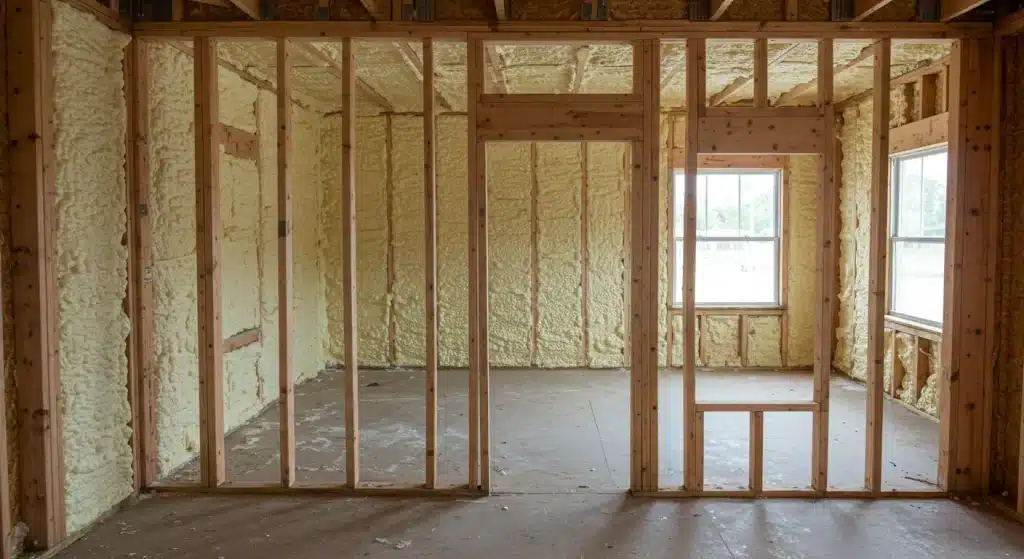
For renovation or new construction projects, insulation should be installed after rough-in mechanicals but before drywall. Installation is possible year-round in Las Vegas due to the arid climate, but summer can present challenges such as excessive attic heat, which can affect working conditions and application timing.
Spray foam insulation relies on precise temperature and surface conditions. Improper timing can reduce material performance, increase labor time, or lead to long-term thermal inconsistencies. When planning for residential spray foam insulation, it’s essential to account for these variables to ensure optimal results. The following sections outline what to consider based on real installation experience in the Las Vegas area.
Temperature and Humidity Factors
Las Vegas has extreme summer temperatures and mild winters. While spray foam can cure in a range of temperatures, application outside recommended ranges affects adhesion and expansion rates.
Bonus Tip: Avoid applying spray foam directly to surfaces over 120°F. Attic prep and shade barriers can reduce roof deck temperatures before spraying.
Regional Climate Considerations
Las Vegas homes face intense solar gain, low humidity, and thermal shock due to large daily temperature swings. These conditions require insulation that can expand, contract, and maintain R-values over time. Closed cell foam offers superior air and vapor resistance, especially for attics, foundations, and exterior walls.
Technical Application Guidelines
Source: U.S. Department of Energy, Building Technologies Office, 2024 Performance Study on SPF Types
Things to Consider Before Making a Decision
- Project Stage: For new builds, apply spray foam after HVAC rough-in and electrical. For retrofits, insulation should follow major repairs or sealing.
- Ventilation Plan: Spray foam creates an air-tight seal. Ensure proper mechanical ventilation is designed to avoid stale air buildup.
- Access: Attic and wall access is critical. Insulation should not be delayed by pending roof repairs or internal framing.
- Material Choice: Evaluate between closed and open cell foams based on location, moisture exposure, and thermal resistance needs.
- Budget Timing: Off-season installations (late fall or early winter) can sometimes reduce labor costs due to lower demand.
Bonus Tip: Schedule installations early in the day during summer. Morning temperatures make the process safer and more consistent.
Market Data and Installation Trends
- The average Las Vegas home loses 25%-30% of heating/cooling through poorly insulated attics and walls. (Source: NV Energy Efficiency Study, 2023)
- Spray foam insulation can reduce annual energy bills by up to 35% in desert climates when installed properly. (Source: Energy Star Southwest Performance Review, 2024)
- Closed cell foam is now used in over 60% of new custom home builds in Clark County. (Source: Southern Nevada Home Builders Association, Q1 2025 Report)
Is summer a bad time to install spray foam?
Only if attic prep is neglected. Roof decks can exceed 150°F. Schedule early hours and ventilate thoroughly.
Do HVAC systems need to be off during installation?
Yes. Keep them off to prevent airflow disruptions and to allow foam to cure without pressure shifts.
Does Las Vegas humidity affect foam curing?
Minimal. The dry climate actually favors stable foam expansion, though surfaces must be dust-free.
Should I replace old insulation before installing spray foam?
Yes. Remove damaged fiberglass or cellulose for best adhesion and thermal performance.
Most Relevant Services Provided by Supreme Spray Foam LV
- Attic Insulation Prevents thermal loss through the top of the structure and supports HVAC efficiency.
- Closed Cell Spray Foam Insulation Delivers a vapor barrier and rigid air seal ideal for high-heat zones like attics and exteriors.
- Wall Insulation Seals leaks in wall cavities to improve indoor comfort and reduce noise transfer.
- Spray Foam Repairs Fixes aged, damaged, or misapplied foam to restore insulation performance.
Our recent spray foam insulation services expansion allows more homeowners across new Las Vegas regions to access professional insulation services with faster scheduling and on-site expertise.
Get Expert Insulation Guidance
For specific advice based on your home’s layout, materials, and HVAC configuration, contact:
Supreme Spray Foam LV Phone: (702) 904-9895 Email: info@supremesprayfoamlv.com
Book a site evaluation to determine the best installation timing and approach for your Las Vegas property.
How long does spray foam insulation last?
Most spray foam products last 30+ years without degradation if properly installed and maintained.
Can I live in my home during installation?
Yes, but access to treated areas will be restricted for 24 hours. Proper ventilation is critical.
How do I know if my home needs new insulation?
High energy bills, inconsistent temperatures, or visible attic insulation gaps are common signs.
What type of spray foam is best for noise reduction?
Open cell foam is more effective for sound dampening in interior walls.
How do I maintain spray foam insulation?
No active maintenance is needed. Periodic attic checks for moisture or pests are recommended.