
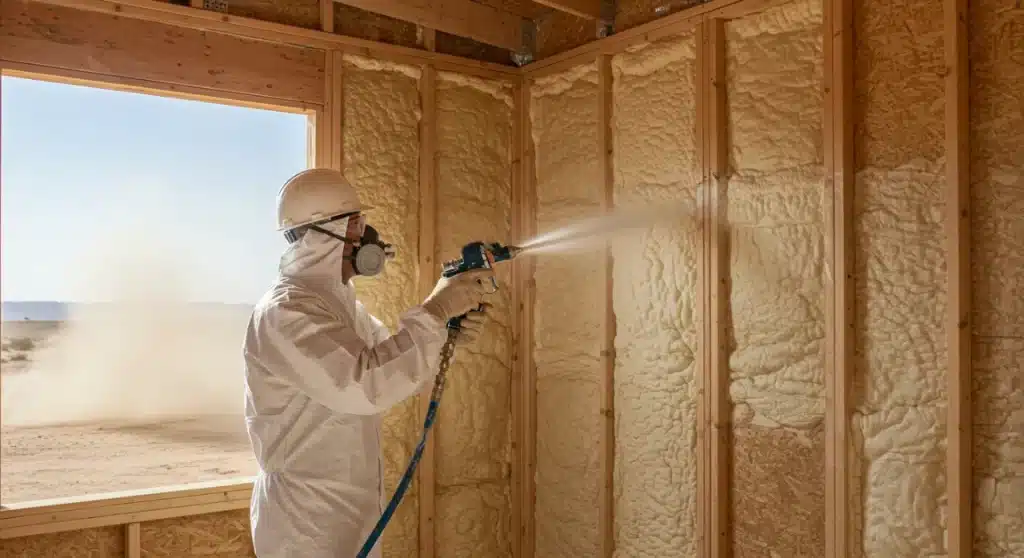
Spray foam insulation significantly improves indoor air quality in desert homes by sealing gaps that allow dust intrusion. In high-dust regions like Las Vegas, airborne particles often infiltrate through small cracks in attics, walls, and foundations. Spray foam forms a continuous barrier that restricts outside dust from entering, reducing respiratory stress and limiting allergens.
This dust control has direct health implications. Lower particulate matter indoors means fewer asthma triggers, reduced allergy symptoms, and better sleep quality. This approach creates a more breathable environment, especially for children, older adults, and individuals with chronic respiratory issues.
Supreme Spray Foam LV applies closed-cell and open-cell foam insulation using proven methods adapted for desert climates. With experience across residential and commercial properties in Southern Nevada, this information is grounded in practical knowledge of insulation behavior under dry, high-temperature conditions.
How Dust Reduction Improves Health in Arid Environments
Desert homes face persistent airborne dust, often worsened by low humidity and windblown sand. This environmental dust contains fine particles that can penetrate the respiratory system and cause chronic irritation.
Bonus Tip
Seal the attic and wall cavities before high-wind seasons (spring and fall in Nevada) to prevent dust accumulation during peak exposure.
Bonus Tip
Closed cell foam is more effective in foundation areas where moisture and dust tend to accumulate. For these applications, closed cell spray foam insulation provides a durable, moisture-resistant barrier. Open cell foam works well in interior walls and ceilings.
Desert-Specific Considerations
Las Vegas homes experience extreme temperature shifts, frequent dust storms, and low relative humidity. These conditions increase the need for a reliable insulation barrier that resists both air and dust penetration.
- Dust particles in Nevada often measure below 10 microns (PM10), which are small enough to remain suspended indoors for days.
- According to EPA air quality data, Clark County exceeds federal dust limits more than 20 times per year (Source: EPA 2024 AQI Report).
Spray foam reduces pathways for this fine particulate matter to enter through:
- Unsealed attic seams
- HVAC chase penetrations
- Utility cutouts in walls and floors
Things to Consider Before Making a Decision
- Building Age: Older homes typically have more unsealed gaps, making them better candidates for full foam encapsulation.
- Type of Foam: Closed cell is denser and blocks more dust but comes at a higher cost. Open cell offers broader coverage for interior applications.
- HVAC Integration: Homes with older ductwork may need sealing before insulation to avoid circulating existing dust.
- Ventilation Needs: Airtight insulation may require added mechanical ventilation to balance air exchange.
- Budget Constraints: Prioritize high-exposure areas first, such as attics and foundation walls.
We Provide These Services to Help Control Dust
Supreme Spray Foam LV offers insulation services that specifically target dust intrusion in desert homes:
- Attic Insulation: Seals the upper envelope where most external dust enters during wind events.
- Wall Insulation: Fills wall cavities to prevent fine particle seepage through siding and framing joints.
- Closed Cell Spray Foam Insulation: Dense barrier ideal for dust-heavy zones like basements or crawl spaces.
- Open Cell Spray Foam Insulation: Effective for interior surfaces and ceilings with a flexible finish.
How soon will air quality improve after installation?
Improvements are often noticeable within a week as air circulation stabilizes and dust infiltration drops.
Is spray foam safe for people with chemical sensitivities?
Once cured, spray foam is inert. Professional installers use ventilation and safety protocols during application.
Can I install spray foam in just one part of the home?
Yes. High-exposure areas like the attic or exterior-facing walls can be targeted for phased upgrades.
Will it eliminate all dust inside the home?
No. It reduces outside dust entry but cannot control indoor sources like textiles and skin cells.
Get Expert Insulation Guidance
For desert homes exposed to high dust levels, blocking particulate entry with insulation offers measurable health improvements. Supreme Spray Foam LV applies effective, long-lasting spray foam insulation tailored for Southern Nevada conditions.
Contact Supreme Spray Foam LV: Phone: (702) 904-9895 Email: info@supremesprayfoamlv.com
How long does spray foam insulation last?
Properly installed foam can last over 30 years without significant degradation.
Can I paint over spray foam?
Yes, after it has fully cured and is trimmed or covered appropriately.
Does spray foam affect HVAC performance?
It can reduce load demand and extend system life by stabilizing indoor temperatures.
What happens if I notice cracks in the foam?
Cracks are rare. If found, they can be spot-repaired without full replacement.
Should I still use air filters?
Yes. Spray foam reduces dust entry, but indoor filtering remains important for optimal air quality.