

If you have ever stood in a drafty room in the middle of winter or watched your energy bills climb even with the thermostat set low, you already know the pain of poor insulation. It acts like a sieve, letting conditioned air escape and forcing your HVAC system to work overtime. While there are many options on the market, few materials offer the sheer performance and structural integrity of closed-cell spray foam.
This guide is not just a quick overview. We are going to examine exactly what makes closed-cell foam the heavy hitter of the insulation world. From its dense cellular structure to its ability to turn a building envelope into a seamless barrier against moisture and air infiltration, this material changes how buildings perform.
At Supreme Spray Foam LV, we have spent years in the field. We have seen firsthand how the right application can stabilize a structure and drastically cut energy consumption. But we have also seen what happens when people misunderstand the material or apply it incorrectly. This guide serves as your complete manual. Whether you are a homeowner looking to retrofit a basement or a builder planning a commercial facility, you will walk away with a clear understanding of how closed-cell foam works, where it excels, and how to maximize your investment.
The Science of Closed-Cell Foam: More Than Just Plastic
To understand why this insulation performs so well, you have to look at it under a microscope. Spray Polyurethane Foam (SPF) comes in two main varieties: open-cell and closed-cell. The difference lies entirely in the structure of the bubbles or cells that make up the foam.
In closed-cell foam, the tiny bubbles are fully encapsulated and packed tightly together. Imagine millions of tiny, rigid balloons glued together. They do not share air with their neighbors. This structure is filled with a specialized gas (a blowing agent) that conducts heat far less effectively than regular air.
High Density Equals High Performance
This tight structure results in a much denser product. While open cell foam feels spongy (like a sofa cushion), closed-cell foam is stiff and rigid. It typically has a density of about 2.0 pounds per cubic foot. This density provides three critical benefits:
- Superior R-Value: Because the gas trapped inside the cells resists heat flow so well, closed-cell foam offers an R-value of roughly R-6 to R-7 per inch. This is nearly double the thermal resistance of open-cell foam or traditional fiberglass.
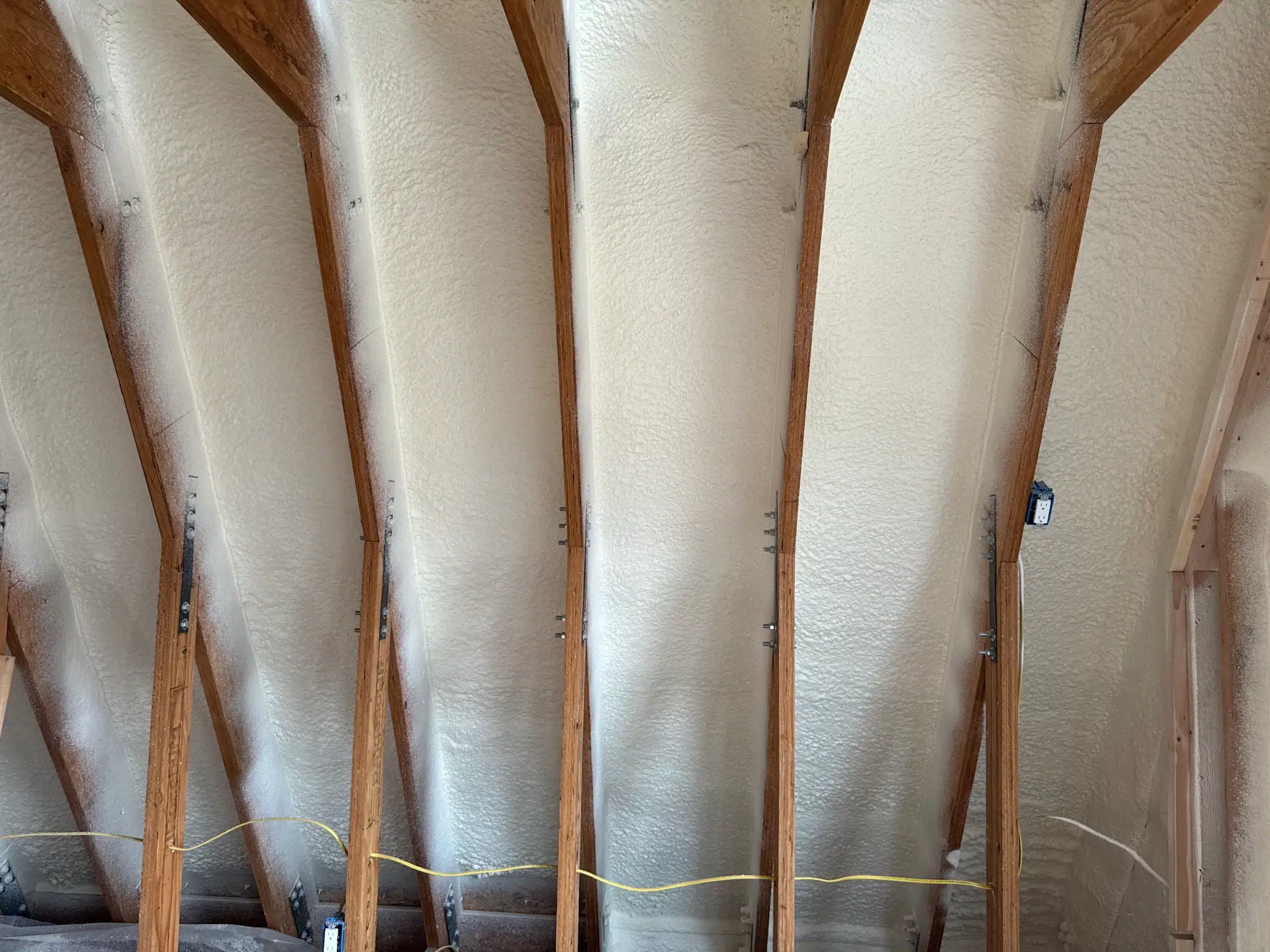
- Structural Integrity: The rigidity adds significant strength to walls and roofs. It can actually increase the racking strength of a wall assembly, making it more resistant to wind loads.
- Water Resistance: The closed cells prevent water from soaking in. This makes the material an approved flood-resistant material by FEMA standards.
Key Takeaway: Closed-cell foam is defined by its encapsulated gas bubbles. This structure gives it a high R-value per inch, makes it rigid enough to add structural strength, and turns it into a powerful vapor retarder.
Comparing the Contenders: Closed-Cell vs. The Rest
When you are deciding on insulation, you need context. How does closed-cell foam stack up against its lighter cousin, open-cell foam, or traditional materials like fiberglass?
Closed-Cell vs. Open Cell
Open-cell foam is lighter, expands more, and is generally cheaper. It is a great sound deadener. However, it is breathable. Air and moisture can eventually migrate through it if not properly sealed. Closed-cell is the opposite. It is a barrier.
A report from the Spray Polyurethane Foam Alliance indicates that closed-cell foam is the superior choice for exterior applications and areas with high moisture risks because of its low permeance rating.
Comparison Table: Insulation Characteristics
| Feature | Closed-Cell Foam | Open Cell Foam | Fiberglass Batts |
|---|---|---|---|
| R-Value per Inch | R-6.0 to R-7.0 | R-3.5 to R-3.8 | R-2.9 to R-3.8 |
| Moisture Barrier | Yes (Class II Vapor Retarder) | No (Permeable) | No (Absorbs Water) |
| Air Barrier | Excellent | Good | Poor |
| Structure | Rigid, Dense | Soft, Spongy | Fibrous, Fluffy |
| Best Application | Exteriors, Basements, Roofs | Interior Walls, Soundproofing | General Dry Areas |
| Cost | High | Medium | Low |
Why Not Just Use Fiberglass?
Fiberglass is inexpensive and easy to find. But it has a major weakness: air leakage. Fiberglass works like a wool sweater. It keeps you warm if there is no wind. But once air starts moving through the fibers (convection), its effective R-value drops. Closed-cell foam works like a windbreaker over that sweater. It stops the air movement completely.
Strategic Applications: Where Closed-Cell Shines
Because closed-cell foam is more expensive than other options, you want to use it where its unique properties provide the most value. It is overkill for an interior bedroom wall where you just wish for sound-dampening. But for the building envelope, it is unmatched.
1. Basements and Crawl Spaces
These are moisture-prone areas. Concrete creates a thermal bridge, pulling cold from the ground into your home. Fiberglass in a rim joist often turns black with mold because it traps moisture. Closed-cell foam bonds directly to the concrete or wood, sealing out the moisture and insulating the space in one pass.
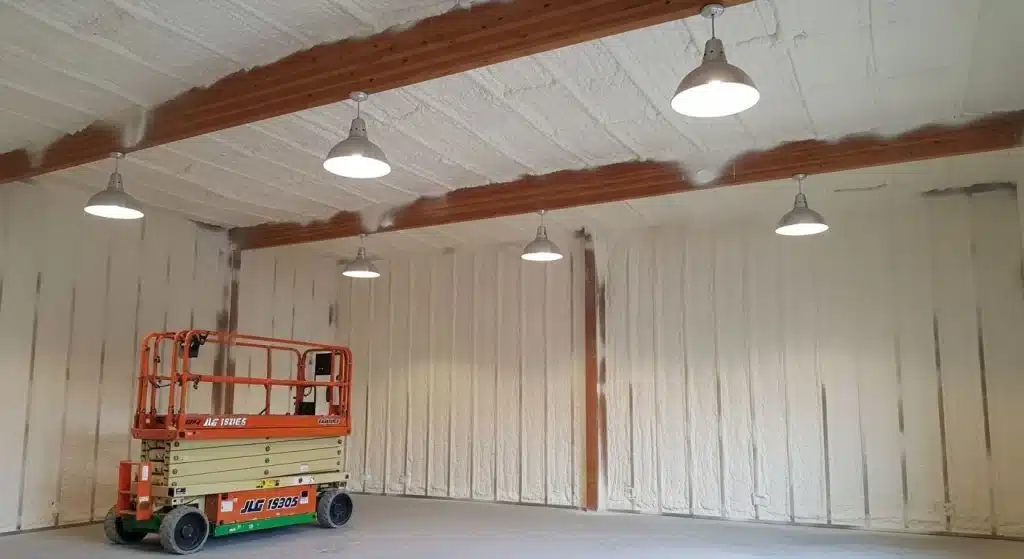
2. Metal Buildings and Pole Barns
Metal conducts heat rapidly. In the summer, a metal roof radiates heat into the building; in winter, it drips condensation. Closed-cell spray foam adheres to the metal profile, stopping the “sweating” completely and adding rigidity to the metal panels.
3. Van Conversions and Container Homes
Space is tight in these builds. You cannot afford to lose 6 inches of wall depth to insulation. Since closed-cell foam offers a high R-value in a thin profile (2 inches can give you R-14), it is the standard for mobile and shipping container dwellings.
4. Exterior Walls in Flood Zones
Since the material is hydrophobic (water-repelling), it does not degrade when wet. If a flood occurs, you clean the surface. You do not have to rip out the insulation and start over, as with cellulose or fiberglass.
Expert Tip: When insulating a roof deck, closed-cell foam acts as a secondary water barrier. If your shingles blow off during a storm, the foam sealed to the underside of the sheathing can actually prevent water from pouring into your attic.
The Installation Process: Precision Required
Applying closed-cell spray foam is not a DIY project for the weekend warrior. It involves complex chemistry that occurs in real time on your job site.
The Chemistry Set
The system uses two 55-gallon drums.
- The “A” Side: Usually methylene diphenyl diisocyanate (MDI).
- The “B” Side: A blend of polyols, catalysts, blowing agents, and flame retardants.
These two liquids are pumped through heated hoses and meet at the spray gun tip. They mix at high pressure and hit the surface. Within seconds, the liquid expands roughly 30 to 40 times its original volume and hardens.
Step-by-Step Execution
- Site Preparation: We mask off windows, floors, and any other areas that should not be sprayed. Once this stuff cures, it is tough to remove.
- Surface Prep: The substrate (wood, metal, or concrete) must be dry and clean. Surface moisture can cause adhesion failure.
- Safety Setup: Installers wear full-body suits and fresh-air respirators. Ventilation fans are set up to exhaust fumes during the application.
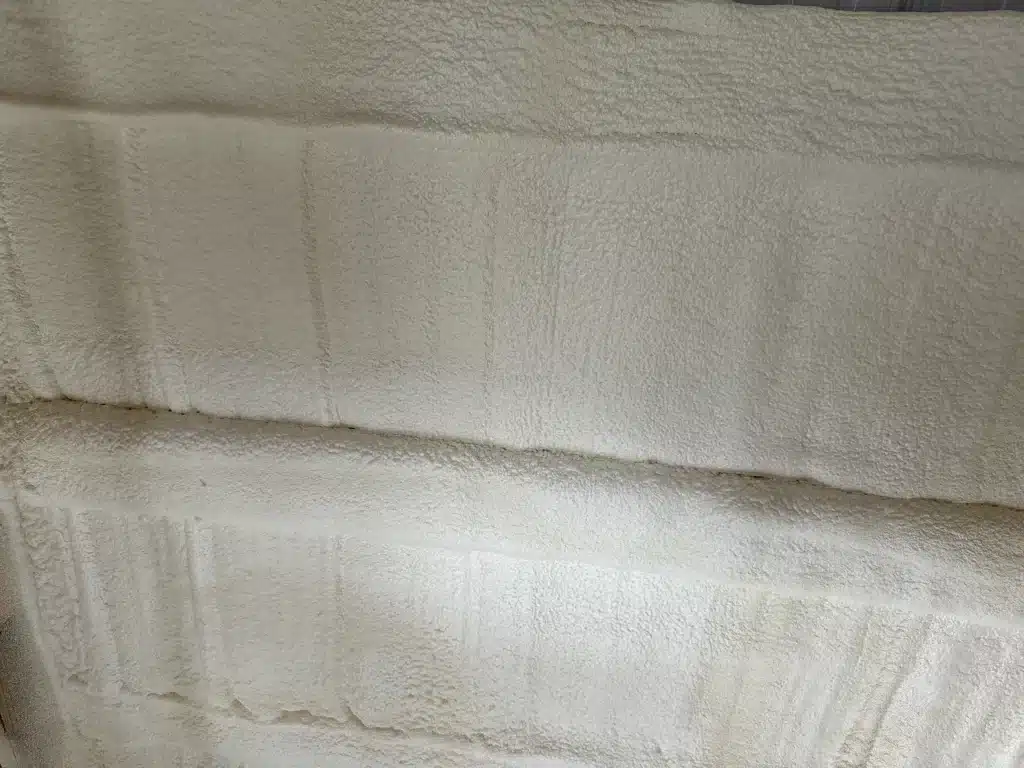
- The Spray: The installer applies the foam in “lifts” or layers. You usually spray no more than 2 inches at a time.
- Curing: The reaction creates heat (exothermic). If you spray it too thickly or too quickly, the heat can get trapped and cause the foam to split or even char. This is why a professional application is critical.
- Trimming and Cleanup: Unlike open-cell, closed-cell is rock hard. It is difficult to trim, so installers aim for a smooth, consistent finish that doesn’t need cutting.
Efficiency, ROI, and Energy Savings
The sticker price of closed-cell foam is higher than that of traditional insulation. However, looking only at the upfront cost ignores the monthly cash flow.
Air Sealing is the Secret Weapon
The Department of Energy states that air leakage can account for 25% to 40% of the energy used for heating and cooling in a typical home. You can put R-50 fiberglass in an attic, but if air leaks through light fixtures and top plates, you’ll still lose heat.
Closed-cell foam seals these gaps automatically. By creating a sealed envelope, you reduce the load on your HVAC system. This often allows builders to install smaller, less expensive heating and cooling units (HVAC downsizing), which offsets the insulation cost immediately.
Long-Term Durability
Fiberglass sags over time. Cellulose settles. This creates gaps where heat escapes. Closed-cell foam stays in place. It does not settle, shrink, or sag. The performance you pay for on day one is the same performance you have twenty years later.
Market Data on Savings
According to Energy Star data, homeowners who comprehensively seal and insulate their homes can save an average of 15% on heating and cooling costs (or 11% on total energy costs). In extreme climates, very hot or very cold, these savings can be significantly higher with closed-cell foam due to the elimination of thermal bridging.
Addressing Common Challenges and Myths
Every building material has limitations. Being honest about them helps you plan a better project.
The “Too Tight” Myth
People often worry that a house can be “too tight” and will have stale air. The industry phrase is: “Build it tight, ventilate it right.” When you seal a home with closed-cell foam, you stop relying on random cracks for fresh air. Instead, you use mechanical ventilation (like an ERV or HRV) to bring in filtered, fresh air. This gives you control over indoor air quality rather than breathing attic dust.
Off-Gassing and Re-Entry
During the chemical reaction, the foam releases gases. This is why the site is off-limits during spraying. However, once the foam has cured (typically within 24 to 48 hours, depending on the product), it becomes inert. It does not continuously off-gas for years.
UV Sensitivity
Polyurethane foam hates sunlight. If you use closed-cell foam on the exterior of a roof or a tank, the UV rays will degrade it, turning it orange and brittle. It must be covered with a UV-protective coating, such as silicone or acrylic elastomeric coating, to survive outdoors.
Future Trends in Spray Foam Technology
The industry is not standing still. The most significant shift recently has been the move toward HFO (hydrofluoroolefin) blowing agents.
Older foams used HFCs (hydrofluorocarbons), which had high Global Warming Potentials (GWPs). The new generation of closed-cell foams uses HFOs, which have a GWP of 1, basically the same as carbon dioxide. This makes modern closed-cell foam an environmentally responsible choice. It lowers the home’s carbon footprint by saving energy, and the material itself is now produced with much greener chemistry.
Putting Your Insulation Strategy into Action
Insulation is one of the few building components that you pay for once, but that pays you back every single month. Closed-cell spray foam represents the highest standard of thermal efficiency and structural durability available today. It seals air leaks that other materials miss, blocks moisture that damages homes, and provides an R-value that keeps you comfortable in the harshest weather.
By understanding the physics of the material and the importance of proper installation, you can make a decision that adds value to your property for decades. Whether you are building a new custom home or fixing a cold, damp basement, this material offers a permanent, effective solution.
Need Expert Guidance?
Choosing the proper insulation involves more than just picking a product; it requires a strategy tailored to your specific building. If you have questions about whether closed-cell foam is right for your project, reach out to us. We can review your plans and help you maximize your energy efficiency.
Supreme Spray Foam LV
- Phone: (702) 904-9895
- Email: [email protected]
Frequently Asked Questions About Closed-Cell Foam
What is the R-value of closed-cell spray foam?
Closed-cell spray foam typically offers an R-value between R-6.0 and R-7.0 per inch. This is one of the highest R-values of any commercially available insulation material, enabling high thermal resistance in thin walls or tight spaces.
Can I install closed-cell foam myself?
We strongly advise against DIY kits for large projects. The chemical balance, temperature control, and safety equipment required are complex. Small “froth packs” are fine for sealing rim joists or small gaps, but spraying a whole wall requires professional equipment to ensure the foam cures safely and performs correctly.
Does closed-cell foam trap moisture in the walls?
Closed-cell foam is a Class II vapor retarder. It prevents warm, moist air from reaching cold surfaces where it would condense. However, you must ensure your roof and siding are leak-free. If water gets behind the foam from a roof leak, the foam will prevent it from drying out easily. Proper flashing and exterior water management are essential.
How long does closed-cell spray foam last?
Indefinitely. As long as it is protected from UV light and physical destruction, the foam does not degrade, settle, or lose its R-value. It is effectively a permanent part of the building structure.
Will pests eat the foam?
Foam offers no nutritional value to rodents or insects. Because closed-cell foam is so complex and dense, it is also much more difficult for pests to tunnel through compared to soft fiberglass or open-cell foam. It also seals the tiny gaps that insects use to enter the home.
Sources
- Spray Polyurethane Foam Alliance – Industry standards and technical documents regarding foam performance and applications.
- Department of Energy – Data regarding air leakage, energy consumption, and insulation best practices.
- Energy Star – Statistics on potential energy savings through comprehensive sealing and insulating.