
The right insulation strategy in 2026 comes down to understanding your home’s specific weak points, matching the correct material to each zone, and prioritizing air sealing alongside thermal resistance. With updated energy codes pushing for higher performance and federal tax credits rewarding efficient upgrades, homeowners have more incentive than ever to insulate smarter, not just thicker. Whether you are dealing with an older home with drafty walls, a new build aiming for maximum efficiency, or a retrofit targeting specific problem areas like attics and crawl spaces, the approach that works depends on your climate zone, budget, and long-term energy goals.
TLDR / Key Takeaways
- Air sealing and insulation work together. The U.S. Department of Energy recommends treating them as a single system, since even high-R insulation underperforms if air leaks around it.
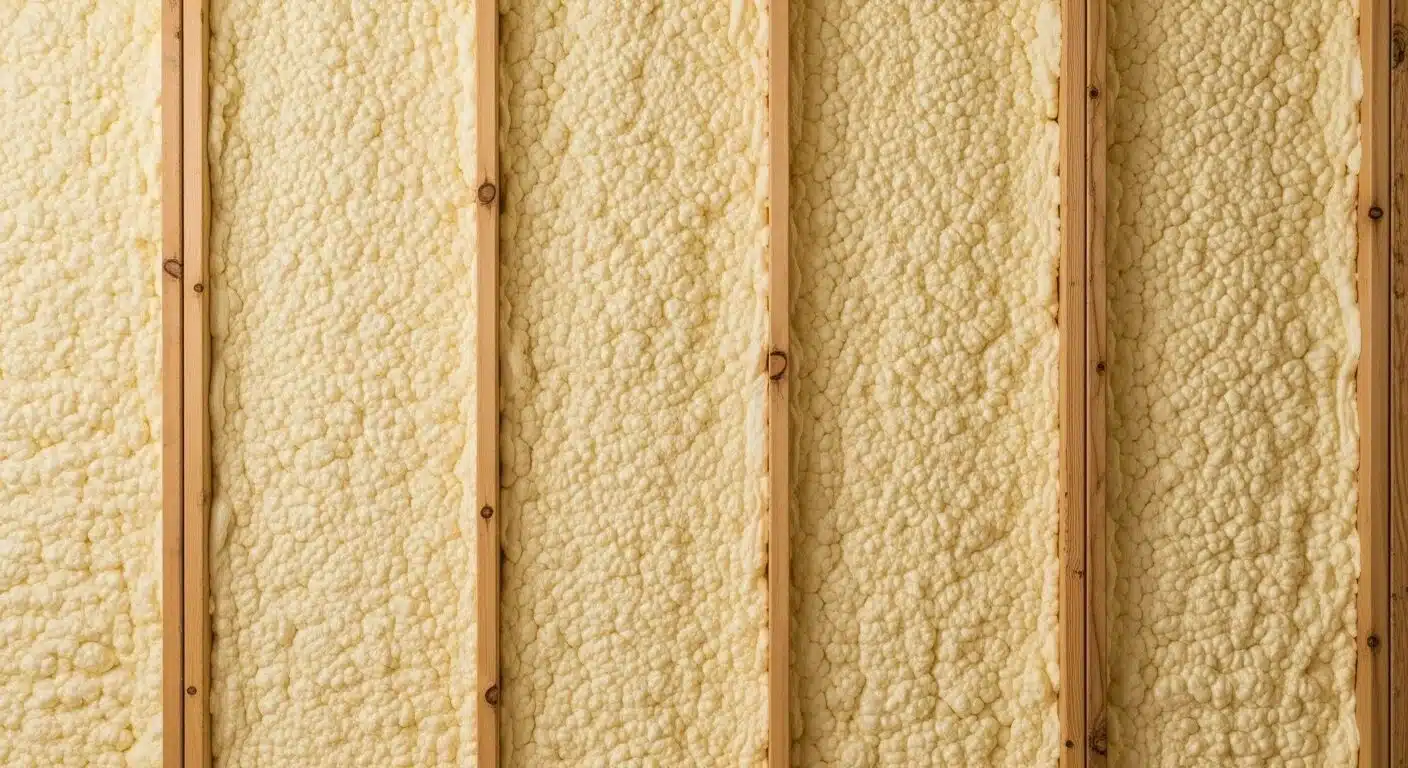
- Spray foam leads in per-inch R-value. Closed-cell spray foam delivers R-6.0 to R-7.0 per inch while simultaneously sealing air and moisture, making it the highest-performing option for targeted applications.
- Homeowners can save 15% on heating and cooling costs through proper air sealing and insulation, according to ENERGY STAR.
- The 2024 International Energy Conservation Code (IECC) delivers an estimated 6.6% improvement in energy cost savings over prior editions, per the National Association of Home Builders.
- Attic upgrades typically yield the fastest return: $200 to $600 in annual savings, followed by wall insulation at $150 to $400 and basement insulation at $100 to $300.
- Federal tax credits under Section 45L and the Inflation Reduction Act continue to reward energy-efficient upgrades, with over 350,000 homes built using the 45L credit in 2024 alone.
- Material choice should be driven by the specific zone: spray foam for irregular cavities and air sealing, fiberglass for accessible wall cavities, rigid foam for continuous exterior insulation, and cellulose for eco-friendly retrofits.
Why 2026 Is the Year to Rethink Your Insulation
Building science has shifted significantly over the past several years. The 2024 IECC raised the bar on residential energy performance, and its impact is fully rolling into construction and renovation practices by 2026. According to the NAHB analysis, the updated code not only improves energy efficiency but does so at a lower incremental building cost compared to previous code cycles. For homeowners, this means the market is moving toward higher-performing homes as the baseline standard.
Meanwhile, ENERGY STAR certified homes saw record growth in 2024, with these homes consuming roughly 20% less energy than comparable standard construction. The average annual savings sit around $400, but the real value compounds over decades. The Insulation Institute estimates lifetime energy cost savings at approximately $17,500 for an ENERGY STAR home and up to $50,000 for a Zero Energy Ready Home over a 45-year period.
For existing homeowners, these shifts create a clear signal: homes without modern insulation and air sealing are falling behind both in comfort and resale value.
Understanding Insulation Materials: A 2026 Comparison
Not all insulation is created equal. The right material depends on where it is being installed, what the cavity conditions are, and what performance targets you are aiming for. Here is a breakdown of the primary options homeowners should consider in 2026.
| Insulation Type | R-Value Per Inch | Best Application | Air Sealing Capability | Typical Cost Range |
|---|---|---|---|---|
| Closed-Cell Spray Foam | R-6.0 to R-7.0 | Walls, crawl spaces, rim joists, and basements | Excellent (acts as a vapor barrier and air seal) | $1.50 to $3.50 per sq ft |
| Open-Cell Spray Foam | R-3.5 to R-4.0 | Attics, wall cavities, sound-dampening | Good (air seals, but not a vapor barrier) | $0.75 to $1.50 per sq ft |
| Fiberglass Batts | R-2.9 to R-3.8 | Standard wall cavities, unfinished attics | Poor (requires separate air sealing) | $0.50 to $1.50 per sq ft |
| Blown Cellulose | R-3.1 to R-3.8 | Attics, existing wall cavities (dense-pack) | Moderate (fills gaps better than fiberglass) | $0.80 to $2.00 per sq ft |
| Rigid Foam Board | R-3.8 to R-6.5 | Continuous exterior insulation, basement walls | Good when taped and sealed at joints | $1.00 to $3.00 per sq ft |
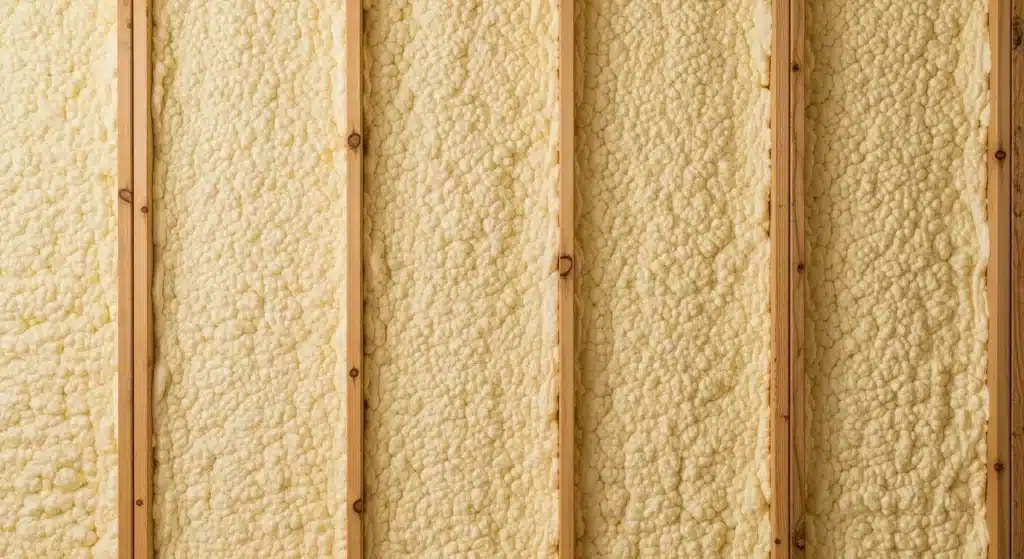
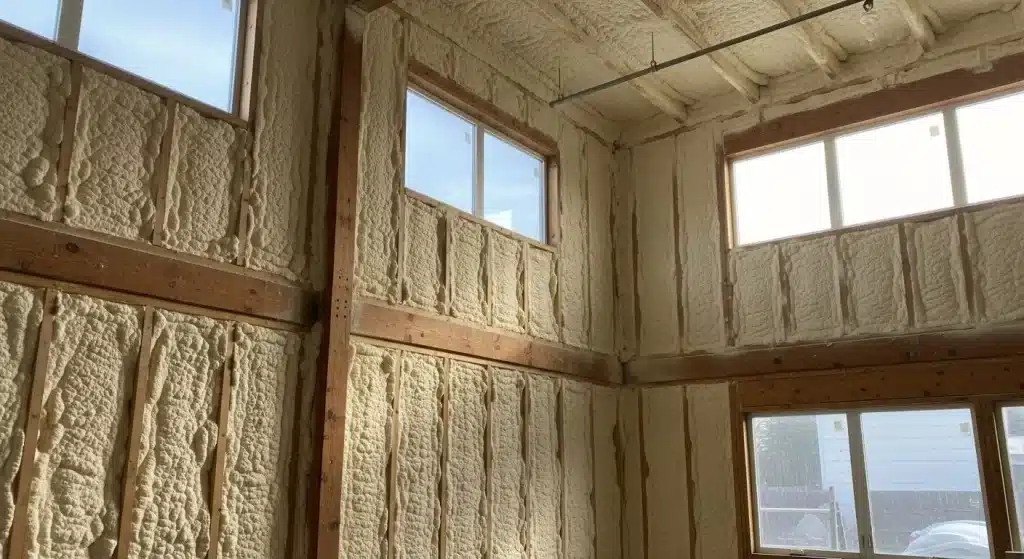
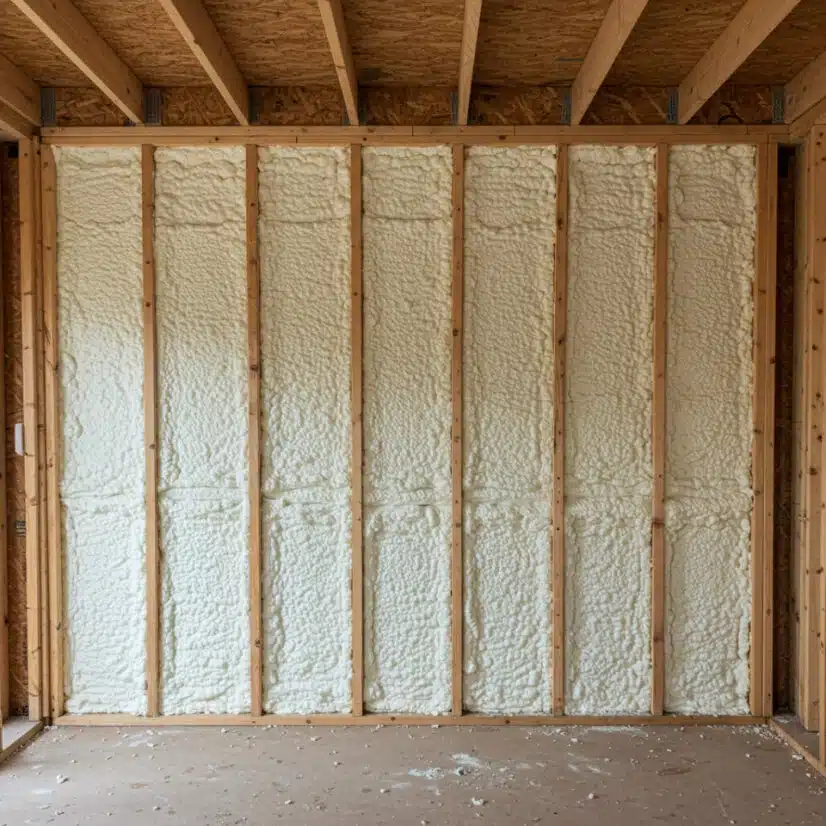
Closed-cell spray foam stands out because it handles three jobs at once: thermal resistance, air sealing, and moisture control. Open-cell spray foam is more affordable and expands further, making it a strong choice for large, open cavities where moisture control is less of a concern. Fiberglass remains the budget-friendly staple, while cellulose offers a recycled, environmentally conscious option.
The 5 Smartest Insulation Upgrades for 2026
1. Prioritize the Attic First
Heat rises, and an under-insulated attic is the single largest source of energy loss in most homes. The DOE recommends attic insulation levels of R-38 to R-60, depending on your climate zone. In 2026, the most effective approach is to combine air sealing at the attic floor (sealing around penetrations, ductwork, and recessed lights) with a thick layer of blown-in insulation or spray foam along the roof deck.
Expected outcome: $200 to $600 in annual energy savings, with the fastest payback period of any single insulation upgrade.
2. Seal and Insulate Rim Joists and Crawl Spaces
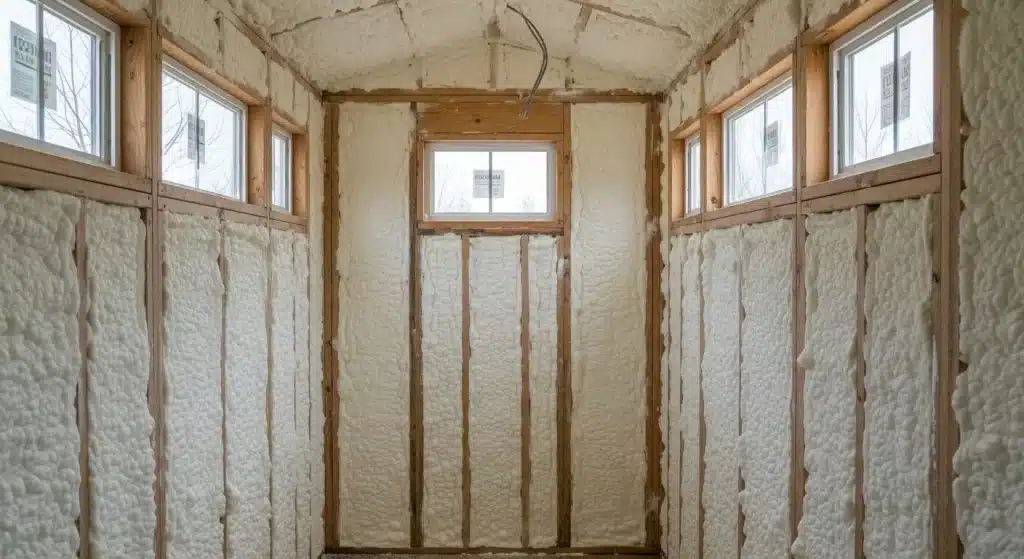
Rim joists, the area where the first-floor framing meets the foundation, are notorious for air infiltration. Spraying closed-cell foam along rim joists eliminates drafts, blocks moisture intrusion, and dramatically improves comfort on the first floor. Crawl spaces benefit similarly from encapsulation with spray foam, which prevents ground moisture from entering the living space and protects ductwork and plumbing.
3. Upgrade Wall Insulation with Dense-Pack or Injection Foam
Many existing homes, particularly those built before 1990, have walls with little or no insulation. Dense-pack cellulose or injection foam can be installed through small holes drilled in the exterior or interior, filling wall cavities without gutting the rooms. This approach is less disruptive than a full renovation and can reduce heating and cooling loads by a noticeable margin.
4. Add Continuous Exterior Insulation During Renovations
If you are planning a siding replacement or exterior renovation, adding a layer of rigid foam board beneath the new cladding creates a continuous thermal barrier that eliminates thermal bridging through wall studs. This is one of the most impactful upgrades for long-term energy performance, though it is best coordinated with larger exterior projects.
5. Do Not Forget the Basement and Garage
Basement walls and ceilings adjacent to unconditioned garages are often overlooked. Insulating these areas with spray foam or rigid board reduces heat loss from the home’s perimeter and can make bonus rooms and finished basements significantly more comfortable year-round.
Common Insulation Mistakes Homeowners Still Make
Even with better materials and more information available, several missteps repeatedly reduce the effectiveness of insulation projects.
Ignoring air sealing. This remains the number one error. Insulation without air sealing is like wearing a thick winter coat with the zipper open. The EPA estimates that proper air sealing combined with insulation can save an average of 15% on heating and cooling costs. Skipping the sealing step means leaving that savings on the table.
Under-insulating by outdated standards. Many homeowners add insulation based on what was considered adequate a decade ago. Code requirements have risen, and so has the performance bar. Meeting only the minimum R-value for your climate zone is a starting point, not the goal.
Blocking ventilation in the attic. When adding insulation to an attic floor, it is essential to maintain proper soffit ventilation. Baffles should be installed to keep airflow channels open. Compressing insulation or blocking vents can trap moisture and lead to rot and mold.
Using the wrong material for the location. Fiberglass in a damp crawl space, for example, will absorb moisture and lose effectiveness. Matching the material to the environment is just as important as achieving the right R-value.
DIY without a proper assessment. While some insulation projects are straightforward, a professional energy audit can identify exactly where upgrades will have the most impact. Without that assessment, homeowners risk spending money in areas with diminishing returns while missing the zones that need attention most.
Recommendations by Homeowner Scenario
| Homeowner Situation | Recommended Approach | Why It Works | Expected Payback |
|---|---|---|---|
| Older home (pre-1990), no prior upgrades | Attic insulation + air sealing + rim joist spray foam | Addresses the largest sources of loss first with minimal disruption | 3 to 5 years |
| New construction or major renovation | Spray foam walls + continuous exterior rigid foam + high-R attic | Maximizes efficiency from the start; meets or exceeds 2024 IECC | Built into home value |
| Home with comfort complaints (drafts, cold rooms) | Energy audit + targeted air sealing + wall insulation | Solves specific problem areas rather than blanket approach | 2 to 4 years |
| Homeowner focused on resale value | Attic and basement upgrades + air sealing | High-visibility improvements that buyers and appraisers recognize | 3 to 6 years |
| Budget-conscious homeowner looking for DIY options | Blown-in attic insulation + weatherstripping + caulk sealing | Lowest-cost entry point with meaningful savings | 1 to 3 years |
Signs You Have Found the Right Insulation Contractor
A quality insulation job depends heavily on the installer. Here are the indicators that signal a competent, trustworthy professional:
- They start with an assessment, not a pitch. A strong contractor will evaluate your home, discuss problem areas, and explain why certain materials or zones should be prioritized before quoting a price.
- They explain the “why” behind the material choice. If a contractor recommends spray foam for your rim joists but fiberglass for your attic, they should be able to articulate the reasoning clearly rather than pushing a single product across the board.
- They address air sealing as part of the conversation. Any contractor who quotes insulation without discussing air sealing is leaving a critical step out of the project.
- They provide clear, itemized estimates. Vague pricing or pressure tactics are red flags. A detailed breakdown of materials, labor, zones, and warranty terms is standard practice among reputable installers.
- They have relevant certifications and insurance. Look for credentials from organizations like the Building Performance Institute (BPI) or Spray Polyurethane Foam Alliance (SPFA), along with proof of liability and workers’ compensation coverage.
Visual Suggestion for Designers
Bar Chart Concept: Annual energy savings by insulation zone. Show four bars representing attic ($200-$600), walls ($150-$400), basement ($100-$300), and air sealing alone ($100-$200) to help homeowners visualize where their investment goes furthest.
Timeline Graphic: A step-by-step insulation upgrade roadmap for homeowners, showing Year 1 (audit and air sealing), Year 2 (attic and crawl space), and Year 3 (walls and exterior) as a phased approach to full-home efficiency.
Ready to Insulate Smarter in 2026?
Upgrading your home’s insulation is one of the few investments that pays for itself while making your living space more comfortable from day one. At Supreme Spray Foam LV, we specialize in spray foam insulation solutions tailored to your home’s unique needs, from rim joist sealing to full attic encapsulation. Our team brings hands-on expertise, transparent pricing, and a commitment to getting the job done right the first time.
Call us at (702) 904-9895 or email [email protected] to discuss your project. The right insulation strategy starts with a conversation, and we are here to help you make informed decisions that protect your home and your wallet for decades to come.
Frequently Asked Questions
How much does spray foam insulation cost in 2026?
Expect to pay between $1.50 and $3.50 per square foot for closed-cell spray foam, and $0.75 to $1.50 per square foot for open-cell, depending on the project scope, accessibility, and your region. Total project costs for a typical home range from $2,000 to $8,000 for targeted areas like attics and crawl spaces.
Is spray foam insulation worth the higher upfront cost?
For most homeowners, yes. Spray foam delivers higher R-value per inch, seals air leaks simultaneously, and acts as a moisture barrier in many applications. The energy savings and comfort improvements typically offset the premium over cheaper materials within 3 to 6 years, and the performance advantage compounds over the life of the home.
Can I add insulation to my walls without removing the drywall?
Yes, through a process called dense-pack cellulose or injection foam insulation. Small holes are drilled through the exterior siding or interior drywall, insulation material is blown or injected into the wall cavities, and the holes are patched. It is a less disruptive option for existing homes.
How do I know if my home needs more insulation?
Signs include fluctuating indoor temperatures, high energy bills compared to similar homes, drafts near windows and baseboards, ice dams on the roof in winter, and rooms that feel noticeably colder or hotter than others. A professional energy audit is the most reliable way to identify specific deficiencies.
What R-value should I target for my attic?
The DOE recommends R-38 to R-60 for attics depending on your climate zone. Most of the southern and central U.S. falls in the R-38 range, while northern and colder climates should aim for R-49 to R-60. Adding insulation beyond the minimum delivers diminishing returns but continues to improve comfort.
Sources
- U.S. Department of Energy – Insulation – Comprehensive guide on how insulation works, R-value recommendations by climate zone, and the relationship between insulation and air sealing.
- ENERGY STAR – Seal and Insulate Methodology – EPA methodology showing estimated 15% savings on heating and cooling costs through air sealing and insulation upgrades.
- National Association of Home Builders – 2024 IECC Cost Analysis – Analysis of the 2024 IECC energy code showing 6.6% energy cost savings with lower incremental building costs compared to prior editions.
- U.S. Green Building Council – ENERGY STAR Homes Record Growth – Data on ENERGY STAR home growth in 2024, with average 20% energy reduction and $400 annual savings.
- Insulation Institute – 45L Tax Credit Adoption – Statistics on the adoption of energy-efficient building practices under the Section 45L federal tax credit, including lifetime savings estimates.