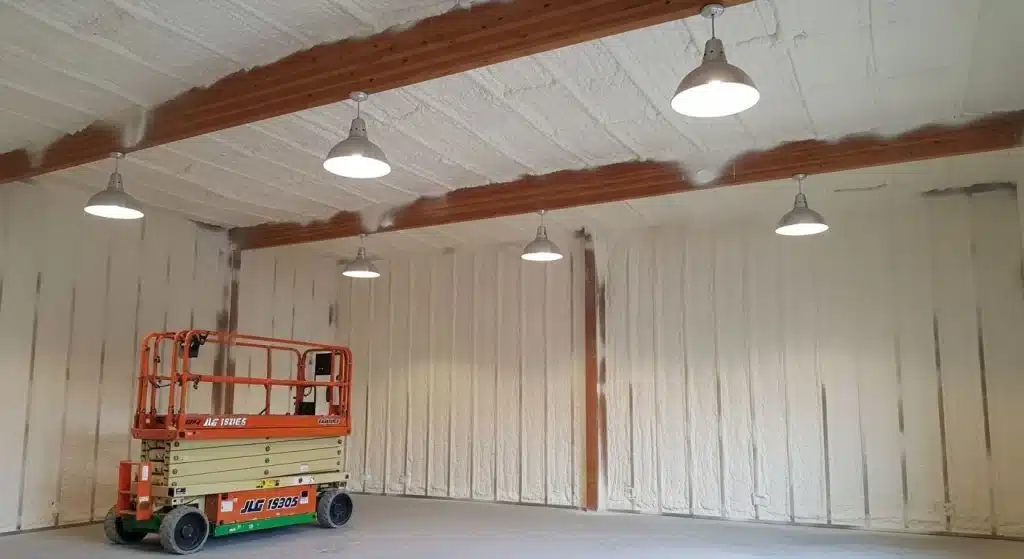



Open-cell spray foam insulation creates a quieter home office in Lone Mountain by filling wall cavities and air gaps with sound-absorbing material that significantly reduces noise transmission through walls, ceilings, and floors. The foam’s cellular structure traps sound waves and converts acoustic energy into heat, effectively dampening external noises like traffic, neighbors, and household activities while also preventing sound from escaping your office space. This makes it particularly valuable for Lone Mountain residents dealing with the area’s growing residential density and proximity to major transportation corridors.
The unique properties of open-cell spray foam make it superior to traditional insulation for acoustic control in home offices. Unlike fiberglass batts that can leave gaps and settle over time, spray foam expands to fill every crevice, creating a continuous sound barrier that doesn’t compress or degrade. Supreme Spray Foam LV specialists have found that properly installed open-cell foam can reduce sound transmission by up to 50%, creating the kind of quiet environment needed for professional video calls, focused work, and recording sessions. This article explains exactly how open-cell spray foam achieves these results, what Lone Mountain homeowners should know before installation, and how it compares to other soundproofing options.
Understanding Open-Cell Spray Foam’s Sound Control Properties
Open-cell spray foam insulation works through multiple mechanisms to create a quieter home office environment. The material consists of millions of tiny, interconnected cells that form a semi-rigid structure when applied. These cells trap air and create countless barriers that sound waves must pass through, forcing the acoustic energy to change direction repeatedly. Each directional change dissipates sound energy, effectively muffling the noise before it reaches your workspace.
The density and expansion characteristics of open-cell spray foam make it particularly effective at absorbing mid to high-frequency sounds, which include most common office distractions like voices, keyboard typing, and ringing phones. According to research from theSpray Polyurethane Foam Alliance, open-cell foam has a sound transmission class (STC) rating between 17-23 when properly installed in standard 2×4 wall assemblies. This means it can reduce normal speech sounds from a neighboring room to barely audible levels in your office space.
Lone Mountain’s specific housing stock presents unique challenges for home office acoustics. Many homes in this area feature modern construction with open floor plans, which allows sound to travel freely throughout the house. The proximity to the 215 Beltway and growing commercial development along nearby corridors introduces external noise that traditional insulation struggles to block. Open-cell spray foam addresses both issues by creating a sealed envelope around your office space.
How Sound Travels Through Walls
To understand why open-cell spray foam is so effective, it helps to know how sound moves through building structures. Sound waves travel through three main pathways: airborne transmission (through the air), impact transmission (through structural contact), and flanking paths (around or through gaps in the structure). Traditional insulation only addresses airborne transmission and does so incompletely, leaving multiple paths for sound to travel.
Open-cell spray foam targets all three transmission types simultaneously. Its air-sealing properties eliminate gaps and cracks that allow airborne sound to pass through. The foam’s slightly flexible structure absorbs impact vibrations from footsteps or door slams. Most importantly, it expands to fill framing cavities completely, eliminating the flanking paths that typically undermine other soundproofing methods.
Installation Considerations for Lone Mountain Home Offices
Proper installation determines how well open-cell spray foam performs for sound control. In the Lone Mountain climate, where temperatures can swing dramatically between seasons, the foam needs to be applied at the right thickness and in the right locations to maximize acoustic benefits without compromising other performance aspects.
For optimal sound reduction in home offices, a minimum of 3.5 inches of open-cell spray foam is recommended in wall cavities. This thickness provides enough material to effectively absorb sound while still allowing the wall assembly to dry properly, which is particularly important in Nevada’s arid climate, where moisture control is often overlooked.
Where to Apply Spray Foam for Maximum Office Quiet
The most effective application strategy targets the office’s six surfaces – four walls, ceiling, and floor. However, budget constraints often require prioritization based on your specific noise challenges:
- Exterior walls should be your first priority if street noise or outdoor activities are your main concern
- Party walls (walls shared with neighboring units or high-traffic areas) deserve attention if household noise is the issue
- Ceilings matter most if you have upstairs activity or live in a multi-story home
- Floors become crucial for offices below occupied spaces
Bonus Tip: For Lone Mountain homes with tile or concrete floors common in newer constructions, adding spray foam to the ceiling cavity above your office, combined with a suspended ceiling system, can dramatically reduce impact noise from upper floors.

Comparing Open-Cell Spray Foam to Other Soundproofing Options
Home office sound control comes in many forms, each with different advantages and limitations. Understanding these differences helps you make informed decisions about your specific situation.
| Sound Control Method | STC Rating Improvement | Installation Complexity | Best For |
|---|---|---|---|
| Open-Cell Spray Foam | 17-23 | Professional required | Complete air sealing & absorption |
| Fiberglass Batt Insulation | 11-13 | DIY possible | Budget projects with existing walls |
| Mineral Wool | 15-20 | Moderate installation | Fire resistance & moisture control |
| Soundproof Drywall | 15-20 | Professional recommended | Retrofits where insulation isn’t possible |
| Acoustic Panels | 5-10 | Easy installation | Reducing echo within the room |
The table shows that while open-cell spray foam isn’t the cheapest option upfront, it provides the best combination of sound reduction and air sealing. For Lone Mountain homeowners dealing with both temperature extremes and noise concerns, this dual benefit often justifies the higher initial investment.
Market Trends in Home Office Acoustics
The home office soundproofing market has grown significantly since 2020, with industry analysts reporting a 40% increase in acoustic insulation demand for residential applications. A recent report from Grand View Research indicates that the North American spray foam insulation market is expected to reach billions by 2028, driven partly by remote work needs.
For Lone Mountain specifically, the rapid development along the Lone Mountain Parkway corridor has brought new acoustic challenges. The area’s population growth of 15% over the past five years means more neighboring noise sources, making professional sound control increasingly essential for productive home offices Clark County Building Department.
Things to Consider Before Making a Decision
Before investing in open-cell spray foam for your home office sound control, several factors deserve careful consideration to ensure you get the results you expect.
Building Access Requirements Spray foam installation typically requires removing existing drywall unless you’re building new or doing major renovations. For finished Lone Mountain homes, this means factoring in drywall replacement costs and potential disruption to your living space.
HVAC System Compatibility The airtight seal created by spray foam can affect your home’s ventilation. Many newer Lone Mountain homes already include mechanical ventilation systems that handle this requirement, but older homes might need upgrades to maintain air quality after foam installation.
Climate-Specific Performance In Nevada’s high desert climate, open-cell spray foam’s vapor permeability can be advantageous, allowing any moisture that does get into wall assemblies to dry out. This makes it particularly suitable for Lone Mountain’s dry conditions compared to closed-cell alternatives that might trap moisture.
Local Building Codes Clark County has specific requirements for insulation materials and installation methods. Working with installers familiar with Lone Mountain’s insulation permission process ensures your project meets all local regulations while maximizing acoustic benefits.
Bonus Tip: Request test sections before full installation. A small area application lets you evaluate the actual sound reduction in your specific office environment, helping you decide if additional measures like double drywall or resilient channels might be needed.
Making the Right Choice for Your Home Office
Creating an effective sound barrier for your Lone Mountain home office starts with understanding your specific noise challenges and how open-cell spray foam addresses them. The material excels at reducing airborne sound transmission, sealing gaps that carry noise, and creating the consistent acoustic environment needed for professional work. When properly installed in the right locations with appropriate thickness, it transforms noisy, distracting spaces into productive, quiet offices.
Your decision should balance immediate acoustic needs against long-term comfort and energy benefits of open cell. For many Lone Mountain residents dealing with growing neighborhood density and the area’s temperature extremes, open-cell spray foam’s combination of sound control and thermal performance makes it a practical investment in home office productivity. Evaluate your noise sources, installation constraints, and budget to determine whether this solution fits your specific situation.
Get a Professional Assessment for Your Office Space
Understanding exactly how open-cell spray foam would work in your specific Lone Mountain home office requires professional evaluation. Supreme Spray Foam LV offers detailed acoustic assessments that identify your primary noise sources and recommend the most effective application strategy. Call (702) 904-9895 or email [email protected] to schedule a consultation that includes sound transmission testing, installation planning, and a detailed quote tailored to your office’s unique characteristics.
Frequently Asked Questions
Will spray foam completely eliminate all noise from my home office?
No single material creates perfect sound isolation, but open-cell spray foam significantly reduces noise transmission. Combined with strategic room design and surface treatments, it can make your office remarkably quiet. The foam eliminates flanking paths and absorbs most airborne sounds, but very low frequencies like bass or heavy impact vibrations might still transmit to some degree.
Is open-cell spray foam safe for home use?
Modern open-cell spray foam products meet or exceed all safety standards for residential applications when installed by certified professionals. The material has been used in homes for decades with no documented long-term health issues. Proper installation includes curing periods and ventilation protocols that ensure safe occupancy levels.
How does spray foam compare cost-wise to other soundproofing methods?
While spray foam has higher upfront costs than basic fiberglass, it provides superior sound reduction and energy savings that often justify the investment over time. When you factor in the dual benefits of acoustic control and thermal insulation, spray foam typically offers better long-term value than single-purpose soundproofing products.
Can I install spray foam myself to save money?
DIY spray foam installation is not recommended for sound control applications. Proper noise reduction requires specific application techniques, correct thickness, and complete cavity filling that professionals achieve through specialized equipment and training. Mistakes during installation can create gaps that compromise the entire acoustic barrier.
Does the Lone Mountain climate affect spray foam performance?
Actually, the local climate enhances open-cell spray foam’s benefits. The material’s vapor-permeable characteristics work well with Nevada’s low humidity, while the extreme temperature swings make the foam’s air-sealing properties particularly valuable for both energy efficiency and preventing drafts that could carry sound.
Sources
- Spray Polyurethane Foam Alliance – Industry association providing technical data on acoustic properties of spray foam insulation
- Grand View Research – Market research firm reporting growth trends in the spray foam insulation industry
- Clark County Building Department – Local authority maintaining building codes and permit requirements for insulation installations in the Las Vegas area