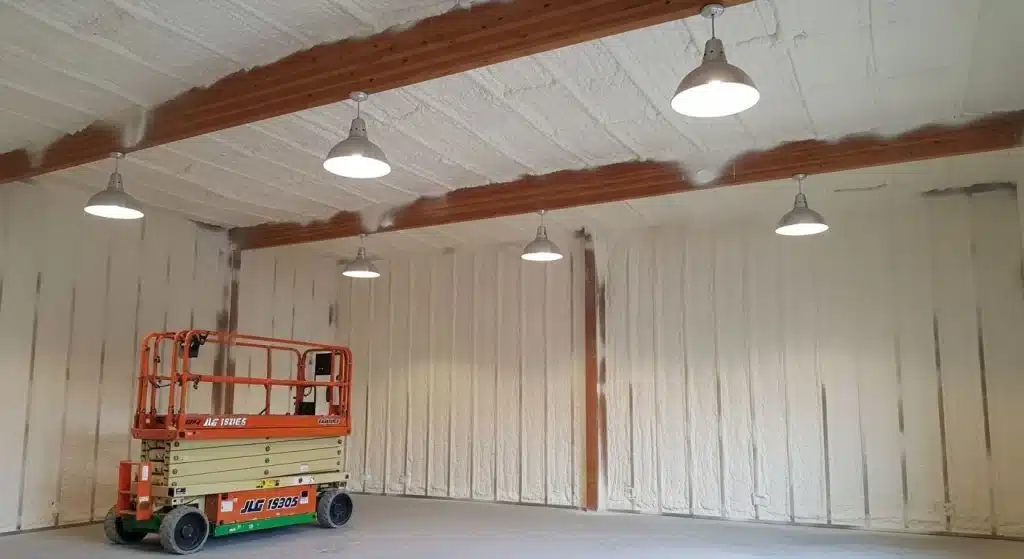

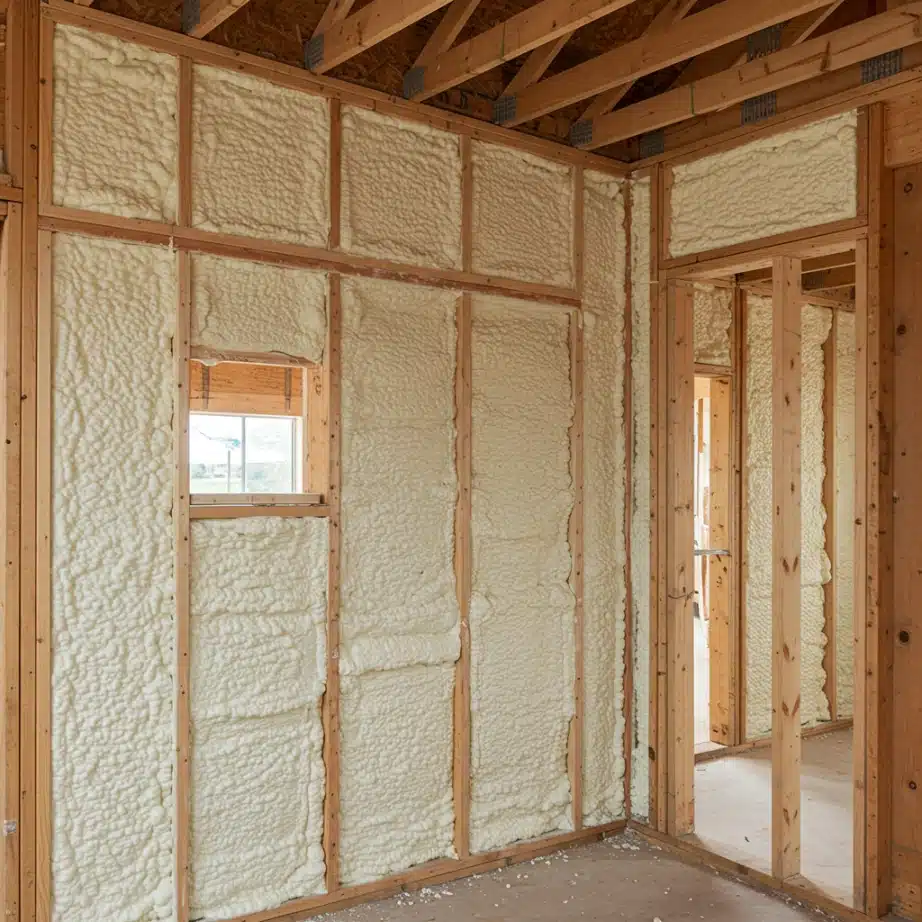
Open-cell spray foam insulation functions primarily as an air barrier, not a vapor barrier. This fundamental distinction shapes how and where it should be used in building construction. While it effectively stops air movement through building assemblies, its semi-permeable nature allows moisture vapor to pass through at a controlled rate, making it different from closed-cell foam or traditional vapor barriers.
This article breaks down the science behind open-cell spray foam’s performance, clarifies common misconceptions, and provides practical guidance for making informed insulation decisions. The information here comes from years of hands-on application experience and a deep understanding of building science principles.
Understanding Open-Cell Spray Foam Properties
Open-cell spray foam insulation expands significantly during application, creating a lightweight, flexible material with millions of tiny interconnected cells. These cells remain open rather than sealed, which gives the foam its characteristic breathability. The R-value typically ranges from 3.5 to 4.0 per inch, providing good thermal performance while allowing moisture vapor diffusion.
The foam’s structure makes it excellent at sealing air leaks, filling gaps, and conforming to irregular surfaces. When applied correctly, it creates a continuous air barrier that stops convective heat loss and prevents drafts. However, its vapor permeability rating (perm rating) generally falls between 10 and 20, classifying it as vapor-permeable rather than a vapor barrier.
Air Barrier vs Vapor Barrier: Key Differences
Building science professionals distinguish between air barriers and vapor barriers because they serve different functions in building assemblies. Air barriers control the movement of air through walls, ceilings, and floors, while vapor barriers control moisture vapor diffusion.
Air movement typically accounts for more energy loss and moisture problems than vapor diffusion. An effective air barrier must be continuous, durable, and able to withstand pressure differences without leaking. Vapor barriers, conversely, need specific perm ratings depending on climate conditions and building assembly design.
The U.S. spray foam insulation market continues to grow as builders recognize these performance advantages. According to industry research, the market is projected to reach $2.7 billion by 2027, driven by rising energy-efficiency requirements and greater awareness of building science principles.
Performance Characteristics in Different Climate Zones
Climate conditions play a significant role in determining whether open-cell spray foam is appropriate for a specific application. In hot-humid climates, its vapor-permeable nature helps buildings dry outward, reducing the risk of moisture accumulation within wall assemblies. For cold climates, it may require additional interior vapor protection depending on the building design.
The material’s moisture management capabilities make it particularly suitable for mixed-humid climates where vapor drive reverses seasonally. Unlike vapor-impermeable materials that can trap moisture, open-cell foam allows assemblies to breathe and dry in both directions.
Bonus Tip: In regions like Nevada, with extreme temperature fluctuations and low humidity, open-cell spray foam’s air-sealing properties often provide more value than its modest vapor resistance. The material helps maintain consistent indoor temperatures while preventing moisture issues through proper ventilation design.
Installation Requirements and Best Practices
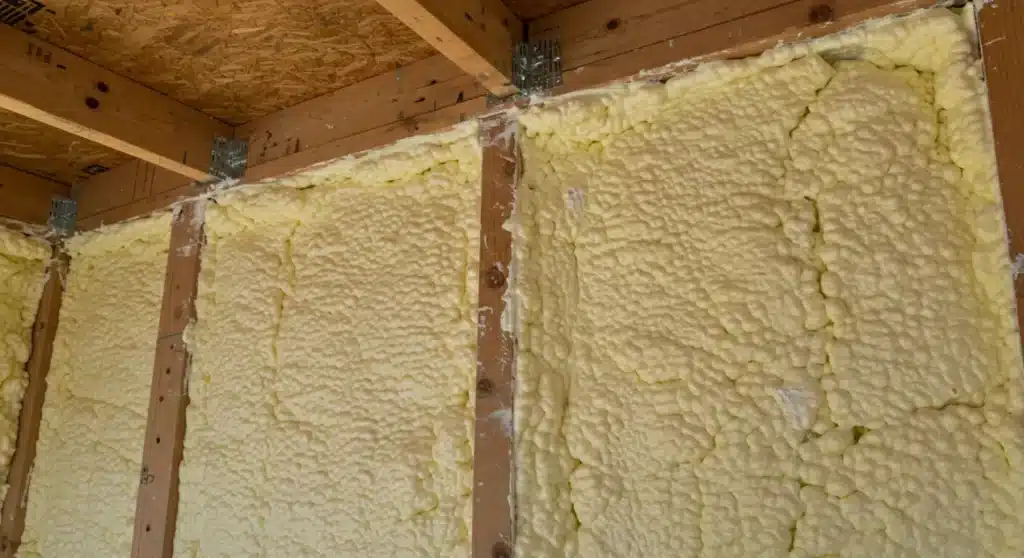
Proper installation affects both air barrier performance and moisture management. Choosing Open-cell spray foam requires professional application with specific equipment and safety protocols. The material expands 100-150 times its liquid volume, which helps fill cavities completely but requires careful thickness control.
For optimal air barrier performance, installers typically apply 3-5 inches in wall cavities and 6-8 inches in roof assemblies. Thickness directly affects both R-value and air-sealing effectiveness. The material adheres tenaciously to most building materials, creating monolithic seals around protrusions and irregular surfaces.
Installation quality directly affects long-term performance. Even small gaps or thin spots can compromise air barrier integrity and reduce overall effectiveness. Professional installers understand how to manage expansion rates, achieve proper thickness, and ensure continuous coverage around complex geometries.
Comparison with Other Insulation Types
Open-cell spray foam’s performance differs significantly from other common insulation materials. Fiberglass and cellulose provide thermal resistance but lack inherent air barrier properties. Closed-cell spray foam offers both air and vapor barrier characteristics, but at a higher cost and with different moisture management implications.
The following table compares key properties of common insulation materials:
| Property | Open-Cell Spray Foam | Closed-Cell Spray Foam | Fiberglass Batts | Cellulose |
|---|---|---|---|---|
| R-Value per inch | 3.5-4.0 | 6.0-7.0 | 2.2-2.7 | 3.2-3.8 |
| Air Barrier | Yes | Yes | No | No |
| Vapor Permeability | Semi-permeable | Vapor barrier | Vapor permeable | Vapor permeable |
| Expansion Ratio | 100-150x | 30-40x | None | Settles 20% |
Bonus Tip: When comparing costs, factor in labor, air sealing materials, and long-term energy savings. Spray foam’s air sealing properties often reduce overall project costs by eliminating separate air barrier systems.
Common Misconceptions About Vapor Management
Many misunderstandings surround vapor management in building assemblies. Some assume all insulation should prevent vapor movement, while others believe vapor barriers are always necessary. The reality depends on climate, assembly design, and material selection.
Open-cell spray foam’s vapor-permeable nature benefits many building designs by allowing assemblies to dry. This moisture management capability helps prevent mold growth, wood rot, and other moisture-related problems. The key is understanding how moisture moves through building materials and designing assemblies that manage this movement effectively.
Bonus Tip: Supreme Spray Foam LV often sees moisture problems in buildings where vapor barriers were installed incorrectly in mixed climates. Understanding vapor drive direction and seasonal variations prevents these issues.
Things to Consider Before Making a Decision
Several factors influence whether open-cell spray foam is appropriate for your project:
Climate zone and local building code requirements affect minimum R-values and vapor barrier needs. Project budget constraints may influence material selection since open-cell typically costs less than closed-cell but more than traditional insulation. Building design complexity affects installation difficulty and cost, especially for areas with many penetrations or irregular geometries.
Indoor air quality considerations matter because spray foam can affect ventilation strategies. Long-term performance requirements differ between residential and commercial applications. Existing structure conditions may limit retrofit options compared to new construction applications.
Final Considerations
Open-cell spray foam serves as an effective air barrier while allowing vapor permeability, making it suitable for many climate applications and building designs. Its performance characteristics differ from both traditional insulation materials and closed-cell spray foam, requiring careful consideration of project-specific factors.
Success with open-cell spray foam depends on proper installation, climate-appropriate application, and understanding its role in the overall building assembly design. The material’s air-sealing capabilities often deliver greater benefits than its thermal resistance alone would suggest, especially in structures with complex geometries or air-leakage challenges.
Evaluate your specific project requirements, climate conditions, and long-term performance goals when considering open-cell spray foam. Professional consultation helps ensure appropriate material selection and application techniques for optimal results.
Get Professional Assessment
For specific questions about your insulation project or to understand whether open-cell spray foam meets your building’s needs, contact Supreme Spray Foam LV at [email protected] or call (702) 904-9895. Professional assessment ensures material selection aligns with your climate, building design, and performance requirements.
Common Questions About Open-Cell Spray Foam
Does open-cell spray foam require a separate vapor barrier?
Most applications don’t require additional vapor barriers because the material’s semi-permeable nature allows adequate vapor diffusion. However, climate-specific calculations may determine supplemental vapor protection in some cold climate applications.
Can open-cell spray foam be used in below-grade applications?
It’s not recommended for direct contact with soil or constant moisture exposure. In basements, it works well for above-grade walls and rim joists, but closed-cell foam or other moisture-resistant materials serve better below grade.
How does open-cell spray foam affect indoor air quality?
Properly cured spray foam doesn’t emit harmful chemicals and actually improves indoor air quality by reducing air infiltration. The key is proper installation and allowing adequate curing time before occupancy.
What happens if open-cell spray foam gets wet?
The material’s open-cell structure allows water to drain and the foam to dry when exposed to air movement. Unlike closed-cell foam that can trap water, open-cell foam’s permeability helps prevent moisture accumulation.
Is open-cell spray foam worth the higher cost compared to traditional insulation?
The value depends on project goals. While material costs exceed those of fiberglass or cellulose, the combined air-sealing and insulation performance often provides better long-term value through energy savings and improved comfort.
Sources
- Spray Foam Market Analysis – Market research data on spray foam insulation industry growth and projections
- Building Science Corporation – Technical guidance on spray foam insulation properties and applications
- U.S. Department of Energy – Government resource on insulation types and performance characteristics