
Meeting modern building codes for wall insulation requires understanding three key factors: R-value requirements for your climate zone, proper installation techniques, and documentation for code compliance. Building codes have become increasingly strict about energy efficiency, with most jurisdictions adopting the 2021 International Energy Conservation Code (IECC) or similar standards. For walls, this typically means R-13 to R-21 in standard 2×4 construction and R-19 to R-23 in 2×6 walls, though specific requirements vary by location. The process starts with checking local amendments to international codes, then selecting appropriate insulation materials, ensuring proper installation, and maintaining thorough documentation for inspections.
This guide provides practical steps to verify your insulation meets or exceeds code requirements while avoiding common pitfalls that lead to failed inspections or poor performance. Supreme Spray Foam LV has extensive experience helping homeowners navigate these requirements, working directly with building inspectors across different jurisdictions to ensure installations pass inspection the first time.
Understanding Current Building Code Standards
The International Energy Conservation Code (IECC) sets baseline requirements for wall insulation across the United States. According to the U.S. Department of Energy, buildings meeting modern energy codes consume 30-40% less energy than those built to older standards. Most states have adopted versions of the IECC, though local amendments may create additional requirements.
Climate zones determine the minimum R-value for wall assemblies. Colder zones require higher insulation levels. For example, Zone 5 (covering parts of the Northeast and Midwest) requires R-13 cavity insulation plus R-5 continuous insulation for 2×4 walls, while Zone 3 (much of the Southeast) requires only R-13 cavity insulation.
Climate Zone Requirements Table
| Climate Zone | Minimum Cavity R-Value | Required Continuous Insulation | 2×4 Wall Total R-Value | 2×6 Wall Total R-Value |
|---|---|---|---|---|
| Zone 1-2 (Hot) | R-13 | None | R-13 | R-19 |
| Zone 3-4 (Mixed) | R-13 | R-2.5 | R-15.5 | R-21.5 |
| Zone 5 (Cold) | R-13 | R-5 | R-18 | R-24 |
| Zone 6-8 (Very Cold) | R-15 | R-5 | R-20 | R-26 |
Common Wall Insulation Options
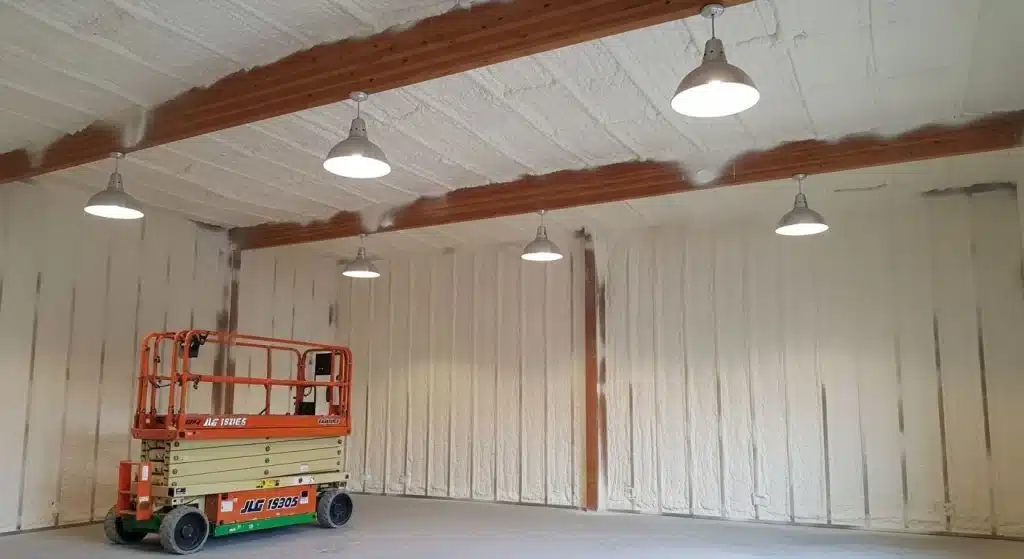
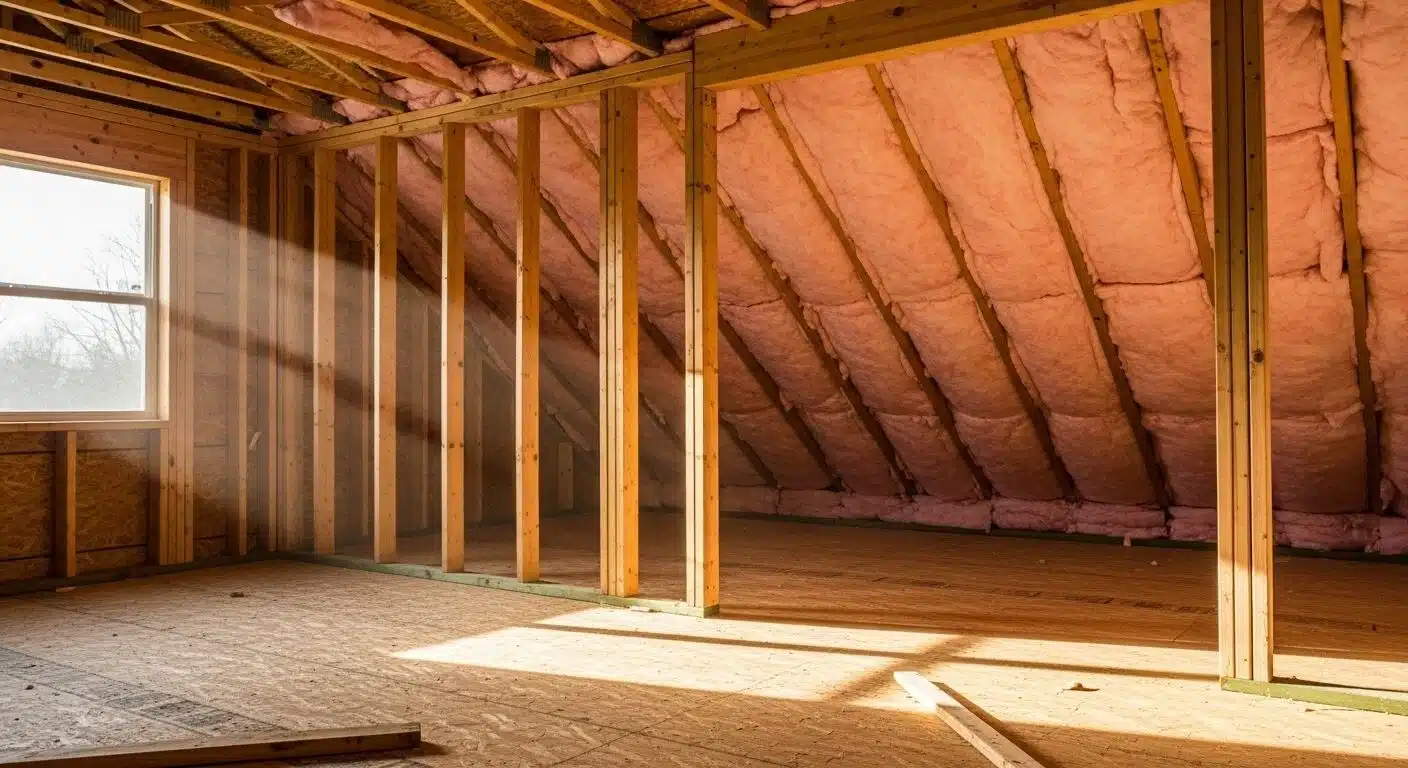
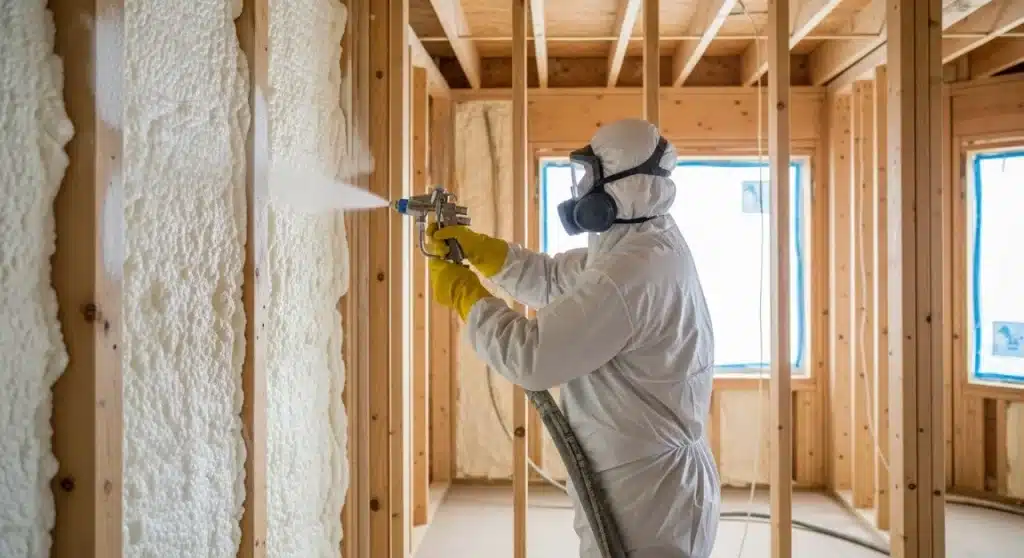
Different insulation materials achieve code compliance in distinct ways. Fiberglass batts remain popular due to lower cost, but must be installed perfectly to avoid performance gaps. Spray foam insulation provides both cavity filling and air sealing, often allowing thinner walls to meet code requirements. Rigid foam boards serve as continuous insulation, eliminating thermal bridging through wood studs.
The choice between materials affects both installation complexity and long-term performance. Spray foam insulation costs more initially but can reduce overall project expenses by eliminating separate air sealing steps. A 2023 industry analysis shows that properly installed spray foam can reduce heating and cooling costs by up to 50% compared to under-insulated homes International Code Council.
Installation Requirements That Matter
Code compliance depends heavily on proper installation. Even the best insulation material fails to meet code if installed incorrectly. Key requirements include:
- Complete cavity fill: No gaps, voids, or compression
- Air barrier integration: Insulation must connect with other air barriers
- Thermal break elimination: Continuous insulation must cover structural elements
- Vapor retarder placement: Must be installed on the warm-in-winter side
Building inspectors specifically look for wall insulation that makes continuous contact with adjacent surfaces. Any gaps greater than 1/4 inch typically result in failed inspections.
Bonus Tip: Infrared Inspections
Before final drywall installation, many contractors use infrared cameras to detect insulation gaps. This technology can identify problem areas invisible to the naked eye, allowing corrections before they become expensive fixes behind finished walls.
Documentation and Inspection Process
Proper documentation streamlines the code compliance process. Inspectors need to see manufacturer specifications, installation certificates, and sometimes independent testing results. For spray foam applications, installers must provide thickness measurements and coverage documentation.
The inspection process typically occurs in two phases. The rough-in inspection verifies insulation installation before drywall covers the work. The final inspection may require access to the attic and crawl space areas to confirm complete coverage.
Regional Considerations for Nevada Residents
Nevada primarily follows climate zone requirements for Zones 2-4, with higher insulation levels required in northern counties. Local amendments in Clark County specifically mandate air sealing requirements that exceed IECC standards. The desert climate also creates unique vapor barrier considerations different from more humid regions.
Things to Consider Before Making a Decision
Building code compliance represents only the minimum standard. Before selecting insulation materials and methods, consider:
- Future energy costs: Codes represent minimums, not optimums
- Local climate extremes: Some areas benefit from exceeding code minimums
- Home age and construction type: Retrofit projects face different constraints
- Budget constraints vs. long-term savings: Higher upfront costs may pay dividends
Bonus Tip: Planning for Future Code Changes
Energy codes become more stringent approximately every three years. Installing insulation that exceeds current minimum requirements by 20-30% can prevent costly upgrades when selling the property or during future renovations Spray Polyurethane Foam Alliance.
Bonus Tip: Pre-Inspection Verification
Many contractors recommend self-inspection before official inspections. Using flashlight checks, feel tests for temperature differences, and even temporary infrared camera rental can identify potential issues before the inspector arrives.
Getting Professional Help
Ensuring wall insulation meets modern building codes requires specialized knowledge of local requirements and proper installation techniques. Supreme Spray Foam LV provides code-compliant insulation solutions with thorough documentation for smooth inspections. Contact Us at [email protected] or (702) 904-9895 to discuss your specific project requirements and climate zone needs.
FAQS
What happens if the insulation fails inspection?
Failed inspections typically require correction and reinspection. Common failures include compressed insulation, gaps in coverage, improper vapor barrier placement, or insufficient thickness relative to documented specifications.
Can homeowners install their own insulation and still pass code?
Yes, but installations must meet the same standards as professional work. Building departments often require additional documentation or inspections for owner-installed insulation. Some jurisdictions restrict certain insulation types, particularly spray foam, to licensed installers only.
What’s the difference between cavity and continuous insulation?
Cavity insulation fills the space between wall studs, while continuous insulation forms an unbroken layer over the entire wall surface. Modern codes increasingly require both types because cavity insulation alone allows heat transfer through wood studs (thermal bridging).
How often do building codes change regarding insulation requirements?
The International Energy Conservation Code updates every three years, with states adopting new versions on different schedules. Most jurisdictions have adopted at least the 2015 version, with many using 2018 or 2021 standards. Each update typically increases required R-values by 10-15%.
Sources
- International Code Council – Official 2021 International Energy Conservation Code requirements and climate zone maps
- U.S. Department of Energy – Building energy code compliance data and energy savings statistics
- Spray Polyurethane Foam Alliance – Industry standards and installation guidelines for spray foam insulation