
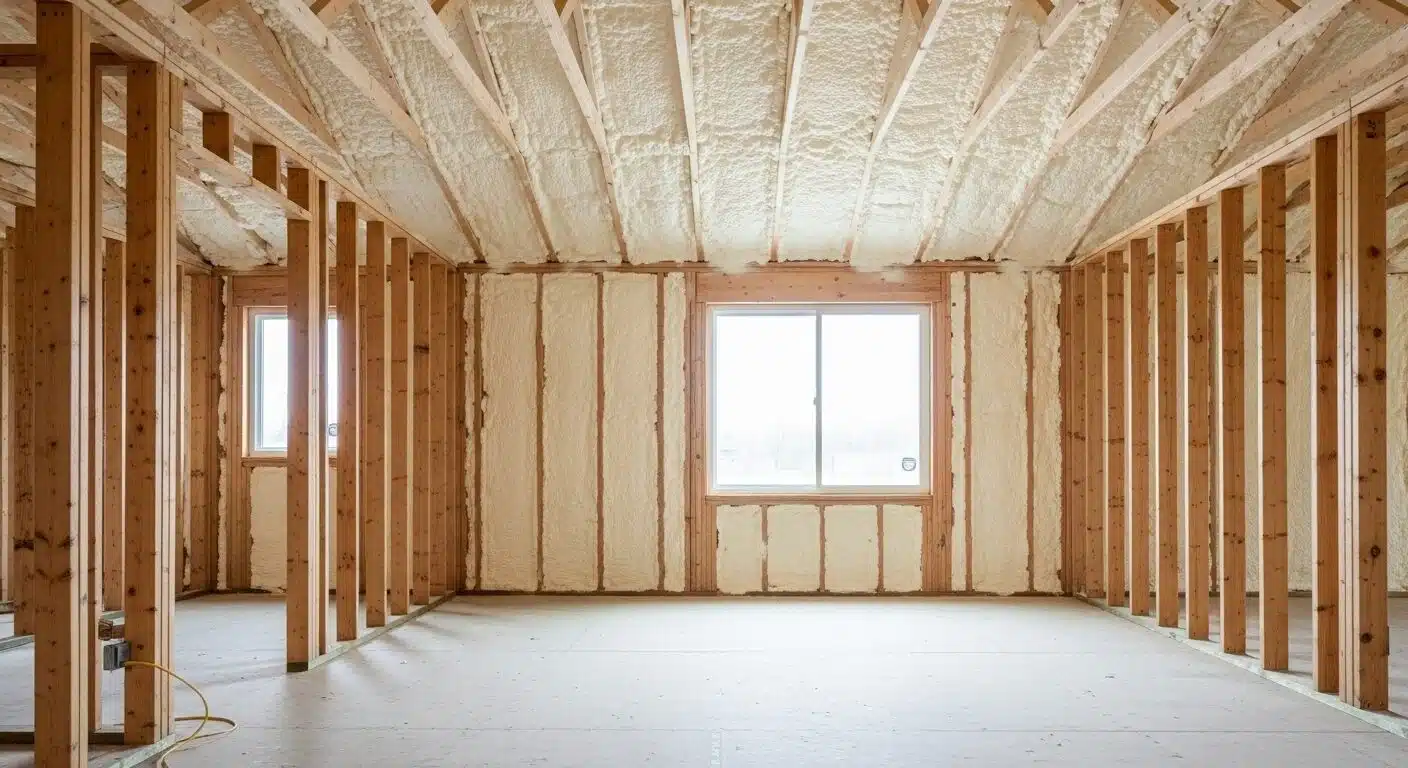
Wall insulation targets a single building envelope surface to stop thermal transfer through exterior and interior walls, while residential insulation covers the full scope of a home’s thermal barrier including attics, crawl spaces, floors, and ductwork. In Silverado Ranch, where Las Vegas sits in IECC Climate Zone 3 with extreme summer heat, choosing between a wall-only insulation project and a whole-home insulation approach affects not just upfront cost but long-term energy savings, code compliance, and indoor comfort. A wall insulation project typically runs between $1.50 and $4.00 per square foot depending on material, while a full residential insulation scope can range from $2,000 to $8,000 or more for an average-sized home. The right choice depends on your property’s age, existing insulation conditions, budget, and whether you are building new, renovating, or retrofitting.
TLDR / Key Takeaways
- Wall insulation focuses on exterior and interior wall cavities, while residential insulation encompasses walls, attics, crawl spaces, basements, floors, and ductwork
- Silverado Ranch falls under IECC Climate Zone 3, requiring specific minimum R-values for walls (R-13 to R-20), ceilings (R-38 to R-49), and floors (R-13 to R-19)
- Wall-only insulation projects typically cost $1.50 to $4.00 per square foot, while full residential insulation scopes range from $2,000 to $8,000+ per home
- Spray foam offers the highest R-value per inch (R-6 to R-7 for closed-cell) but costs 4 to 5 times more than fiberglass batts
- Whole-home residential insulation delivers 15 to 30% better energy savings compared to wall-only projects in hot climates like Southern Nevada
- New construction favors full residential insulation scope for code compliance, while retrofitting an older Silverado Ranch home may start with targeted wall insulation
- Nevada’s 2024 IECC adoption updated insulation requirements effective August 18, 2024, making code compliance a critical factor in project planning
Understanding the Scope Difference
The distinction between wall insulation and residential insulation comes down to scope. Wall insulation is a targeted approach, addressing the cavities between interior and exterior walls. This includes both new construction framing cavities and retrofit applications where insulation is blown into existing wall cavities through small access holes.
Residential insulation, on the other hand, covers the entire building envelope. According to the U.S. Department of Energy, a complete home insulation strategy addresses walls, attics, floors over unheated spaces, crawl spaces, basements, and even ductwork running through unconditioned areas. In a climate like Silverado Ranch where summer temperatures regularly exceed 110 degrees Fahrenheit, every gap in the building envelope becomes a pathway for heat infiltration.
The practical difference matters for contractors bidding jobs and homeowners deciding where to invest. A wall-only project might solve a specific comfort complaint in a room with west-facing exposure. A full residential insulation scope addresses the entire home’s energy performance, often uncovering problems the homeowner did not know existed.
| Scope Element | Wall Insulation Only | Full Residential Insulation |
|---|---|---|
| Exterior walls | Covered | Covered |
| Interior partition walls | Selective | Selective |
| Attic and ceiling | Not included | Covered |
| Crawl spaces | Not included | Covered |
| Basement walls | Not included | Covered |
| Floor insulation | Not included | Covered |
| Duct insulation | Not included | Covered |
| Air sealing | Limited | Comprehensive |
R-Value Requirements for Silverado Ranch (Climate Zone 3)
Las Vegas and Silverado Ranch fall squarely within IECC Climate Zone 3, a hot-dry region where cooling loads dominate energy use. The 2024 Nevada Energy Code, based on the 2024 IECC with state amendments, sets prescriptive R-value minimums that contractors must meet or exceed.
Energy Star recommends even higher R-values for optimal performance, especially in extreme heat zones. Meeting minimum code is a baseline, but exceeding it delivers measurable returns in Silverado Ranch, where air conditioning runs for months at a time.
| Building Surface | IECC 2024 Minimum (CZ3) | Energy Star Recommended |
|---|---|---|
| Wood frame walls | R-20 or R-13 + R-5 ci | R-13 to R-23 cavity + R-5 ci |
| Ceiling/attic | R-38 | R-49 to R-60 |
| Floors over unheated space | R-19 | R-25 to R-30 |
| Crawl space walls | R-5 to R-6 | R-10 to R-15 |
| Basement walls | R-8 to R-10 | R-10 to R-15 |
For wall insulation specifically, this means achieving at least R-13 in standard 2×4 framing or R-20 in 2×6 framing. Many Silverado Ranch homes built in the early 2000s have R-11 or less in wall cavities, making wall insulation upgrades a high-impact improvement.
Material Comparison: What Goes Into the Walls vs the Whole Home
Material selection differs depending on whether the project scope is wall-only or whole-home. Some materials work better in wall cavities, while others are more practical for attics and open floor areas.
Fiberglass Batts remain the most cost-effective option at $0.40 to $0.70 per square foot, delivering R-3.2 per inch. They work well in standard wall cavities during new construction, but perform poorly in retrofit applications where gaps and compression reduce effective R-value for wall insulation by up to 30%.
Blown-In Cellulose offers R-3.2 to R-3.8 per inch and fills irregular cavities effectively, making it a strong choice for retrofit wall insulation. It also provides better air resistance than fiberglass at a moderate cost of $1.00 to $1.80 per square foot.
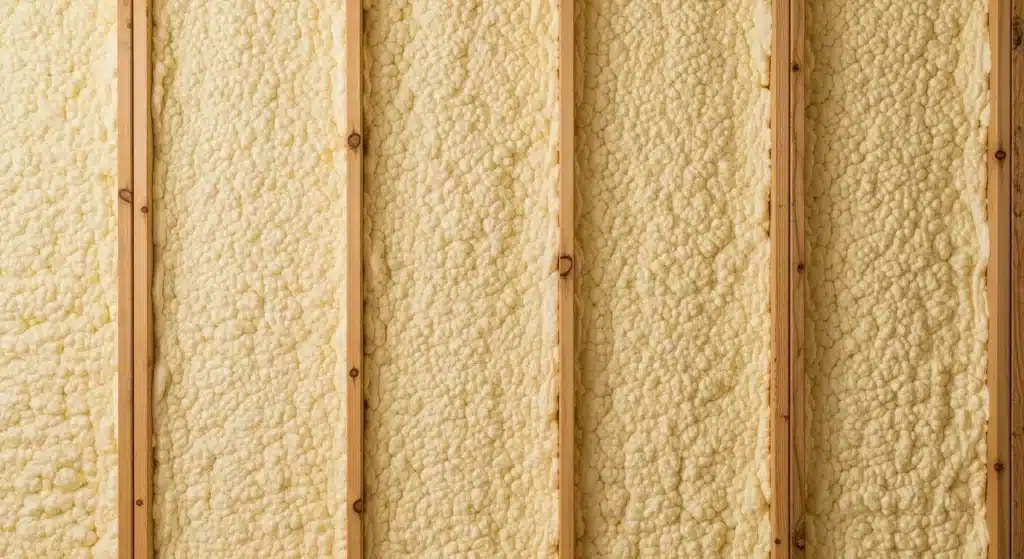
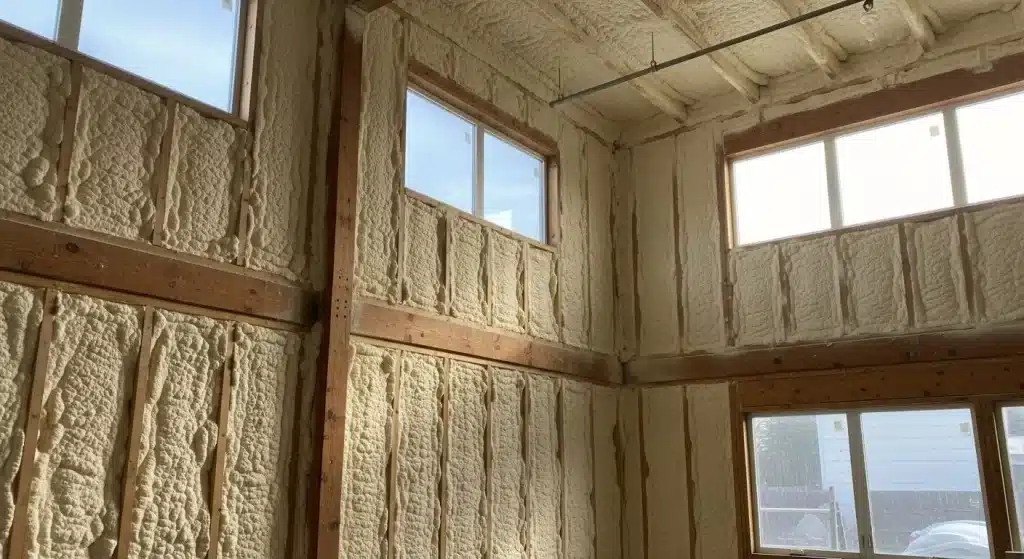
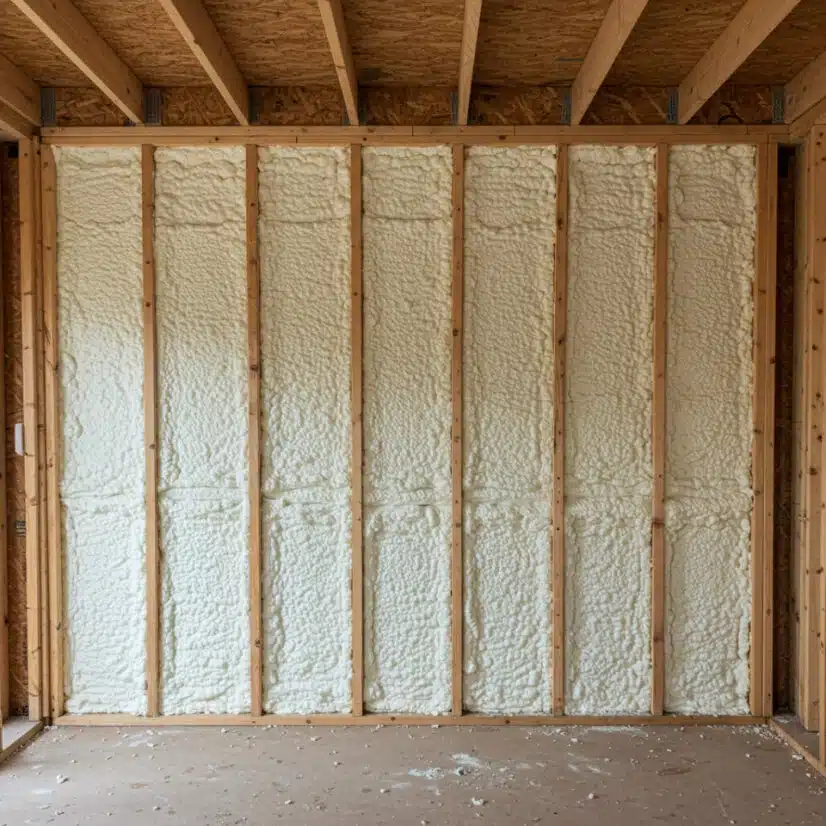
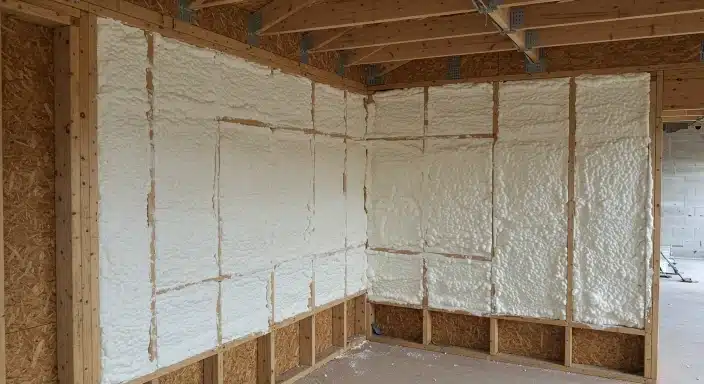
Spray Foam delivers the highest performance with R-3.7 per inch for open-cell and R-6.0 to R-7.0 per inch for closed-cell. It also acts as an air barrier and moisture barrier, which is valuable in Silverado Ranch, where monsoon humidity can drive condensation issues. The tradeoff is cost, with spray foam running $1.50 to $4.00 per square foot installed.
| Material | R-Value per Inch | Best Application | Cost per Sq Ft (Installed) |
|---|---|---|---|
| Fiberglass batts | R-3.2 | New construction walls | $0.40 – $0.70 |
| Blown cellulose | R-3.2 to R-3.8 | Retrofit walls, attics | $1.00 – $1.80 |
| Open-cell spray foam | R-3.7 | Walls, attics, hard-to-reach areas | $1.00 – $1.50 |
| Closed-cell spray foam | R-6.0 to R-7.0 | Walls, crawl spaces, rim joists | $1.50 – $4.00 |
| Rigid foam board | R-4.0 to R-6.5 | Continuous exterior insulation | $1.00 – $2.50 |
Line Chart Suggestion: A multi-line chart plotting cumulative energy savings over 10 years for three scenarios, wall-only insulation, full residential insulation with fiberglass, and full residential insulation with spray foam. The x-axis shows years 1 through 10, and the y-axis shows total savings in dollars. The full spray foam scope line should show the steepest climb, while the wall-only shows a moderate but steady gain.
Cost Breakdown: Wall Insulation vs Full Residential Scope
Pricing in Silverado Ranch reflects both material costs and the labor intensity of each application. Wall insulation retrofits require drilling access holes, blowing material, and patching, which adds labor cost. Full residential insulation projects benefit from economies of scale but involve more total square footage.
Wall-Only Insulation Project (Retrofit, 2,000 sq ft home):
- Blown cellulose into existing wall cavities: $1,800 to $3,200
- Drill and patch access holes: $300 to $600
- Total estimated range: $2,100 to $3,800
Full Residential Insulation Project (Same Home):
- Wall insulation (blown cellulose): $1,800 to $3,200
- Attic insulation (blown fiberglass to R-49): $1,200 to $2,500
- Crawl space or floor insulation: $800 to $1,800
- Air sealing and ductwork: $500 to $1,200
- Total estimated range: $4,300 to $8,700
The full scope project costs roughly 2 to 2.5 times more upfront but delivers significantly greater energy savings. In Silverado Ranch’s cooling-dominated climate, a whole-home approach can reduce cooling energy use by 15 to 30%, according to Department of Energy data on insulation upgrades.
Real-World Contractor Scenarios in Silverado Ranch
These scenarios represent common project types we encounter in the Silverado Ranch area and illustrate how scope decisions play out in practice.
| Scenario | Property Type | Recommended Option | Estimated Cost |
|---|---|---|---|
| New build, 2,400 sq ft single-family | New construction | Full residential insulation scope with spray foam walls and blown attic | $8,500 – $14,000 |
| 2003-built home, hot rooms on the west side | Existing retrofit | Wall insulation (west-facing walls) + attic top-up | $3,200 – $5,500 |
| Remodel with drywall already removed | Partial gut renovation | Spray foam walls + blown attic insulation | $5,000 – $9,000 |
| 1998 tract home, high energy bills | Existing retrofit | Full residential insulation scope, air sealing included | $4,500 – $8,700 |
| Two-story home, upper floor overheating | Existing retrofit | Attic insulation + second-floor wall insulation | $3,800 – $6,500 |
Factors That Influence the Decision
Several variables determine whether wall insulation or full residential insulation makes the most sense for a specific Silverado Ranch property:
- Property age: Homes built before 2005 in Silverado Ranch often have R-11 wall insulation and inadequate attic coverage. Older homes benefit most from a full residential scope.
- Existing insulation condition: If attic insulation is already at R-38 or above but walls are under-insulated, a wall-only approach makes financial sense.
- Budget constraints: Wall insulation delivers targeted improvement at a lower cost. Full scope delivers maximum performance but requires a larger investment.
- Comfort complaints: Hot spots on west-facing walls, cold drafts near windows, or second-floor overheating each point to different insulation priorities.
- Energy code compliance: New construction and major renovations must meet 2024 IECC requirements, which may mandate a full scope approach.
- HVAC system sizing: Homes with oversized or undersized HVAC systems benefit from full insulation because reduced loads allow equipment to operate more efficiently.
- Planned future renovations: If drywall is coming down during a kitchen or bathroom remodel, adding spray foam to exposed wall cavities is far more cost-effective than a standalone retrofit.
When Wall Insulation Makes Sense vs When It Does Not
Wall insulation is the right choice when:
- The home already has adequate attic insulation, but the walls are underperforming
- Budget limits the project to the highest-impact single improvement
- A specific comfort problem (hot west-facing rooms, cold north walls) is the primary complaint
- Drywall is already open during another renovation, reducing installation costs
- The home is relatively new, with good attic and floor insulation from the original build
Wall insulation is NOT the right choice when:
- The attic has little to no insulation, since the attic is typically the largest source of energy loss in Southern Nevada homes
- The home has significant air leakage around windows, doors, and penetrations that wall insulation alone cannot address
- The homeowner is planning to sell within 1 to 2 years and wants maximum ROI from a whole-home efficiency upgrade
- The HVAC system is being replaced simultaneously, which creates an opportunity to right-size equipment with a full insulation scope
- The home has uninsulated crawl spaces or basements that are contributing to comfort and moisture problems
Get Your Silverado Ranch Insulation Project Scoped Right
Deciding between wall insulation and a full residential insulation scope depends on your property’s specific conditions, budget, and performance goals. Our team at Supreme Spray Foam LV evaluates every Silverado Ranch home individually to recommend the approach that delivers the best return on investment. We work with both contractors bidding new construction projects and homeowners looking to improve comfort and reduce cooling costs in existing homes. Whether you need targeted wall insulation or a comprehensive whole-home solution, we ensure your project meets or exceeds Nevada’s 2024 energy code requirements.
Contact us at [email protected] or call (702) 904-9895 to discuss your project scope. We provide detailed assessments that help you make the right investment for your property.
FAQs
What R-value do walls need in Silverado Ranch?
Under the 2024 IECC for Climate Zone 3, wood frame walls need a minimum of R-20 in 2×6 cavities or R-13 cavity plus R-5 continuous exterior insulation. Energy Star recommends going higher, especially in a cooling-dominated climate like Southern Nevada, to reduce heat gain through walls during summer months.
Can wall insulation be added without removing drywall?
Yes, blown-in cellulose or fiberglass can be installed through small access holes drilled in the exterior or interior wall. The holes are then plugged and patched. This retrofit approach works well for existing Silverado Ranch homes where drywall removal is not practical. Spray foam insulation, however, typically requires open wall cavities.
Is full residential insulation worth the extra cost over wall-only?
For most Silverado Ranch homes, yes. The attic is the single largest source of energy loss in Southern Nevada, and uninsulated crawl spaces or floors contribute to both energy waste and comfort problems. A full scope approach typically delivers 15 to 30 percent greater energy savings compared to wall insulation alone.
How does Nevada’s 2024 energy code affect my insulation project?
Nevada adopted the 2024 IECC effective August 18, 2024, with state-specific amendments. New construction and substantial renovations must meet updated R-value minimums for walls, ceilings, floors, and crawl spaces. Even retrofit projects should reference these standards to ensure long-term performance and avoid issues during resale inspections.
How long does a full residential insulation project take?
A typical full residential insulation project for a 2,000 to 2,500 square foot home in Silverado Ranch takes 1 to 3 days, depending on materials, access conditions, and whether air sealing is included. Wall-only retrofit projects can often be completed in a single day. New construction projects are typically scheduled in coordination with framing and drywall phases.
Sources
- U.S. Department of Energy – Types of Insulation – Comprehensive overview of insulation materials, installation methods, R-values, and where each type is most effective in residential applications.
- Energy Star – Recommended Home Insulation R-Values – Climate-zone-specific R-value recommendations for optimizing home energy efficiency and comfort.
- Las Vegas Energy Code 2024 – Chapter 3 General Requirements – Official Nevada energy conservation code reference for Climate Zone 3 classification and insulation requirements.
- SNARSCA – IECC Adoption and Its Effects on Las Vegas Contractors – Analysis of how the 2024 IECC adoption impacts insulation and HVAC requirements for Las Vegas area contractors.
- Nevada Governor’s Office of Energy – NAC 701 Building Energy Codes – Official state resource detailing the adoption and effective dates of the 2024 IECC energy code in Nevada.