
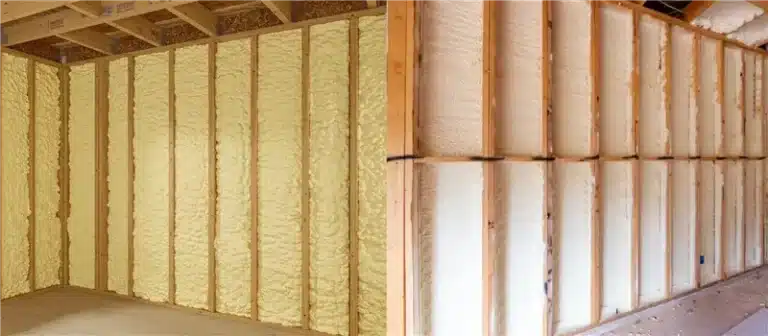
Closed cell and open cell spray foam differ in structure, performance, and application. The right choice depends on the specific goals of the project: moisture control, structural reinforcement, insulation value, or budget.
Closed-cell spray foam is denser, provides a higher R-value per inch, and resists moisture. It is ideal for exterior and below-grade applications. Open-cell spray foam is lighter, expands more, and is better suited for interior walls and soundproofing. In Las Vegas, where extreme temperatures and dry conditions dominate, closed-cell foam often delivers superior performance in attics, roofs, and external walls.
The following guide outlines the key differences, performance data, and decision factors based on real-world installation experience in Southern Nevada. The technical insights come from working directly with insulation systems in residential and commercial buildings.
Regional Climate Impact on Insulation Choice
Southern Nevada’s climate influences insulation performance. High summer temperatures, minimal humidity, and cool desert nights make thermal resistance and vapor control critical. Closed-cell insulation service offers better protection against heat gain, helps reduce HVAC load, and resists airborne dust infiltration in arid environments.
Bonus Tip: In high solar load zones like Las Vegas, applying closed cell foam to roof decks minimizes radiant heat transfer into attic spaces, lowering ceiling temperatures.
Things to Consider Before Making a Decision
- Budget: Open cell is more affordable but may need thicker application for the same R-value.
- Moisture Exposure: Closed cell is better for high-risk moisture areas such as basements, crawlspaces, and exterior walls.
- Sound Control: Open cell provides better acoustic absorption.
- Space Constraints: Closed cell provides more insulation in less space.
- Building Code Requirements: Some local codes require specific R-values and vapor control.
- Existing Structure Condition: Closed cell adds rigidity, which may be beneficial for aging structures.
Bonus Tip: During retrofits, always assess the condition of framing and sheathing. Closed cell can lock in existing moisture if applied over damp material.
Most Relevant Services Offered by Supreme Spray Foam LV
- Closed Cell Spray Foam Insulation: High-density solution for roofs, walls, and structural applications requiring moisture and vapor control.
- Open Cell Spray Foam Insulation: Lighter option ideal for sound absorption and wide coverage in interior cavities.
- Attic Insulation: Application of either foam type to improve thermal performance and energy efficiency in overhead spaces.
- Wall Insulation: Interior or exterior foam insulation for climate control and energy retention in wall cavities.
Get Expert Insulation Guidance
Choosing the right foam insulation means weighing structural needs, environmental factors, and budget. Supreme Spray Foam LV has direct experience working with both closed cell and open cell products in Southern Nevada. For tailored advice and expert assessment, contact:
Phone: (702) 904-9895 Email: info@supremesprayfoamlv.com
What thickness is recommended for each type?
Closed cell: 2 inches minimum for effective vapor barrier. Open cell: 3.5 inches or more for interior walls.
Can spray foam be installed in older homes?
Yes, both types are used in retrofits, though closed cell may require additional prep work.
Is spray foam safe indoors?
When installed correctly and cured, both foam types are safe for interior use.
How long does spray foam last?
Closed cell: 30+ years. Open cell: 20-25 years, depending on exposure.
Does one type work better for soundproofing?
Open cell is more effective at reducing airborne noise between interior rooms.
How does spray foam react to high temperatures over time?
Closed cell holds its structure and R-value more reliably in prolonged heat. Open cell may degrade faster in unvented hot spaces.