
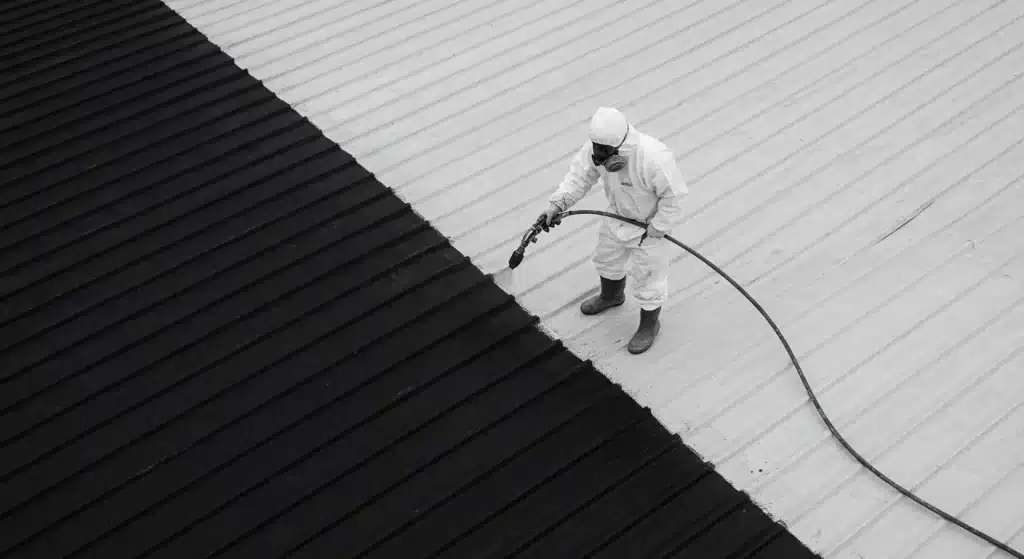
If you live in a home with a flat roof here in Las Vegas, you’ve probably noticed something: no matter how hard your AC works, it always feels like the heat just sits above your head. That’s not your imagination, it’s your roof. Or more specifically, it’s how your flat roof handles insulation (or doesn’t).
Flat roofs can be practical, even stylish. But if they’re not insulated properly, they can cause a lot of problems, some of which don’t show up until your next utility bill or after a rare desert rainstorm.
Let’s break down why this type of roof needs special attention, and how the right insulation, especially spray foam roof insulation, can make a real difference in comfort, energy savings, and long-term protection.
What Makes Flat Roofs So Different?
Unlike pitched roofs that naturally ventilate and drain, flat roofs don’t give heat or water anywhere to go. In Las Vegas, where the sun is relentless most of the year, your roof absorbs all that heat and holds onto it. Without proper insulation, that warmth slowly pushes its way down into your living space.
And since there’s usually no attic space acting as a buffer, the heat goes straight into your ceilings and walls.
Water’s a concern too. Even in a dry place like Vegas, when rain does hit, a flat roof is more likely to pool water, especially if there are low spots. Over time, that can lead to rot, mold, or slow leaks that are hard to trace.
The Cost of Not Insulating Properly
Skipping insulation, or using the wrong kind, can set you up for a long list of problems:
- Your energy bills creep higher every month
- Rooms feel warmer or colder depending on the time of day
- Moisture can sneak in, even if it’s not obvious right away
- Your roof materials age faster from thermal stress
- Your home’s resale value takes a hit because buyers know better
It’s one of those things you don’t notice until you do, and then you wish you’d dealt with it sooner.
Why Spray Foam Is Such a Good Fit
There are lots of insulation types out there, but when it comes to flat roofs, spray foam insulation checks the right boxes. It doesn’t just sit in place, it actually bonds directly to the surface, sealing up cracks and blocking air movement.
Here’s what makes it stand out:
- It creates a solid, continuous layer over your roof, no seams, no gaps
- It has a high R-value, so it does more with less material
- It helps block both heat and moisture at the same time
- Once installed, it stays put, no sagging or shifting over the years
For flat roofs, which need to shed water and block heat without help from gravity, spray foam insulation does the heavy lifting.
Want to Cut Cooling Costs? Start with the Roof
In our climate, you can’t afford to let your roof work against your HVAC system. Spray foam helps keep the cool air in and the heat out, which means your AC doesn’t have to fight so hard.
Many homeowners see noticeable savings on their energy bills, some as high as 25%, just with proper roofing insulation services from an experienced spray foam contractor. And it’s not just about the money. You’ll also feel the difference in how evenly your home cools down, especially in rooms that used to overheat in the afternoon.
Preventing Leaks and Water Damage
While Las Vegas isn’t exactly known for constant rainfall, when storms do roll in, a flat roof can easily collect water. That’s when trouble starts, especially if your roof has small cracks or weak seals.
Spray foam insulation doesn’t absorb water. It forms a tough, closed-cell surface that keeps moisture out. That means fewer surprises during monsoon season and less risk of mold creeping into your ceiling or walls.
The Long-Term Payoff
Installing spray foam on a flat roof is an investment, no doubt about it. But when you look at what you get in return, it’s one of the smartest upgrades you can make.
- You’ll run your AC less and still feel more comfortable
- Your roof materials won’t break down as quickly
- You’ll avoid expensive repairs caused by moisture or heat
- Your home will be easier to sell when the time comes
And once it’s in, it’s in. Spray foam insulation lasts for decades with very little upkeep.
Thinking About Insulating Your Roof?
If your home has a flat roof and you’re tired of unpredictable temperatures or rising energy bills, it might be time to take a closer look at your insulation.
At Supreme Spray Foam LV, we’ve worked with countless Las Vegas homeowners and business owners to upgrade their flat roofs. We understand the climate, the building codes, and the challenges that come with keeping your home efficient in the desert.
If you’re not sure where to start, we’re happy to take a look and give you honest feedback, no pressure.
Call us today at (702) 904-9895
What’s the biggest problem with flat roofs in Las Vegas?
They trap heat and collect water. Without proper insulation, that means high cooling costs and potential leaks over time.
Is spray foam really better than fiberglass?
Yes. Spray foam sticks directly to your roof and seals it completely. Fiberglass can sag or leave gaps, especially on flat surfaces.
Will it stop leaks too?
Spray foam forms a moisture barrier, which helps prevent leaks before they start. It won’t fix damage, but it stops new issues from forming.
How long does it last?
A quality spray foam job can last 20 years or more with little to no maintenance.
Will it help my house stay cooler in summer?
Definitely. You’ll notice a difference almost immediately, rooms stay cooler, and your AC runs less.