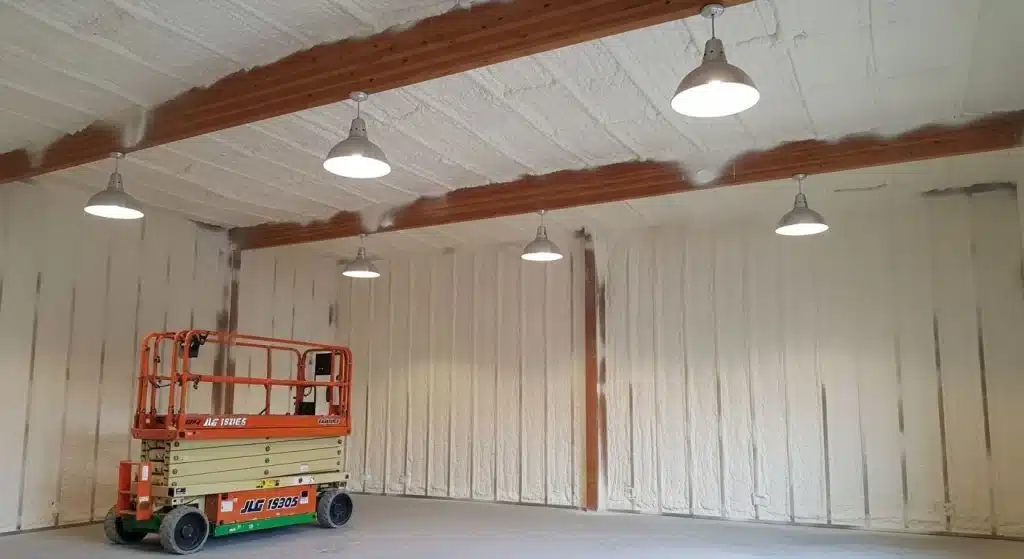

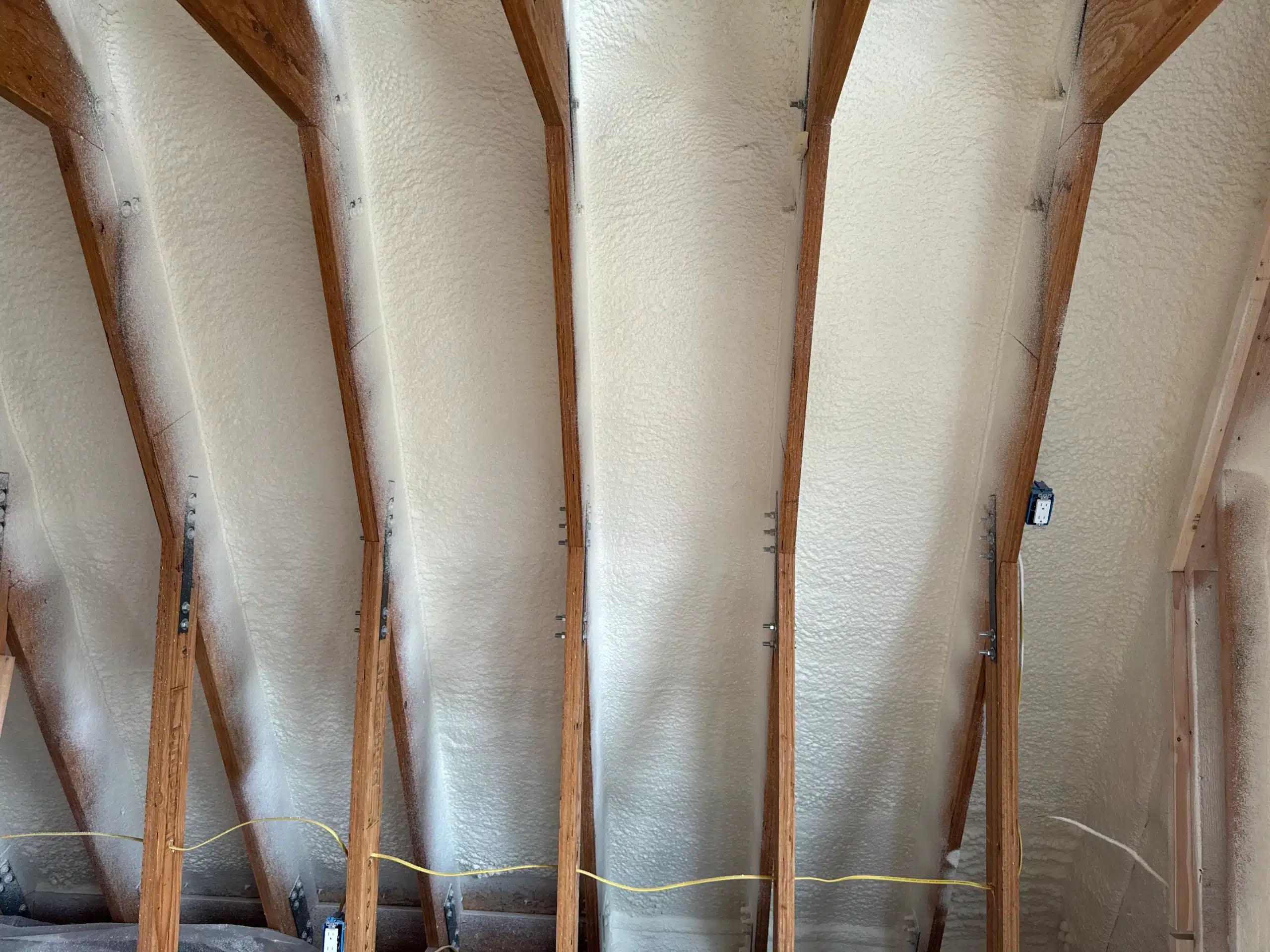
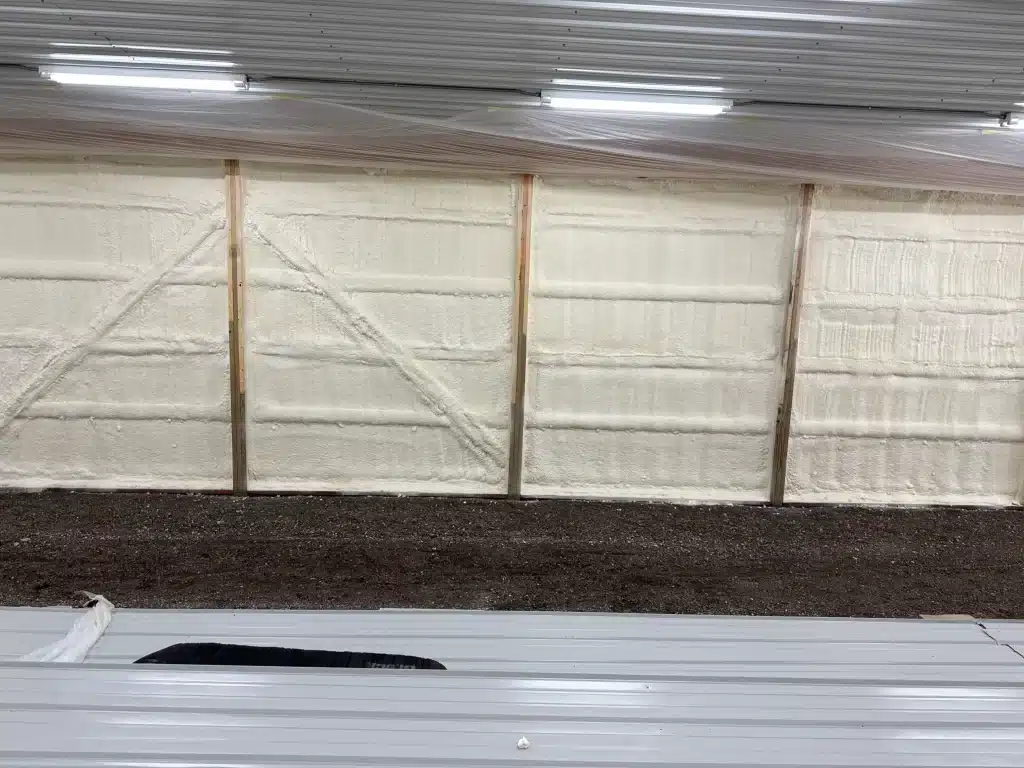
Closed-cell spray foam prevents moisture damage in walls by creating an impermeable barrier that stops water movement while providing superior insulation value. The foam’s closed-cell structure traps gas bubbles within plastic cells that cannot absorb water, unlike traditional insulation materials such as fiberglass or cellulose. This unique composition makes it both waterproof and vapor-resistant, effectively eliminating the primary pathways through which moisture typically infiltrates wall assemblies. The material expands upon application to fill every gap, crack, and void, creating a continuous seal that prevents air from entering and water from passing through, addressing the root causes of moisture-related problems like mold growth, wood rot, and structural degradation.
This comprehensive guide explains the technical mechanisms behind closed-cell spray foam’s moisture protection, compares its performance with alternative insulation methods, and provides practical considerations for homeowners and builders evaluating this technology. With over a decade of experience installing closed spray foam systems across diverse climate conditions, the insights shared here come from extensive hands-on application and observation of long-term performance in real-world conditions.
The Science Behind Moisture Protection
Closed-cell spray foam consists of two liquid components that react when mixed, expanding rapidly to create a rigid plastic matrix filled with trapped gas bubbles. Each cell is completely sealed, preventing water molecules from passing through the material. The foam achieves a water absorption rate of less than 1%, making it essentially waterproof under normal conditions. This contrasts sharply with open-cell spray foam, which has interconnected cells that can absorb water like a sponge, and traditional insulation materials that readily absorb moisture when exposed.
The material’s vapor permeability rating typically falls below 1.0 perm, classifying it as a vapor retarder rather than a vapor barrier. This characteristic is crucial because while it stops liquid water penetration, it allows some moisture vapor to escape, preventing trapped moisture from accumulating within wall assemblies. The foam’s thermal performance remains stable even when exposed to moisture, unlike fiberglass insulation, which loses significant R-value when wet.
The expansion properties of closed-cell spray foam contribute significantly to its moisture protection capabilities. As it expands to 30-60 times its initial volume, it fills gaps that would otherwise allow air and moisture to bypass traditional insulation. This complete sealing eliminates convective loops that can transport moisture through wall cavities, addressing a common failure point in building envelope design.
Installation Process and Critical Details
Proper installation determines whether closed-cell spray foam delivers its promised moisture protection. The process requires specialized equipment and trained technicians who understand material behavior under different environmental conditions. Installation begins with surface preparation, ensuring all areas are clean, dry, and free of contaminants that could affect adhesion.
Temperature plays a critical role in foam expansion and cell structure formation. Ideal application temperatures range between 60-80 degrees Fahrenheit. Colder temperatures can result in reduced expansion and incomplete cavity filling, while excessive heat can cause over-expansion and potential structural damage. Supreme Spray Foam LV technicians use temperature monitoring equipment to adjust application parameters based on ambient conditions.
The thickness of the application directly correlates with moisture protection performance. Building codes typically require minimum thicknesses of 1-2 inches for vapor-retarder classification. At 2 inches thick, closed-cell spray foam provides both thermal insulation and moisture protection in most climate zones. The application must be uniform with no gaps or thin spots that could compromise the moisture barrier.
Curing time varies based on temperature and humidity, but generally ranges from 24-72 hours before the foam can be covered with finishing materials. During this period, the foam continues to off-gas and achieves its final physical properties. Rushing this process can compromise moisture protection capabilities.
Performance Comparison With Other Insulation Types
The moisture protection capabilities of different insulation materials vary significantly, affecting long-term building performance. Understanding these differences helps explain why closed-cell spray foam often outperforms alternatives in moisture-prone applications.
| Insulation Type | Water Absorption | Vapor Permeability (perm) | R-Value When Wet | Moisture Protection Method |
|---|---|---|---|---|
| Closed-Cell Spray Foam | <1% | <1.0 | Maintains 90%+ | Impermeable barrier |
| Open-Cell Spray Foam | 5-10% | 10-20 | Maintains 70%+ | Air barrier only |
| Fiberglass Batts | 10-20% | 50+ | Drops to 20% | None |
| Cellulose | 20-30% | 30-50 | Drops to 15% | Limited absorption |
| Rigid Foam Board | 1-2% | 1-5 | Maintains 80%+ | Semi-permeable barrier |
Market data shows that buildings using closed-cell spray foam experience 75% fewer moisture-related insurance claims compared to structures with traditional insulation. According to Building Science Corporation, closed-cell spray foam systems have demonstrated superior performance in preventing moisture-related failures across various climate zones, particularly in regions with high humidity or significant temperature differentials between interior and exterior environments.
The long-term cost benefits extend beyond reduced repair expenses. Structures properly insulated with closed-cell spray foam typically maintain higher energy efficiency throughout their lifespan because the insulation never degrades due to moisture exposure. A report from the U.S. Department of Energy indicates that moisture-compromised insulation can increase heating and cooling costs by 15-30%, while closed-cell spray foam maintains consistent performance over decades.
Things to Consider Before Making a Decision
Building location and climate significantly influence whether closed-cell spray foam represents the optimal moisture protection solution. In hot, humid climates like those in the southern United States, the material’s vapor-resistance properties help prevent outdoor moisture from infiltrating air-conditioned spaces. Conversely, in cold northern climates, it prevents indoor moisture from reaching cold surfaces where condensation could occur.
Cost considerations extend beyond initial installation expenses. Closed-cell spray foam typically costs 2-3 times more than traditional insulation materials but provides both insulation and moisture barrier functions in a single application. When evaluating total system costs, factor in the savings from eliminating separate vapor barriers, reduced material waste, and lower long-term maintenance requirements.
Building compatibility affects installation success. The foam requires proper substrate preparation and may not be suitable for all wall assemblies. Existing structures with certain types of sheathing or vapor barriers might require modifications to accommodate closed-cell spray foam without creating moisture traps. Older buildings with existing moisture problems need remediation before foam application.
Local building codes and permit requirements vary by jurisdiction. Some regions have specific requirements regarding foam types, thicknesses, or application methods in certain construction scenarios. Checking with local building authorities before starting a project prevents compliance issues that could require expensive corrections later.
Bonus Tip: In coastal regions with salt exposure, closed-cell spray foam provides additional protection against corrosion of metal fasteners and structural components within wall assemblies, extending building lifespan beyond moisture protection alone.
Bonus Tip: For retrofit projects, consider combining closed-cell spray foam in moisture-critical areas (like below-grade walls) with less expensive insulation in dry areas to optimize cost-performance ratios.
Making the Right Choice for Your Situation
Closed-cell spray foam offers superior moisture protection through its unique combination of water impermeability, vapor resistance, and air sealing properties. The material’s ability to create continuous barriers against moisture infiltration makes it particularly valuable in moisture-prone applications and climates. However, successful implementation requires proper installation techniques, appropriate material selection for specific conditions, and consideration of building assembly compatibility.
Evaluate your specific moisture risks, climate conditions, and budget constraints when considering closed-cell spray foam. For new construction in moisture-sensitive areas, the material’s dual function as insulation and moisture barrier often justifies the higher initial cost through reduced material waste, simplified installation, and long-term performance stability. Existing structures with moisture history benefit from a comprehensive evaluation before installation to ensure the foam addresses underlying causes rather than simply masking symptoms.
Professional Assessment and Installation
Proper evaluation of moisture protection needs requires specialized knowledge of building science and local climate conditions. Supreme Spray Foam LV provides comprehensive assessments to determine whether closed-cell spray foam represents the optimal solution for your specific situation. Their experienced technicians consider factors such as building age, construction type, climate exposure, and existing moisture history before recommending appropriate applications.
For detailed consultations or to schedule an evaluation, contact Supreme Spray Foam LV at [email protected] or call (702) 904-9895. Our team can provide specific recommendations based on your building’s characteristics and local climate requirements, ensuring moisture protection measures deliver lasting performance and value.
Frequently Asked Questions
Does closed-cell spray foam prevent all types of moisture problems?
Closed-cell spray foam effectively stops liquid water penetration and significantly reduces vapor diffusion, but it cannot prevent moisture from plumbing leaks or other water sources inside the building envelope. Proper maintenance and early leak detection remain essential for complete moisture management.
Can closed-cell spray foam be applied over existing insulation?
Application over existing insulation is generally not recommended because it can create moisture traps between materials and prevent proper inspection of the substrate. Complete removal of old insulation ensures optimal performance and allows identification of any pre-existing moisture issues.
How thick should closed-cell spray foam be for moisture protection?
For vapor retarder classification, most building codes require a minimum of 2 inches of closed-cell spray foam. Thinner applications may provide some moisture resistance but typically meet code requirements for vapor control. Local climate conditions may affect optimal thickness recommendations.
Is closed-cell spray foam suitable for all climates?
Closed-cell spray foam performs well across diverse climate zones, but installation techniques may need adjustment based on local conditions. In extremely cold climates, additional interior vapor barriers might be recommended, while in hot, humid regions, exterior drainage planes become more critical.
What maintenance does closed-cell spray foam require?
Once properly installed and protected from UV exposure, closed-cell spray foam requires virtually no maintenance. Regular building maintenance practices, such as roof inspections and plumbing checks, remain important for overall moisture management, but the foam itself requires no maintenance for decades.
Sources
- Building Science Corporation – Research organization providing scientific information on building performance, moisture management, and insulation materials
- U.S. Department of Energy – Federal agency providing energy efficiency information and building science research
- Spray Polyurethane Foam Alliance – Industry association providing technical information and standards for spray foam applications