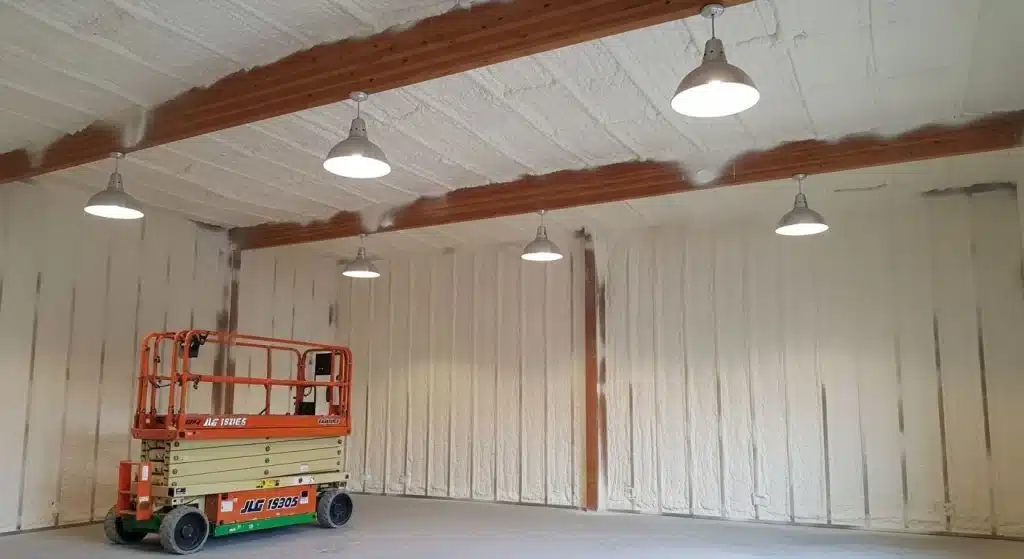


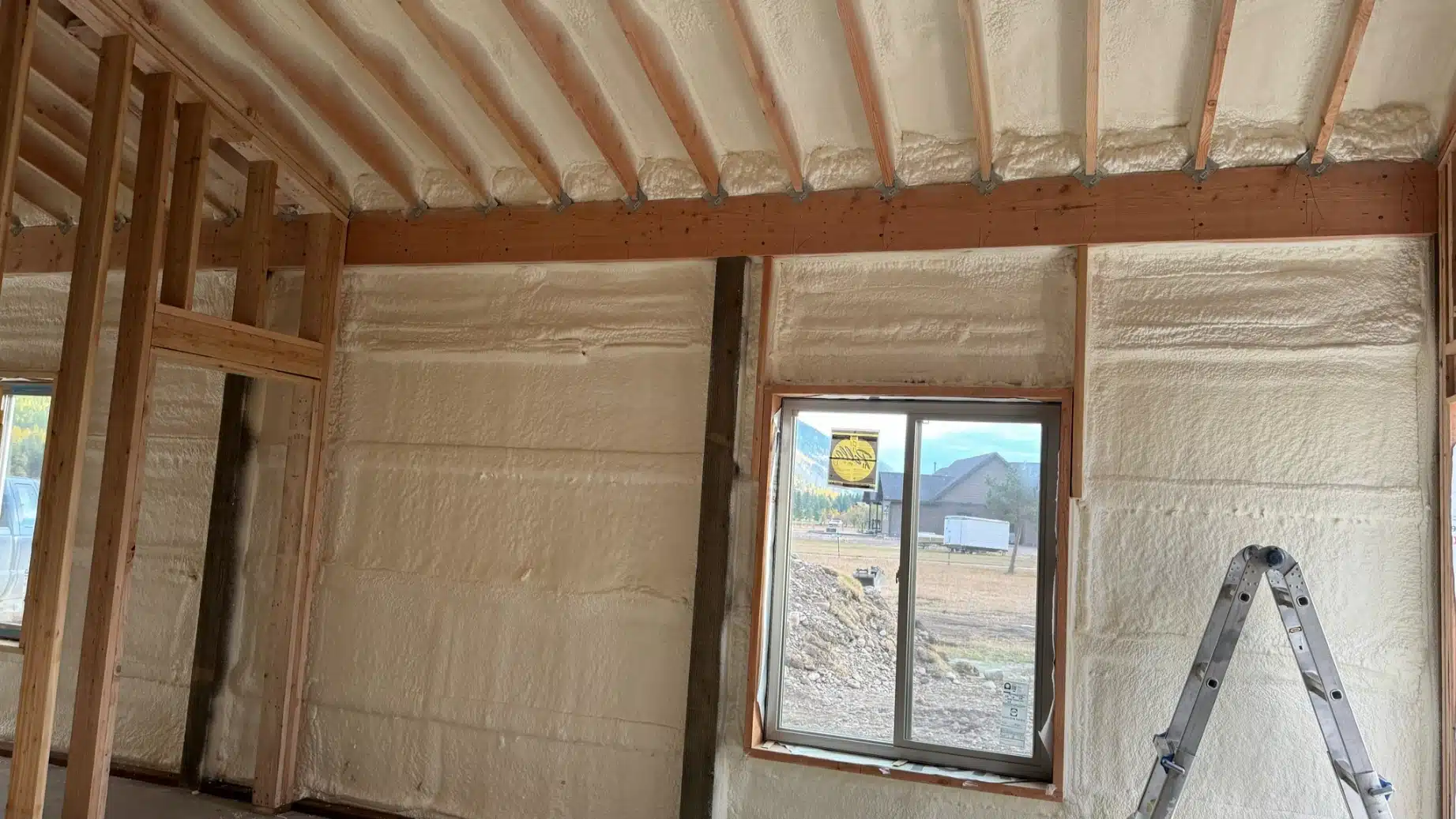
Closed cell spray foam provides superior structural support because it cures into a dense, rigid solid that essentially glues building materials together, unlike soft insulation, which merely fills space. Closed cell foam bonds directly to studs and sheathing to create a monolithic barrier. This bonding process significantly increases a wall’s resistance to racking loads, the lateral forces from wind or earthquakes, by up to 300%, effectively turning a standard stud wall into a unified structural component.
Homeowners and builders choose this material when they need more than just temperature control. The chemical reaction during application transforms liquid components into a hard plastic with a density of roughly 2.0 pounds per cubic foot. This high density allows the foam to reject bulk water and resist compression, adding durability that fiberglass or open cell foam simply cannot match. For buildings in high-wind zones or areas prone to severe weather, this added rigidity acts as a secondary layer of protection against structural movement and deformation.
The Science Behind the Structural Integrity
The structural capability of closed-cell spray foam stems from its cellular geometry. When applied, the two-part mixture undergoes an exothermic reaction, forming millions of tiny, encapsulated gas bubbles. These “closed” cells are packed tightly together and do not share walls with neighboring cells. This structure creates a hard, durable plastic rather than a soft sponge.
Once cured, the foam becomes a rigid material that locks lumber framing in place. It bridges the gap between studs and exterior sheathing (such as plywood or OSB). Adhering to both surfaces prevents the wood from twisting, buckling, or shifting under stress. This connection distributes weight and impact loads more evenly across the entire wall assembly rather than isolating force on individual studs.
Bonus Tip: Always ask your installer for the specific density rating of the foam they plan to use. For structural reinforcement, you specifically need “2 lb” or “medium-density” foam. Anything less than 1.7 lbs per cubic foot will not provide the same level of rigidity.
Comparative Analysis of Insulation Types
To understand why closed cell foam is the superior choice for structural support, you must compare it directly with other common materials. The table below outlines the physical differences that contribute to building stability.
| Feature | Closed Cell Spray Foam | Open Cell Spray Foam | Fiberglass Batt |
|---|---|---|---|
| State After Curing | Rigid, hard plastic | Soft, sponge-like | Loose fibers |
| Density | 1.75 – 2.25 lb/cu. ft. | 0.5 lb/cu. ft. | 0.5 – 1.0 lb/cu. ft. |
| Structural Contribution | Adds ~300% racking strength | Negligible | None |
| Water Resistance | Rejects bulk water (Class 5) | Absorbs water | Absorbs water |
| Adhesion | Aggressive, permanent bond | Good adhesion, flexible | No adhesion |
As shown above, only closed cell foam adds measurable strength to the building envelope. Fiberglass and open cell foam are strictly insulators; they hang between studs but do not reinforce them.
Racking Strength and Wall Assembly Rigidity
Racking strength is a wall’s ability to maintain its square shape when wind or seismic forces push against it laterally. Standard wood-framed walls rely on exterior sheathing and cross-bracing to resist this “parallelogram” distortion.
Research highlights the impact of insulation on this metric. A study conducted by the NAHB Research Center demonstrated that walls with closed-cell spray foam installed have a racking strength up to 300% greater than standard walls without it. The foam acts as a continuous glue that stiffens the entire assembly.
This added rigidity is particularly valuable for:
- Tall walls: High ceilings often cause walls to flex or bow. Closed cell foam reduces this movement.
- Metal buildings: It add stiffness to metal panels, reducing shuddering during high winds.
- Pole barns: It reinforces the connection between girts and exterior metal sheeting.
Moisture Resistance and Durability
Water is the primary enemy of structural longevity. Wood rot, rust, and mold compromise a building’s load-bearing capacity. Closed cell foam contributes to structural health by serving as a secondary water barrier.
According to technical bulletins from FEMA, closed cell spray foam is the only cavity insulation classified as a flood-resistant material (Class 5). It can withstand direct contact with floodwater for 72 hours without sustaining significant damage. By preventing water from soaking into the framing lumber, the foam protects the structural integrity of the wood itself.
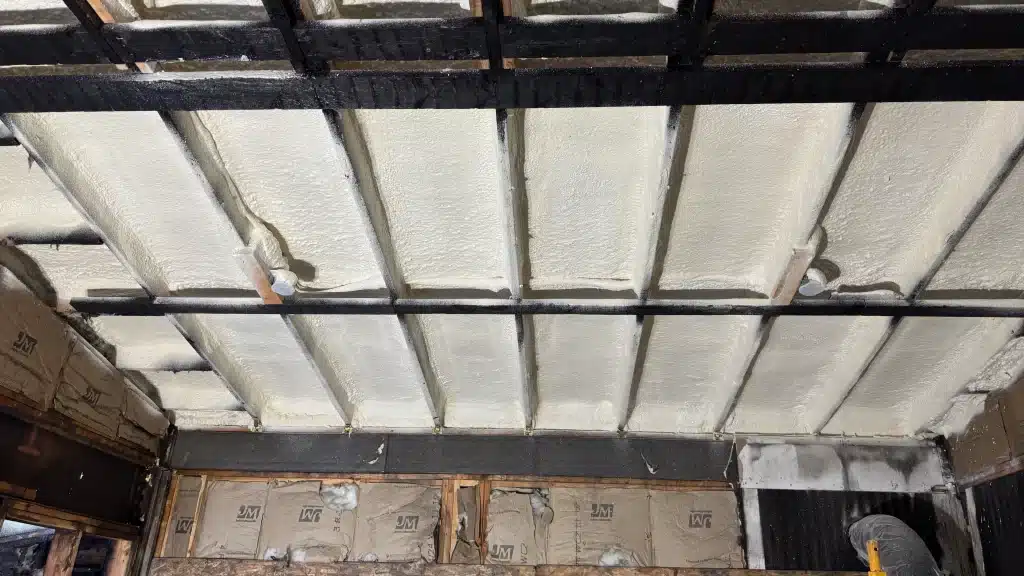
Bonus Tip: If you live in a hurricane zone, adding closed cell foam to your roof deck (the underside of your roof) is often called “gluing the roof on.” It can significantly increase wind uplift resistance, helping keep your roof intact during severe storms.
Market Trends in Structural Insulation
The demand for materials that offer both efficiency and strength is reshaping the construction industry. Data from DataHorizzon Research indicates the closed cell spray foam market is experiencing steady growth, driven largely by stricter building codes and the need for disaster-resilient construction.
Builders are increasingly moving away from single-purpose products. They prefer materials that solve multiple problems at once. Closed cell foam fits this requirement by serving as insulation, air barrier, vapor retarder, and structural reinforcement in a single application.
Things to Consider Before Making a Decision
While the structural benefits are clear, homeowners must evaluate a few factors before proceeding.
- Permanence: This material bonds aggressively. Once applied, it is tough to remove. If you plan to rewire your home or move plumbing soon, complete those tasks first.
- Cost: Closed cell foam is more expensive than open cell or fiberglass due to the higher density and amount of material required. You are paying for a 3-in-1 product (insulation, structure, vapor barrier).
- Existing Damage: Spray foam is a reinforcement, not a repair for a failed structure. You cannot spray foam over rotted wood to “fix” it. All structural repairs must be completed before insulation installation.
Conclusion
Closed-cell spray foam offers a unique advantage by turning your insulation into a structural asset. It reinforces your home against wind, resists water damage, and locks framing members together to create a stronger, more durable building. While the initial investment is higher than with traditional methods, the long-term benefits of increased racking strength and flood resistance provide peace of mind that other materials cannot. Evaluate your specific needs, especially if you live in an area prone to high winds or moisture, to determine if this robust solution fits your goals.
Contact Supreme Spray Foam LV for Expert Guidance
Ready to strengthen your property while maximizing energy efficiency? The team at Supreme Spray Foam LV is here to help you determine if closed cell insulation is the right choice for your specific project. We provide honest assessments and professional installation to ensure you get the full structural benefits of this advanced material.
Phone: (702) 904-9895 Email: [email protected]
Frequently Asked Questions
Is closed-cell foam too heavy for my ceiling?
No. While it is denser than other insulations, it is still very lightweight compared to building materials like drywall or lumber. Most roof structures can easily support the weight of the foam.
Can I use closed-cell foam for soundproofing?
It provides some sound dampening, but open cell foam is generally better for acoustics. Closed cell foam is rigid, which can sometimes transfer vibration more than soft, sponge-like open cell foam.
Does the added rigidity make the house too airtight?
It definitely makes the house airtight, which is suitable for energy bills but requires proper ventilation. You should ensure your HVAC system includes fresh air intake to maintain healthy indoor air quality.
How long does the structural benefit last?
The rigid plastic does not degrade, sag, or settle over time. As long as it is protected from UV light (sunlight), the structural reinforcement lasts for the life of the building.
Can I install it myself to save money?
DIY kits exist but are generally not recommended for large structural projects. Achieving the correct chemical ratio for maximum hardness and adhesion requires professional equipment and temperature control.
Sources
- Spray Foam Magazine – references NAHB Research Center studies regarding racking strength increases in foam-filled walls.
- FEMA – Technical Bulletin 2 regarding flood-resistant material classifications and Class 5 rating for closed cell foam.
- DataHorizzon Research – Market data and growth statistics for the closed cell spray foam industry.