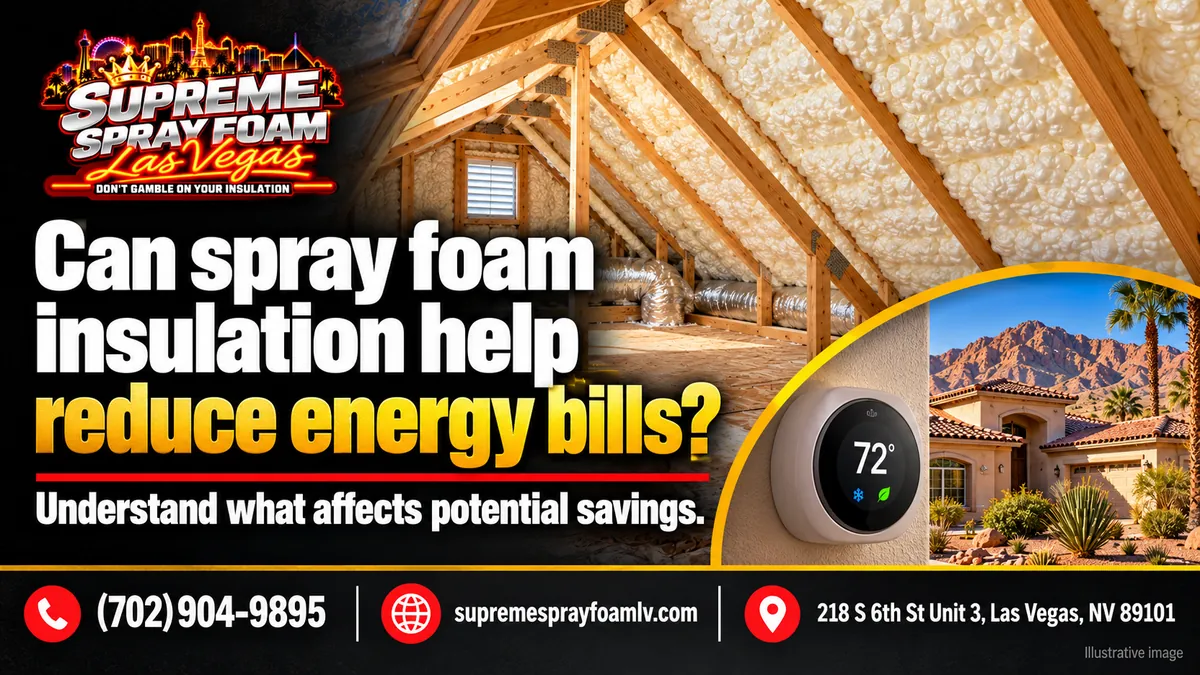
Spray foam insulation can help reduce heating and cooling energy use when it addresses a real gap in a home’s insulation or air barrier. Lower energy use may reduce bills, but the amount depends on the existing building, installation scope, HVAC system, weather, occupancy, and utility rates. A Las Vegas homeowner should assess those factors before relying on a savings claim.
Where potential savings come from
A cooling system removes heat that enters a home. Insulation helps resist heat transfer through the surfaces where it is installed. Air sealing helps reduce uncontrolled outdoor air entering through openings. Proper spray foam installation can support both functions and may reduce heating or cooling loads.
That does not mean every high bill is an insulation problem. Leaky ducts, inefficient equipment, sun-exposed windows, thermostat settings, or increased occupancy can also matter. The DOE explanation of insulation places material selection within the wider building system.
Why the existing home makes a difference
The opportunity depends partially on what is already there. A house with missing coverage or significant air leakage is different from one with a continuous, well-installed insulation and air-barrier system. The same product can therefore produce different results in two nearby homes.
Before selecting work, identify the rooms affected, when the discomfort occurs, and which surfaces separate them from outdoors or unconditioned space. If the attic is a concern, discuss attic insulation in relation to the current construction. A wall problem may require a different access and installation plan.
Why a savings percentage is not a promise
General estimates are useful only when you understand their assumptions. ENERGY STAR’s savings methodology evaluates specified air-sealing and insulation improvements using a modeled baseline. It is not a prediction for every Las Vegas home, and it is not a guarantee that spray foam alone will produce a particular result.
If an estimate includes expected savings, ask what evidence supports it. Does the figure refer to heating and cooling energy, the entire energy bill, or dollar costs? What existing insulation, air leakage, thermostat use, and weather conditions were assumed? These distinctions should be clear before you compare the benefit with the installation cost.
Energy use and the bill are different measurements
Kilowatt-hours show electricity consumption. The amount you pay also reflects rates and other bill components. A lower energy-use figure can therefore exist alongside a similar or higher bill if rates change. Conversely, a smaller bill during mild weather does not prove the insulation caused the reduction.
Keep copies of your bills and note the billing dates and days in each period. Where available, use the utility’s daily usage view to examine patterns. Treat those records as a baseline for questions, not as a controlled test by themselves.
For an audio companion to this guide, listen to the energy-bills episode on Podbean.
What to check before approving an upgrade
Ask for an assessment of the relevant insulation boundary, coverage, and leakage paths. A qualified assessor may recommend diagnostic work, such as an air-leakage evaluation, if it is appropriate to the problem. Do not assume Supreme Spray Foam LV supplies a particular testing service unless it is confirmed in the scope.
DOE’s air-sealed home guidance explains why a complete boundary matters. The assessment should also consider ventilation and equipment affected by enclosure changes. An insulation project should not create an uncontrolled moisture or combustion-safety issue.
Compare complete scopes rather than sales claims
A useful quote states the areas, preparation, selected product, insulation target, protective covering, and exclusions. It explains what problem the work is intended to address. If attic ducts or a roof leak are outside the scope, that should be visible when you judge the expected result.
Ask about alternatives when appropriate. Targeted air sealing, repairs to existing coverage, or another insulation material may fit some projects. Supreme Spray Foam LV’s residential spray foam insulation service and wall insulation service describe relevant services, but a product choice should follow the assessment.
Before choosing a product, read our guide to the difference between open-cell and closed-cell spray foam to understand how the two options compare in thermal performance, air sealing, and moisture behavior.
How to review results after installation
Save the agreed scope and installation information. Then compare energy use over sufficiently similar periods, while accounting for weather, billing days, thermostat habits, occupancy, and major equipment changes. A single month before and after the work can be misleading.
Also record whether the original comfort issue has improved. More even room temperatures may matter to you even when a dollar saving is hard to isolate. If performance does not match expectations, return to the written scope and ask what was checked rather than assuming another layer of foam is the answer.
You can also listen to our energy-bills audio on SoundCloud while reviewing the factors that affect energy use and comfort in your home.
Plan an upgrade around your home
Bring your recent bills, a description of uncomfortable rooms, and any known attic or wall issues to the conversation. Supreme Spray Foam LV serves Las Vegas, Paradise, Henderson, and Spring Valley. Ask for a scope that explains the intended benefit and its limits.
Request an insulation assessment or call (702) 904-9895. Start with the cause of the energy or comfort problem, then compare the proposed work with your priorities and budget.
Find Supreme Spray Foam LV
218 S 6th St Unit 3, Las Vegas, NV 89101. Contact the business before visiting.