

Open cell spray foam creates a more comfortable living environment by sealing air leaks, stabilizing indoor temperatures, absorbing sound, and allowing moisture vapor to pass through without trapping it. According to the U.S. Department of Energy, heating and cooling account for 50 to 70% of the energy used in the average American home, and inadequate insulation along with air leakage are leading causes of energy waste (DOE Insulation Fact Sheet). Open cell spray foam directly addresses both of these issues in a single application. Unlike traditional batt insulation that only slows conductive heat transfer, open cell foam expands on contact to fill every gap, crack, and cavity, creating a continuous air barrier that keeps conditioned air inside and unconditioned air out. The result is a home that stays warmer in winter, cooler in summer, quieter year-round, and less prone to moisture-related problems. The right insulation approach depends on your climate zone, the areas of your home being insulated, and whether sound control or moisture management is a priority.
TL;DR
- Open cell spray foam expands up to 100 times its liquid volume, sealing gaps and cracks that traditional insulation cannot reach
- The EPA estimates proper insulation and air sealing can save homeowners up to 20% on heating and cooling costs (HUD USER)
- Open cell foam allows water vapor to pass through, reducing condensation risk inside wall cavities
- The soft, cellular structure of open cell foam absorbs mid-to-high frequency sounds better than dense rigid materials
- Walls and rim joists account for over 40% of a home’s total envelope area, making them high-impact targets for spray foam application (DOE Energy.gov)
- Temperature stability improves immediately after installation because the air barrier eliminates drafts and stratification
- Open cell foam has a lower R-value per inch than closed cell, but thicker application in wall cavities achieves comparable total R-values
- Air sealing should be completed before or during insulation installation, since insulation alone does not stop air movement through gaps between building parts
How Open Cell Spray Foam Works
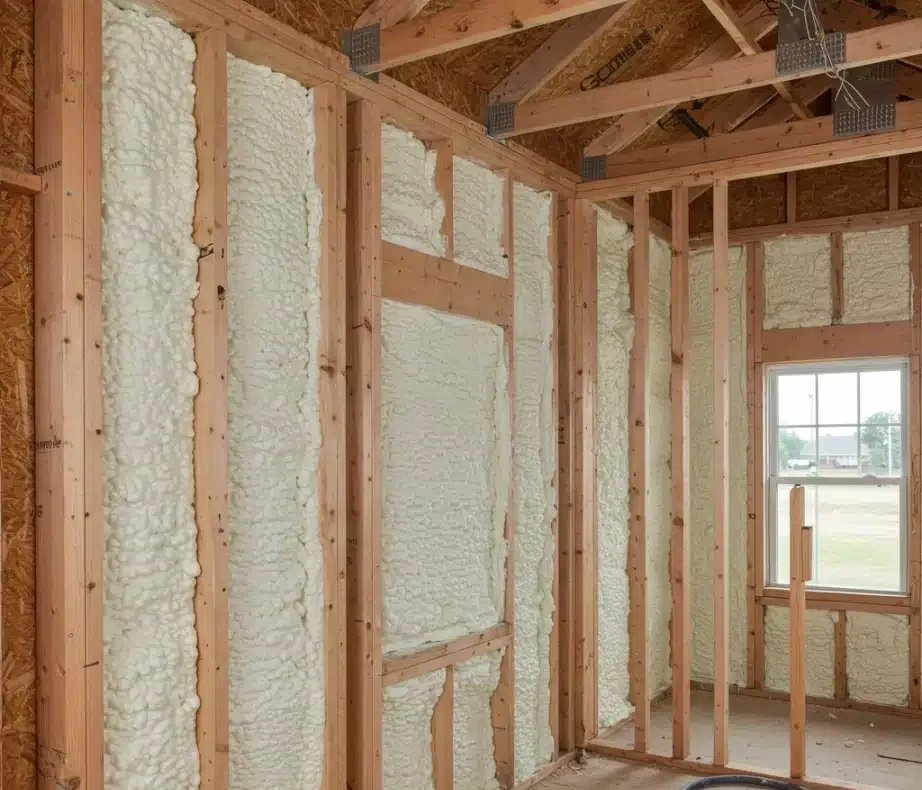
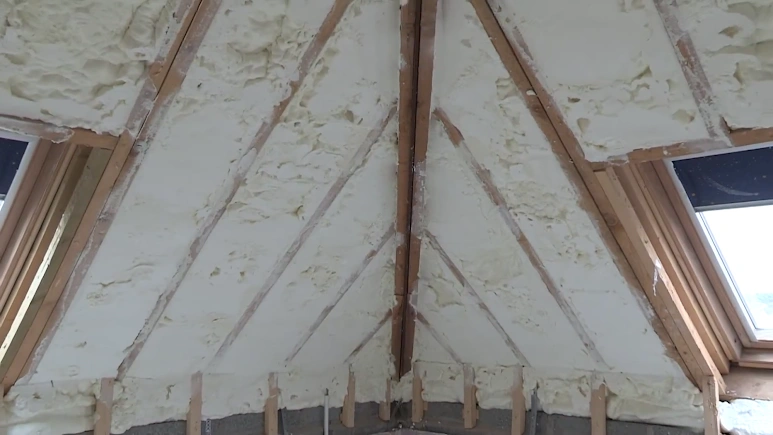
Open cell spray foam is a type of polyurethane insulation applied as a liquid that expands into a soft, flexible solid filled with tiny open cells. These cells are not completely sealed, which gives the foam its characteristic spongy texture and lower density compared to closed cell alternatives. The DOE’s Insulation Fact Sheet identifies polyicynene as a common open-celled foam, noting that it allows water vapor to move through the material more easily than closed-cell foams while still delivering strong thermal performance when applied at sufficient thickness.
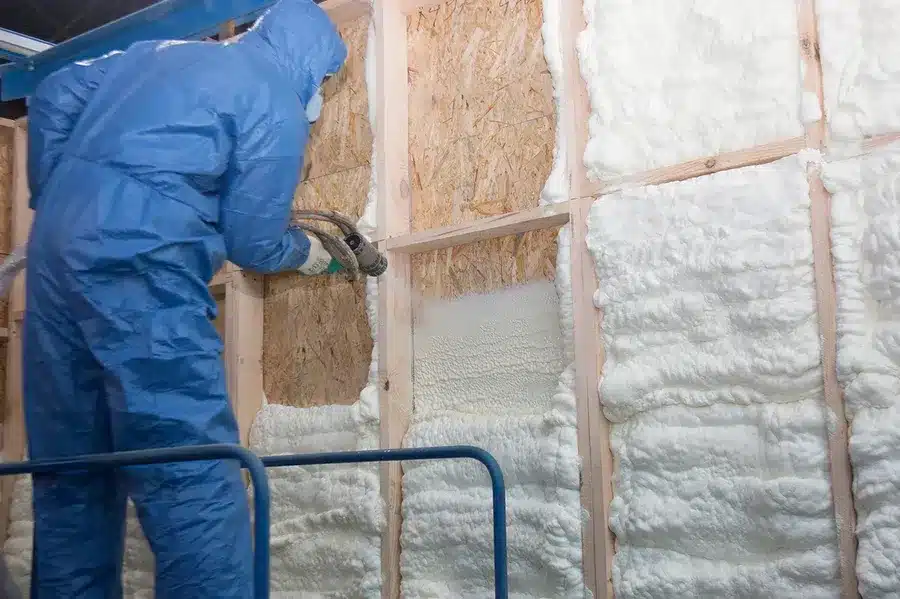
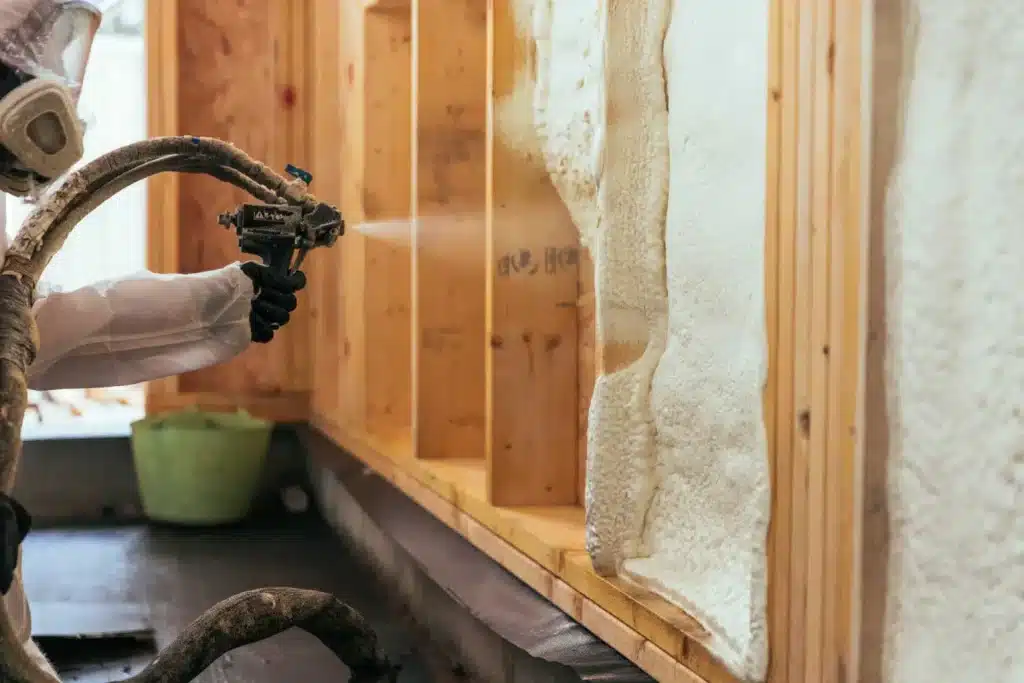
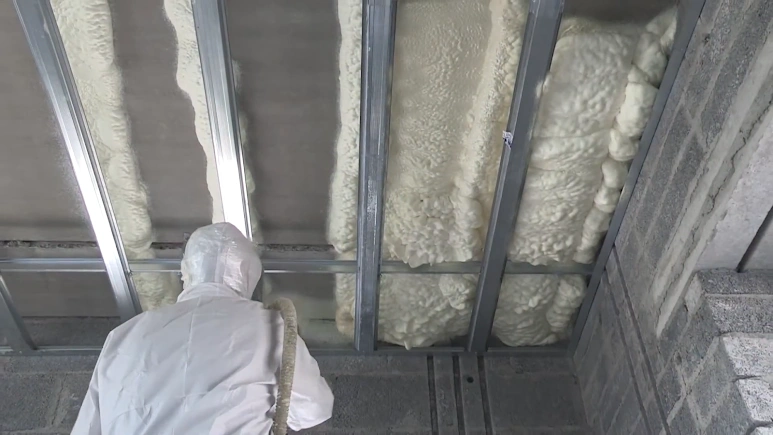
When our technicians apply open cell spray foam, it expands rapidly to fill the entire cavity, wrapping around pipes, wires, and framing members. This expansion is what sets spray foam apart from fiberglass batts or blown-in cellulose, which can leave voids around obstructions. The foam adheres to the surrounding surfaces and cures in place, creating a monolithic layer that resists air movement through the assembly.
The R-value of open cell spray foam typically ranges from 3.5 to 3.8 per inch, which is lower than closed cell foam but comparable to or better than fiberglass on a per-inch basis. In standard 2×4 wall cavities, open cell foam applied to full cavity depth can achieve R-13 to R-15, meeting or exceeding the minimum code requirements for most climate zones per the 2021 IECC.
The Four Ways Open Cell Spray Foam Improves Comfort
1. Eliminates Drafts and Air Infiltration
The single most noticeable comfort improvement from open cell spray foam is the elimination of drafts. Air leaks occur around window frames, door jambs, electrical outlets, plumbing penetrations, and where walls meet floors and ceilings. The DOE notes that air leaks can carry hot humid outdoor air into your home in summer, or carry warm moist air into the attic in winter, creating discomfort and moisture problems simultaneously.
Open cell spray foam seals these pathways at the point of application. By filling the entire wall cavity or attic floor with a continuous layer of foam, the material blocks the convective loops that drive drafts. The DOE states that air sealing reduces the amount of air that leaks into and out of your home, calling it “a cost-effective way to reduce heating and cooling costs, improve durability, increase comfort, and create a healthier indoor environment.”
2. Stabilizes Indoor Temperatures
Temperature consistency is a hallmark of a well-insulated home. Without adequate insulation, rooms near exterior walls experience wide temperature swings, while interior rooms may feel comfortable. This creates a “hot room, cold room” problem that forces occupants to constantly adjust thermostats.
Open-cell spray foam provides a continuous thermal barrier across the entire building envelope. Open-Cell Spray Foam Helps Prevent Ice Dams by reducing heat loss through the roof, improving energy efficiency, and maintaining consistent indoor temperatures.. The DOE’s Insulation Fact Sheet states that insulation “makes your house more comfortable by helping to maintain a uniform temperature throughout the house, and makes walls, ceilings, and floors warmer in the winter and cooler in the summer.” Because spray foam fills gaps and eliminates thermal bridging at studs and framing members, the entire assembly works together to maintain steady indoor temperatures.
| Comfort Factor | Before Spray Foam | After Open Cell Spray Foam |
|---|---|---|
| Drafts near windows and outlets | Noticeable cold spots in winter | Eliminated, consistent surface temperatures |
| Temperature between rooms | Varies by 5-10 degrees | Within 2-3 degrees throughout |
| HVAC cycling frequency | Frequent on/off cycles | Longer, more efficient run times |
| Upper floor vs. lower floor | Significant temperature difference | Even temperature distribution |
3. Reduces Noise Transmission
Sound control is an often-overlooked aspect of home comfort. Open cell spray foam’s soft, cellular structure makes it an effective sound absorber for mid-to-high frequency noises, including conversations, television audio, and household activity. The foam converts sound energy into minute amounts of heat through friction within its open cell matrix, reducing the amount of sound that passes through walls and ceilings.
This makes open cell spray foam particularly effective in interior partition walls between bedrooms, home offices, and living spaces, as well as in exterior walls facing busy streets. While it does not provide the same level of low-frequency noise reduction as specialized mass-loaded systems, the combination of air sealing and sound absorption creates a noticeably quieter indoor environment.
4. Manages Moisture Without Trapping It
One of the most important differences between open cell and closed cell spray foam is vapor permeability. The DOE’s Insulation Fact Sheet explains that “open-celled foam allows water vapor to move through the material more easily than closed-cell foam.” This vapor-open characteristic is a significant advantage in many climate zones, especially in wall assemblies where trapped moisture can lead to mold growth, wood rot, and structural damage.
In hot, humid climates like Las Vegas summers, moisture that enters wall cavities needs a path to dry out. Open cell foam allows that drying to occur while still providing an effective air barrier. According to Wikipedia’s building insulation reference, sufficient thermal insulation “is the fundamental task that ensures a healthy indoor environment and against structure damage” by preventing condensation and mold formation.
Where Open Cell Spray Foam Performs Best
Not every area of a home is suited for open cell spray foam. Understanding which locations benefit most helps homeowners prioritize their investment.
| Application Area | Suitability for Open Cell | Reason |
|---|---|---|
| Wall cavities (2×4 and 2×6) | Excellent | Fills cavities completely, air seals, allows drying |
| Attic floors (unconditioned attic above) | Good | Provides air seal at ceiling plane, adds thermal resistance |
| Cathedral ceilings and roof decks | Good when paired with proper ventilation | Fills rafter bays, reduces air leaks at roof transitions |
| Rim joists and band joists | Excellent | Seals a major source of air leakage at floor transitions |
| Below-grade basements | Limited | Open cell is vapor-permeable, so use closed cell for below-grade |
| Exterior continuous insulation | Limited | Rigid foam boards are more practical for exterior applications |
The DOE points out that walls and rim joists typically make up more than 40% of the total envelope area of a house, so targeting these areas with spray foam produces outsized comfort improvements.
Signs You Have Found the Right Insulation Approach
Choosing the right insulation strategy involves more than selecting a material. Here are indicators that open cell spray foam is the right approach for your home:
- Your home experiences noticeable drafts around windows, outlets, and baseboards, especially during extreme temperatures
- Room-to-room temperature differences exceed a few degrees, indicating poor air sealing and thermal bridging
- Your HVAC system runs frequently but struggles to maintain comfort, suggesting high air infiltration rates
- Sound travels easily between rooms or from outside, particularly through shared walls
- You have visible condensation on interior surfaces during winter, which can indicate air leakage carrying moisture into wall cavities
- Your home has uninsulated wall cavities accessible through existing openings or during a renovation project
A qualified insulation contractor should perform a thorough assessment of your home’s envelope before recommending a specific approach. The right provider will evaluate your climate zone, existing insulation levels, building assembly type, and specific comfort concerns before making a recommendation.
Common Mistakes That Reduce Comfort Gains
Even with the right material, installation errors can undermine the comfort benefits of open cell spray foam. Based on guidance from the DOE and building science principles, here are the most common pitfalls:
- Ignoring air sealing before insulating: Air leaks reduce the effectiveness of insulation. The DOE explicitly warns that air leaks should be sealed before or during insulation installation because “the insulation may hide them and make them less accessible”
- Compressing the foam: Overfilling cavities can compress the foam, reducing its R-value and compromising its ability to expand into small gaps
- Skipping rim joists: These floor-to-foundation transitions are among the largest sources of air leakage in most homes, yet they are frequently overlooked
- Not addressing ventilation: Reducing air infiltration with spray foam means mechanical ventilation may be needed to maintain indoor air quality
- Applying too thin: Open cell foam must reach adequate thickness to achieve its rated R-value and air sealing performance
Our team addresses each of these factors during every installation to ensure homeowners receive the full comfort benefit open cell spray foam delivers.
Get Started With a Professional Insulation Assessment
Supreme Spray Foam LV has the experience and expertise to evaluate your home’s insulation needs and recommend the best approach for lasting comfort improvements. Whether you are building new, renovating, or upgrading an existing home in the Las Vegas area, our team provides detailed assessments, honest recommendations, and professional installation that maximizes the performance of your insulation investment. We take the time to evaluate every area of your building envelope and explain exactly how open cell spray foam will address your specific comfort concerns.
Request a Quote | Schedule an Assessment
Call us at (702) 904-9895 or email [email protected] to discuss your project. We look forward to helping you create a more comfortable, efficient home.
Frequently Asked Questions
Is open cell spray foam better than fiberglass for home comfort?
Open cell spray foam outperforms fiberglass in comfort because it creates an airtight seal while fiberglass only resists conductive heat flow. The DOE notes that fiberglass insulation allows air movement within and around it, while spray foam adheres to surfaces and expands to fill gaps, eliminating drafts and air infiltration.
How long does open cell spray foam last?
Open cell spray foam is a permanent installation that does not settle, sag, or degrade over time when properly applied. Unlike loose-fill insulation that can compress or shift, spray foam maintains its shape and R-value for the life of the building.
Will open cell spray foam help with my high energy bills?
Properly installed open cell spray foam can reduce heating and cooling costs by sealing air leaks that waste energy. The HUD USER reports that EPA estimates proper insulating and air sealing can save up to 20% on heating and cooling costs, though actual savings depend on your home’s condition and climate.
Can open cell spray foam be installed in existing homes?
Yes, open cell spray foam can be installed in existing homes, particularly in attics, crawl spaces, and rim joist areas that are accessible. For finished walls, small holes can be drilled through the exterior or interior to inject foam into wall cavities, a process sometimes done during a re-siding project.
Does open cell spray foam require ventilation after installation?
Sealing your home tightly with spray foam reduces uncontrolled air infiltration, which means your home may need mechanical ventilation to maintain healthy indoor air quality. This is especially important in homes with gas appliances, where adequate fresh air supply prevents buildup of combustion byproducts.
Sources
- DOE Insulation Fact Sheet – Comprehensive DOE guide on insulation types, R-values, air sealing, and how insulation improves comfort by maintaining uniform temperatures.
- DOE Energy-Efficient Home Improvement Credit: Insulation and Air-Sealing Essentials – DOE guidance on building envelope insulation requirements by climate zone and the role of air sealing in comfort and energy efficiency.
- HUD USER – Insulation and Air Sealing – EPA estimates on energy savings from insulation and air sealing, plus explanation of how heat flow and insulation affect home comfort.
- Wikipedia – Building Insulation – Reference on thermal insulation materials including polyurethane foam, thermal comfort principles, and how insulation prevents condensation and building damage.
- ORNL – Spray Foam in Accessible Spaces – Oak Ridge National Laboratory research on spray foam insulation performance, thermal barriers, and infiltration barriers in residential buildings.