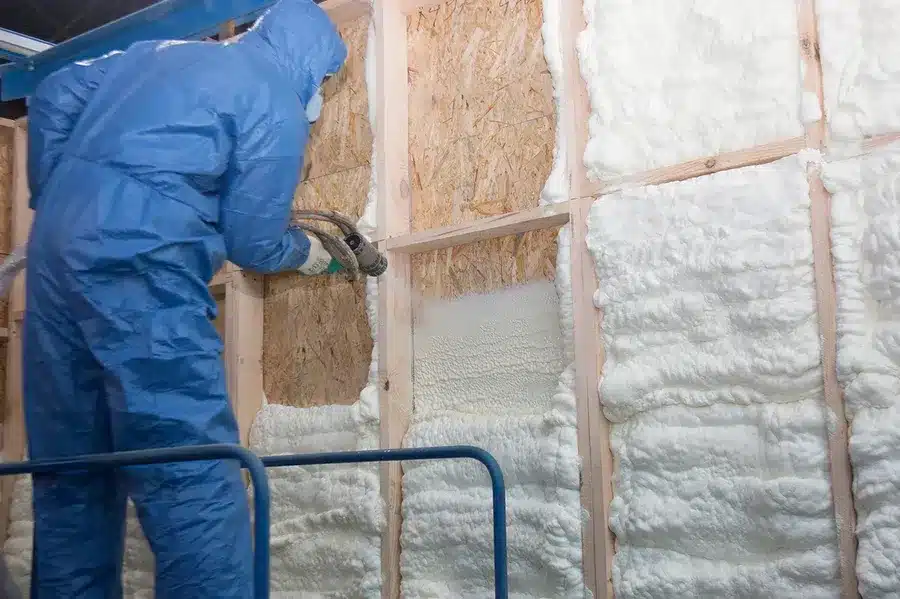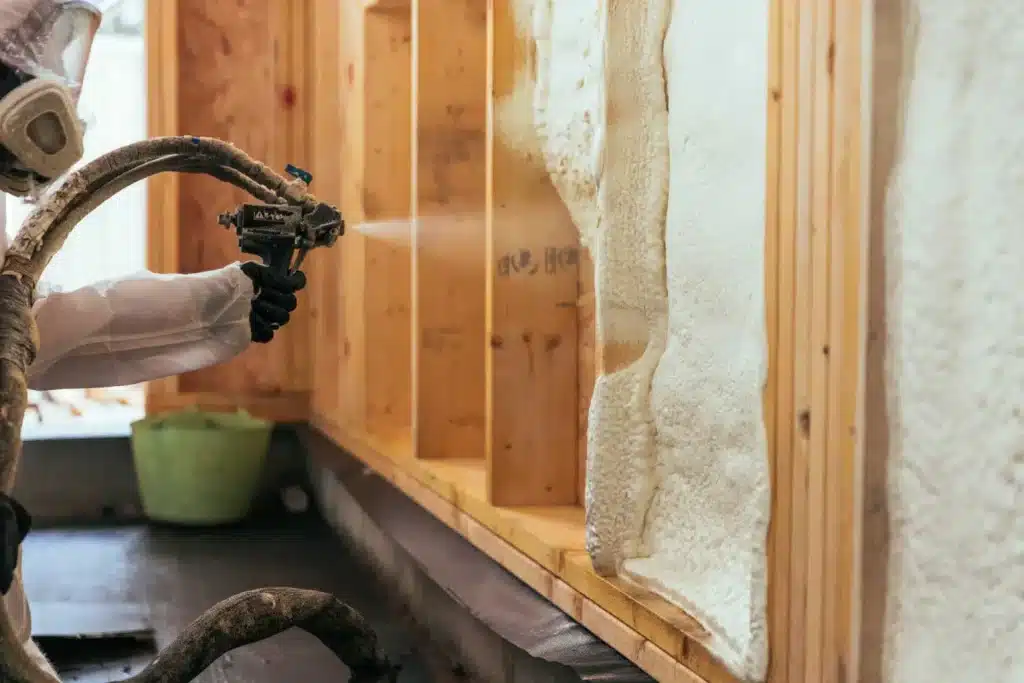


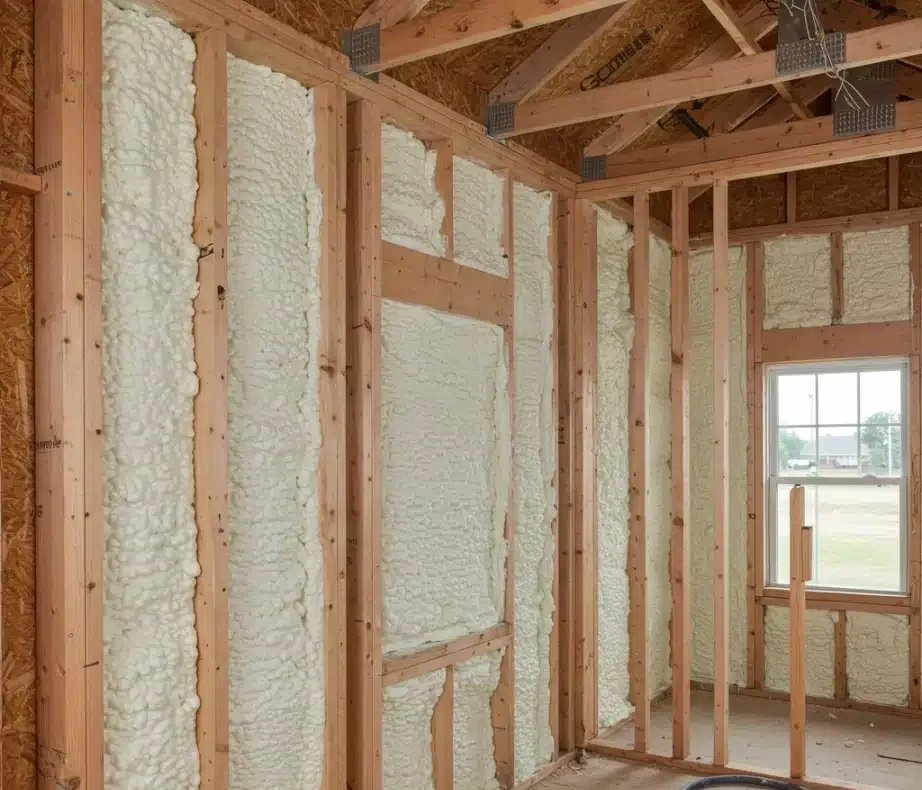
Spray foam insulation can be installed in nearly any closed, tight, or irregular space because it is applied as a liquid that expands up to 30 to 60 times its volume, fills voids completely, and adheres to surfaces that batts and rigid boards simply cannot reach. For homes and commercial buildings, the complete guide to spray foam insulation covers finished wall cavities filled through small drilled holes, rim joists and band joists, crawl spaces and floor voids, cathedral ceilings, knee walls, and the crowded gaps around pipes, wiring, and ductwork. The right method depends on how the building is framed, the moisture condition inside the cavity, and applicable code requirements, so the smartest first step is always a site-specific access assessment rather than a one-size-fits-all pitch. Below, we break down exactly where spray foam performs best when access is limited, how our crews physically reach sealed-off spaces, and what separates a lasting install from a hidden moisture problem.
TL;DR
- Foam’s liquid-to-solid application lets it insulate closed wall cavities through small drilled holes, a retrofit technique commonly called wall injection, with a less aggressive expanding water-based foam used in existing structures.
- Rim joists, band joists, and plumbing or wiring penetrations are among the highest-value restricted-access targets, and ENERGY STAR guidance calls for spray foam on gaps larger than 1/4 inch where caulk falls short.
- Uninsulated basement and crawlspace walls can account for up to one-third of a home’s total heat loss, according to Department of Energy Building America research.
- Department of Energy studies attribute roughly 40% of a home’s energy loss to air infiltration through walls, windows, and doorways, which is why air-sealing foams outperform fill-only materials.
- Open-cell foam (about R-3.8 per inch) suits sound control and irregular interior cavities; closed-cell foam (R-5.1 to R-6 per inch) adds vapor resistance and rigidity where moisture is a concern.
- Foam should never be injected into damp, leaking, or drainage-dependent cavities, and cavity walls must keep weep holes and roughly a 1-inch free drainage space per industry guidance.
- Aggressive air sealing can trap radon, carbon monoxide, and VOCs, so ventilation planning, radon testing, and combustion safety checks belong in the scope.
- Any retrofit scope should include drilling patterns, patching, and surface repair plans, and a professional crew will put every access point in writing.
Why Spray Foam Insulation Fits Spaces Other Materials Cannot Reach
The physics of the product do the heavy lifting. Spray polyurethane foam starts as two liquid components that mix at the gun and react in place, expanding to conform to every crack, crevice, and void while adhering to irregular substrates. A fiberglass batt needs a clean rectangular bay and a careful installer; foam needs only a small opening and the right chemistry.
That matters because invisible gaps are expensive. Building insulation – Wikipedia research shows that inaccessible voids within wall cavities that are devoid of insulation act as thermal bridges, and corners, electrical boxes, and plumbing chases are the spots most commonly left bare. Oak Ridge National Laboratory’s whole-wall analysis, cited in University of Massachusetts Amherst building science research, found that a standard 2×4 wood wall delivers only 76% of its center-of-cavity R-value once thermal bridging and framing gaps are counted, and steel framing performs even worse at 45%. Foam closes those gaps because insulation and air barrier arrive in the same pass Spray foam – Wikipedia.
The Most Common Restricted-Access Applications
| Application Area | How Access Is Gained | Why Foam Wins Here | Watch-Outs |
|---|---|---|---|
| Finished wall cavities | Small holes drilled between studs, foam injected, holes patched | Fills voids around wiring and plumbing without demolition | Verify the cavity is dry before injecting |
| Rim joists and band joists | Basement or crawlspace entry | Seals wide, awkward gaps at the foundation line | Check combustion appliance drafting first |
| Crawl spaces and floor voids | Crawlspace door, hatch, or floor access cuts | Closed-cell adheres overhead and to uneven joist bays | Pair with a sealed groundcover for moisture control |
| Cathedral ceilings and sloped roof decks | Attic edge, soffit, or ridge routes | Fills deep rafter bays batts cannot occupy | Confirm dry sheathing and a ventilation strategy |
| Pipes, wiring, ducts, and chases | Existing penetrations and chase openings | Conforms around obstructions batts wrap poorly | Maintain clearances at heat-producing equipment |
| Knee walls, bonus rooms, and soffits | Attic access | Shapes to odd framing and sloped planes | Keep the air barrier aligned across transitions |
| Masonry cavity walls | Drilled fill holes through the outer wythe | Fills a portion of the air space in older cavity construction | Preserve weep holes and the free drainage space |
Each row of that table shares one theme: the value of foam rises as physical access falls, but so does the need for moisture judgment. Sprayed blindly into the wrong cavity, foam can do more harm than good.
How Our Crews Actually Reach Sealed-Off Spaces
Drill-and-Fill Wall Injection
In the United States, wall injection has become an established retrofit technology: small holes are drilled between wall studs, and the void is filled with a less aggressive expanding, water-based foam that conserves energy by creating a thermal envelope inside an existing structure.Cavity wall insulation follows the same logic in masonry buildings, with material installed after construction through holes that are later refilled, while an open-cell spray foam service can address similar hard-to-reach insulation needs. Our team maps stud bays, drills at the pattern that guarantees full coverage, injects, patches, and textures so the finished wall shows no trace of the work Cavity wall – Wikipedia.
Working From the Cold Side
Many of the worst leaks sit where you already have partial access. ENERGY STAR’s basement and crawlspace project lists the usual suspects: between rim joists and under the sill plate, at wiring holes, around plumbing pipes, at crawlspace doors, and along the foundation at the sill plate. These tight, low-clearance zones are exactly where foam outperforms, because it seals and insulates irregular joist bays in one pass.
Coordinating With Exterior Work
When a building is being re-sided or re-roofed, the opening in the envelope is the opening in the schedule. Residing a home is a recognized opportunity to add continuous exterior insulation, and our crews can pair cavity injection with exterior foam planning during those windows, which also addresses the condensation and thermal bridging issues that exposed framing creates.
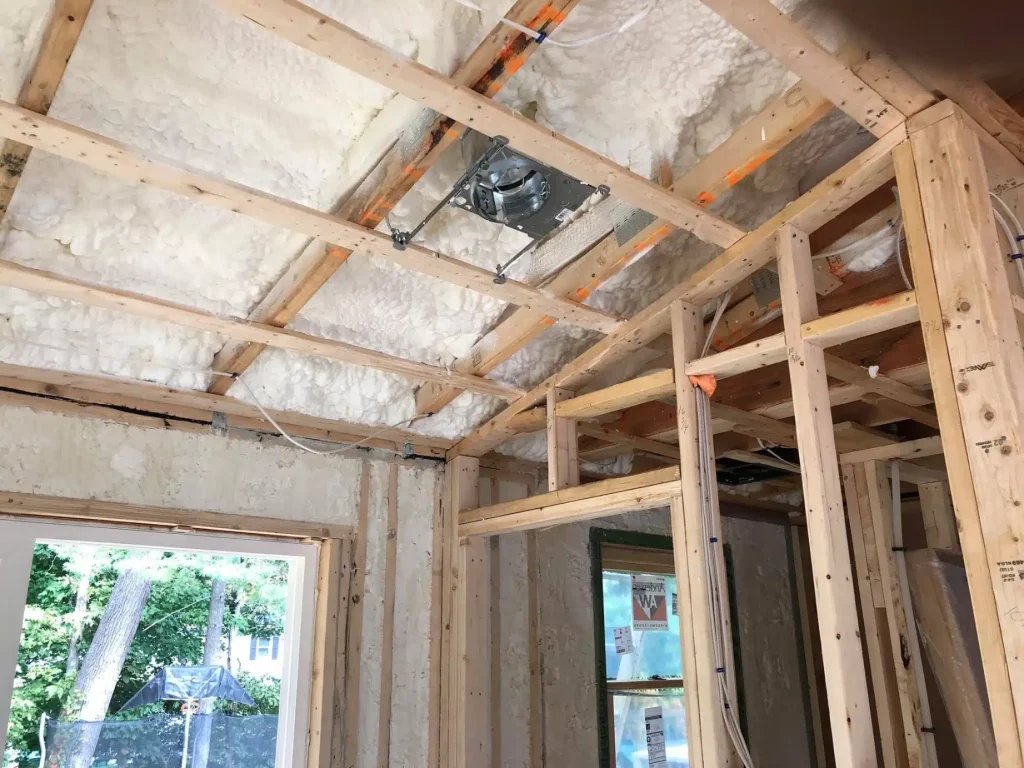
Open-Cell or Closed-Cell for Tight Spaces?
| Property | Open-Cell Foam | Closed-Cell Foam |
|---|---|---|
| Approximate R-value per inch | About R-3.8 | R-5.1 to R-6 |
| Character | Semi-rigid, sponge-like, expands into every void | Rigid, dense, adds structural stiffness |
| Moisture behavior | Not an effective vapor barrier until about 5.5 inches thick | Acts as both vapor and air barrier at minimum installed thickness |
| Best restricted-access uses | Interior sound-control walls, irregular interior cavities | Crawl spaces, rim joists, assemblies near moisture, roof decks |
| Caution | Indoor applications only | Requires dry, stable cavities before application |
Moisture, Ventilation, and Code Checks Before Injecting Hidden Cavities
Restricted-access work demands a defensive checklist, because nobody will see the mistake until it becomes a leak stain or a health complaint.
- Moisture first. The EPA is unambiguous that the key to mold control is moisture control, and it lists the inside of walls around pipes and ductwork among the most common hidden mold locations. Foam should never seal a cavity that is actively wet, and water-damaged materials must be dried within 24 to 48 hours.
- Damp cavities and roofs. Documented UK cases show that when foam is applied incorrectly or in damp roof spaces, it can trap moisture and damage the roof structure. If a cavity fails a moisture check, the right answer is to fix the water issue first.
- Drainage must survive. Masonry cavity walls rely on weep holes and flashing, and industry guidance typically requires at least a 1-inch drainage space free of insulation. Filling that space defeats the wall’s water management design.
- Air quality after sealing. ENERGY STAR warns that sealing a home can trap radon, carbon monoxide, and VOCs, and may require additional mechanical ventilation. In high-radon areas, testing and mitigation should come before aggressive air sealing.
- Inspection strips and clearances. Exterior foam can create hidden termite pathways, which is why International Residential Code guidance requires clearances between foam and exposed earth in heavy termite regions. A good installer leaves inspection sight lines and follows the clearance rules.
Recommendations by Audience
- Owners of older homes with un-insulated walls: Drill-and-fill wall injection plus rim joist sealing delivers the biggest comfort jump without demolition, especially in a cooling-dominant climate where ducts and chases pull superheated attic air into living space.
- Homes with vaulted ceilings or bonus rooms: Prioritize cathedral ceiling rafter bays and knee wall transitions, where convective loops hide and batts sag over time.
- Commercial and retail property managers: Block and cavity-wall construction responds well to injected foam, provided drainage provisions are respected and work is phased around tenants.
- Remodelers and builders: Coordinate cavity injection with residing or re-roofing schedules so every access point is used once and patched once.
- Anyone with a chronically damp crawlspace: Fix grading, drainage, and vapor control first, then insulate; foam will preserve a dry space but cannot rescue a wet one.
Signs You’ve Found the Right Approach
- The crew reads moisture levels before injecting anything and is willing to skip a cavity and tell you why.
- The written scope names every access point, the drilling pattern, and the patching plan before work starts.
- The foam choice is explained per cavity, open-cell where sound control and flexibility matter, closed-cell where vapor resistance matters.
- Ventilation, radon, and combustion safety are part of the conversation, not an afterthought.
- Code items like weep holes, drainage space, and clearance strips are respected out loud, not grudgingly.
Get Expert Restricted-Access Insulation Work
Limited access is not a limitation for spray foam insulation, it is the reason the product exists. Our team at Supreme Spray Foam LV assesses moisture, maps access routes, and injects the right foam into the walls, joists, ceilings, and chases other approaches which cannot touch, then patches every opening so the only thing you notice is the comfort. Call us at (702) 904-9895 or email [email protected] to talk through your building, and choose the next step below.
Your building already has the hiding places, we have the method for reaching them.
FAQs
Can spray foam insulation really be installed in walls that are already finished?
Yes. Small holes are drilled between the studs and the cavity is filled through them, a process called wall injection, then the holes are patched and textured. The finished wall typically shows no sign of the work.
How do you insulate an area with no hatch, door, or opening?
Our crew creates access, usually small drilled holes on an engineered pattern, and sometimes a discreet access panel that can be reopened later. Every opening is patched as part of the scope.
Which restricted-access areas matter most in buildings?
Rim joists, attic-side ceiling planes, duct chases, and block or cavity walls tend to pay off fastest in our climate. These are the paths where superheated outside air and dust enter conditioned space.
Is it safe to fill every cavity in a wall or roof assembly?
No. Damp cavities, drainage-dependent masonry cavities, and assemblies needing drying potential should be left alone or corrected first. A moisture check before injection is standard practice.
Does sealing hidden air leaks create other problems?
Tightening a building can trap radon, carbon monoxide, and VOCs, so ventilation may need adjusting after the work. We evaluate combustion safety and ventilation as part of any major air-sealing project.
Sources
- Spray foam – Wikipedia – Covers spray polyurethane foam chemistry, expansion rates, R-values per inch, open-cell versus closed-cell properties, wall injection retrofits, and applications in cavities, crawl spaces, and basements.
- Cavity wall – Wikipedia – Explains cavity wall construction, post-construction insulation retrofits through drilled holes, weep hole drainage, and the recommended 1-inch free drainage space.
- Building insulation – Wikipedia – Details why retrofitting insulation is harder than new construction, thermal bridging from inaccessible voids, and moisture effects on insulation performance.
- Basement & Crawlspace Air Sealing and Insulating Project – ENERGY STAR – Government guidance on rim joist and crawlspace sealing, common leak locations, foam versus caulk by gap size, indoor air quality, radon, and combustion safety.
- Insulating on the Outside – University of Massachusetts Amherst – Building science article on exterior foam strategies, ORNL whole-wall R-value data, moisture management, and termite clearance requirements for foam insulation.