
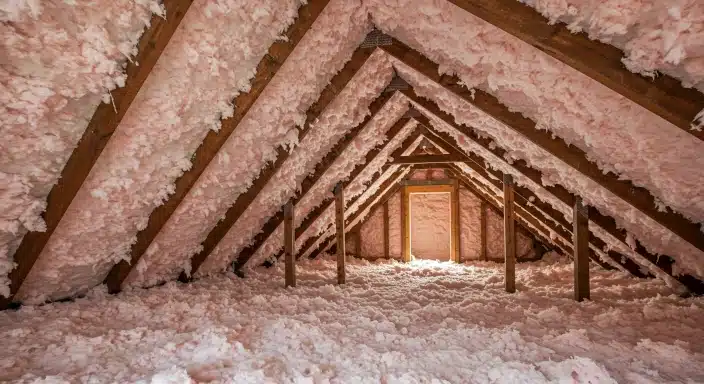
If you have ever walked into your living room on a July afternoon in Las Vegas and felt the heat radiating down from above, you already understand the problem on a personal level. That uncomfortable warmth is your attic working against you, transferring the intense desert sun straight through your roof and into your living space. The good news is that attic insulation is one of the most effective, practical ways to fix this problem and keep your home comfortable year-round.
This guide is built from years of hands-on experience working in Las Vegas attics, combined with the latest building science research and Department of Energy standards. Whether your home was built in the 1970s or last year, whether you are planning a full renovation or simply want to understand why your energy bills keep climbing, this resource covers everything you need to know. We will walk through what attic insulation actually does, the different material types available, how Las Vegas climate demands specific R-values, what the installation process looks like, and how to tell when it is time for an upgrade.
How Attic Insulation Works: The Basics
Heat moves in three ways: conduction (direct transfer through materials), convection (air carrying heat), and radiation (heat traveling as invisible energy). Insulation primarily fights conduction by putting a thick, resistant barrier between the hot exterior and your cooled interior. Think of it like putting on a winter coat, the material itself traps tiny pockets of still air, and still air is a remarkably poor conductor of heat.
In a Las Vegas summer, the sun heats your roof to well over 150 degrees Fahrenheit. Without insulation, that heat conducts straight through the ceiling drywall and into your home. Your air conditioning system then has to work overtime to remove it. In winter, the process reverses, any warmth generated by your heating system escapes upward through the attic and out the roof.
The effectiveness of insulation is measured by its R-value, which stands for thermal resistance. A higher R-value means the material resists heat flow more effectively. According to the Department of Energy, the R-value depends on the type of insulation material, its thickness, and its density. When you stack multiple layers, the individual R-values add together.
An important concept to understand is thermal bridging. Insulation only resists heat flow within the space it occupies. The wooden joists or metal framing that hold up your ceiling still conduct heat right through them. That is why proper installation matters so much, if insulation does not fully cover the tops of the joists, you have thermal bridges that let heat pass through unchecked.
Key Takeaways
- Attic insulation resists heat transfer by trapping still air within the material
- R-value measures thermal resistance, and higher numbers mean better performance
- Thermal bridging through framing reduces overall effectiveness unless joists are fully covered
- Insulation works alongside air sealing, not as a replacement for it
Why the Attic Deserves Special Attention
You might wonder why we are so focused on the attic when walls, floors, and windows all lose energy too. The answer comes down to physics and how heat behaves in buildings.
Hot air rises. This natural tendency, called the stack effect, means that the upper portions of your home are under constant pressure to push warm air out through any available gap in the attic ceiling. In a poorly sealed home, this creates a continuous cycle where conditioned air escapes upward and unconditioned attic air gets pulled in through lower-level gaps.
ENERGY STAR reports that if you added up all the leaks, holes, and gaps in a typical home, it would be the equivalent of leaving a window open every day of the year. The attic is where the largest and most consequential of these leaks tend to cluster, around recessed lights, plumbing vents, electrical wiring penetrations, the attic hatch, and where interior walls meet the ceiling.
The EPA estimates that homeowners can save an average of 15% on heating and cooling costs by properly air sealing and adding insulation to attics, floors over crawl spaces, and basements. In a cooling-dominated climate like Las Vegas, that saving on cooling costs alone is even more impactful.
Expert Tip: Before adding any insulation to your attic, seal the air leaks first. Insulation placed over gaps and cracks does not stop air movement through those gaps. Once insulation covers the leaks, they become much harder to find and fix later.
Beyond energy savings, proper attic insulation delivers several other benefits:
- Improved comfort: Rooms stay at a more even temperature, eliminating those hot spots near the ceiling
- Better indoor air quality: A sealed and insulated attic reduces dust, pollen, and pollutants entering from outside
- Reduced HVAC wear: Your air conditioning system runs less frequently and lasts longer
- Moisture control: Proper insulation and ventilation prevent condensation that can lead to mold growth
Understanding R-Value and What Las Vegas Homes Need
R-value is not just an abstract number. It directly determines how much heat your attic allows to pass through, and the amount you need depends entirely on where you live.
What Climate Zone Is Las Vegas?
The U.S. Department of Energy divides the country into eight climate zones, each with specific insulation requirements. Las Vegas falls within Climate Zone 3B, classified as a warm, dry region. According to the DOE’s climate zone guidelines, Climate Zone 3 requires a minimum ceiling R-value of R-49 for an uninsulated attic to meet the 2021 International Energy Conservation Code (IECC).
For context, that translates to roughly 14 to 16 inches of blown-in fiberglass or cellulose, or about 7 to 8 inches of closed-cell spray foam. Many older Las Vegas homes were built with as little as R-11 or R-19, which is less than half of what current standards recommend.
How to Check Your Current Insulation Level
You can get a rough estimate by looking in your attic. Use a ruler or tape measure to check the depth of insulation across several spots. Here is a general conversion guide:
| Insulation Material | Approximate R-Value Per Inch | Depth Needed for R-49 |
|---|---|---|
| Fiberglass batts/rolls | R-3.2 to R-3.8 | ~14 to 16 inches |
| Blown-in fiberglass | R-2.2 to R-2.7 | ~19 to 22 inches |
| Blown-in cellulose | R-3.1 to R-3.8 | ~13 to 16 inches |
| Open-cell spray foam | R-3.5 to R-3.8 | ~13 to 14 inches |
| Closed-cell spray foam | R-6.0 to R-7.0 | ~7 to 8 inches |
| Mineral wool batts | R-3.3 to R-4.2 | ~12 to 15 inches |
Key Takeaways
- Las Vegas is in Climate Zone 3B, requiring at least R-49 in uninsulated attics
- Most older homes in the area have far less insulation than current standards recommend
- You can check your current level with a simple ruler measurement in the attic
- Different materials achieve the same R-value at different thicknesses
Types of Attic Insulation: A Complete Breakdown
Not all insulation materials perform the same way. The right choice for your attic depends on your existing setup, budget, accessibility, and performance goals. Here is a detailed look at every major option available.
Fiberglass Batts and Rolls
Fiberglass insulation is probably what most people picture when they think of insulation. It comes in pre-cut panels (batts) or long continuous rolls, typically made from spun glass fibers that are bound together and backed with paper or foil facing.
How it works: The interwoven glass fibers trap millions of tiny air pockets, creating resistance to heat flow.
R-value per inch: R-3.2 to R-3.8
Pros:
- Relatively easy for homeowners to install in accessible attics
- Widely available at home improvement stores
- Non-combustible and naturally moisture-resistant
- Lower upfront cost compared to spray foam
Cons:
- Difficult to fit around obstructions like pipes, wiring, and ductwork
- Gaps and compression dramatically reduce effectiveness
- Does not seal air leaks on its own
- Can be itchy and irritating to handle without protective equipment
Best for: Open, unobstructed attics with standard joist spacing where you can lay material flat.
Blown-In Fiberglass
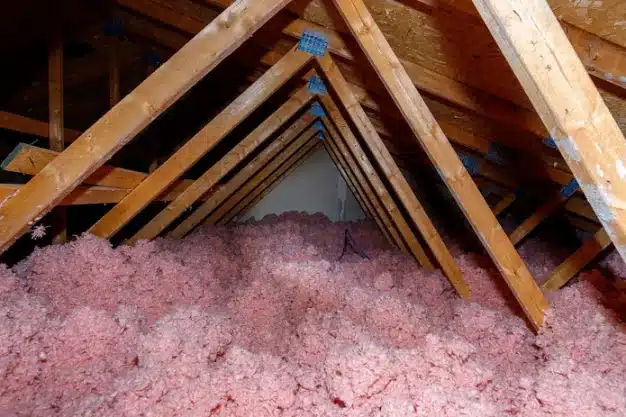
Instead of pre-cut pieces, blown-in fiberglass consists of loose fibers that are pneumatically blown into the attic space using specialized equipment. The material settles into a uniform layer that naturally fills irregular shapes and gaps.
R-value per inch: R-2.2 to R-2.7
Pros:
- Fills around obstructions, wires, and framing irregularities better than batts
- Creates a more consistent, gap-free layer
- Can be installed over existing insulation
- Good value for the coverage provided
Cons:
- Lower R-value per inch means more thickness is needed
- Can settle over time, reducing effective R-value slightly
- Requires professional equipment for installation
- Loose fibers can be messy and require careful containment
Best for: Attics with lots of obstacles, existing insulation that needs topping off, and homeowners who want professional-grade coverage.
Blown-In Cellulose
Cellulose insulation is made from recycled paper products, primarily newsprint, treated with borate fire retardants. Like blown-in fiberglass, it is pneumatically installed into the attic space.
R-value per inch: R-3.1 to R-3.8
Pros:
- Higher R-value per inch than blown-in fiberglass
- Made from recycled content (typically 80% or more post-consumer paper)
- Fills gaps and irregular spaces effectively
- Naturally resistant to pests and mold when properly treated
- Dense packing provides some air-sealing benefit
Cons:
- Heavier than fiberglass, which can be a concern for some ceiling structures
- Can absorb and hold moisture if exposed to water intrusion
- May settle over time, requiring slightly more initial depth
- Dusty during installation
Best for: Homeowners who want good thermal performance with recycled content, and attics where the weight of the material is not a structural concern.
Open-Cell Spray Foam
Spray foam insulation is applied as a liquid that expands and cures into a solid foam matrix. Open-cell spray foam has a sponge-like structure with tiny, connected air bubbles.
R-value per inch: R-3.5 to R-3.8
Pros:
- Expands to fill every gap, crack, and irregular space
- Provides meaningful air sealing in addition to insulation
- Stays in place and does not settle over time
- Flexible material that moves with the building
Cons:
- Lower R-value per inch compared to closed-cell foam
- Permeable to moisture (which can be an advantage or disadvantage depending on the situation)
- Requires professional installation with specialized equipment
- Needs a thicker application to reach target R-values
Best for: Cathedral ceilings, irregular attic geometries, and situations where air sealing is a priority alongside insulation.
Closed-Cell Spray Foam
Closed-cell spray foam has a denser structure with closed, independent gas-filled cells. This gives it significantly higher thermal resistance per inch and additional structural properties.
R-value per inch: R-6.0 to R-7.0
Pros:
- Highest R-value per inch of any common insulation material
- Acts as both a vapor barrier and air barrier
- Adds structural rigidity to the assembly
- Resists moisture and will not absorb water
- Does not settle, shrink, or degrade over time
Cons:
- Highest upfront cost of any insulation type
- Requires professional installation
- Once cured, it is permanent and difficult to remove
- Overly rigid in some applications where building movement is expected
Best for: Attics with limited space where maximum R-value in minimum thickness is needed, moisture-prone environments, and homeowners prioritizing long-term performance.
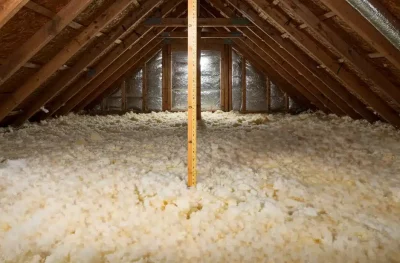
Mineral Wool (Rock Wool)
Mineral wool is made from basalt rock or slag from steel production, spun into fibers similar to fiberglass but denser and heavier.
R-value per inch: R-3.3 to R-4.2
Pros:
- Naturally fire-resistant (does not melt or support combustion)
- Excellent sound-dampening properties
- Repels moisture and maintains R-value when wet
- Dense enough to provide some air-flow resistance
Cons:
- Heavier than fiberglass, which complicates installation
- More expensive than fiberglass
- Limited availability in some markets
- Can be difficult to cut and fit in irregular spaces
Best for: Sound-sensitive areas, homes where fire resistance is a priority, and homeowners who want a denser, more durable batt material.
Radiant Barriers and Reflective Insulation
Unlike other insulation types that slow conductive heat transfer, radiant barriers work by reflecting radiant heat away from your home. They are made from highly reflective aluminum foil laminated to a substrate material.
How they work: In a hot climate like Las Vegas, radiant barriers are installed in the attic to reflect up to 97% of the radiant heat coming from the sun before it reaches the insulation below.
Pros:
- Highly effective at reducing radiant heat gain in cooling-dominated climates
- Does not degrade or lose effectiveness over time
- Can be combined with other insulation types for added performance
- Lightweight and relatively easy to install in some configurations
Cons:
- Only effective against radiant heat, not conductive or convective heat loss
- Performance drops significantly when covered in dust
- Must be installed correctly (attached to rafters, not laid on the attic floor)
- Does not replace the need for bulk insulation
Best for: Las Vegas homes that already have adequate bulk insulation but want to further reduce radiant heat gain, especially during peak summer months.
Comparison Table: All Insulation Types at a Glance
| Insulation Type | R-Value Per Inch | Air Sealing | Moisture Resistant | DIY Friendly | Lifespan |
|---|---|---|---|---|---|
| Fiberglass batts | 3.2 to 3.8 | No | Moderate | Yes | 80 to 100 years |
| Blown-in fiberglass | 2.2 to 2.7 | Minimal | High | No (equipment needed) | 20 to 30 years |
| Blown-in cellulose | 3.1 to 3.8 | Moderate | Low to Moderate | No (equipment needed) | 20 to 30 years |
| Open-cell spray foam | 3.5 to 3.8 | Yes | Low | No | 50+ years |
| Closed-cell spray foam | 6.0 to 7.0 | Yes | High | No | 80+ years |
| Mineral wool | 3.3 to 4.2 | Moderate | High | Yes | 80 to 100 years |
| Radiant barrier | N/A (reflects radiant heat) | No | High | Yes | 25 to 40 years |
Expert Tip: In Las Vegas, combining a radiant barrier with adequate bulk insulation (R-49 or higher) is one of the most effective strategies. The radiant barrier handles the intense solar radiation hitting your roof, while the bulk insulation prevents the remaining heat from conducting into your living space.
Choosing the Right Insulation for Your Las Vegas Attic
With all these options available, how do you decide what makes the most sense for your specific situation? Here are the key factors we consider when evaluating an attic for insulation.
Assessing Your Existing Insulation
Before choosing new insulation, you need to understand what is already up there. Many Las Vegas homes built before 2000 have fiberglass batts that have settled, compressed, or been disturbed by years of HVAC contractors, electricians, and homeowners moving through the attic. The visible depth may be misleading because compressed insulation loses a significant portion of its rated R-value.
Look for these common problems:
- Voids and gaps where insulation was moved and never replaced
- Compression from storage boxes, ductwork, or foot traffic sitting on the insulation
- Moisture damage visible as staining, clumping, or discoloration
- Pest damage including nesting, tunnels, or displaced material
- Insulation blocking soffit vents, which prevents proper attic ventilation
Matching Insulation to Your Attic Configuration
Not every insulation type works in every attic. The physical layout and access of your attic space will narrow your options significantly.
Open, accessible attics with standard floor joists are ideal for blown-in fiberglass or cellulose. These materials provide the most cost-effective path to reaching R-49 and can be installed quickly with minimal disruption.
Attics with ductwork running through them benefit enormously from spray foam applied to the underside of the roof deck, creating a conditioned attic. This brings the ducts inside the insulated envelope, preventing the significant energy losses that occur when ducts sit in a 150-degree attic space.
Low-slope or cathedral ceiling attics with limited space between the roof deck and ceiling often require spray foam because there simply is not enough room for 16 inches of blown-in material. Closed-cell foam achieves R-49 in about 7 to 8 inches of depth.
Older homes with knob-and-tube wiring present a special safety concern. The National Electric Code prohibits installing loose, rolled, or foam-in-place insulation around this type of wiring because it could cause the wires to overheat. If your home has knob-and-tube wiring, the wiring must be updated before insulation can be safely added.
Ventilated vs. Unvented (Conditioned) Attics
This is one of the most important decisions in attic insulation strategy, and it has major implications for both comfort and energy efficiency.
Traditional ventilated attics have insulation on the attic floor, with soffit vents at the eaves and ridge or gable vents near the peak. This allows outside air to flow through the attic space, carrying away heat and moisture. The living space below is separated from the unconditioned attic by the insulation layer on the floor.
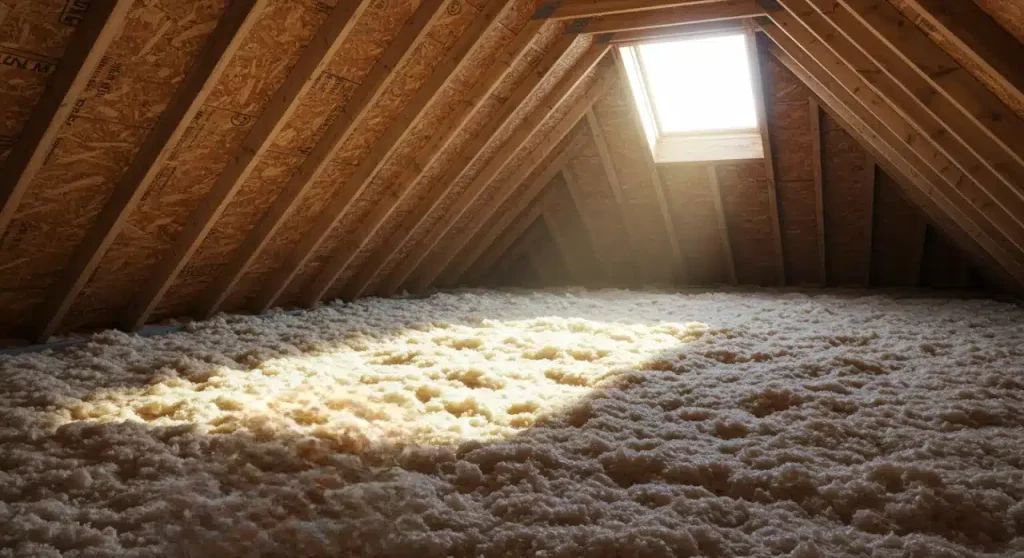
Unvented (conditioned) attics have insulation applied directly to the underside of the roof deck, typically with spray foam. The attic space becomes part of the conditioned envelope of the house. There are no vents, and the attic temperature stays close to the indoor temperature.
In Las Vegas, both approaches can work well, but the unvented approach has a compelling advantage: it keeps HVAC ductwork inside the conditioned space. When ducts run through a traditional vented attic in our climate, they can lose 15 to 25% of the cooled air they carry simply by being in a superheated space. Moving the insulation to the roof deck eliminates this loss entirely.
Expert Tip: If you choose a conditioned attic approach, make sure the spray foam is installed to the correct depth for R-49 (about 7 to 8 inches of closed-cell). Also, any existing soffit vents must be sealed off completely. Leaving vents open in an unvented attic creates pathways for humid outside air to enter, which can cause moisture problems.
The Installation Process: What to Expect
Understanding the installation process helps you know what to look for, whether you hire a professional or tackle it yourself. Here is how a properly executed attic insulation project typically unfolds.
Step 1: Inspection and Assessment
Before any material goes into the attic, a thorough inspection is needed. This involves checking the existing insulation depth and condition, identifying air leaks, verifying that soffit vents are clear, and noting any potential safety hazards like exposed wiring, recessed lights that are not IC-rated, or signs of moisture damage.
This is also when we measure the square footage of the attic and calculate how much insulation is needed to reach the target R-value. The calculation involves multiplying the total area by the depth needed for the chosen material.
Step 2: Air Sealing
As we mentioned earlier, air sealing must happen before insulation is added. The key areas to seal in any Las Vegas attic include:
- Top plates where interior walls meet the ceiling (gaps between framing and drywall)
- Recessed light housings (only IC-rated fixtures can be covered with insulation; non-IC-rated fixtures need dedicated covers)
- Plumbing vent stacks and other penetrations through the ceiling
- Electrical wire penetrations at the top plate
- The attic hatch or pull-down stairway (often one of the largest single air leaks in the entire house)
- Ductwork boots where supply and return registers meet the ceiling drywall
- Chimney and flue chases (using high-temperature-rated materials like sheet metal and high-temperature caulk)
Caulk, canned spray foam, and rigid foam board are the primary materials used for air sealing. The goal is to create a continuous air barrier between your conditioned living space and the unconditioned attic.
Step 3: Preparing the Attic
Preparation includes installing baffles or rafter vents at every soffit intake to maintain proper airflow from eave to ridge. These cardboard or foam channels keep the insulation from blocking the soffit vents while still allowing a clear path for ventilation air.
If there are any non-IC-rated recessed lights, covers must be installed to create a barrier between the fixture and the insulation. This is both a safety requirement and a building code requirement.
Ductwork that runs through the attic should be sealed at all joints with mastic (not duct tape, which degrades over time) and mechanically fastened. Any gaps in the duct insulation should be repaired as well.
Step 4: Insulation Installation
The actual insulation installation varies depending on the material chosen.
For blown-in fiberglass or cellulose: A professional crew sets up the blowing machine outside and runs a long hose into the attic. The installer works from the eaves inward, layering the material to the calculated depth. In most cases, the material is blown to a uniform depth across the entire attic floor, including over the tops of the joists to reduce thermal bridging.
Depth markers (called rulers or gauges) are stapled to joists at regular intervals so the installer can visually confirm they are reaching the target depth throughout the space. A typical Las Vegas attic takes one to three hours to insulate, depending on size and accessibility.
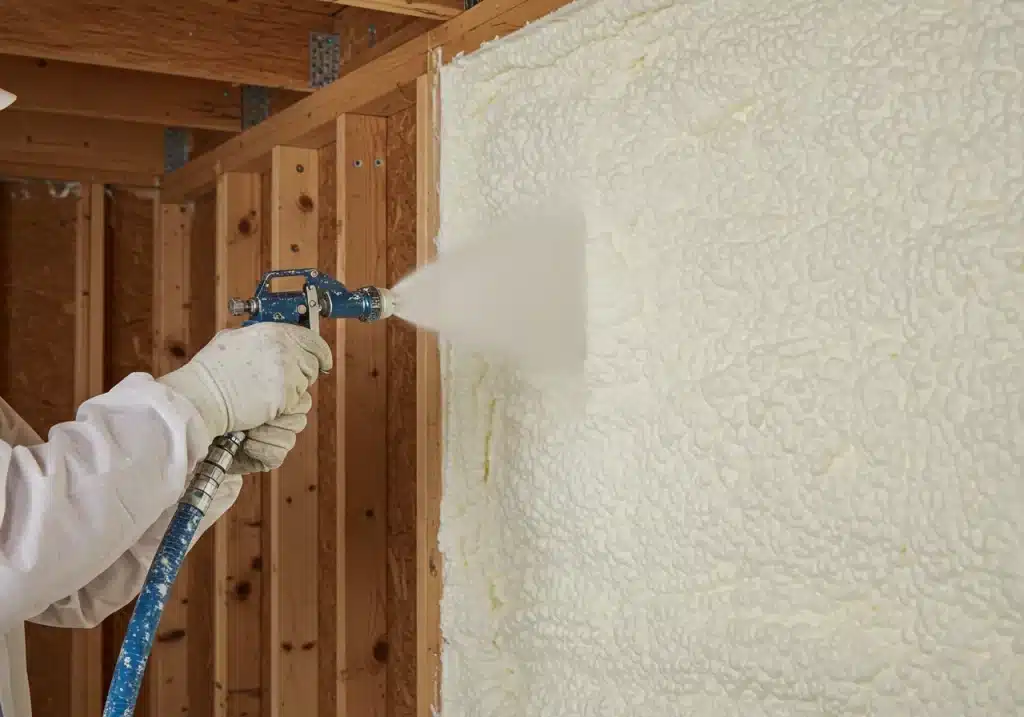
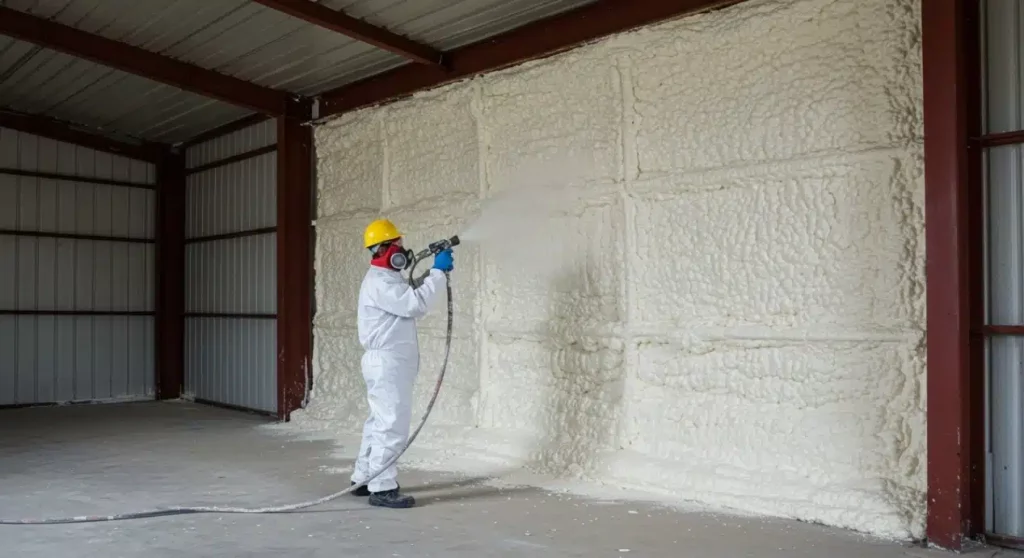
For spray foam: The installation crew applies the foam directly to the surfaces being insulated. For an attic floor application, foam is sprayed between and over the joists. For a conditioned attic approach, foam is sprayed to the underside of the roof deck and along the gable end walls.
Spray foam requires careful temperature and humidity control during application. In Las Vegas, our extreme summer heat can actually accelerate the curing process, which installers must account for. The foam expands to many times its initial volume and cures within minutes.
For fiberglass batts: The installer fits each batt snugly between the joists. If a second layer is needed to reach the target R-value, it is laid perpendicular to the first layer so that it covers the tops of the joists, breaking the thermal bridges. Every batt must be cut to fit tightly around obstructions with no gaps, compressions, or voids.
Step 5: Quality Check and Documentation
After installation, a quality check verifies that the insulation depth meets the specified R-value at multiple points across the attic. For blown-in materials, the installer should provide a certification card documenting the material type, installed R-value, coverage area, and number of bags used.
It is also important to verify that soffit vents remain clear and unblocked, that no insulation is in direct contact with heat-producing fixtures, and that the attic hatch or access door has been insulated to match the surrounding R-value.
Expert Tip: Always get a written insulation certificate from your installer. The Las Vegas building energy code requires this documentation for compliance, and you will need it if you ever sell your home or apply for energy-efficiency rebates.
Common Attic Insulation Mistakes and How to Avoid Them
Over the years, we have seen the same mistakes repeated in attics across Las Vegas. Knowing what to watch for can help you get the most from your insulation investment.
Mistake 1: Skipping Air Sealing
This is the single most common and most costly error. Blowing insulation into an attic without first sealing the air leaks is like wearing a thick coat with the zipper open. The insulation reduces conductive heat transfer but does nothing to stop the conditioned air that is escaping through gaps around penetrations, along top plates, and through the attic hatch.
In a properly air-sealed attic, the insulation can work at its full rated performance. In an unsealed attic, studies show that air movement through and around the insulation can reduce its effective R-value by 30% or more.
Mistake 2: Compressing Insulation
Insulation works because of the air pockets trapped within the material. When insulation is compressed, those pockets collapse and the R-value drops. Common causes of compression include:
- Placing storage boxes on top of attic floor insulation
- Installing dense material on top of lighter material
- Stuffing batts into cavities that are too narrow for their rated thickness
- Walking on insulation and permanently flattening it
If you need to store items in your attic, build a raised platform above the insulation layer so the material underneath can maintain its full, uncompressed depth.
Mistake 3: Blocking Soffit Vents
In a ventilated attic, soffit vents at the eaves draw in outside air, which flows up and out through ridge or gable vents at the peak. This airflow carries away heat in the summer and prevents moisture buildup in the winter. When insulation is blown or placed over these soffit vents, it chokes off the ventilation pathway.
The fix is simple: install baffles or rafter vents at every soffit opening before adding insulation. These channels maintain the air pathway while allowing insulation to be placed right up to the edge of the attic floor.
Mistake 4: Covering Non-IC-Rated Recessed Lights
Recessed can lights that are not rated for insulation contact (IC-rated) generate significant heat and can create a fire hazard if covered with insulation. If you have older non-IC-rated fixtures, they must be covered with a rated insulation contact cover, or replaced with IC-rated fixtures before insulation is installed.
Mistake 5: Ignoring Ductwork
In many Las Vegas homes, the HVAC ductwork runs through the attic. Leaky, uninsulated ducts in a 150-degree attic space can account for 15 to 25% energy loss. Sealing and insulating these ducts at the same time as adding attic insulation ensures that the entire system is working together efficiently.
How to Know When Your Attic Needs More Insulation
Not sure whether your current insulation is adequate? Here are some telltale signs that your attic needs attention.
Visible warning signs in the attic:
- Insulation depth is below the joist tops (typically less than 10 inches for fiberglass or cellulose)
- The insulation looks uneven, with some areas noticeably thinner than others
- There are visible gaps, especially around the eaves where insulation has been disturbed
- You can see the ceiling drywall through gaps in the insulation layer
Comfort signs in your living space:
- Certain rooms are noticeably hotter than others, especially second-story rooms
- Your ceilings feel warm to the touch on summer afternoons
- Temperatures fluctuate significantly between daytime and nighttime
- There are noticeable drafts near the ceiling, particularly around light fixtures
Energy use signals:
- Your cooling costs have been steadily increasing year over year
- Your air conditioning system runs constantly during peak summer hours
- Your home takes a long time to cool down after the system cycles off
Age-related factors:
- Your home was built before 1990 and has never had insulation upgraded
- You have added living space or finished rooms without updating attic insulation
- Your current insulation is original to the home and may have settled or degraded
Any one of these signs is worth investigating. If you notice several, it is very likely that upgrading your attic insulation would make a noticeable difference in both comfort and energy costs.
The Connection Between Attic Insulation and Energy Savings
Let us put some numbers behind the benefits. The EPA’s methodology for estimating energy savings from insulation upgrades is based on energy modeling of typical U.S. homes. The data shows that in Climate Zone 3 (which includes Las Vegas), homeowners can expect to save approximately 8% on total energy costs and 14% on heating and cooling costs specifically.
To put this in perspective, ENERGY STAR reports that 9 out of 10 homes in the U.S. are under-insulated. In Las Vegas, where homes are under intense solar heat load for roughly six months of the year, the impact of under-insulation is magnified.
The savings come from two sources working together. First, the insulation itself reduces the rate of heat flowing through your ceiling. Second, the air sealing that accompanies a proper insulation installation eliminates the air leaks that were already costing you money. Together, these improvements allow your air conditioning system to run less frequently and at lower capacity, which directly translates to lower electricity bills.
The return on investment for attic insulation in Las Vegas tends to be strong because of our heavy cooling load. While the exact payback period depends on your current insulation level, the size of your home, and your electricity rates, many homeowners see a meaningful reduction in their summer cooling bills within the first season.
Expert Tip: Track your energy bills for a few months before and after your insulation upgrade. This gives you real data on the improvement and helps you confirm that the installation is performing as expected. If you see less than a 10% reduction in summer cooling costs and your home was significantly under-insulated to begin with, it is worth investigating whether air sealing was done thoroughly.
Attic Ventilation: The Often-Overlooked Partner to Insulation
Insulation and ventilation work together as a system, especially in a traditional vented attic. Even with R-49 on the attic floor, your home will not perform at its best if the attic space does not have adequate ventilation.
In a Las Vegas summer, the air temperature inside a vented attic can reach 140 to 160 degrees. Proper ventilation, a combination of soffit intake vents at the eaves and ridge or gable exhaust vents at the peak, allows this extreme heat to escape rather than baking the insulation from above.
Building codes generally call for one square foot of net free ventilation area for every 150 square feet of attic floor area, with the ventilation area split evenly between intake (soffit) and exhaust (ridge or gable). If your attic has a vapor retarder on the warm side of the ceiling, the ratio can be relaxed to one square foot per 300 square feet.
Frequently Asked Questions About Attic Insulation in Las Vegas
Can I install attic insulation myself?
Blown-in insulation requires professional equipment, but fiberglass batts can be a DIY project for accessible, unobstructed attics. Spray foam always requires a professional installer. If you are unsure, a professional inspection can help you determine the scope of work.
How long does attic insulation last?
Fiberglass batts and mineral wool can last 80 to 100 years without significant degradation. Blown-in materials like fiberglass and cellulose may settle slightly over 20 to 30 years, reducing their effective depth. Spray foam, once cured, maintains its R-value for the life of the building.
Does adding insulation mean I need a bigger HVAC system?
No, the opposite. Proper insulation reduces the cooling and heating load on your HVAC system, so it can often run more efficiently with less strain. In some cases, well-insulated homes can use smaller, more efficient HVAC equipment.
Can I add new insulation on top of old insulation?
Yes, in most cases. This is actually one of the most common and cost-effective approaches. There are a few precautions: use unfaced material for the new layer, do not place a vapor barrier between old and new insulation, and ensure the existing layer is dry and in reasonable condition before covering it.
Is spray foam insulation worth the extra cost?
Spray foam offers the highest R-value per inch and provides air sealing that other materials cannot match. In applications with limited space, such as cathedral ceilings, or when creating a conditioned attic to protect ductwork, spray foam delivers benefits that other insulation types simply cannot replicate.
Does attic insulation help with soundproofing?
To some degree. Fibrous insulation materials like fiberglass, cellulose, and mineral wool absorb sound energy. Mineral wool is particularly effective at sound dampening. While attic insulation will not eliminate outdoor noise entirely, it can noticeably reduce the transmission of sound through the ceiling from an attached garage or upper-level noise.
Putting Your Attic Insulation Strategy into Action
By this point, you have a solid understanding of how attic insulation works, what types are available, what Las Vegas requires for performance, and what a proper installation involves. Here is a quick summary of the most important points to take with you.
Start with an assessment. Knowing your current insulation level is the foundation for every decision that follows. A ruler and a trip to the attic can tell you a lot, but a professional inspection provides a complete picture.
Prioritize air sealing. No matter how much insulation you add, it will underperform if air leaks are not addressed first. Seal penetrations, gaps, and cracks before a single bag of insulation is opened.
Target R-49 for Las Vegas. Climate Zone 3 requires a minimum R-49 ceiling insulation value. If your attic has significantly less, upgrading will deliver a noticeable improvement in comfort and energy costs.
Match the material to your situation. Blown-in fiberglass and cellulose work well for most standard attics. Spray foam is the right call for conditioned attics, limited-space applications, and maximum performance. Choose based on your specific needs, not just the lowest price.
Combine with proper ventilation. In vented attics, ensure soffit and ridge vents are clear and functioning. In conditioned attics, verify that all vents are properly sealed. Either approach works, but mixing elements of both defeats the purpose.
Use this guide as your reference as you evaluate your options and move forward with your project. The right insulation investment pays dividends in comfort, energy savings, and home durability for decades to come.
Need Expert Guidance?
If you would like a professional assessment of your current attic insulation or help deciding on the best approach for your Las Vegas home, our team at Supreme Spray Foam LV is here to help. We have worked with all insulation types and attic configurations across the Las Vegas area and can provide a straightforward evaluation of your specific situation. Reach out to us at [email protected] or call (702) 904-9895 to schedule a consultation.