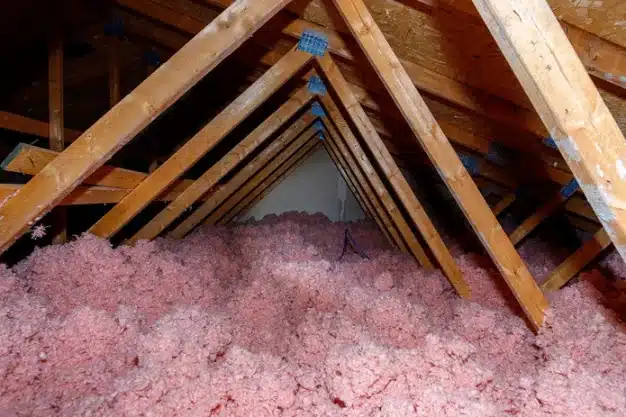
Attic insulation works by creating a thermal barrier between the intense desert heat on your roof and the living spaces below. In Desert Shores, where summer temperatures regularly push past 110 degrees, an uninsulated attic can reach temperatures exceeding 150 degrees. That heat radiates directly through your ceiling and forces your air conditioning system to work overtime. The EPA estimates that homeowners can save an average of 15% on heating and cooling costs by air sealing their homes and adding insulation in attics, crawl spaces, and basements. For a Desert Shores home running central air conditioning through a six-month summer season, those savings compound quickly. Las Vegas falls within Climate Zone 3, where the EPA’s energy modeling shows that sealing and insulating can reduce total household energy costs by approximately 8% and heating and cooling costs alone by 14%.
TL;DR
- The EPA estimates homeowners save an average of 15% on heating and cooling costs by adding attic insulation and sealing air leaks
- Las Vegas is in Climate Zone 3, where recommended attic insulation levels reach R-38 for existing homes with 3-4 inches of current insulation, and R-49 for uninsulated attics
- Desert Shores homes face extreme radiant heat gain through rooftops during summer, making the attic the single most important area to insulate
- 9 out of 10 American homes are under-insulated according to ENERGY STAR, and many older Las Vegas homes were built with minimal attic insulation
- Air sealing must accompany insulation for maximum performance, as air movement through insulation drastically reduces its effectiveness
- Federal tax credits of up to $1,200 are available for qualifying attic insulation projects
- Radiant barriers are particularly effective in hot, sunny climates like Las Vegas for reducing downward heat flow into living spaces
Why Desert Shores Homes Lose More Energy Through the Attic
Building insulation functions by slowing heat transfer through conduction, convection, and radiation. In hot, dry climates like the Las Vegas valley, the greatest source of unwanted heat energy is solar radiation beating down on the roof. That radiation heats roofing materials well above ambient temperature, and the heat transfers into the attic space. Without adequate insulation separating the attic from the conditioned living area below, that heat pushes directly into your home through the ceiling. This is why attic insulation services play such an important role in energy efficiency.
Desert Shores presents a specific challenge because of its proximity to open water features and lake areas, which can create microclimates with higher humidity levels than the surrounding desert. This added moisture increases the urgency of proper insulation because humidity carried into the attic through air leaks can condensate and damage structural materials. Proper insulation combined with air sealing addresses both the heat transfer problem and the moisture infiltration problem simultaneously.
According to Wikipedia’s building insulation reference, radiant barriers are especially effective in hot climates for attic spaces because downward heat flow is dominated by radiation rather than convection. This makes radiant barrier systems paired with bulk insulation a strong strategy for Desert Shores homeowners.
Recommended R-Values for Las Vegas Attics
R-value measures an insulation material’s ability to resist heat flow. Higher R-values mean greater thermal resistance. The ENERGY STAR Recommended Home Insulation R-Values provide specific guidance based on the 2021 International Energy Conservation Code (IECC). For Climate Zone 3, which includes the Las Vegas area:
Most homes built in Las Vegas before 2000 were constructed with far less than R-38 in the attic. Many have settled, compressed, or displaced insulation that offers a fraction of its original thermal resistance. A quick visual inspection using a ruler in the attic can reveal whether you meet current standards.
How Heat Transfer Works Against Your Energy Bill
Understanding the mechanics of heat transfer helps explain why attic insulation delivers such measurable savings in desert climates:
- Conduction: Heat moves directly through solid materials like your ceiling drywall and framing. Insulation with a high R-value slows this transfer significantly.
- Convection: Hot air rises in the attic and creates pressure differentials that push warm air through any gaps, cracks, or penetrations in the ceiling below.
- Radiation: The sun’s energy heats the roof surface, which then radiates heat downward into the attic cavity. This is the dominant mode of heat transfer in desert environments.
The EPA’s Seal and Insulate with ENERGY STAR program notes that insulation performance depends on air not moving through or around it. Air sealing before adding insulation is essential. When air flows through insulation, it strips away the trapped air pockets that provide thermal resistance, reducing the effective R-value dramatically.
Climate Zone 3 Savings Breakdown
The ENERGY STAR Methodology for Estimated Energy Savings breaks down expected savings by geographic region based on energy modeling of typical existing U.S. homes. The savings for Climate Zone 3, which covers Desert Shores and the broader Las Vegas metropolitan area:
While the national average is 11% on total energy bills and 15% on heating and cooling, savings in the South tend to be slightly lower in percentage terms. However, the absolute dollar savings can still be substantial because Las Vegas homeowners spend a larger portion of their energy budget on cooling compared to homeowners in more temperate regions. When your air conditioning accounts for 60-70% of summer electricity usage, even an 8% reduction in total energy costs translates to a noticeable impact on monthly bills.
Factors That Influence Insulation Performance in Desert Shores
Several variables determine how effectively attic insulation will lower your energy costs:
- Current insulation level: Homes with little to no existing insulation see the most dramatic improvement from an upgrade
- Air leakage: Gaps around recessed lights, plumbing vents, ductwork, and attic hatches allow conditioned air to escape and hot attic air to infiltrate
- Attic ventilation: Proper ventilation works in tandem with insulation by allowing trapped heat to exhaust rather than building up pressure against the ceiling
- Roof color and material: Dark roofs absorb more solar radiation, increasing the heat load that insulation must resist
- Ductwork location: HVAC ducts running through uninsulated attic spaces lose significant cooled air through conduction and leaks
- Moisture control: Desert Shores’ proximity to water features means humidity management is an additional consideration
Who Attic Insulation Is For (and Who It Is Not)
Attic insulation is the right investment if:
- Your home was built before 2000 and has not had an insulation upgrade
- Your air conditioning runs continuously during summer but rooms still feel warm
- You notice uneven temperatures between rooms or hot spots near ceilings
- Your energy bills have climbed steadily over the past few summers
- You can see the ceiling joists through your attic insulation, meaning the coverage is too thin
Attic insulation may not be the best priority if:
- Your home was built within the last five years to current energy code standards
- You already have R-49 or better in your attic with verified air sealing
- Your primary comfort complaint is related to window heat gain rather than ceiling heat transfer
- You plan a full roof replacement soon, which would allow for a different insulation approach from above
The Real Cost of Ignoring Your Attic
What happens to your HVAC system when attic insulation is inadequate or nonexistent? Your air conditioning unit runs longer cycles, more frequently, and under higher load to compensate for the continuous heat pouring through your ceiling. Over time, this extra strain shortens the lifespan of your compressor and blower motor. A system that should last 15-20 years may fail in 10-12 years when forced to overcome poor building envelope performance. That replacement cost alone often exceeds the investment in high-performance attic insulation several times over.
The ENERGY STAR Rule Your Attic program also highlights that homeowners may be eligible for federal tax credits of up to $1,200 for qualifying attic insulation projects. This means a portion of the project cost comes back at tax time, accelerating the return on investment.
For Desert Shores homeowners, the question is not whether attic insulation saves money. The data from decades of building science research confirms that it does. The real question is how much money you continue to lose each summer by waiting.
Schedule Your Desert Shores Attic Insulation Project
Our team at Supreme Spray Foam LV has worked on homes throughout Desert Shores and the greater Las Vegas valley, and we understand the specific challenges that desert heat creates for residential insulation. We evaluate your current attic conditions, identify air leakage points, and recommend the insulation strategy that fits your home’s construction and your budget. Whether you need blown-in insulation over existing material or a full spray foam application for maximum air sealing and thermal performance, we handle every project from assessment through completion.
Get started by reaching out today. Call us at (702) 904-9895 or email info@supremesprayfoamlv.com to discuss your project. We are ready to help you stop losing money through your ceiling every summer.
Sources
- ENERGY STAR: Why Seal and Insulate: EPA overview of energy savings from sealing and insulating homes, including the 15% heating and cooling savings estimate and statistic that 9 out of 10 U.S. homes are under-insulated.
- ENERGY STAR: Methodology for Estimated Energy Savings: Detailed EPA methodology showing estimated savings by climate zone, with Zone 3 (Las Vegas area) yielding 8% total energy savings and 14% heating and cooling savings.
- ENERGY STAR: Recommended Home Insulation R-Values: Official R-value recommendations for retrofitting existing wood-framed buildings based on the 2021 IECC, specifying R-38 to R-49 for Zone 3 attics.
- EPA Seal and Insulate with ENERGY STAR (PDF): EPA publication on sealing and insulating the building envelope, covering air leak identification, insulation types, and the importance of combining air sealing with insulation for maximum performance.
- Wikipedia: Building Insulation: Comprehensive reference on building insulation science, including heat transfer modes, radiant barrier effectiveness in hot climates, and the relationship between R-value and thermal performance.