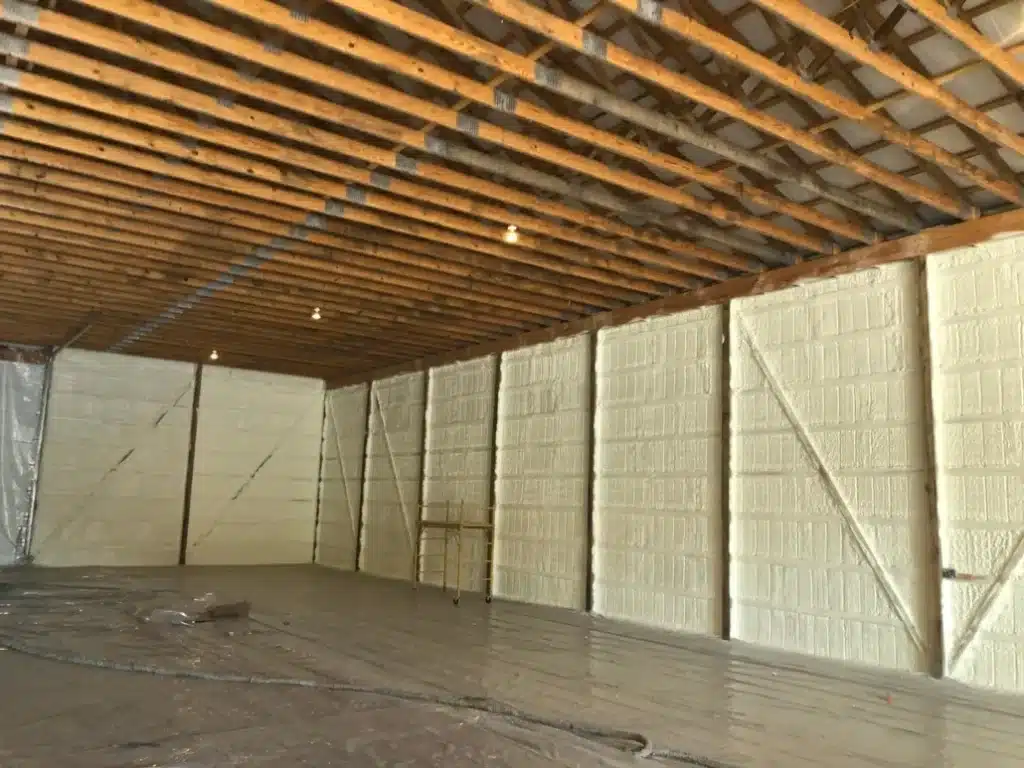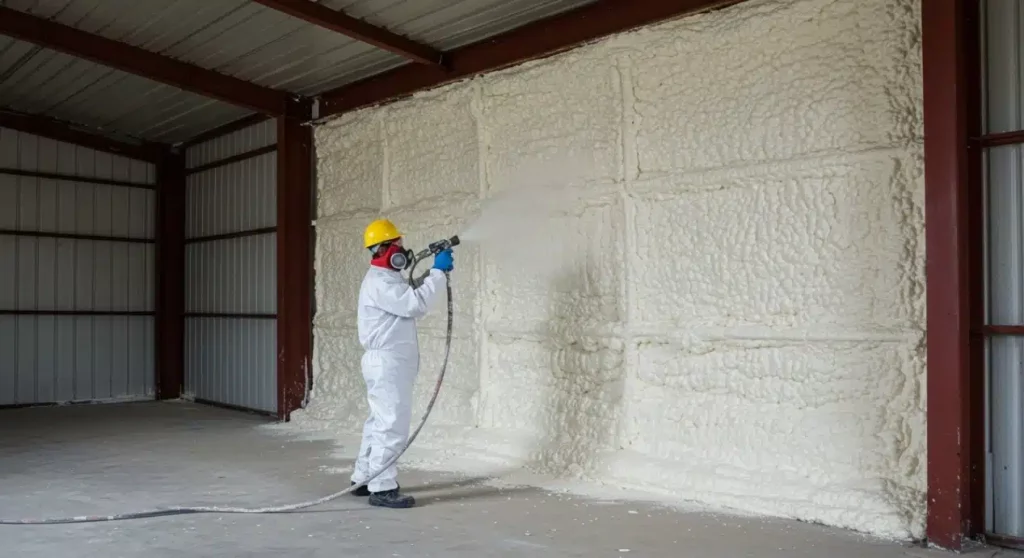

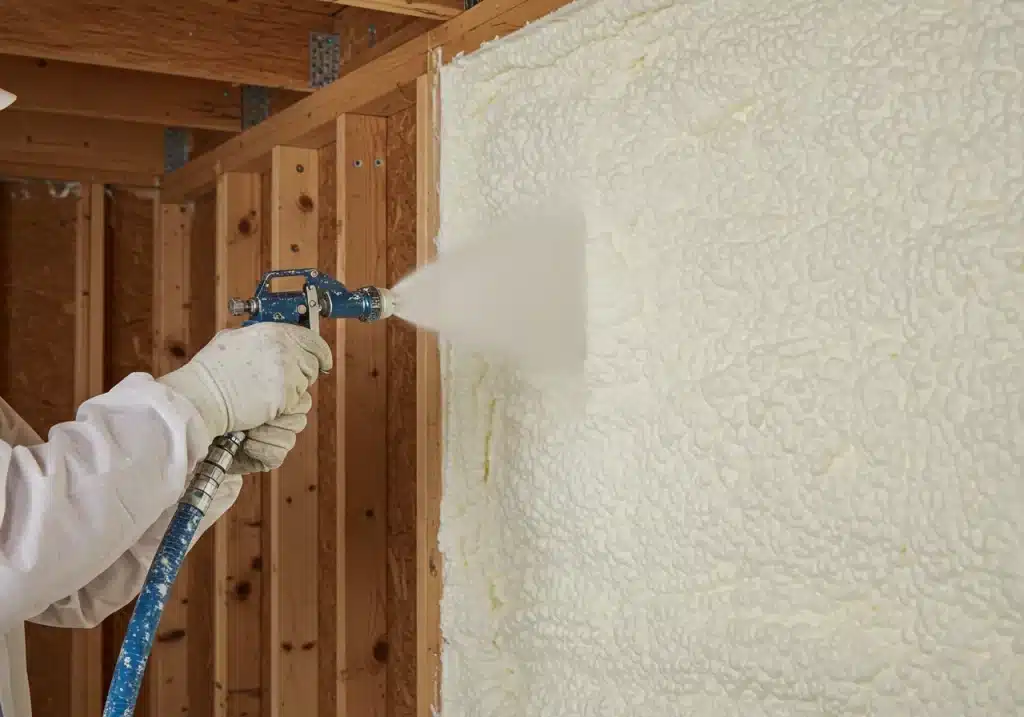
Spray foam insulation consistently outperforms traditional wall insulation in thermal performance, air sealing, and moisture resistance. While standard wall insulation materials like fiberglass batts and blown-in cellulose remain the most widely used and budget-friendly option, spray foam delivers a higher R-value per inch, acts as an effective air barrier, and fills gaps and voids that traditional materials leave behind. According to the Department of Energy, spray foam insulation products yield higher R-values for the same thickness and create an air barrier that eliminates the need for separate weatherization tasks. The EPA’s ENERGY STAR program estimates that homeowners can save an average of 15% on heating and cooling costs through proper air sealing and insulation. For contractors and property owners focused on long-term energy performance and building durability, spray foam is the stronger choice. For those working with tight budgets on large-scale projects, traditional wall insulation still delivers solid results when installed correctly.
TLDR / Key Takeaways
- Spray foam delivers a higher R-value per inch than fiberglass batts, making it the better performer in limited cavity spaces
- Closed-cell spray foam also serves as a vapor barrier and moisture barrier, adding structural protection that traditional wall insulation cannot match
- The EPA estimates homeowners can save 15% on heating and cooling costs with proper air sealing and insulation combined
- Traditional wall insulation (fiberglass, mineral wool, cellulose) costs less upfront and is easier to install in open cavities
- Spray foam requires professional installation and specialized equipment, while batt insulation can be a DIY-friendly option
- 9 out of 10 U.S. homes are under-insulated, making either upgrade a meaningful improvement
- Spray foam eliminates the need for separate air sealing, caulking, and housewrap tasks
- The best choice depends on climate zone, cavity depth, budget, and whether the project is new construction or a retrofit
R-Value Performance Comparison
R-value measures how well insulation resists heat flow. The higher the number, the better the thermal resistance. But R-value alone does not tell the full story. How insulation is installed, whether it seals air leaks, and how it holds up over time all affect real-world performance.
According to the Department of Energy, the overall R-value of a wall differs from the R-value of the insulation itself because heat flows more readily through studs, joists, and framing in a process called thermal bridging. Spray foam adheres to framing members and fills gaps around them, reducing this effect.
| Factor | Traditional Wall Insulation | Spray Foam Insulation |
|---|---|---|
| R-value per inch | R-2.9 to R-3.8 (fiberglass) | R-3.5 to R-6.5 (open/closed cell) |
| Common cavity fill | R-13 (2×4 wall), R-19 to R-21 (2×6 wall) | R-14 to R-26 depending on depth and type |
| Air sealing | Minimal, requires separate air barrier | Built-in air barrier when properly applied |
| Moisture resistance | Absorbs moisture, loses R-value when wet | Closed-cell resists water and acts as vapor barrier |
| Thermal bridging | High, heat transfers through exposed studs | Reduced, foam adheres to framing and sheathing |
| Longevity | Can sag, settle, or compress over time | Maintains shape and R-value for building lifetime |
| Installation | Batts fit between studs, some blown-in options | Requires professional equipment and certification |
The Department of Energy’s insulation materials guide confirms that closed-cell foam has a higher R-value and provides stronger resistance against moisture and air leakage, while open-cell foam is lighter, less expensive, and more flexible but should not be used below ground level where it could absorb water.
How Each Type Works in Wall Cavities
Traditional Wall Insulation
Fiberglass batts and rolls are the most common wall insulation in residential construction. They come in widths matched to standard stud spacing and are fitted between studs, joists, and beams. Blown-in cellulose and fiberglass can also fill existing wall cavities through drilled holes, making them a practical retrofit option. The Department of Energy notes that blanket insulation is relatively inexpensive and suited for standard stud spacing that is relatively free from obstructions.
The main weakness of traditional wall insulation is air leakage. Even when batts are installed properly, gaps around electrical boxes, plumbing penetrations, and framing connections allow conditioned air to escape. These gaps reduce effective R-value significantly, sometimes by 25% or more according to the Insulation Institute, which notes that proper installation increases actual R-value performance by 15 to 25% compared to poorly installed materials.
Spray Foam Insulation
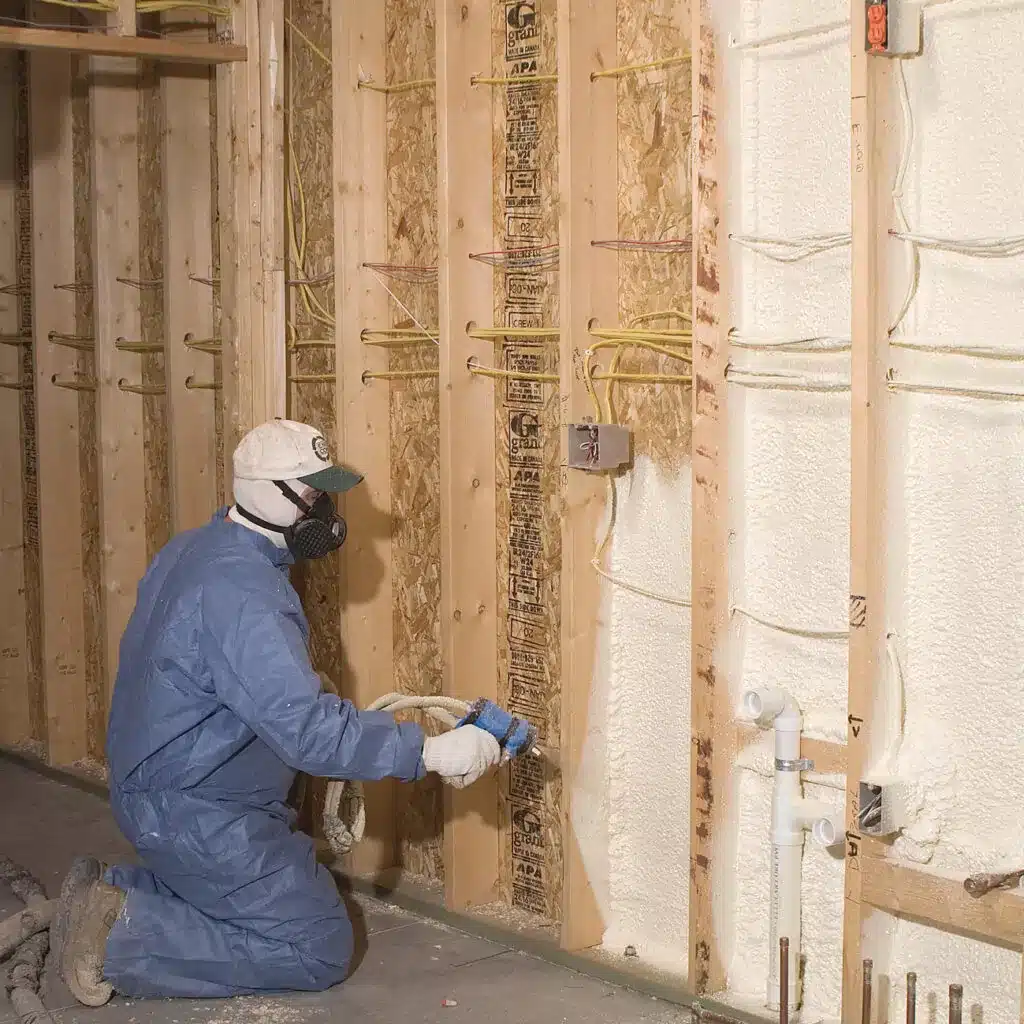
Spray foam is applied as a liquid that expands and hardens, conforming to the shape of the cavity and filling even the smallest gaps. The Department of Energy describes sprayed foam as good for adding insulation to existing finished areas, irregularly shaped spaces, and around obstructions. It simultaneously insulates and air seals in a single step.
Two types dominate the market:
- Open-cell spray foam: Lower density, R-3.5 to R-3.7 per inch, vapor permeable, flexible, and better for sound dampening
- Closed-cell spray foam: Higher density, R-5.6 to R-6.5 per inch, acts as a vapor and moisture barrier, adds structural rigidity to the wall assembly
Energy Savings Potential
The EPA’s ENERGY STAR methodology provides clear data on what proper insulation and air sealing can deliver. Based on modeling of typical existing U.S. homes, EPA estimates an average 15% savings on heating and cooling costs nationally, with savings reaching up to 20% in northern climate zones.
| Climate Zone | Total Energy Savings | Heating & Cooling Savings |
|---|---|---|
| Cold North (CZ 5-8) | 12% to 16% | 16% to 19% |
| Mixed (CZ 4) | 12% to 13% | 17% to 20% |
| Warm South (CZ 2-3) | 6% to 8% | 9% to 14% |
These savings represent the combined effect of insulation and air sealing. Spray foam delivers both in a single application. Traditional wall insulation requires a separate air sealing step to achieve comparable results, adding labor and material costs.
The EPA’s ENERGY STAR program also reports that 9 out of 10 U.S. homes are under-insulated. This means most properties will see measurable improvement regardless of which insulation type is chosen.
Real-World Scenarios
| Scenario | Property Type | Recommended Option | Why |
|---|---|---|---|
| New build with 2×4 walls in hot climate | Single-family home | Open-cell spray foam | Fills cavities completely, air seals, lower material cost per square foot |
| Existing home retrofit, drywall intact | 1970s ranch home | Blown-in cellulose or fiberglass | Can be installed through exterior holes without removing interior finishes |
| Basement renovation with moisture concerns | Below-grade walls | Closed-cell spray foam | Acts as vapor barrier, resists water absorption, will not support mold growth |
| Large apartment complex, budget-sensitive | Multi-unit housing | Fiberglass batts | Lower material cost, faster installation across many identical cavities |
| Garage conversion to living space | Attached garage | Closed-cell spray foam | Highest R-value in thin cavities, seals air leaks around framing, adds structural strength |
Factors That Influence the Decision
Several variables determine which insulation type delivers the best results for a specific project:
- Wall cavity depth: Shallow 2×4 cavities limit how much traditional insulation can fit. Spray foam’s higher R-value per inch makes it the practical choice when space is tight
- Climate zone: Cold climates (Zones 5-8) demand higher R-values and benefit most from spray foam’s air sealing. Mild climates (Zones 1-2) may not justify the added expense
- Moisture exposure: Below-grade walls, basements, and humid environments favor closed-cell spray foam for its water resistance
- Existing construction vs. new build: Retrofits in finished walls are easier with blown-in materials. New construction allows open cavities where spray foam shines
- Budget constraints: Traditional insulation has a lower upfront cost. Spray foam delivers a higher return over time but requires a larger initial investment
- Building code requirements: Some jurisdictions require specific R-values or continuous insulation that may favor one type over another
Who Spray Foam Is Best For (And Who Should Pass)
Spray foam is the right choice when:
- The project involves new construction or a gut renovation with exposed cavities
- The building is in a climate zone with extreme hot or cold seasons
- Moisture control and vapor barrier performance are priorities
- The property owner values long-term energy savings over the lowest upfront cost
- Wall cavities are shallow or irregularly shaped
Traditional wall insulation makes more sense when:
- Budget is the primary constraint on a large-scale project
- The project is a retrofit where wall cavities are already closed
- The local climate is mild and heating and cooling loads are moderate
- DIY installation is preferred to reduce labor costs
- The property already has adequate air sealing in place
Get a Professional Insulation Assessment
Choosing between wall insulation and spray foam comes down to your building’s specific needs, your budget, and your performance goals. At Supreme Spray Foam LV, our team evaluates every project individually to recommend the insulation solution that delivers the best return. We handle residential and commercial projects across the Las Vegas area with professional-grade spray foam application that meets or exceeds building code requirements. Reach out today to get started.
Call us at (702) 904-9895 or email [email protected] to discuss your project. Our experienced team is ready to help you make the right insulation investment for your property.
Frequently Asked Questions
Does spray foam insulation last longer than fiberglass?
Yes. Spray foam maintains its shape, R-value, and air sealing properties for the life of the building without sagging, settling, or compressing. Fiberglass batts can sag over time and lose effectiveness if exposed to moisture.
Can spray foam be installed in existing walls without removing drywall?
Open-cell spray foam can sometimes be injected through small holes into existing wall cavities, but the process is less common than blown-in cellulose or fiberglass for retrofits. Closed-cell foam typically requires open cavity access for proper application.
Is closed-cell spray foam worth the extra cost over open-cell?
In walls exposed to moisture or where structural rigidity is needed, closed-cell foam justifies the higher cost. For standard interior wall cavities in dry climates, open-cell foam delivers strong air sealing at a lower price point.
Does traditional wall insulation need a separate vapor barrier?
In many climate zones, yes. Fiberglass and mineral wool batts often require a separate vapor retarder facing or an additional membrane. Spray foam, particularly closed-cell, eliminates this extra step by serving as its own vapor barrier.
How does climate zone affect which insulation type to choose?
Colder climate zones require higher total R-values and benefit most from spray foam’s air sealing and moisture resistance. In warmer zones like Las Vegas (Climate Zone 3-4), spray foam still delivers strong value by blocking hot outdoor air from infiltrating wall cavities, but the required R-value threshold is lower.
Sources
- Department of Energy – Types of Insulation – Comprehensive guide covering all insulation types, installation methods, advantages, and where each type is most applicable in residential and commercial construction.
- Department of Energy – Insulation Materials – Detailed breakdown of insulation material properties including fiberglass, cellulose, polyurethane, polyisocyanurate, and their R-value characteristics.
- Department of Energy – Insulation and R-Values – Overview of how insulation works, R-value definitions, thermal bridging effects, and climate zone R-value recommendations based on the 2021 IECC.
- EPA ENERGY STAR – Methodology for Estimated Energy Savings – EPA’s modeling methodology and savings estimates showing 15% average heating and cooling savings from air sealing and insulation, broken down by climate zone.
- EPA ENERGY STAR – Why Seal and Insulate – Consumer-facing guide on the benefits of air sealing and insulation, including the finding that 9 out of 10 U.S. homes are under-insulated.