Commercial insulation is not a luxury upgrade or a line item to skip during construction. In Desert Shores, Las Vegas, where summer temperatures regularly climb above 110 degrees Fahrenheit and the dry desert heat radiates through every inch of an uninsulated building envelope, proper commercial insulation systems serve as the first and most effective line of defense against extreme energy loss, equipment strain, and occupant discomfort. Whether you manage a retail storefront, an office building, a warehouse, or a multi-tenant complex, the right insulation strategy determines how hard your HVAC system works, how stable your indoor temperatures remain, and how much you spend on utility bills month after month. The specific approach, whether spray foam, rigid board, fiberglass batts, or a hybrid system, depends on your building type, construction materials, budget, and long-term operational goals. What remains constant is the necessity of getting it done, and done correctly.
TL;DR
- Around 40% of all energy consumed in buildings goes toward heating and cooling, making insulation one of the most impactful investments a facility owner can make (Wikipedia: Building Insulation).
- The EPA estimates that proper air sealing combined with insulation improvements can reduce heating and cooling costs by an average of 15% and total energy costs by about 11% (ENERGY STAR: Why Seal and Insulate).
- Las Vegas falls within IECC Climate Zone 3B (warm, dry), requiring specific R-value minimums for commercial walls, roofs, and assemblies under the Nevada Energy Code.
- Buildings that follow the EPA’s recommended five-stage energy improvement approach, which includes addressing supplemental loads like poor insulation, can reduce total energy use by roughly 30% (ENERGY STAR for Commercial Buildings).
- Insulation also protects against moisture damage, mold growth, and structural degradation, all of which are accelerated in desert environments with temperature swings.
- The R-value of insulation measures its resistance to conductive heat flow, and the higher the R-value, the greater the insulating effectiveness (Department of Energy: Insulation).
- The EPA identifies sustainability considerations for insulation that include thermal performance, reduction of toxics and VOCs, recycled content, and embodied energy (EPA: Identifying Greener Insulation).
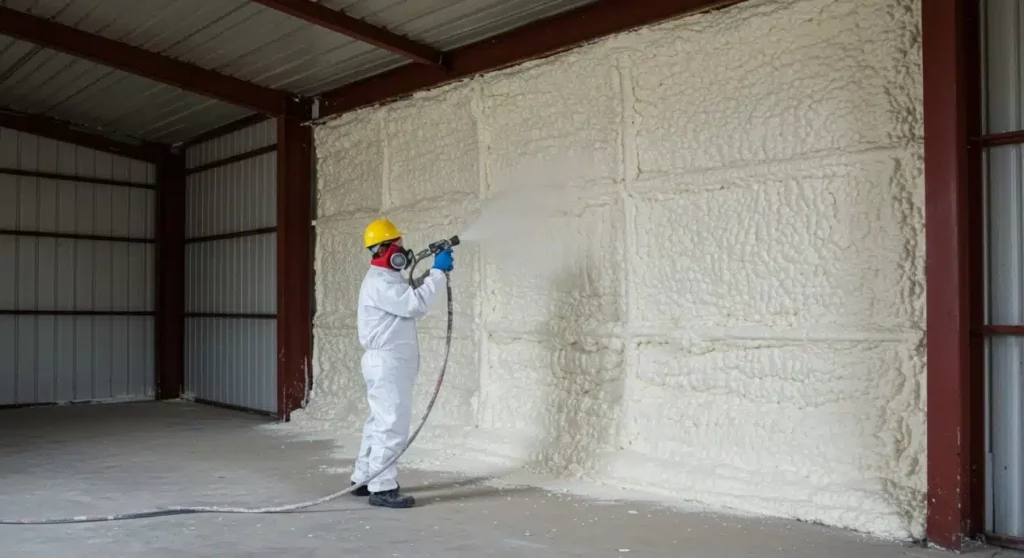
- Spray foam insulation offers both high R-value per inch and air barrier properties in a single application, making it well-suited for commercial retrofits in hot, dry climates.
What Desert Shores Building Owners Face: A Climate That Punishes Poor Insulation
Desert Shores sits within the Las Vegas Valley, a basin characterized by long, brutal summers, intense solar radiation, and minimal cloud cover. The sun beats down on commercial roofs and walls for the majority of the year, driving exterior surface temperatures far above ambient air readings. Without adequate insulation, that heat transfers directly into conditioned spaces, forcing HVAC systems to run continuously just to maintain occupable temperatures.
The challenge is compounded at night. Desert climates experience wide diurnal temperature swings, which means the building envelope must resist heat gain during the day and manage rapid cooling after sunset. Facilities with thin or degraded insulation cannot handle this cycle, leading to hot zones near exterior walls, cold drafts near windows, and constant thermostat adjustments that drive up energy consumption.
For commercial facilities specifically, the stakes are even higher. Employee productivity drops in uncomfortably warm environments. Equipment, from servers to inventory, can suffer heat damage. Tenants in multi-unit buildings may leave over complaints about inconsistent climate control. Proper insulation addresses all of these issues at the source, the building envelope, rather than treating symptoms with larger or additional HVAC units.
How Commercial Insulation Works: Understanding the Science
Insulation slows the transfer of thermal energy through a building’s walls, roof, floor, and foundation. According to the Department of Energy, heat flows through three mechanisms: conduction (heat moving through solid materials), convection (heat circulating through air and fluids), and radiation (heat traveling in a straight line from a warm surface to a cooler one). Most common insulation materials work by slowing conductive and convective heat flow, while radiant barriers and reflective systems reduce radiant heat gain, which is especially useful in cooling-dominated climates like Las Vegas and is a key benefit of commercial insulation upgrades.
The effectiveness of an insulation material is rated by its R-value, which measures thermal resistance. The higher the R-value, the better the material resists heat flow. The required R-value depends on your climate zone, the part of the building being insulated, and the type of HVAC system in use. For commercial buildings in Las Vegas (Climate Zone 3B), energy codes mandate specific minimum R-values for walls, roofs, and other assemblies, though exceeding those minimums delivers measurably better performance.
A critical concept for commercial buildings is the difference between cavity insulation and continuous insulation. Cavity insulation fills the spaces between studs or framing members, but framing itself conducts heat, creating thermal bridges that bypass the insulation. Continuous insulation, applied across the entire exterior surface, eliminates those bridges and provides a complete thermal barrier. This is why spray foam and rigid foam boards have become standard recommendations for commercial new construction and major retrofits.
Commercial Insulation Types Compared
Not every insulation material performs the same way in a desert commercial environment. The table below compares the most common options for commercial facilities in Desert Shores.
For Desert Shores commercial buildings, closed-cell spray foam and rigid foam board continuous insulation deliver the strongest overall performance. Spray foam in particular acts as both an insulator and an air barrier in one application, which means fewer gaps, fewer thermal bridges, and less air infiltration through the building envelope.
Why the Building Envelope Matters Most
The EPA’s ENERGY STAR program for commercial buildings recommends a five-stage technical approach to energy efficiency: retrocommissioning, reducing lighting loads, reducing supplemental loads, improving air distribution, and upgrading HVAC equipment. Reducing supplemental loads includes addressing poor insulation, leaky windows, and other envelope weaknesses. The EPA recommends tackling these lower-cost envelope measures first before investing in expensive HVAC upgrades, because a well-insulated building allows a smaller, more efficient HVAC system to do the same work.
In practice, this means that a Desert Shores warehouse, retail center, or office building with upgraded insulation will see compounding benefits. The HVAC system runs less frequently, which extends equipment life and reduces maintenance costs. Indoor temperatures stay consistent across zones, which improves occupant comfort and reduces complaints. And because the building holds its conditioned air more effectively, the system cycles on and off rather than running continuously during peak heat hours.
Recommendations by Facility Type
Different commercial building types in Desert Shores have different insulation priorities. Here is how the approach shifts depending on the facility.
Each facility type has unique requirements, but the common thread is that insulation must be comprehensive, not spot-applied. Partial insulation in just the attic or just the walls leaves the rest of the envelope vulnerable to heat transfer, undermining the entire investment.
Signs You Have Found the Right Insulation Contractor
Choosing an insulation provider for a commercial facility in Las Vegas requires more than comparing quotes. Here are the indicators that signal a reliable, qualified team.
- Detailed building assessment before quoting. A qualified contractor walks the facility, identifies thermal bridging points, checks existing insulation conditions, and evaluates the HVAC system before recommending a solution.
- Clear explanation of R-value targets. The contractor can explain why specific R-values are recommended for your Climate Zone 3B building and how those targets relate to Nevada Energy Code compliance.
- Air sealing included in the scope. Insulation without air sealing leaves gaps that allow conditioned air to escape. A thorough provider addresses both as a unified system.
- Knowledge of commercial building challenges. Commercial buildings have different structural, fire-rating, and ventilation requirements than residential properties. The right team understands these distinctions and specifies materials accordingly.
- Transparent project timeline and site management plan. Commercial facilities operate during business hours. A professional crew coordinates around tenant schedules, protects work areas, and minimizes disruption to daily operations.
What R-value does my commercial building need in Desert Shores, Las Vegas?
Las Vegas is in IECC Climate Zone 3B, and the Nevada Energy Code requires specific minimum R-values based on your assembly type (wood-framed wall, steel-framed wall, mass wall, roof, etc.). A qualified contractor can determine the exact requirements for your specific building.
Can insulation reduce my commercial cooling bills during Las Vegas summers?
Yes. The EPA estimates that sealing air leaks and adding insulation can reduce heating and cooling costs by an average of 15%, which is especially significant in a cooling-dominated desert climate.
Is spray foam insulation worth it for commercial buildings?
Spray foam provides one of the highest R-values per inch available and doubles as an air barrier, eliminating the need for separate air sealing. This combination makes it highly effective for commercial facilities where thermal performance and moisture resistance are priorities.
Does insulation help with sound control in commercial spaces?
Insulation materials like mineral wool and open-cell spray foam absorb sound transmission through walls and between units, which benefits office environments, multi-tenant buildings, and medical facilities where noise reduction matters.
How long does commercial insulation last?
Most insulation materials last the life of the building when properly installed and protected from moisture. Spray foam, rigid foam boards, and mineral wool are particularly durable in desert climates where humidity and water intrusion are less of a concern than in wetter regions.
Get Your Commercial Insulation Project Started
Our team at Supreme Spray Foam LV has extensive experience insulating commercial facilities across Desert Shores and the greater Las Vegas area. We understand the demands of the local desert climate, Nevada energy code requirements, and the specific challenges that commercial building owners face. Whether you are constructing a new facility, planning a major retrofit, or addressing chronic temperature inconsistencies in your current building, our professionals will assess your property and recommend a tailored insulation strategy that delivers measurable results. Reach out to us at info@supremesprayfoamlv.com or call (702) 904-9895 to discuss your project.
Sources
- Department of Energy: Insulation: Comprehensive guide to how insulation works, R-values, and recommendations for different climate zones in the United States.
- EPA: Identifying Greener Insulation: EPA guidance on sustainability considerations for insulation materials including thermal performance, recycled content, and toxics reduction.
- ENERGY STAR: Why Seal and Insulate: EPA estimates on energy savings from air sealing and insulation, including the 15% heating and cooling cost reduction figure and comfort benefits.
- ENERGY STAR for Commercial Buildings FAQs: Overview of the EPA’s five-stage technical approach to commercial building energy efficiency, including the 30% energy reduction estimate and the role of reducing supplemental loads like poor insulation.
- Wikipedia: Building Insulation: Encyclopedia article covering building insulation fundamentals, the significance of thermal insulation in reducing energy consumption (approximately 40% of total energy use in buildings), and ASHRAE 90.1 commercial insulation requirements by climate zone.