
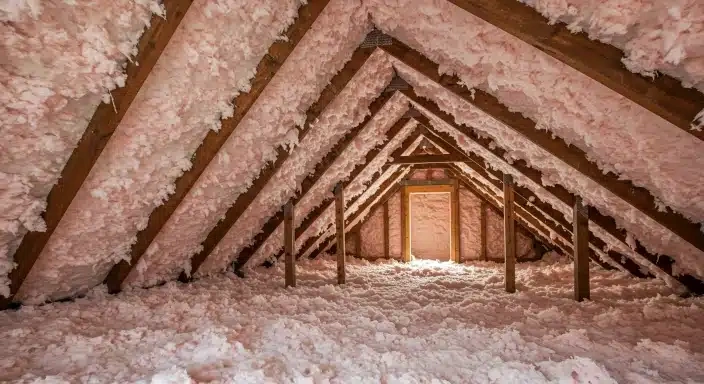
Choosing between professional attic insulation and living with poor insulation is the difference between a controlled, energy-efficient environment and a home that constantly battles the desert heat. In Moapa Valley, NV, where summer temperatures frequently soar, an attic insulation comparison reveals that professional upgrades reduce HVAC strain by up to 15%, according to the Department of Energy. Poor insulation allows heat to transfer freely through the ceiling, forcing cooling systems to run longer and increasing the risk of premature mechanical failure.
While the initial cost of high-quality insulation is higher than sticking with existing materials, the long-term ROI is significant. A professional home insulation upgrade typically pays for itself through lower energy bills within three to five years. Strategically, upgrading to spray foam or high-density fiberglass provides a thermal break that old, settled, or thin insulation simply cannot match. This creates a more stable indoor climate, protects the structural integrity of your roof, and increases the overall resale value of your property.
TL;DR
- Financial Impact: Poor insulation leads to energy bills that are 20% to 40% higher during Nevada’s peak summer months.
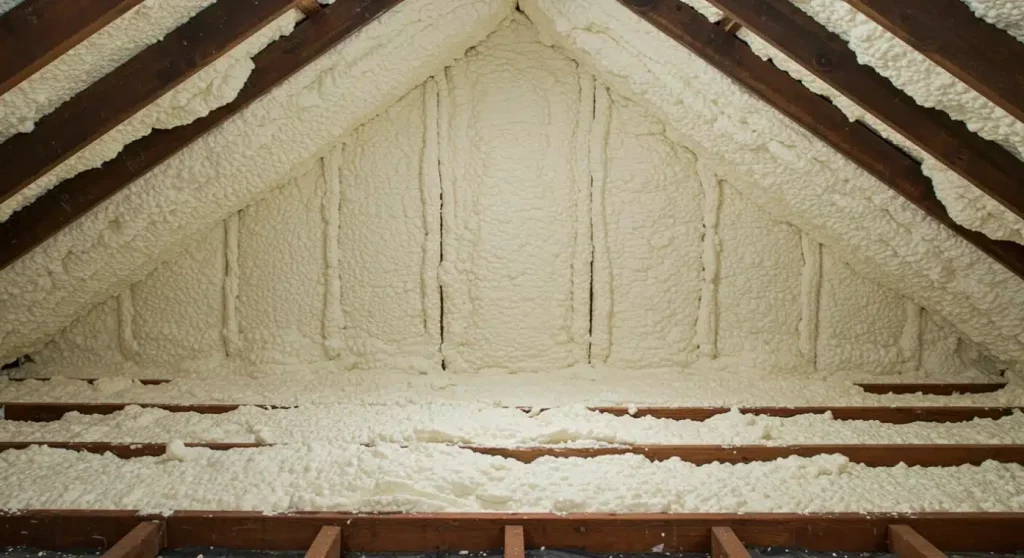
- Performance Gap: Modern spray foam provides an airtight seal that eliminates convection currents, whereas poor insulation allows significant air leakage.
- Lifespan: High-quality spray foam lasts for decades, while traditional materials like cellulose can settle and lose R-value in as little as 10 years.
- Comfort Levels: An energy-efficient attic maintains consistent room temperatures, while poor insulation creates “hot spots” and drafty areas.
- HVAC Health: Better insulation reduces the “on-off” cycling of your AC, extending the lifespan of expensive cooling equipment.
Understanding the Attic Insulation Comparison
The sun is your home’s primary adversary. When we look at an attic insulation comparison in Moapa Valley, we aren’t just talking about the thickness of the material. We are looking at the material’s ability to resist heat flow, known as its R-value. Many older homes in the region were built with R-19 or R-30 insulation, but modern standards often recommend R-49 or higher for optimal efficiency.
Poor insulation problems usually stem from three sources: age, improper installation, or insufficient material. Over time, blown-in insulation can settle due to gravity or moisture, leaving gaps where heat can pour into your living space. This heat gain makes your air conditioner work overtime, leading to high utility costs and frequent repairs.
Performance Comparison Table
| Feature | Poor / Aged Insulation | Energy Efficient Attic Upgrade |
|---|---|---|
| Heat Resistance | Low (R-19 or less) | High (R-49 to R-60) |
| Air Sealing | None; allows air bypass | Excellent (especially with spray foam) |
| Pest Resistance | Often attracts nesting pests | Treated to deter pests and rodents |
| Moisture Control | Can trap humidity and mold | Provides a moisture barrier |
| Monthly Cost | Higher utility bills | 15-30% reduction in cooling costs |
Common Poor Insulation Problems in Moapa Valley
Living with inadequate insulation isn’t just about heat; it impacts the entire health of your home. One of the most significant poor insulation problems is the “oven effect.” During a Moapa Valley summer, attic temperatures can reach 150 degrees Fahrenheit. Without a proper thermal barrier, that heat radiates through your drywall and into your bedrooms.
According to a report from Energy Star, sealing air leaks and adding insulation can save homeowners an average of 15% on heating and cooling costs. Furthermore, poor insulation often leads to poor indoor air quality. Gaps in insulation allow dust, allergens, and outdoor pollutants to seep into your ductwork and living areas.
Visual Suggestion: Heat Transfer Diagram
- Graphic Idea: A cross-section of two houses side-by-side during a summer day.
- House A (Poor Insulation): Show red arrows (heat) penetrating deep into the living space, with an AC unit glowing red to indicate overwork.
- House B (Upgraded Insulation): Show red arrows bouncing off the attic floor or roofline, with the interior remaining a cool blue and the AC unit showing a “resting” status.
The Financial Benefits of a Home Insulation Upgrade
Investing in a home insulation upgrade is a proactive financial move. While the upfront cost for professional installation varies based on square footage and material choice, the reduction in lower energy bills is immediate. In the Mojave Desert climate, the cooling season lasts for the majority of the year, meaning the savings accumulate much faster than in more temperate regions.
The Department of Energy highlights that insulation is one of the most cost-effective ways to improve a home’s energy performance. Beyond monthly savings, you may also be eligible for federal tax credits under the Energy Efficient Home Improvement Credit, which can offset a portion of the installation costs.
Real-World Moapa Valley Scenarios
| Scenario | Property Type | Recommended Option | Estimated ROI Period |
|---|---|---|---|
| Old Ranch Home | Single Story (1,500 sq ft) | Blown-in Fiberglass Overfill | 3-4 Years |
| Modern Two-Story | Residential (2,800 sq ft) | Closed-Cell Spray Foam | 5-6 Years |
| Vented Attic Issues | Mid-size (2,000 sq ft) | Air Sealing + Cellulose | 2-3 Years |
Key Attic Insulation Benefits
When you prioritize an energy-efficient attic, you gain more than just savings. The attic insulation benefits extend to the very structure of your house.
- Noise Reduction: High-quality insulation acts as a sound dampener, reducing the noise from wind, rain, and nearby traffic.
- Structural Protection: By keeping the attic at a more consistent temperature, you reduce the expansion and contraction of wooden rafters and joists.
- Enhanced Comfort: You will no longer have to constantly adjust the thermostat to stay comfortable in different rooms.
- Eco-Friendly Footprint: Reducing your energy consumption directly lowers your home’s carbon footprint, a key goal for many Nevada residents.
Factors That Influence Your Insulation Choice
Several variables dictate whether a specific insulation type will perform well in your Moapa Valley home.
- Climate Zone: Nevada’s Zone 3 and 4 requirements demand higher R-values than coastal regions.
- Current Attic Condition: If your existing insulation is moldy or rodent-infested, it must be fully removed before an upgrade.
- Roof Design: Complex rooflines with many peaks and valleys often benefit more from spray foam, which can reach tight crevices.
- Budget: While spray foam offers the best performance, blown-in fiberglass or cellulose provides a more budget-friendly entry point for immediate relief.
Who This Is For
- Homeowners in Moapa Valley are seeing a 20% year-over-year increase in utility bills.
- Property owners with rooms that stay hot regardless of how high the AC is turned.
- Those looking to increase their home value before a future sale.
- Contractors looking for high-performance thermal solutions for new builds.
Who This Is NOT For
- Renters who do not have the authority to make structural changes to the property.
- Homeowners with a brand-new, LEED-certified home that already meets maximum R-value standards.
- Those planning to demolish the structure within the next 12 months.
Maximize Your Comfort with Supreme Spray Foam – Fresno
Our team understands the unique challenges of maintaining a cool home in the Nevada heat. We provide expert insulation assessments and professional installation to ensure your property remains protected year-round. Let us help you eliminate hot spots and slash your monthly utility costs with a precision insulation strategy.
Schedule your professional attic assessment today!
Company: Supreme Spray Foam – Fresno Phone: (559) 545-0800 Email: [email protected]
Take the first step toward a cooler, more efficient home and contact us for a detailed quote.
FAQs
How do I know if my current attic insulation is “poor”?
You likely have poor insulation if you notice uneven temperatures between rooms, high energy bills, or if you can see your floor joists because the material has settled too low.
Can I just add new insulation on top of the old stuff?
In many cases, you can add new insulation over old material if it is dry and free of pests. However, removing old, flattened material is often better for maximizing R-value and air sealing.
Is spray foam worth the extra cost over fiberglass?
Yes, because spray foam provides both a thermal barrier and an air seal in one step. It prevents the hot desert air from leaking into your home entirely, which fiberglass cannot do.
How long does a home insulation upgrade take to install?
Most residential attic upgrades are completed in a single day. Our team works efficiently to ensure minimal disruption to your daily routine while delivering a total thermal seal.
Will new insulation help reduce the dust in my house?
Absolutely, because professional insulation involves sealing the gaps and cracks where dust and outdoor allergens typically enter your home’s ventilation system from the attic space.
Sources
- Department of Energy: Energy Efficiency and Renewable Energy
- Energy Star: Sealing and Insulating Your Home
- The Spruce: Common Insulation Types and R-Values
- Forbes Home: Spray Foam Insulation Costs and Benefits