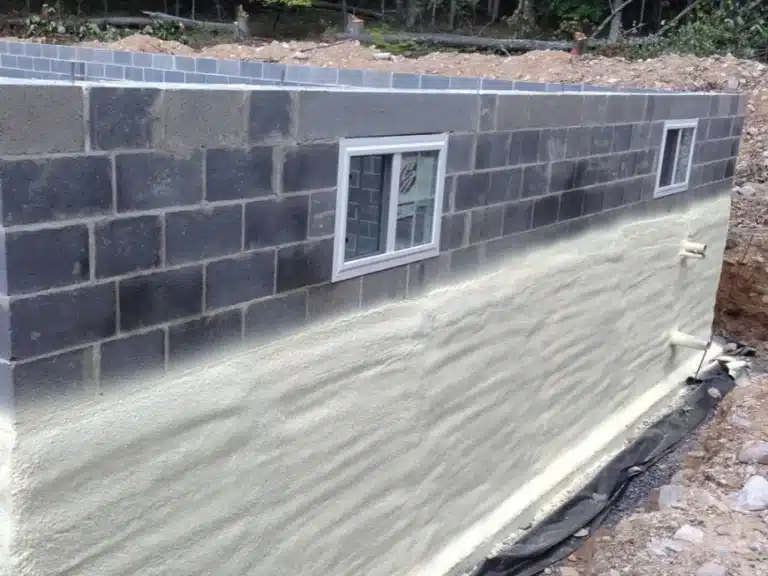
Foundation insulation plays a direct role in preventing moisture accumulation in Las Vegas homes by minimizing condensation and controlling ground vapor transfer. In a dry desert climate like Las Vegas, moisture isn’t typically associated with weather patterns, but it becomes a critical concern due to temperature extremes and ground vapor intrusion. Insulating the foundation creates a consistent thermal barrier that reduces humidity migration from soil into slab, crawl space, or basement structures.
By reducing contact between cooler underground temperatures and warmer indoor air, our foundation insulation service helps avoid dew point condensation. This is especially important for slab-on-grade foundations common in Las Vegas residential construction. Left unchecked, moisture leads to microbial growth, structural degradation, and indoor air quality issues.
Supreme Spray Foam LV uses practical experience gained from years of on-site work in Las Vegas homes to address this issue with proven methods. The following guide outlines key technical factors, comparisons, and decision-making support for homeowners evaluating this insulation method.
Direct Soil Contact
Moisture from soil penetrates through foundation walls and slab if left uninsulated. Porous concrete allows vapor diffusion unless blocked.
Thermal Bridging and Dew Point Condensation
Temperature differentials create condensation at uninsulated contact points between soil and interior air. Dew point is reached when warm interior air cools at the foundation surface.
Plumbing Intrusions and Capillary Action
Water lines and plumbing access points are common intrusion sites. Without insulation and proper sealing, capillary action draws moisture into interior spaces.
Why Las Vegas Homes Require Foundation Moisture Control
Las Vegas soils, including sandy loam and caliche, retain heat but can hold unexpected subsurface moisture. Monsoon runoff and irrigation runoff contribute to unexpected saturation below slabs. Temperature swings exceeding 40°F daily lead to condensation when uninsulated concrete is exposed to interior air.
According to U.S. Department of Energy research (DOE/GO-102022-5561), ground vapor in arid climates is a major source of moisture in slab-on-grade homes, responsible for over 60% of indoor relative humidity spikes in affected structures.
Bonus Tip:
Before insulation, conduct a slab moisture emission test (ASTM F1869) to measure vapor release from the foundation. This identifies high-risk zones needing reinforced barrier application.
Things to Consider Before Making a Decision
- Soil Composition: Denser soils (caliche) limit drainage, trapping moisture longer.
- Foundation Type: Slab-on-grade benefits more from underside or perimeter insulation.
- Existing Moisture Damage: Past mold, peeling paint, or musty odors indicate vapor intrusion.
- Drainage Conditions: External grading and gutter systems must be functioning.
- Material Compatibility: Confirm insulation adheres correctly to your foundation type (e.g., concrete vs. block).
Bonus Tip:
Use infrared thermography to locate cold zones in the foundation before installing insulation. It pinpoints thermal bridging areas likely to cause future condensation.
Services from Supreme Spray Foam LV That Directly Address This Issue
- Foundation Insulation: Application of closed-cell spray foam to create a vapor barrier and thermal seal along the foundation perimeter and below-grade walls.
- Spray Foam Repairs: Re-insulation of damaged or ineffective areas, especially in high-moisture contact zones.
- Exterior Insulation: Protects outer surfaces from temperature flux that drives condensation.
- Residential Spray Foam Insulation: Comprehensive insulation service customized for local home designs, including slab-on-grade properties.
Get Expert Insulation Guidance
For practical advice, moisture assessments, or insulation options tailored to Las Vegas soil and climate conditions, contact Supreme Spray Foam LV.
Phone: (702) 904-9895 Email: info@supremesprayfoamlv.com
How long does it take to install foundation insulation?
Most residential installations are completed in 1-2 days depending on foundation access and square footage.
Is excavation required?
For exterior foundation insulation, partial trenching may be needed. Interior solutions typically don’t require excavation.
Will this reduce indoor humidity?
Yes, sealing ground vapor paths and condensation points reduces indoor RH, especially in basements and slab homes.
Can this be added to an existing home?
Yes. Retrofit installations are common and often done without major disruption.
What is the best insulation for slab-on-grade homes in desert climates?
Closed-cell spray polyurethane foam performs best. It offers a dual moisture and thermal barrier, ideal for ground contact surfaces.
How does foundation insulation impact HVAC performance?
It reduces load on heating and cooling systems by stabilizing indoor temperature at the floor level, improving energy efficiency.
What signs indicate foundation moisture problems?
Look for mildew odor, peeling floor finishes, cracks near floor edges, or high indoor humidity.
Can insulation trap moisture inside the foundation?
When correctly installed, no. Spray foam creates a sealed surface that prevents moisture entry while allowing the foundation to remain dry.
How often should foundation insulation be inspected?
Annually. Look for signs of wear, pest damage, or areas where insulation may have separated from the surface.