
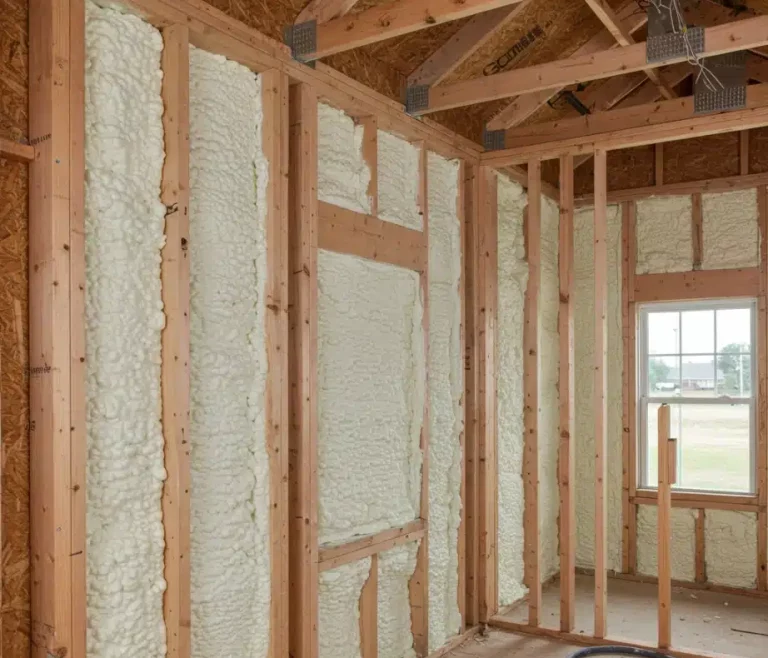
Las Vegas garages are constantly exposed to high temperatures and wind-driven dust. Spray foam insulation provides a direct solution by sealing air gaps and reducing heat transfer. This creates a stable indoor environment that limits dust intrusion and prevents extreme heat buildup.
Spray foam insulation forms a continuous barrier across walls, ceilings, and roof decks. By filling cracks and seams, it prevents fine desert dust from entering. At the same time, its thermal resistance reduces heat absorption, helping maintain tolerable garage conditions throughout the summer months.
How spray foam works in desert conditions
Spray foam insulation expands on application to fill voids that traditional insulation cannot. Closed-cell spray foam is particularly effective for garages in Las Vegas because it combines air sealing with high thermal resistance. The insulation slows radiant heat transfer from sun-exposed surfaces, a critical factor in desert climates where roof temperatures often exceed 150°F (65°C).
Local climate factors influencing garage insulation
Las Vegas averages more than 310 sunny days per year with summer highs reaching 110°F (43°C). Uninsulated garages absorb radiant heat through metal doors and concrete walls, creating interior temperatures that can exceed outdoor levels. Wind-blown desert dust carries fine particles that easily enter through gaps around doors, vents, and wall joints.
Spray foam directly addresses both conditions:
- Creates a sealed barrier against airborne dust.
- Reduces temperature swings by limiting heat conduction.
- Protects stored items, vehicles, and tools from extreme conditions.
Practical benefits of spray foam in garages
- Keeps dust-sensitive equipment clean and functional.
- Limits temperature fluctuations, reducing stress on vehicles and tools.
- Improves energy efficiency when the garage connects to conditioned living spaces.
Bonus tip
Applying closed-cell spray foam under the garage roof deck reduces radiant heat transfer more effectively than insulating only the walls.
Things to consider before insulating a garage in Las Vegas
- Type of spray foam: Closed-cell is preferable for garages exposed to heat and dust, while open-cell may suit interior partitions.
- Surface preparation: Proper cleaning and moisture checks improve adhesion.
- Ventilation needs: Fully sealed garages may require controlled ventilation to avoid trapped fumes from vehicles.
- Long-term durability: Closed-cell spray foam adds structural reinforcement, extending the service life of garage walls and roofs.
Market data reference
According to the U.S. Department of Energy, effective air sealing and insulation can cut heating and cooling costs by up to 20% (DOE, 2024). In desert climates, this translates into reduced thermal stress and improved equipment longevity.
Services available for garage insulation
- Spray Foam Roof Insulation: Reduces heat absorption from sun-exposed garage roofs.
- Closed Cell Spray Foam Insulation: Provides strong dust and moisture control with high thermal resistance.
- Wall Insulation: Seals wall cavities to block airborne dust and radiant heat.
- Spray Foam Repairs: Restores insulation performance in areas with damage or degradation.
Is spray foam safe for use in garages with vehicles?
Yes. Once cured, spray foam does not release harmful vapors. Adequate ventilation during application is required.
Does spray foam affect garage door operation?
No. Spray foam is applied to fixed surfaces like walls and ceilings, not to moving door parts.
Can insulation reduce the strong heat radiating from concrete garage walls?
Yes. Spray foam directly addresses conductive heat transfer through concrete.
Will spray foam keep pests out?
Yes. By sealing cracks and gaps, spray foam limits entry points for insects and rodents.
Conclusion
Spray foam insulation offers an effective method to shield Las Vegas garages from heat and dust intrusion. By sealing gaps and providing strong thermal resistance, it safeguards vehicles, tools, and stored items from desert conditions. Choosing the right type of foam, preparing surfaces, and considering ventilation ensures long-lasting results.
Get in touch for professional guidance
Supreme Spray Foam LV provides insulation solutions that protect Las Vegas garages from dust and heat. For more details, contact info@supremesprayfoamlv.com or call (702) 904-9895.
How long does spray foam last in garage applications?
Closed-cell spray foam typically lasts 20-30 years without significant performance loss.
Can spray foam be painted over inside a garage?
Yes. Once cured, the surface can accept most types of paint or coatings.
Does insulation reduce garage noise levels?
Open-cell foam offers better sound dampening, though closed-cell provides some reduction.
Is spray foam resistant to dust accumulation over time?
Yes. The sealed surface resists penetration, unlike fiberglass or cellulose insulation.
What maintenance does spray foam require?
Minimal maintenance is needed; periodic inspections ensure no mechanical damage compromises the seal.