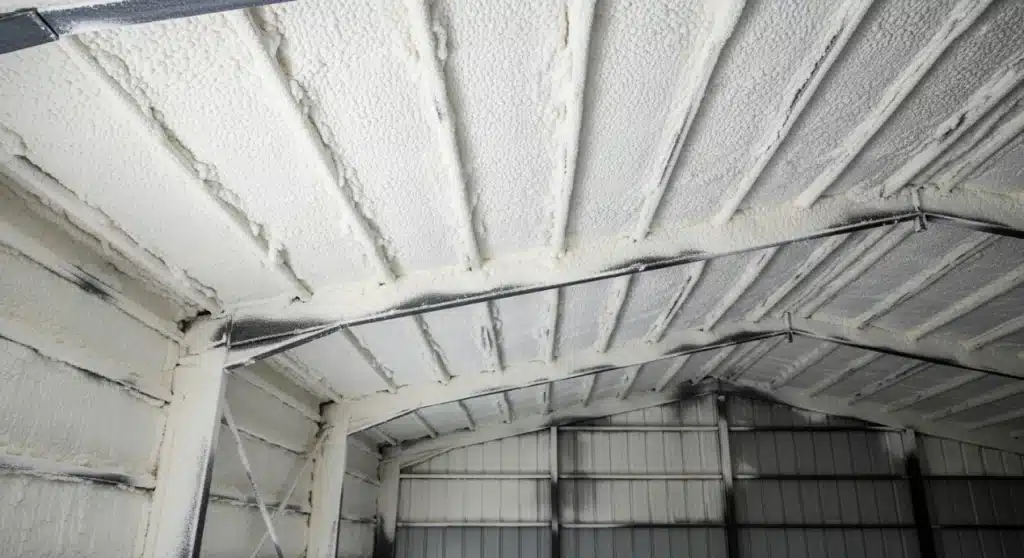
When insulation is missing from an attic or roof cavity, the consequences extend far beyond an uncomfortable living space. The absence of a proper thermal barrier sets off a chain reaction that directly compromises the roof’s structural integrity, shortens its lifespan, and leads to significant energy waste. Heat moves freely between the living area and the attic, causing extreme temperatures that overwork HVAC systems and lead to moisture buildup. This condensation can rot the roof decking, damage trusses, and create an environment for mold growth, turning a simple issue into a complex and expensive problem.
Understanding these risks is the first step toward protecting your property. This article explains the specific ways missing insulation damages a roof and what you can do to prevent it.
The Immediate Impact on Energy and Comfort
The most noticeable effect of missing roof insulation is on your utility bills and indoor comfort. Without insulation, the conditioned air you pay for escapes directly through the ceiling. In fact, a poorly insulated attic can be responsible for up to 25% of a home’s heat loss in the winter, according to information from ENERGY STAR. In hot climates like Las Vegas, the reverse is true. Intense solar heat radiates through the roof, superheating the attic and forcing your air conditioner to run constantly to keep the home cool.
This leads to inconsistent temperatures throughout the house. Rooms on the top floor might feel stuffy in the summer and chilly in the winter, no matter how you adjust the thermostat. This constant struggle to maintain a comfortable temperature isn’t just frustrating; it’s a clear sign that your home’s thermal envelope is compromised.
How an Uninsulated Attic Damages Your Roof Structure
While high energy bills are a problem, the structural damage caused by missing insulation is far more severe. The issues stem from two primary factors: extreme temperature fluctuations and uncontrolled moisture.
Formation of Ice Dams in Colder Climates
In regions with snowfall, missing insulation and air leaks are primary causes of ice dams, a point detailed by the University of Minnesota Extension. Here’s how it happens:
- Heat escaping from the living space warms the underside of the roof deck.
- This heat melts snow on the roof from the bottom up.
- The melted water runs down the roof until it reaches the colder eaves, where it refreezes.
- This process repeats, creating a thick ridge of ice (an ice dam) that blocks water from draining properly.
- Water pools behind the dam, seeping under shingles and into the roof structure and attic, causing water damage, rot, and mold.
Moisture, Condensation, and Material Degradation
In all climates, temperature differences between a warm, humid interior and a cold attic space (in winter) or a hot, humid exterior and a cool, air-conditioned attic (in summer) create condensation. Without insulation to manage this temperature gradient, moisture vapor accumulates on the underside of the roof decking, rafters, and other structural components.
This persistent dampness leads to:
- Wood Rot: The roof deck, trusses, and joists can begin to rot and lose their structural strength.
- Mold and Mildew Growth: Damp, dark attics are ideal breeding grounds for mold, which can cause health issues and further material decay.
- Shingle Damage: Extreme attic heat can essentially “cook” asphalt shingles from the inside out. A study by the Building Research Council at the University of Illinois found that high attic temperatures can accelerate the aging of shingles, making them brittle and prone to cracking and granule loss.
Bonus Tip: Check the underside of your roof decking for dark stains or a damp feeling. These are early warning signs of a condensation problem that needs to be addressed before it causes widespread damage.
Long-Term Consequences of Neglect
Ignoring a lack of roof insulation allows minor issues to grow into major structural failures. Over time, the constant cycle of moisture and temperature extremes can weaken the entire roof system. The sheathing may warp or delaminate, fasteners can corrode, and the roof’s ability to withstand wind and other environmental stressors is reduced.
Beyond structural issues, an uninsulated attic can also attract pests. Rodents, birds, and insects seek out these sheltered, temperature-stable spaces to nest, bringing with them contamination and potential damage to wiring and other systems. Ultimately, a home with a poorly insulated roof can also see a decrease in property value, as home inspectors will flag the issue as a significant deficiency requiring costly repairs.
Understanding these consequences is the first step, but taking effective action requires careful planning.
Things to Consider Before Adding Insulation
Before you install or upgrade your roof insulation, it’s important to evaluate a few key factors to ensure you choose the right solution for your home.
Local Climate and R-Value Requirements
The effectiveness of insulation is measured by its R-value, or its resistance to heat flow. The right R-value for your roof depends entirely on your climate zone. A home in a hot climate requires a high R-value to prevent heat from entering, while a home in a cold climate needs it to prevent heat from escaping. For example, building codes in warmer southern states may require an R-value of R-30, while colder northern states might mandate R-49 or even higher.
Different Insulation Materials
There are several types of insulation, each with its own advantages and applications. The best choice depends on your attic’s configuration, your budget, and your performance goals.
The Role of Attic Ventilation
Insulation and ventilation must work together. Proper ventilation allows excess heat and moisture to escape the attic, preventing condensation and reducing the load on your insulation. Without adequate soffit and ridge vents, even a well-insulated attic can develop moisture problems.
Bonus Tip: Before adding insulation, have a professional inspect your attic’s ventilation. Sometimes, improving airflow is just as important as increasing the R-value.
What to Do Next
If you suspect your home has missing or inadequate roof insulation, the next step is a professional assessment. An expert can identify the extent of the problem, check for any existing moisture or structural damage, and recommend the most effective solution for your specific home and climate. Taking action protects your roof, lowers your energy bills, and ensures your home remains a safe and comfortable space.
We Can Help
With years of experience diagnosing and resolving these issues, Supreme Spray Foam LV provides this information to help homeowners make informed decisions about their property’s health and efficiency. For a detailed evaluation of your home’s insulation and ventilation systems, contact Supreme Spray Foam LV. An expert can help determine the best path forward to protect your property. To schedule a consultation, call (702) 904-9895 or send an email to info@supremesprayfoamlv.com to discuss your home’s needs.
Sources
- ENERGY STAR: Provides federal guidelines and information on how insulation affects home energy consumption.
- University of Minnesota Extension: Explains the causes of ice dams, linking them directly to heat loss and air leaks from homes.
How do I know if I have enough insulation?
The simplest way is to look in your attic. If the insulation level is at or below the top of your ceiling joists, you probably need more. For a more precise assessment, measure the depth of the insulation. Different materials have different R-values per inch, so this measurement can help you estimate your current R-value.
Can I just put new insulation over my old insulation?
In many cases, yes. If the existing insulation is dry and in good condition (not compacted or moldy), you can add new insulation on top to reach the desired R-value. However, if the old insulation is wet, damaged, or contaminated, it must be removed first.
Does a new roof come with new insulation?
No. A standard roof replacement only includes the exterior components: shingles, underlayment, and flashing. Attic insulation is considered part of the home’s thermal envelope and is a separate project. It is, however, an excellent time to address insulation while the roof is being worked on.