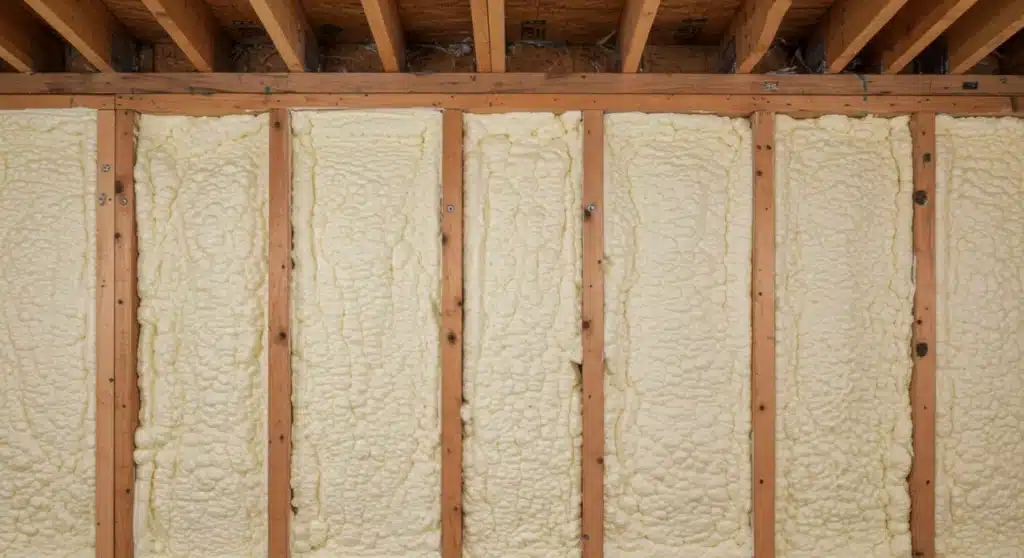
In Las Vegas, high cooling bills, uneven temperatures, and indoor discomfort are common signs that indicate the need for spray foam insulation. Poorly insulated structures struggle to retain cooled air during the long summer season. If insulation is degraded, missing, or improperly installed, interior comfort will drop, and HVAC systems will work harder to maintain set temperatures.
Another major sign is visible gaps or cracks in walls, ceilings, or around window frames. These create airflow paths that undermine temperature control. If certain areas in a home or building consistently feel warmer or colder than others, inadequate insulation is likely contributing to heat exchange.
Supreme Spray Foam LV applies tested knowledge from field projects across the Las Vegas Valley. Practical observations from thermal imaging inspections, blower door tests, and insulation tear-outs guide the insights shared here.
Physical Deterioration
Bonus Tip: In desert climates, roof deck insulation often breaks down faster than wall insulation due to extended UV and radiant heat exposure.
Factors That Affect Insulation Performance in Las Vegas
- Extreme Heat Load: Summer attic temps often exceed 150°F. Inferior insulation fails under sustained radiant load.
- Thermal Bridging: Metal framing and sheathing intensify conductive heat transfer without proper sealing.
- Moisture Dynamics: Though rare, monsoon humidity spikes can trigger condensation in poorly sealed assemblies.
Bonus Tip
Older stucco homes in Las Vegas often lack any wall insulation, especially those built before 1990. Infrared inspection can identify voids behind drywall.
Market Facts That Support the Need
- According to the U.S. Energy Information Administration (2023), Nevada homes use 26% more electricity in summer than the national average.
- The EPA Home Energy Yardstick ranks Las Vegas homes in the lowest third for envelope efficiency.
- DOE Building America study (2022) found spray foam reduced total HVAC runtime by up to 35% in high heat zones like Clark County.
Things to Consider Before Making a Decision
- Building Age: Homes built before 2000 typically lack modern air sealing.
- HVAC Load: High HVAC usage often traces back to insulation deficiencies.
- Budget: Spray foam insulation has a higher upfront cost, offset by lower long-term energy usage.
- Area Type: Attics and crawlspaces show more performance gain from spray foam than interior walls alone.
- Access Restrictions: Retrofit scenarios may involve partial demolition for foam application.
Services Offered by Supreme Spray Foam LV
Supreme Spray Foam LV provides the following relevant services for insulation issues in residential and commercial buildings:
- Attic Insulation: Improves thermal resistance in high-temperature zones.
- Wall Insulation: Seals wall cavities to stabilize interior conditions.
- Closed Cell Spray Foam Insulation: Adds both structure and thermal protection.
- Spray Foam Repairs: Fixes failed or aged foam without full reinstallation. Recent energy-focused spray foam services highlight the growing demand for professional insulation solutions that maximize comfort, efficiency, and building protection in high-heat climates.
What areas in a home benefit most from spray foam?
Attics, crawlspaces, and exterior-facing walls offer the most measurable efficiency improvements.
Is closed cell or open cell better for Las Vegas?
Closed cell performs better due to its high R-value and moisture barrier properties.
How long does installation take?
Typical residential jobs are completed in 1-2 days depending on square footage and prep needs.
What prep is needed before application?
Obstructing materials must be cleared. Access panels may be installed for difficult areas.
Can I add spray foam over existing insulation?
Yes, but aged materials must be stable and dry. Removal is often recommended for best results.
Does spray foam reduce noise?
Yes. Open cell types significantly dampen airborne sound between rooms or floors.
Will spray foam affect electrical wiring?
No. Proper application techniques avoid damage or interference with wiring systems.
Is spray foam safe for indoor air quality?
Once cured, it emits no VOCs. Use certified products and ventilate during application.