
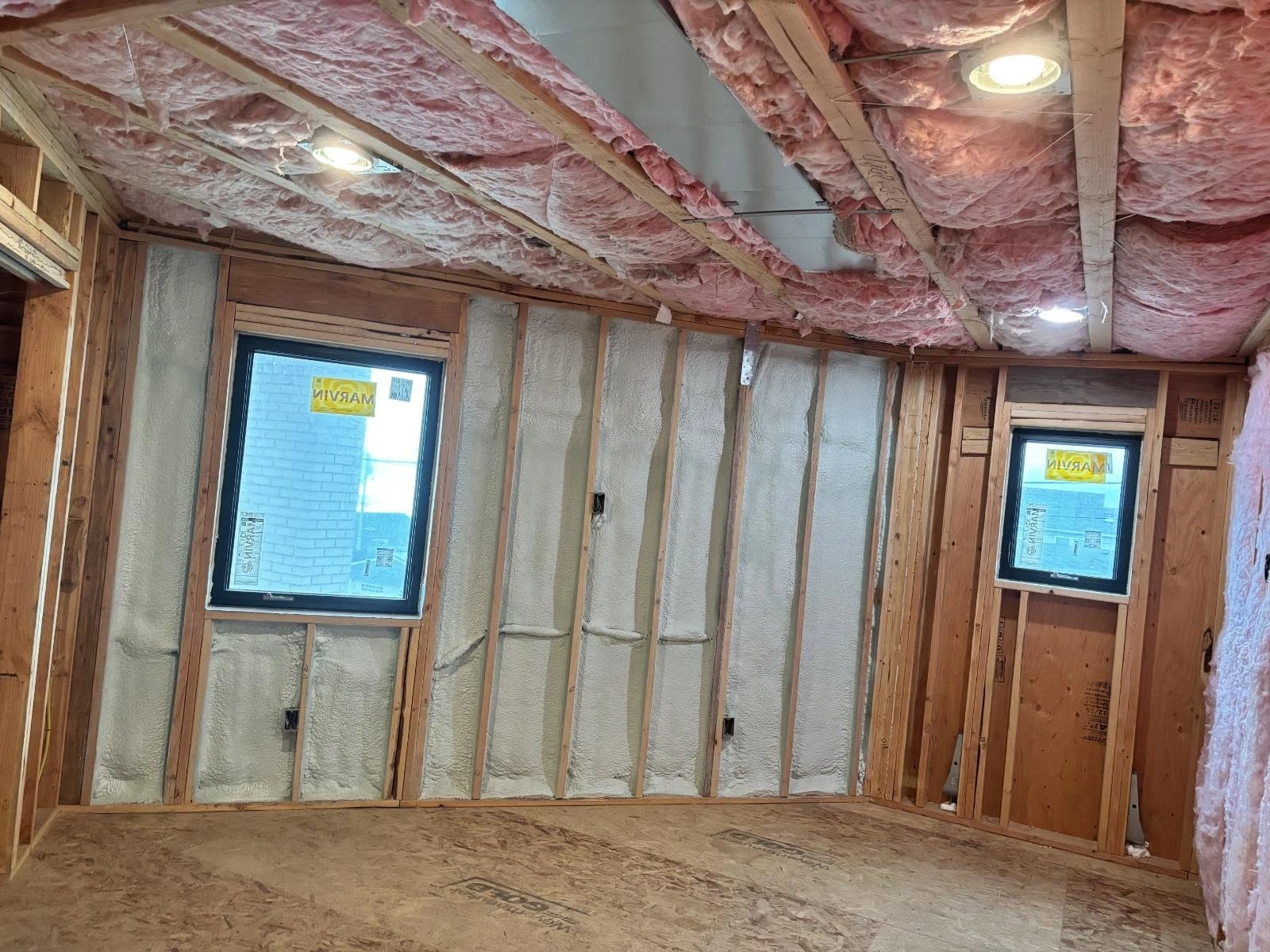
The right insulation for a Las Vegas, NV, property is chosen with data, not instinct: you verify what insulation already exists, compare it against published R-value targets for our hot desert climate zone, match each material to the specific location it will serve, and document installation quality so performance can be measured afterward. In the Las Vegas Valley, where solar radiation drives most of the heat load and cooling season runs more than four months long, the smartest answer is usually a combination: spray foam for air sealing and roof decks, blown or batt products for attic floors and walls, and radiant control for the hottest attic spaces. Homeowners, landlords, and business owners who follow the process below can replace guesswork with evidence and invest in the parts of the building that actually move energy bills, as outlined in mastering home insulation types, installation, and energy savings.
TL;DR
- Las Vegas has a hot desert climate with an average July high of 104.5°F, 78 days a year at or above 100°F, and roughly 310 sunny days annually, so attic and roof heat control deserves first priority.
- ENERGY STAR recommends R49 attic insulation for uninsulated homes in climate zone 2, a top-up to R38 where 3 to 4 inches already exist, and R13 under floors.
- Sealing air leaks together with adding insulation can cut up to 10% from annual energy bills, so air sealing should come before or alongside any new insulation.
- Building science references note that radiant barriers perform best in attic spaces in hot climates, provided they face an adequate air gap.
- Open-cell spray foam suits attic decks and sound control, closed-cell suits walls, roofs, and metal buildings that need moisture resistance, and blown fiberglass or cellulose remain practical for attic floors when installed at full target depth.
- Not every insulation is designed for every part of the house, per ENERGY STAR, so material selection must follow location.
- The no-guesswork process takes five steps: inspect existing insulation, set code-based R-value targets, diagnose the heat path, match materials to locations, and verify installation with measurements.
Why Las Vegas Heat Rewrites the Standard Rulebook
Most national insulation advice assumes heat escapes in winter. Here, the problem is reversed for most of the year, and the physics differ. According to Wikipedia’s building insulation overview, the greatest source of heat in hot conditions is solar radiation, which can heat the building shell far above ambient temperature, and radiant barriers are most effective in attic spaces in hot climates where downward heat flow is dominated by radiation.
Our local numbers explain why. Las Vegas records an average July high of 104.5°F, about 137 days per year at or above 90°F, and 78 days at or above 100°F. The official record reached 120°F on July 7, 2024. Sunshine occurs during 86% of all daylight hours, annual rainfall averages only about 4.2 inches, and summer overnight lows frequently stay above 80°F Las Vegas. When an attic sits above a roof absorbing that sun all day, attic air temperatures climb far beyond the outdoor reading, and that heat pushes down into bedrooms and living areas well past sunset.
Desert nights also swing sharply, often dropping 30°F or more from daytime highs. Insulation with strong air sealing keeps the cool air you paid for inside through those long cooling runs, which is exactly why ENERGY STAR treats sealing and insulating as one combined project worth up to 10% in annual bill savings.
Start With Published R-Value Targets, Not Product Brochures
An R-value is a measure of insulation’s ability to resist heat traveling through it, and the higher the R-value, the better the thermal performance. For attic insulation service, instead of guessing how much you need, start from the ENERGY STAR recommended levels, which are based on the 2021 International Energy Conservation Code for wood-framed buildings.
| Location | If Your Attic Is Uninsulated | If You Already Have 3–4 Inches | Las Vegas Priority |
|---|---|---|---|
| Attic (Zone 2) | R49 | Top up to R38 | Highest, absorbs the solar load |
| Floors (Zone 2) | R13 | R13 | High over garages and slab edges |
| Wood-framed walls | R13 per ASHRAE 90.1 for Zone 2 | Verify fill and voids | High during re-siding |
For context, ASHRAE 90.1, the national energy standard summarized in Wikipedia’s insulation reference, sets R13 as the prescriptive wall requirement for wood-framed buildings in climate zone 2, where all of Clark County sits. Your target, though, also depends on building design, energy costs, and budget, which is why a measured inspection beats a one-size answer.
Compare the Main Insulation Types Against Desert Conditions
Every common material works, but each one earns its keep in a different spot. Here is how we frame the choice for Las Vegas properties:
| Material | Best For | Desert Strengths | Watch-Outs |
|---|---|---|---|
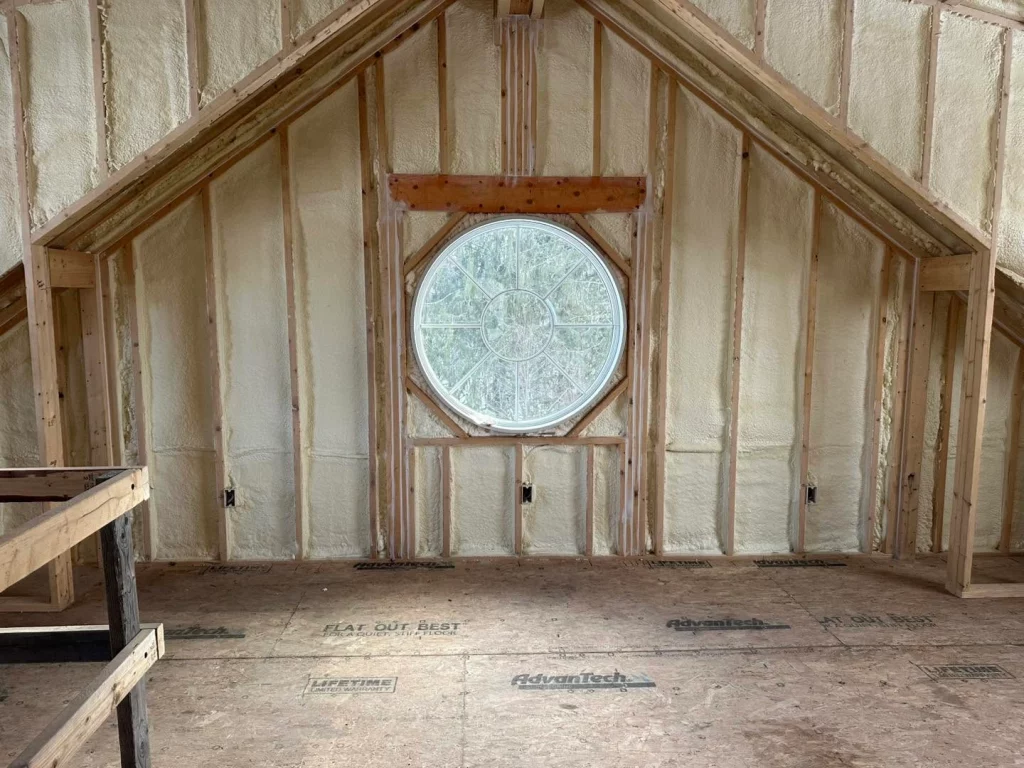
| Open-cell spray foam | Attic roof decks, cathedral ceilings | Expands to air-seal and insulate in one pass, dampens noise | Must reach full code thickness to perform |
| Closed-cell spray foam | Walls, metal buildings, garages, duct chases | Densist common foam option, strong moisture resistance | Requires professional application and curing |
| Blown fiberglass or cellulose | Attic floors over living space | Economical route to R49, fast installation | Settles and shifts; needs baffles and even depth |
| Batt (fiberglass or mineral wool) | Open wall cavities, remodels | Predictable R-value when fitted tightly | Gaps and compression cut real-world performance |
| Rigid foam board | Continuous exterior coverage, garage doors | Cuts thermal bridging where studs conduct heat | Needs an approved thermal or fire covering |
| Radiant barrier | Underside of roof decking | Reflects radiant heat where attics dominate the load | Only works facing an air gap; not a substitute for bulk insulation |
The Wikipedia reference is clear on two points worth repeating: bulk insulation and reflective insulation are the two main categories, and most buildings use a combination to fight conduction, convection, and radiation at once. An experienced insulation company can help determine the right combination for the building rather than relying on a single product. Any contractor who sells you a single product for the whole building is selling simplicity, not performance.
Match the Material to Each Part of the Building
This is the step that removes most of the guesswork, because location dictates material. ENERGY STAR states plainly that not every insulation is designed for use in every part of the house, and its project guides break the work into attic, wall, and crawlspace scopes. For Las Vegas buildings, we map it like this:
- Attic floor: blown insulation brought to full target depth over an air-sealed ceiling plane.
- Roof deck: spray foam when you want a conditioned attic or a sealed rim and knee wall.
- Walls: dense-pack or batts during remodels, continuous board when re-siding.
- Garage and shop: closed-cell foam on metal or masonry surfaces to handle heat and condensation.
- Ductwork: sealing and insulation, which the U.S. Department of Energy’s expert checklists treat as its own scope because leaky ducts in a 130°F attic waste cooled air by the minute.
Those same DOE checklists cover attic air sealing, framed wall insulation, and vented-to-unvented attic conversions, and they recommend attaching a contractor checklist to your work agreement. Asking for one is a fast way to separate professionals from guessers.
The Five-Step Process We Use to Remove Guesswork
- Inspect and measure. A visual inspection with a ruler in the attic reveals existing depth, and a whole-house energy assessment confirms where insulation is missing, the same approach described in the building science literature.
- Set code-based targets. We compare measured depth against the R49 attic and R13 floor benchmarks for zone 2 before recommending anything.
- Diagnose the heat path. Solar radiation through the roof, conduction through walls, and air leakage around fixtures each call for different fixes.
- Select by location. Material follows the surface it protects, using the location map above.
- Verify the install. Depth markers, photo documentation, and a final walk-through confirm coverage, because gaps and voids, not the label, decide real performance.
Recommendations by Property Type
| Property Type | Recommended Approach | Key Notes |
|---|---|---|
| Single-story ranch home | Air-seal ceiling plane, blow attic to R49 | Fastest comfort and bill improvement |
| Two-story with a hot upstairs | Roof-deck spray foam or conditioned attic conversion | Pulls ductwork inside the envelope |
| Garage, casita, or metal shop | Closed-cell foam on roof and walls | Manages both heat and condensation |
| Rental portfolio | Standardized attic top-up scope | Simple to verify across units |
| Commercial tilt-up building | Continuous board or closed-cell on the envelope | Targets thermal bridging at studs and panels |
Signs You Have Found the Right Approach
- The proposal cites R-value targets from published tables instead of vague promises.
- Someone inspected your attic before quoting, with photos and depth measurements.
- Air sealing is discussed before, or alongside, new material.
- The scope names each location separately, from attic to ducts.
- Verification steps, like depth rulers and documentation, are written into the agreement.
Get a Data-Driven Insulation Plan From Supreme Spray Foam LV
Choosing insulation without guesswork comes down to inspection, published targets, and the right material in the right place, and that is exactly how our team works at Supreme Spray Foam LV. Our professionals assess your property, measure what exists, and recommend only the scope your building actually needs. Call us at (702) 904-9895 or email [email protected] to start with facts instead of estimates.
A cooler, quieter, more efficient Las Vegas property starts with one measured visit from our crew.
Frequently Asked Questions
What R-value does my Las Vegas attic actually need?
For an uninsulated attic in climate zone 2, ENERGY STAR recommends R49, or topping up to R38 if you already have 3 to 4 inches. We measure your existing depth and close the gap to target.
Is spray foam worth it in the desert climate?
It earns its spot where air leakage and radiant attic heat dominate, such as roof decks and metal buildings. For simple attic floors, blown insulation over an air-sealed ceiling can be the better match.
Should old insulation be removed before adding new?
Not always, since clean, dry insulation can usually stay and be topped up. Removal makes sense when insulation is wet, compressed, contaminated, or scattered unevenly.
Which insulation works best for garages and metal buildings?
Closed-cell spray foam handles both the heat load and condensation on metal and masonry surfaces. Continuous rigid board is another strong option where framing allows.
How long does a typical insulation upgrade take?
Most attic scopes are completed in a single day, while larger roof-deck or metal building projects take longer. Your written proposal should state the schedule before work begins.
Sources
- ENERGY STAR – Recommended Home Insulation R-Values – Climate zone R-value table for attics and floors, based on the 2021 IECC, including the zone 2 recommendations used in this guide.
- ENERGY STAR – Seal and Insulate with ENERGY STAR – Guidance on combining air sealing with insulation for up to 10% annual energy bill savings and matching insulation to each part of the home.
- Wikipedia – Building Insulation – Building science reference covering R-values, ASHRAE 90.1 climate zone requirements, bulk versus reflective insulation, radiant barriers in hot climates, and thermal bridging.
- Wikipedia – Las Vegas – NOAA-sourced climate data for Las Vegas, including the 104.5°F July average high, days above 100°F, sunshine totals, and record temperatures cited throughout.
- U.S. Department of Energy – Home Improvement Expert Checklists – DOE fact sheets and contractor checklists for attic insulation, air sealing, wall insulation, duct sealing, and attic conversion scopes.