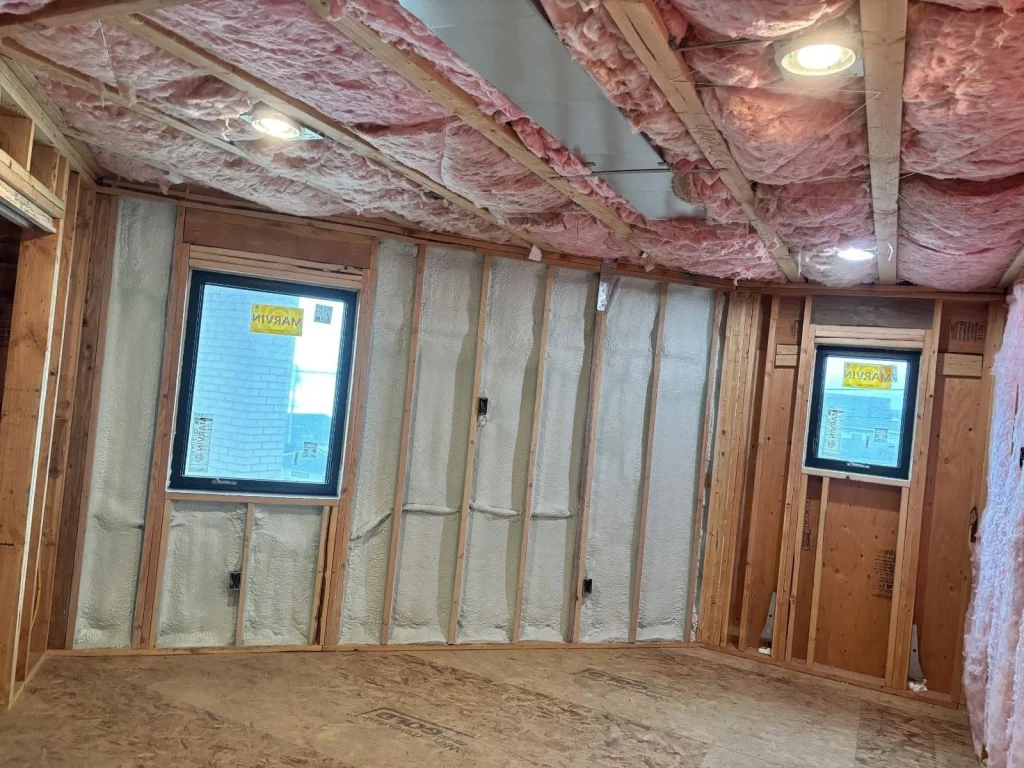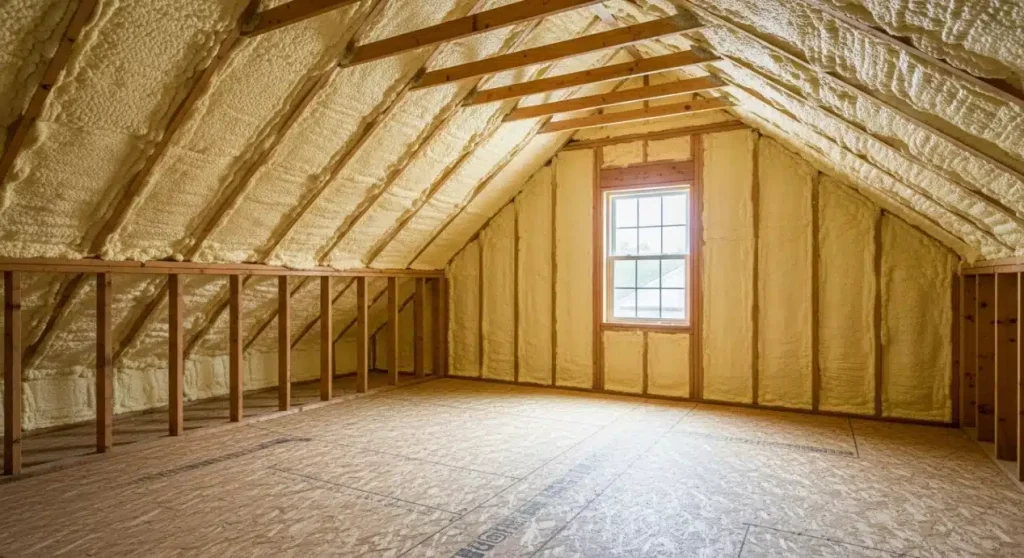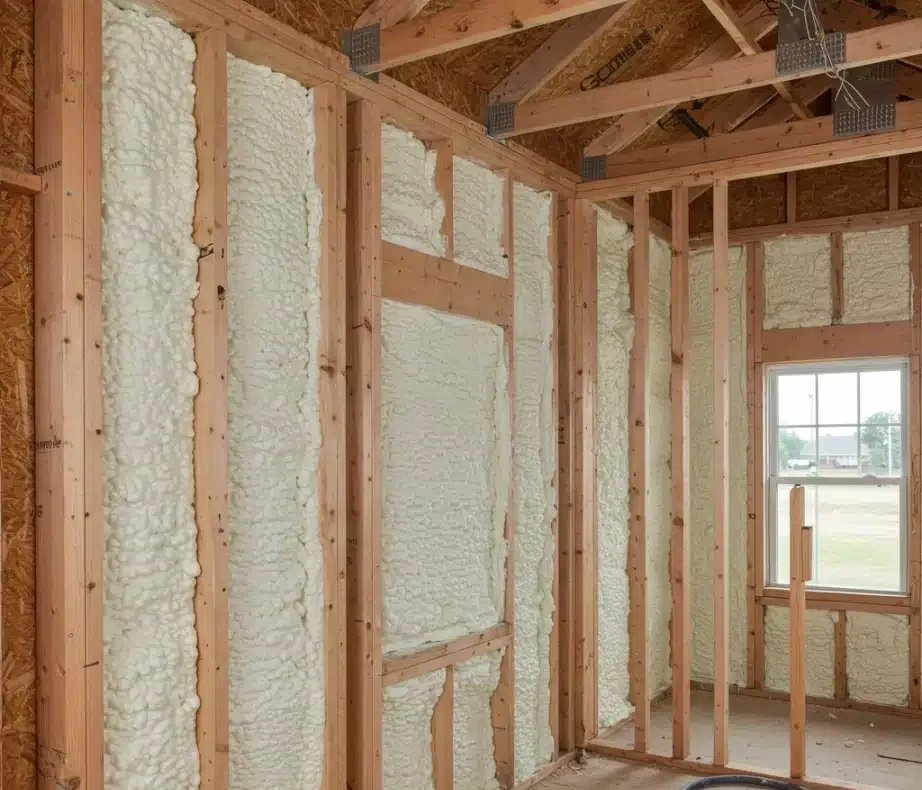

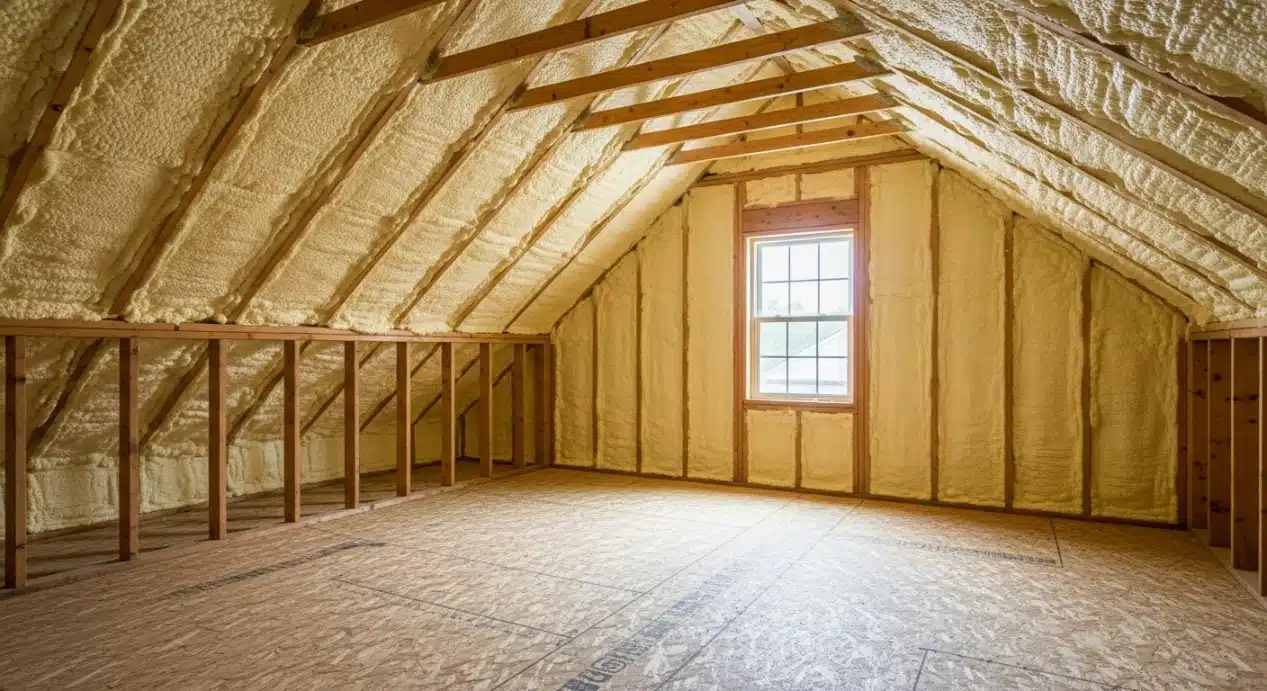
Peccole Ranch, NV property owners should ask any spray foam insulation contractor about product type, R-value per inch, licensing and insurance, jobsite safety and re-entry procedures, attic preparation, expected energy savings, and warranty terms before signing anything. The right questions depend on the application: closed cell foam suits attic roof decks and surfaces that need higher R-value per inch plus moisture resistance, while open cell foam suits interior walls where sound control matters most. Because spray foam is a permanent, chemistry-driven upgrade, the questions you ask upfront determine whether you get a comfortable, efficient home or an unplanned re-installation. In the hot western Las Vegas Valley, where attic heat drives summer cooling demand, informed questions turn this upgrade into a strategic investment.
TL;DR
- Air sealing combined with added insulation can save up to 10% on total annual energy bills according to ENERGY STAR, and attic projects rank among the highest-value upgrades.
- Department of Energy research summarized by Wikipedia attributes roughly 40% of a home’s energy loss to air infiltration through walls, windows, and doorways.
- Closed cell foam delivers about R-5.1 to R-6 per inch and acts as both an air and vapor barrier; open cell runs near R-3.8 per inch and excels at sound reduction.
- EPA guidance recommends that occupants and pets vacate the property during installation and return only at a safe re-entry time set in advance.
- Verify training, licensing, insurance, and references with every bidder, and ask how the crew will isolate and ventilate the work area.
- Quality installers inspect for moisture, roof leaks, and ventilation problems before spraying anything.
- Las Vegas 1991-2020 climate normals show steadily rising temperatures, which raises the payoff of a tighter building envelope.
Why Asking Questions Matters in Peccole Ranch’s Climate
Peccole Ranch sits in the western Las Vegas Valley, where desert sun bears down on rooftops for most of the year. National Weather Service climate data for Las Vegas shows the city’s mean temperature climbed from 69.3 to 70.1 degrees between the 1981-2010 and 1991-2020 averaging periods, and overnight lows have risen fastest, up about 7 degrees since the 1970s, partly due to the urban heat island effect. Hotter nights keep air conditioners running longer, and a leaky attic keeps that battle going after sundown.
Spray foam earns its reputation because it blocks all three modes of heat transfer: conduction, radiant heat, and convection. The convective piece matters most in summer, since heat carried by moving air cannot cross gaps that no longer exist. As explained in the complete guide to spray foam insulation: benefits, applications, and value, your questions should therefore focus on air-sealing quality, not just R-value numbers.
The First Question: Open Cell or Closed Cell Foam?
Ask which product the contractor plans to use, why, and what R-value per inch it delivers. According to Wikipedia’s spray foam overview, medium-density closed cell foam carries a long-term R-value of roughly 5.1 to 6 per inch and acts as both an air barrier and a vapor barrier at the required minimum thickness. Light-density open cell foam sits near R-3.8 per inch, remains air-permeable at thin depths, and is usually reserved for interior applications where sound absorption is an advantage.
| Factor | Open Cell Foam | Closed Cell Foam |
|---|---|---|
| R-value per inch | About 3.8 | About 5.1 to 6 |
| Texture | Soft, sponge-like | Rigid, dense |
| Vapor barrier | No, air-permeable when thin | Yes, at minimum thickness |
| Sound control | Strong | Moderate |
| Typical best use | Interior walls, media rooms | Attic roof decks, garages, exterior surfaces |
A trustworthy installer explains trade-offs instead of steering every job toward one product. If a bidder cannot describe the difference between the two foams, keep shopping.
Questions About Credentials, Insurance, and References
EPA guidance on spray polyurethane foam tells homeowners to confirm training, verify insurance and licenses, check references, and request product literature plus the safety data sheet for the exact material being installed. We encourage Peccole Ranch property owners to put those checks in writing and to ask:
- Which manufacturer system do you use, and who trained your applicators?
- Can I see your license, bonding, and insurance certificates?
- Will you provide references from recent jobs in the Las Vegas Valley?
- Will foam type, target thickness, and coverage area appear in a written contract?
Questions About Safety, Ventilation, and Re-Entry
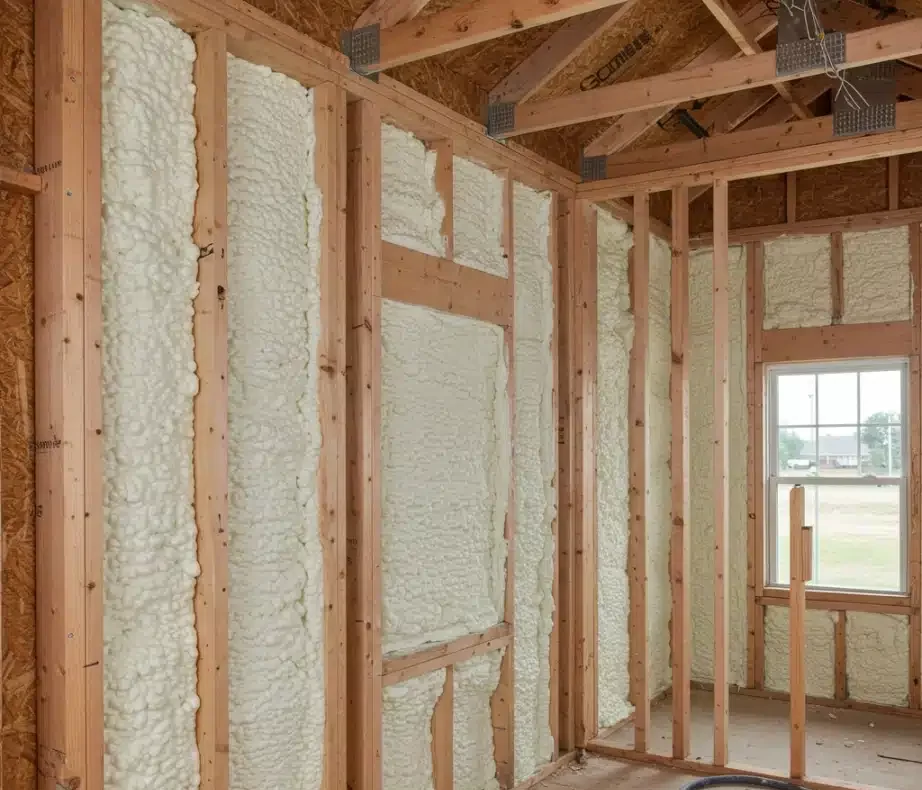
Spray foam chemistry deserves direct questions. Isocyanates, the reactive ingredient in spray polyurethane products, can irritate skin and mucous membranes, cause chest tightness and breathing difficulty, and are linked to occupational asthma, according to OSHA’s isocyanates overview. Once cured fully, the foam is inert, which makes installation-day practices the deciding safety factor. Ask:
- Will everyone, including pets, vacate during installation? The EPA recommends exactly that for occupants not involved in the work.
- How will you isolate and ventilate the work area so vapors do not drift into other rooms?
- What is the safe re-entry time, and will you confirm it in writing before starting?
- What protective equipment do applicators and helpers wear?
Questions About Preparation and Installation Quality
A professional crew inspects before spraying. Ask whether the team will check the attic for moisture, roof leaks, ventilation, and structural or pest issues first, and what happens if problems surface. Ask whether existing insulation will be removed or set aside so foam bonds directly to clean framing, and how full-depth, gap-free coverage gets verified at completion when installing spray foam insulation in Peccole Ranch, NV. Timing questions matter too: the EPA specifically suggests asking about the appropriate season for installation in our area and which weather conditions could affect curing. Southern Nevada’s dry air is favorable, but extreme attic heat on spray day still deserves a scheduling conversation.
Questions About Energy Savings and Return
Get performance expectations in writing instead of accepting vague promises. ENERGY STAR’s seal and insulate guidance reports that air sealing plus added insulation can save up to 10% on total annual energy bills, with attic upgrades among the first projects to prioritize. Department of Energy research cited by Wikipedia found that about 40% of a home’s energy loss traces to air infiltration and that buildings treated with spray foam can insulate as much as 50% better than traditional insulation products. Ask whether the project may qualify for current federal or state energy-efficiency tax credits, and how the contractor will document results so you can compare utility bills before and after.
Recommendations by Property Type
| Property Context | Best-Fit Focus | Questions to Lead With |
|---|---|---|
| Homes with dated attic insulation | Attic air sealing, then foam at the roof deck or ceiling plane | What R-value will I end up with, and how do you verify it? |
| Garages, workshops, and casitas | Closed cell on walls and ceilings | How does the foam hold up on heat-exposed surfaces? |
| Interior remodels and media rooms | Open cell in partition walls | What thickness do you apply for acoustic benefit? |
| Small commercial spaces near Peccole Ranch | Air sealing to cut cooling runtime | How will you schedule around business hours? |
Signs You Have Found the Right Approach
The right conversation feels educational rather than salesy. Look for these markers:
- Trade-offs between open cell and closed cell are explained without pressure toward one product.
- A written re-entry plan and ventilation approach are offered before you ask.
- Repairs, such as fixing a roof leak, are recommended before spraying.
- Thickness, coverage, and post-installation performance get measured and documented.
- Comparison shopping is welcomed, because confident installers know their process holds up.
Get Straight Answers From Our Peccole Ranch Spray Foam Team
You do not need to memorize every technical detail, because our team answers these questions every day. We help Peccole Ranch property owners choose between open cell and closed cell foam, plan safe installations with clear re-entry guidance, and document efficiency gains you can verify on your own utility bills. Call Supreme Spray Foam LV at (702) 904-9895 or email [email protected] to talk through your property with us.
Better questions lead to better results, and we are ready to answer every one of them.
FAQs
How long must we stay out of the house after installation?
Your contractor sets the safe re-entry time based on the product and curing conditions, and EPA guidance says to confirm it before work begins. Ask for it in writing so your family and pets have a firm plan.
Which foam is better for Las Vegas heat, open cell or closed cell?
Closed cell delivers higher R-value per inch and doubles as a vapor barrier, which suits attic roof decks and heat-exposed surfaces. Open cell fits interior walls where sound control matters, so the answer depends on the application.
Can spray foam insulation qualify for tax credits?
Energy-efficient insulation improvements have often qualified for federal incentives, and ENERGY STAR maintains current tax credit guidance. Ask your contractor to document the work, then confirm details with a tax professional.
Can foam be sprayed over my existing attic insulation?
Sometimes, but not always. A pre-installation inspection for moisture, ventilation, and the condition of existing material determines whether insulation should stay, be set aside, or be removed for proper air sealing.
What should I ask about the spray foam warranty?
Ask what the workmanship warranty covers, how long it lasts, and whether the manufacturer backs the specific foam system used. Get the terms in writing, including how shrinkage or adhesion issues are handled.
Sources
- National Weather Service – Las Vegas 1991-2020 Climate Normals – Official climate data showing Las Vegas warming trends, rising overnight lows, and the urban heat island effect that increases cooling demand.
- ENERGY STAR – Seal and Insulate – Government-backed guidance reporting up to 10% annual energy bill savings from air sealing plus insulation, with attic projects prioritized.
- EPA – Safer Workplace Practices for Spray Polyurethane Foam Installation – EPA guidance listing the questions homeowners should ask contractors about training, licensing, insurance, ventilation, and safe re-entry.
- OSHA – Isocyanates – Occupational safety overview of isocyanate health effects, the reactive chemistry used in spray polyurethane foam.
- Wikipedia – Spray Foam – Reference overview of open cell versus closed cell R-values, air barrier behavior, and Department of Energy findings on air infiltration losses.