
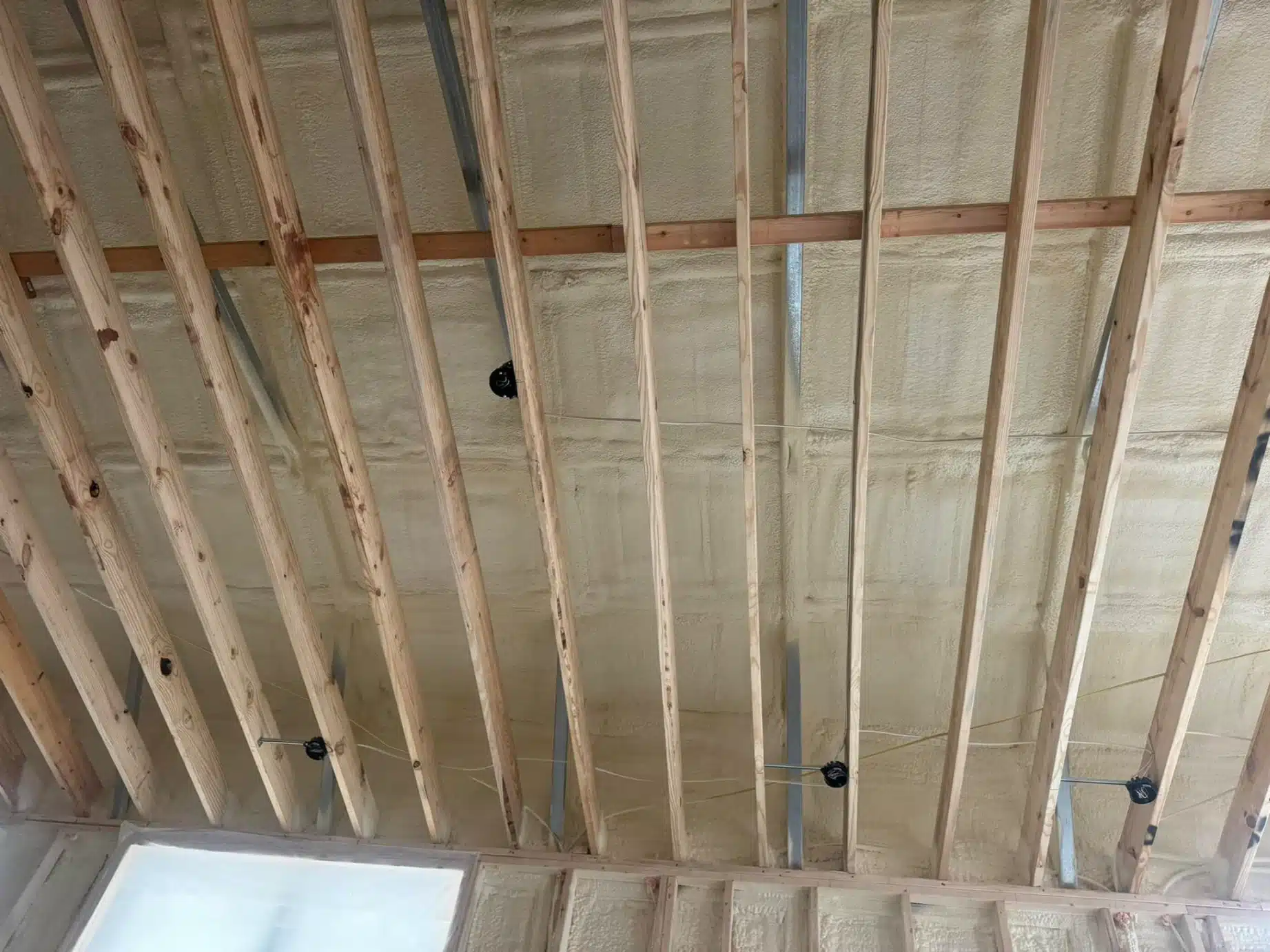
Premium insulation in Downtown Las Vegas homes is worth the investment because the city sits in IECC Climate Zone 3, a hot-dry region where daytime temperatures regularly exceed 110°F for months at a time. In this zone, the Department of Energy recommends R-49 to R-60 for uninsulated attics and at least R-20 for wood-frame walls. The EPA estimates that proper air sealing combined with insulation upgrades delivers an average of 14% savings on heating and cooling costs, specifically in Climate Zone 3. When you add in reduced HVAC wear, improved indoor comfort, moisture protection, and increased property value, premium materials like spray foam insulation generate returns that extend well beyond monthly utility bills. The right choice depends on your home’s age, construction type, and existing insulation levels, but for Downtown Las Vegas properties, the combination of extreme heat and rising energy costs makes the case for going premium clear through advanced home insulation strategies.
TL;DR
- Las Vegas is classified as IECC Climate Zone 3, requiring R-49 to R-60 for attics and R-20 for wood-frame walls per Department of Energy guidelines
- The EPA estimates homeowners in Climate Zone 3 can save 14% on heating and cooling costs through proper air sealing and insulation
- ENERGY STAR-certified new homes are 20-30% more energy efficient than homes built to standard code, with insulation and air sealing among the primary drivers
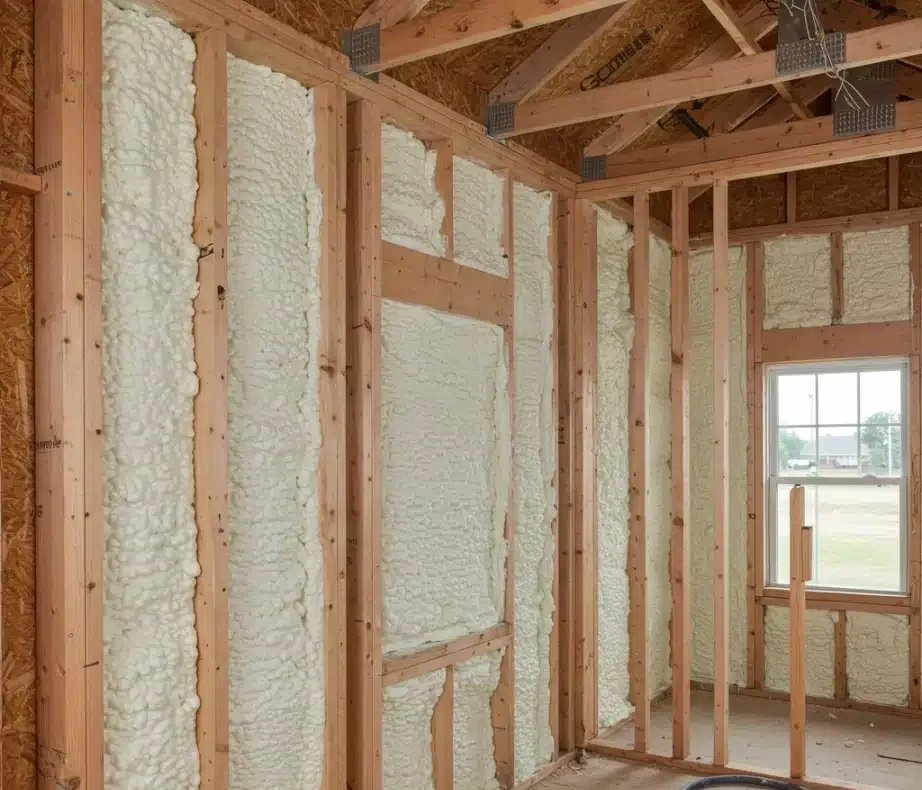
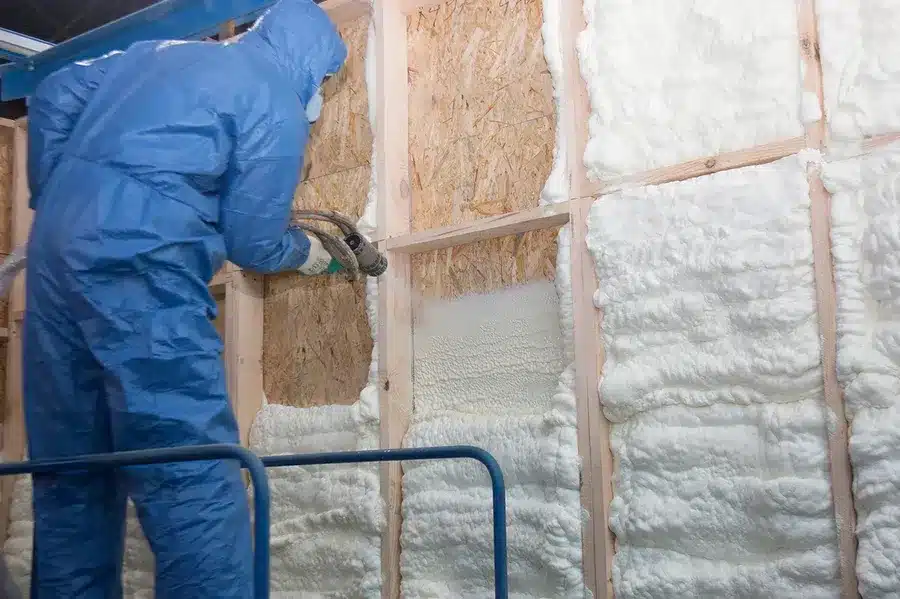
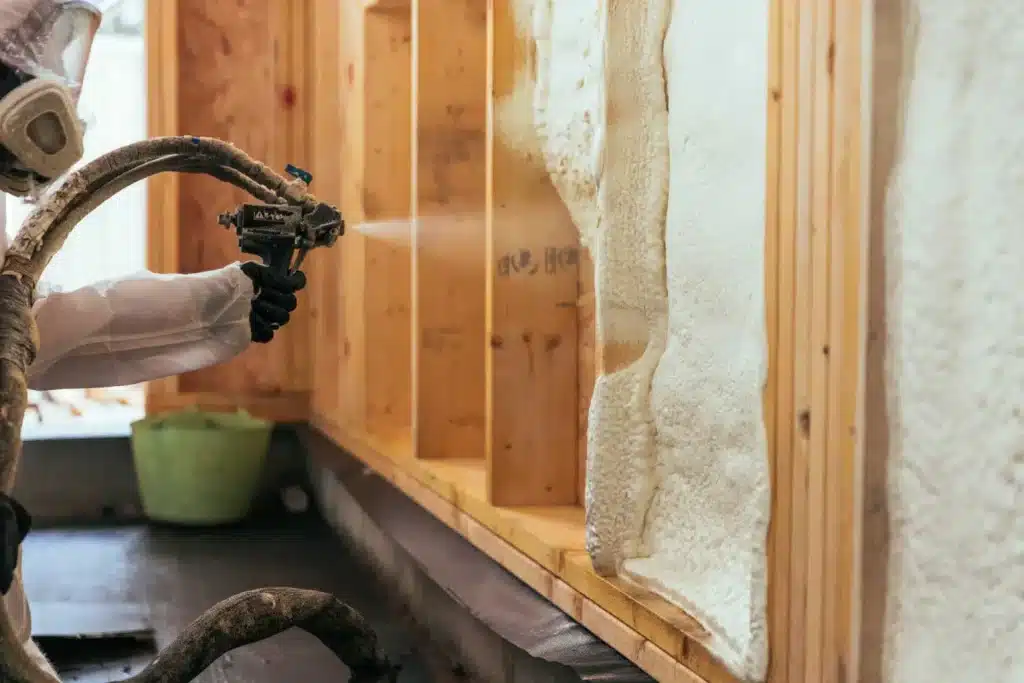
- Spray foam insulation doubles as both an air barrier and thermal insulator, addressing two major building science requirements in one application
- Buildings in hot-dry climates benefit from closed-cell foam’s ability to resist moisture intrusion while adding structural rigidity to wall assemblies
- Older Downtown Las Vegas homes with minimal or degraded insulation stand to benefit the most from a premium upgrade
- Properly installed insulation also reduces HVAC runtime, extending the life of cooling equipment in a climate where air conditioning runs nearly year-round
What Climate Zone 3 Demands from Your Insulation
Las Vegas falls squarely into Climate Zone 3 under the International Energy Conservation Code, which covers hot-dry desert regions. The Department of Energy publishes specific R-value recommendations for each zone, and for Zone 3 the numbers are straightforward but demanding:
| Home Area | Uninsulated Starting Point | Recommended R-Value (Zone 3) | Existing Insulation Upgrade |
|---|---|---|---|
| Attic | No insulation | R-49 to R-60 | R-38 to R-49 |
| Wood-frame wall | No insulation | R-20 (or R-13 + R-5 CI) | Add R-5 continuous insulation |
| Floor over crawl space | No insulation | R-19 | Varies by existing conditions |
Continuous insulation (CI) is an exterior-applied layer that eliminates thermal bridging through studs and framing, a problem the DOE identifies as a major source of heat loss even in well-insulated cavities. For Downtown Las Vegas homes, many of which were built decades ago with minimal insulation, these targets represent a significant gap between what exists and what the climate actually requires.
The EPA’s methodology for energy savings estimates breaks down savings by climate zone. In Zone 3, air sealing and adding insulation to attics, floors, and basement rim joists produces approximately 8% savings on total household energy costs and 14% on heating and cooling alone. Those percentages translate into meaningful dollar figures when Las Vegas air conditioning runs from April through October.
How Premium Insulation Outperforms Standard Materials
Not all insulation delivers the same results in a desert climate. The difference between standard fiberglass batts and premium spray foam comes down to three performance factors:
Air sealing capability. Fiberglass and cellulose sit inside wall cavities but do not block air movement. Gaps around studs, electrical boxes, plumbing penetrations, and framing connections allow conditioned air to escape and hot exterior air to infiltrate. Spray foam expands on contact, filling gaps and creating an air-impermeable seal. The Building Science Corporation identifies spray foam as a material that achieves air barrier performance at the 0.02 l/(s-m2)@75 Pa standard, which is the threshold for air-impermeable materials in building assemblies.
R-value per inch. Closed-cell spray foam delivers R-6 to R-7 per inch, meaning it achieves target R-values in less space than fiberglass (R-3.1 to R-3.8 per inch) or cellulose (R-3.1 to R-3.8 per inch). In older Downtown Las Vegas homes where wall cavity depth may be limited, higher R-value per inch directly affects performance.
Moisture resistance. The Whole Building Design Guide notes that closed-cell, nonhygroscopic insulation helps minimize high moisture levels in wall systems. While Las Vegas is a dry climate, monsoon season brings brief but intense humidity, and plumbing leaks or condensation from HVAC systems can introduce moisture into wall cavities. Closed-cell foam acts as a vapor retarder, reducing the risk of mold and structural damage.
| Insulation Type | R-Value Per Inch | Air Sealing | Moisture Resistance | Best Application |
|---|---|---|---|---|
| Fiberglass batts | 3.1 – 3.8 | No | Low | Open wall cavities during new construction |
| Blown cellulose | 3.1 – 3.8 | Minimal | Moderate | Attics and enclosed cavities |
| Open-cell spray foam | 3.5 – 3.7 | Yes | Moderate | Wall cavities, sound control |
| Closed-cell spray foam | 6.0 – 7.0 | Yes | High | Walls, crawl spaces, rim joists |
Why Downtown Las Vegas Homes Face Added Pressure
Downtown Las Vegas has a higher concentration of older homes compared to newer suburban developments. Many properties in neighborhoods near the Arts District, Fremont East, and Historic Westside were built between the 1940s and 1970s, an era when insulation standards were minimal or nonexistent. These homes typically have:
- No insulation in exterior walls
- Thin attic insulation that has settled or degraded over decades
- Air leakage around windows, doors, and framing connections
- No vapor barriers or air barriers of any kind
The EPA reports that building energy codes, when well-designed and enforced, can lock in cost-effective energy savings of more than 30% compared to standard construction practices. Homes built before modern codes were enacted miss these savings entirely. Premium insulation retrofits bring pre-code homes up to and often beyond current performance standards.
Beyond energy savings, older homes in dense urban areas like Downtown Las Vegas deal with noise from nearby traffic, entertainment districts, and construction. Open-cell spray foam provides meaningful sound dampening, a secondary benefit that standard fiberglass cannot match.
Building Science: Air Barriers Matter as Much as R-Value
The Building Science Corporation explains that moisture accumulates when the rate of moisture entry exceeds the rate of moisture removal, and that air transport is one of the most significant mechanisms for moisture movement through building assemblies. In a hot climate like Las Vegas, this means humid air during monsoon season can infiltrate poorly sealed wall cavities, condense on cooler interior surfaces, and create conditions for mold growth, which is why effective home insulation tips for 2026 focus heavily on air sealing and moisture control.
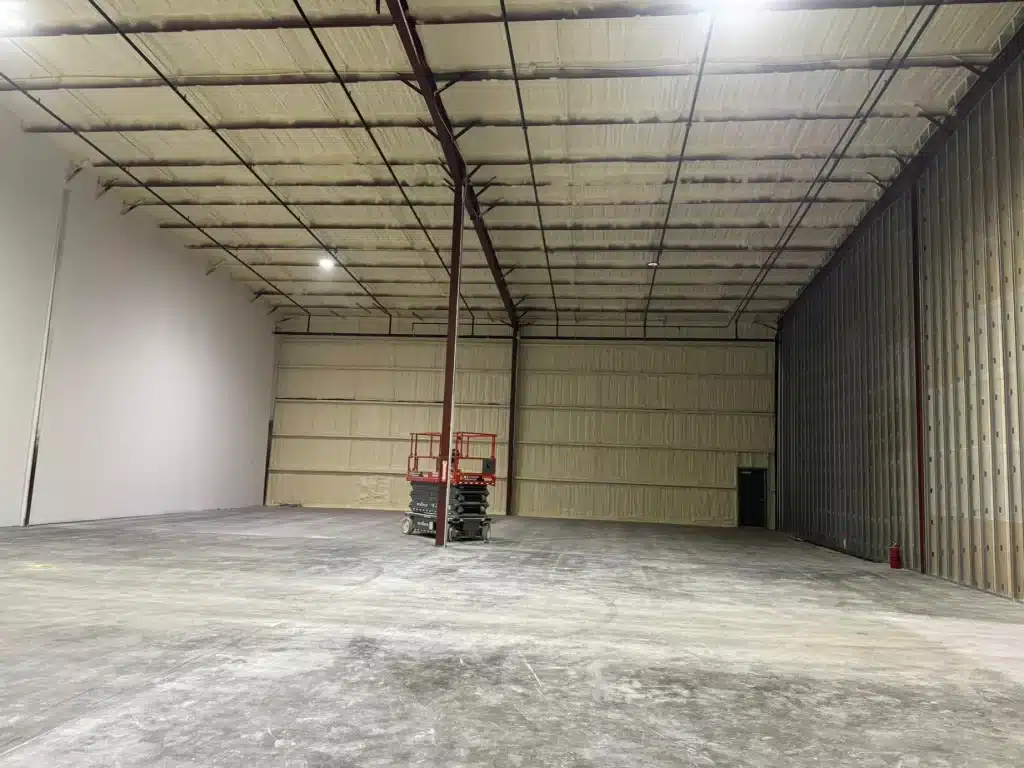
Spray foam insulation addresses this by functioning simultaneously as a thermal insulator and an air barrier system. According to building science research, air barrier systems must achieve a maximum of 2.00 l/(s-m2)@75 Pa at the enclosure level, and spray foam installations consistently meet this target when applied to structural elements.
The WBDG further emphasizes that the design of the building envelope for minimizing air leakage is more critical than the design of the vapor retarder. In practical terms, this means a premium insulation material that seals air leaks provides more protection than a high-R-value material that leaves gaps unsealed.
Recommendations by Home Type
| Home Profile | Recommended Approach | Key Considerations |
|---|---|---|
| Pre-1970 Downtown home, no wall insulation | Closed-cell foam in walls, upgraded attic insulation to R-49+ | Limited cavity depth makes high R-value per inch essential |
| 1980s-2000s home with existing attic fiberglass | Add closed-cell foam to walls and rim joists, supplement attic to R-60 | Focus on air sealing around penetrations and HVAC ductwork |
| Newer construction, code-minimum insulation | Upgrade attic to R-60, add continuous insulation to exterior walls | Target performance above code for long-term savings |
| Home with HVAC ductwork in attic | Closed-cell foam at roof deck to create conditioned attic | Protects ductwork from extreme attic temperatures |
Signs You Have Found the Right Insulation Contractor
Choosing the right installation team matters as much as the material itself. Look for these indicators:
- Detailed assessment before quoting. A thorough contractor inspects your attic, walls, and HVAC system before recommending a solution, rather than offering a one-size-fits-all package.
- Clear explanation of R-value targets for your zone. The contractor should reference Climate Zone 3 requirements and explain how their recommended installation meets or exceeds those benchmarks.
- Air sealing included in the scope. If the proposal only addresses adding material without sealing gaps, penetrations, and connections, it is incomplete.
- Transparency about material types. The contractor should explain the difference between open-cell and closed-cell foam and recommend based on your specific home conditions, not just the higher-priced option.
- References from similar Downtown Las Vegas projects. Experience with older homes in the area demonstrates familiarity with the unique challenges of pre-code construction.
Ready to Invest in Your Home’s Comfort and Efficiency
Supreme Spray Foam LV has been helping Downtown Las Vegas homeowners upgrade their insulation with professional spray foam installation tailored to the demands of Climate Zone 3. Our team evaluates your home’s specific needs, recommends the right material and application for maximum performance, and installs with precision to ensure every gap is sealed and every R-value target is met through expert spray foam services in Downtown Las Vegas.
Call us at (702) 904-9895 or email [email protected] to get started. Your home works hard against the Las Vegas heat. Make sure your insulation does the same.
FAQs
Q: How much can I realistically save on cooling costs with premium insulation in Las Vegas?
A: The EPA estimates 14% savings on heating and cooling costs in Climate Zone 3 when combining air sealing with insulation upgrades, though actual savings vary based on your home’s current condition and HVAC system.
Q: Is spray foam insulation worth it for an older Downtown Las Vegas home with no existing wall insulation?
A: Homes built before modern energy codes typically have no wall insulation at all, making them strong candidates for spray foam, which achieves high R-values per inch and seals air leaks simultaneously.
Q: How does closed-cell spray foam handle Las Vegas monsoon moisture compared to fiberglass?
A: Closed-cell foam is nonhygroscopic and acts as a vapor retarder, meaning it resists absorbing moisture, whereas fiberglass can lose R-value when exposed to humidity and condensation.
Q: Does upgrading insulation really increase home value in the Las Vegas market?
A: The EPA notes that energy-efficient homes built to ENERGY STAR standards are 20-30% more efficient than standard construction, and energy performance is increasingly recognized by buyers and appraisers as a measurable home value factor.
Q: How long does spray foam insulation last in a hot desert climate?
A: Spray foam is a permanent installation that does not settle, sag, or degrade over time, unlike fiberglass or cellulose which can compress and lose effectiveness, especially under the temperature extremes common in Las Vegas attics.
Sources
- EPA ENERGY STAR – Methodology for Estimated Energy Savings – EPA energy modeling data and savings estimates by climate zone for air sealing and insulation improvements.
- Department of Energy – Insulation – Federal guidance on R-value recommendations, climate zone requirements, and how insulation works to resist heat flow.
- Building Science Corporation – Moisture Control for New Residential Buildings – Building science research on air barrier performance, spray foam as air-impermeable insulation, and moisture control strategies by climate.
- WBDG – Moisture Management – Whole Building Design Guide resource on closed-cell insulation properties, vapor retarders, and building envelope design for moisture control.
- EPA – Local Residential Energy Efficiency – EPA data on ENERGY STAR certified homes achieving 20-30% greater efficiency than code-built homes through insulation, air sealing, and other measures.