
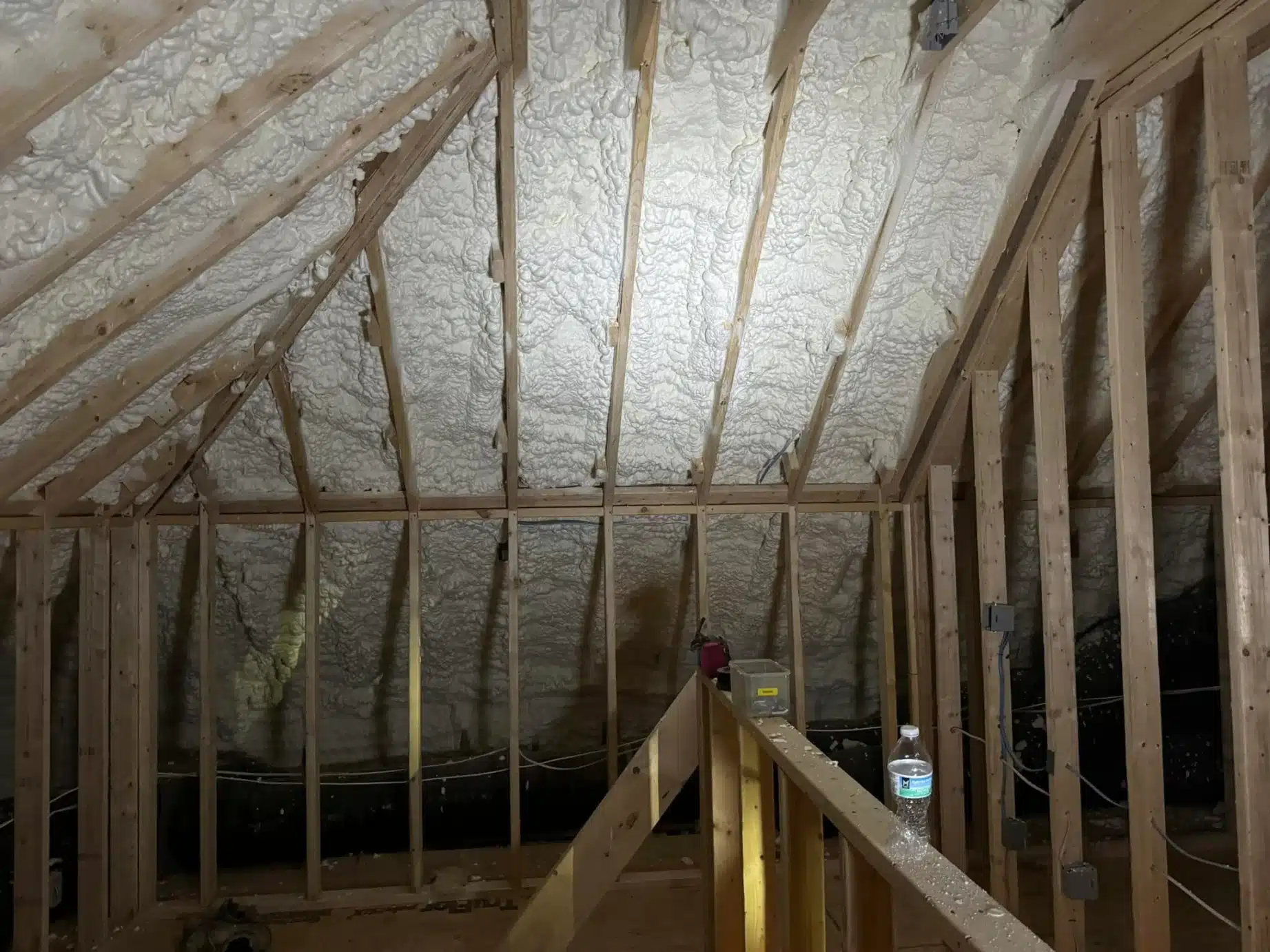
Spray foam insulation is safe for homes with young children when it has been fully cured and professionally installed, but the installation process itself introduces temporary health risks that parents need to manage carefully. During application, spray polyurethane foam releases chemicals including isocyanates, amine catalysts, and flame retardants that can cause respiratory irritation, skin reactions, and asthma-like symptoms. Once the curing process is complete and the home has been properly ventilated, the foam becomes an inert plastic material that does not release harmful emissions under normal conditions. The distinction between “during installation” and “after curing” is what matters most for your child’s safety. Choosing a qualified installer who follows proper protocols makes the difference between a safe, well-insulated home and a potential health hazard, which is why reviewing a professional spray foam insulation guide is important before installation.
TL;DR
- Spray foam becomes inert and non-toxic once fully cured, typically within 24 to 48 hours after professional installation.
- During application, isocyanates and other volatile chemicals pose real health risks to anyone in the home, especially young children whose respiratory systems are still developing.
- The EPA recommends all unprotected occupants, including children and pets, vacate the home during and immediately after spray foam installation.
- Open-cell and closed-cell foam carry the same curing requirements and chemical exposure risks during installation.
- Faulty or improper installation can lead to persistent off-gassing, ongoing odors, and long-term indoor air quality problems that affect the entire household.
- One-component spray foam cans sold at hardware stores should never be used around children, according to the EPA.
- After curing, spray foam should only pose risks again if it is heated, cut, sanded, or disturbed during future renovation work.
What Happens During Spray Foam Installation
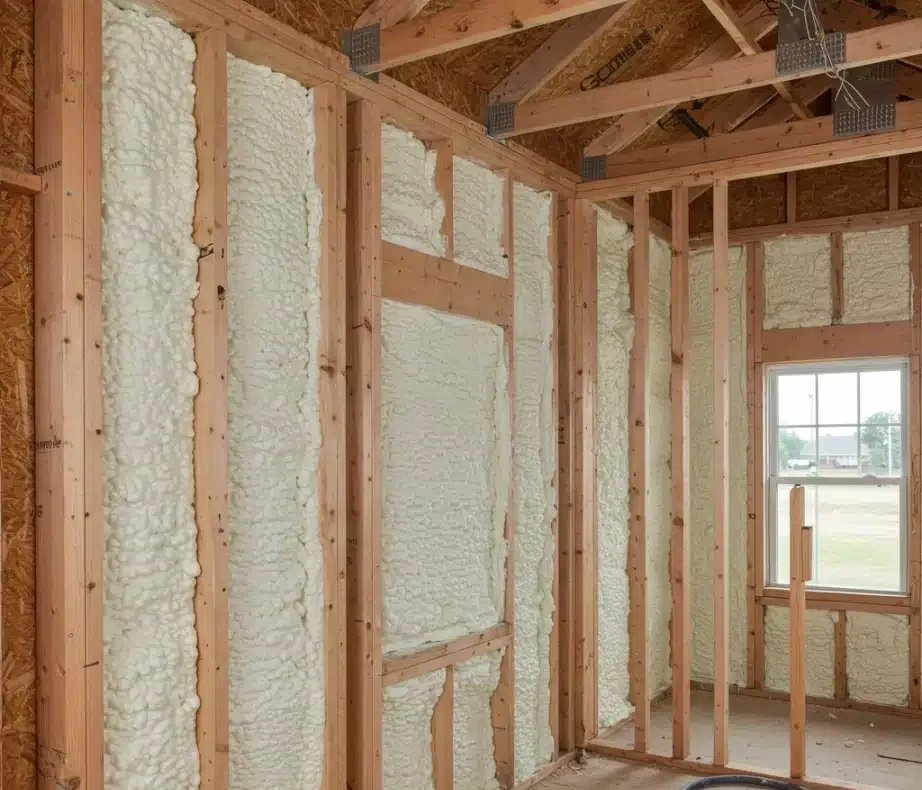
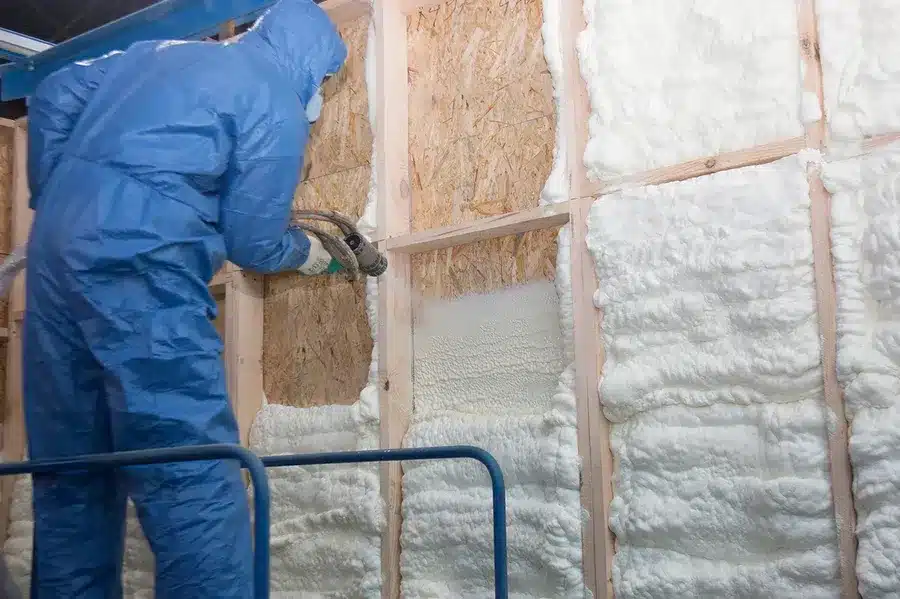
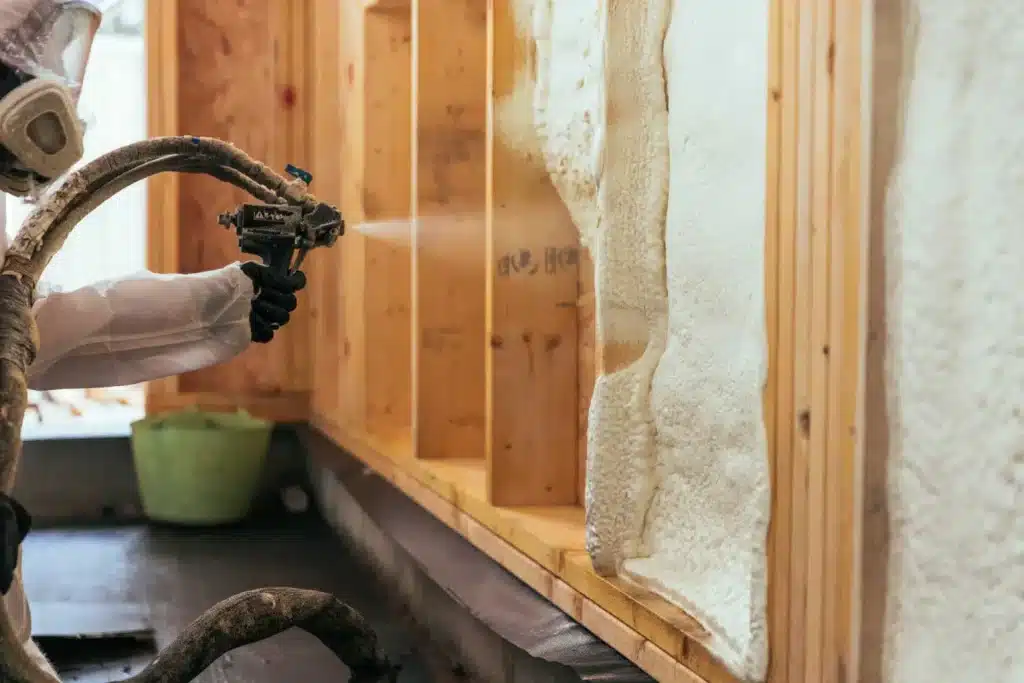
Spray polyurethane foam (SPF) is created by mixing two chemical components at the application site. Side A contains isocyanates, highly reactive chemicals that make up roughly 50% of the formulation. Side B contains a polyol resin blended with catalysts, flame retardants, blowing agents, and surfactants. When these two sides meet at the spray nozzle, a rapid chemical reaction occurs and the foam expands to fill cavities, cracks, and gaps.
During this reaction, the foam generates vapors, aerosols, and dust that can migrate through a building if the area is not properly isolated and ventilated. According to the EPA’s page on potential chemical exposures from SPF, research data show that inhalation exposures during spray foam application typically exceed OSHA occupational exposure limits, which is why workers wear supplied-air respirators and full protective gear. Children should never be present while these chemicals are airborne.
The foam may appear hardened within minutes, but at that stage it is still curing and contains unreacted chemicals. Cutting or trimming the foam before it is fully cured generates additional dust containing unreacted isocyanates and other chemicals that linger in the air.
Why Young Children Are More Vulnerable
Children are not simply small adults. Their bodies process environmental exposures differently in several important ways:
- Developing respiratory systems: A child’s airways are narrower and more reactive than an adult’s. Irritants that might cause mild discomfort in an adult can trigger significant wheezing or breathing difficulty in a young child.
- Higher breathing rate: Children breathe more air relative to their body weight than adults do, meaning they inhale a proportionally larger dose of any airborne contaminant.
- More time on the floor: Crawling and playing close to the ground puts children closer to settled dust and chemical residues that may settle after installation.
- Inability to communicate symptoms: Infants and toddlers cannot clearly describe what they are feeling, making it harder for parents to identify early signs of exposure.
The CDC's NIOSH page on isocyanates notes that isocyanates are powerful irritants to the mucous membranes of the eyes and respiratory tract, and that both inhalation and skin contact can lead to sensitization. Once a person becomes sensitized, even low-level future exposures can trigger severe asthma attacks. For a young child, sensitization at an early age could mean a lifetime of respiratory reactivity.
Understanding the Curing Process and Re-Entry Times
Curing is the period during which the chemical reaction in the foam completes and the material stabilizes. The curing time varies based on the type of foam, product formulation, application thickness, temperature, humidity, and ventilation. The EPA notes that some manufacturers recommend 24 hours after application before re-occupancy for professional two-component systems, while one-component foam from aerosol cans may take 8 to 24 hours, which is an important factor when evaluating spray foam installation safety.
The following table summarizes what parents should expect at each stage:
| Stage | Timeframe | Risk to Children | What Parents Should Do |
|---|---|---|---|
| During application | Active spraying | High | Children and pets must not be in the home |
| Initial curing | 0-8 hours | Very high | Keep home vacant, ventilate continuously |
| Off-gassing period | 8-24 hours | Moderate to high | Follow manufacturer re-entry guidance, continue ventilation |
| Full cure | 24-48 hours | Low | Return only after confirming no odors remain |
| Long-term (cured) | Weeks to years | Minimal | No risk under normal conditions |
| During renovation | Future projects | Moderate | Warn contractors foam is present, avoid heating or grinding |
It is worth noting that curing times are not guaranteed. Temperature, humidity, foam thickness, and ventilation all affect how quickly the reaction completes. Our team always communicates specific re-entry timelines for each project based on the product used and the conditions in your home.
What Can Go Wrong With Improper Installation
The majority of documented health problems linked to spray foam insulation are not caused by the product itself but by poor application. A 2014 study published in Environmental Research (PubMed) examined 13 adults from 10 households where spray foam was improperly applied. In every case, occupants either were not told to leave during installation or were instructed to return too early. All subjects reported burning eyes, sinus congestion, throat irritation, cough, and chest tightness. Over 90% experienced headaches, dizziness, and difficulty concentrating. Every household eventually had to vacate.
Common installation mistakes that put families at risk include:
- Inadequate mixing: When the two chemical components are not blended at the correct ratio or temperature, the foam may never fully cure, leading to persistent off-gassing.
- Insufficient ventilation: Without proper airflow during and after installation, chemical vapors concentrate indoors and settle on surfaces throughout the home.
- Over-spraying in confined spaces: Applying too much foam in a small area like an attic or crawlspace traps vapors that then migrate into living spaces.
- Premature re-entry: Allowing occupants back before the foam has fully cured is the single most common cause of health complaints.
The EPA warns that misleading marketing claims sometimes ignore the presence of hazardous chemicals in spray foam, which can lead homeowners to underestimate the precautions needed during and after installation. Parents should be skeptical of any contractor who downplays the need to vacate the home.
Open-Cell vs. Closed-Cell Foam: Safety Comparison for Families
Both open-cell and closed-cell spray foam use the same core chemical components: isocyanates on the A-side and a polyol blend on the B-side. The safety profile during installation is similar for both types, but there are differences worth understanding:
| Factor | Open-Cell Foam | Closed-Cell Foam |
|---|---|---|
| Density | Low (approximately 0.5 lb per cubic foot) | Medium to high (2-3 lb per cubic foot) |
| R-value per inch | Approximately 3.5 | Approximately 6.5 |
| Expansion | Expands aggressively, applied in layers | Expands less aggressively |
| Texture when cured | Soft and flexible | Rigid and hard |
| Curing time | May require longer ventilation (up to 48 hours) | Typically cures within 24 hours |
| Moisture barrier | Not a vapor barrier | Acts as a vapor barrier |
| Off-gassing concern | Higher volume of foam means more chemical reaction | Less foam volume, faster cure time |
| Post-cure safety | Inert when fully cured | Inert when fully cured |
Neither type is inherently safer for children. What matters is that whichever product is used, it is applied correctly by trained professionals who follow the manufacturer’s curing and ventilation guidelines.
Long-Term Safety After Curing
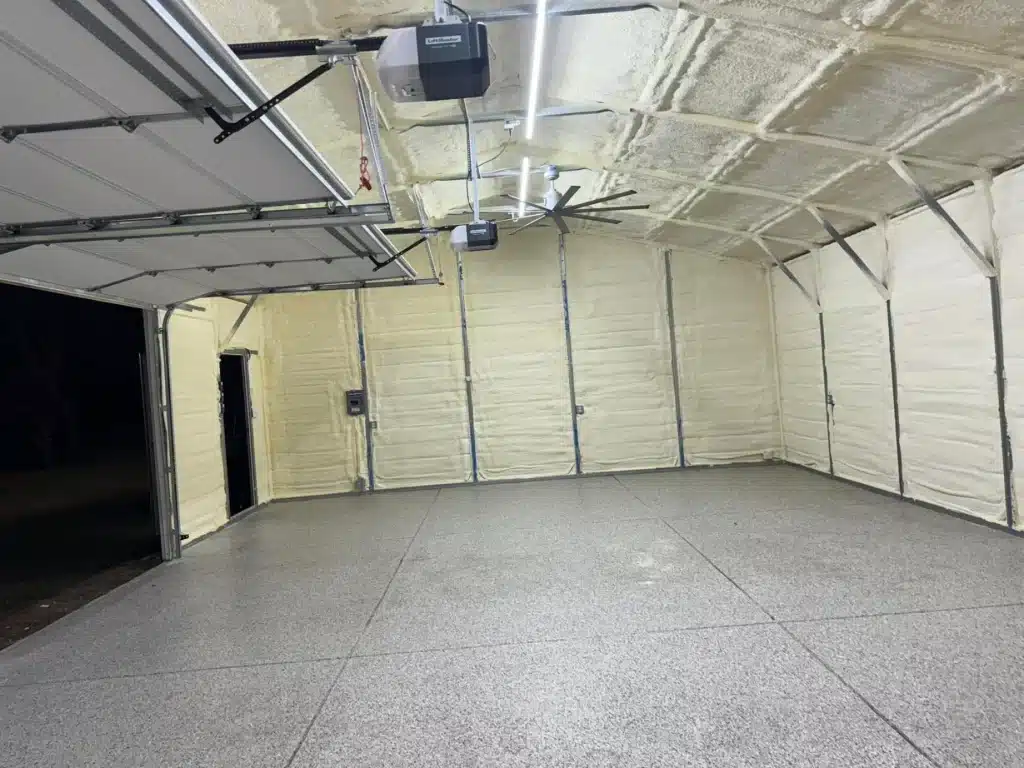
Once spray foam has fully cured, the EPA considers it relatively inert, meaning it no longer reacts chemically or releases vapors under normal conditions. This is the state in which millions of American homes safely contain spray foam insulation, including homes with infants, toddlers, and young children.
There are, however, a few long-term scenarios parents should be aware of:
- Future renovations: If plumbers, electricians, or HVAC technicians need to drill, cut, or grind through cured spray foam, the process can release toxic emissions including isocyanates, amines, and hydrogen cyanide. Always inform contractors that spray foam is present before any renovation work begins.
- Hot work: Soldering, welding, or using heat tools near spray foam generates dangerous airborne chemicals. This applies to any future work near the insulated areas.
- Improperly cured foam: If foam was installed incorrectly and never fully cured, it may continue off-gassing for weeks or months. If your home has persistent chemical odors long after installation, the foam may need to be evaluated by an indoor air quality professional.
- Fire events: While spray foam includes fire retardants, it can release toxic gases when burned. This is a concern during fire emergencies, not during normal daily life.
The Consumer Product Safety Commission (CPSC) has been working with ASTM International to develop standardized testing methods for chemical emissions from spray foam insulation, which will give homeowners better data on long-term indoor air quality impacts.
Warning Signs That Something Is Wrong
Parents should watch for the following indicators after spray foam installation, particularly in the first few weeks:
- Persistent chemical or “fishy” odor that does not fade after the recommended curing period
- Ongoing respiratory symptoms in children, including coughing, wheezing, nasal congestion, or shortness of breath
- Eye irritation, redness, or watering that occurs primarily inside the home
- Skin rashes or unexplained itching, especially in infants who spend time on the floor
- Headaches, dizziness, or difficulty concentrating in older children or adults
- Symptoms that improve when the family leaves the home and return upon re-entering
If you notice any of these signs, contact your installer immediately. The EPA recommends hiring an independent indoor air quality consultant to test for residual volatile organic compounds if problems persist.
How to Make Sure Your Installation Is Safe for Your Family
The single most effective step parents can take is hiring a professional installer who follows established safety protocols. Here is what to look for:
- Certified installers who have completed manufacturer training on proper application techniques, mixing ratios, and curing procedures
- Clear communication about vacating the home before installation begins, with specific re-entry timelines provided in writing
- Proper containment and ventilation during application, including isolation of the work area from the rest of the home
- Post-installation verification that the foam has cured completely before your family returns
- Willingness to answer questions about the specific products being used, their chemical composition, and any associated safety data sheets
Signs You Have Found the Right Spray Foam Installer
A trustworthy contractor makes safety a visible part of their process rather than an afterthought. Here are the signs that indicate you are working with a qualified team:
- They explain the chemical nature of the product honestly and do not minimize the need for precautions during installation
- They provide a detailed timeline for vacating and re-entering your home, specific to the product and conditions of your project
- They use professional-grade equipment and follow manufacturer guidelines for temperature, humidity, and mixing ratios
- They carry appropriate insurance and certifications, and can explain their training background
- They are willing to discuss what happens if something goes wrong and how they would address any post-installation concerns
- They document the entire process, including product batch numbers and application conditions, so any future issues can be traced and resolved
Get a Professional Safety Assessment for Your Home
At Supreme Spray Foam LV, we take the safety of your family seriously. Our team follows strict installation protocols and manufacturer curing guidelines to make sure your home’s insulation performs as intended without compromising indoor air quality. Whether you are considering spray foam for a new construction project or a retrofit, we walk you through every step of the process so you know exactly what to expect before, during, and after installation.
Call us at (702) 904-9895 or email [email protected] to discuss your project. Your children’s safety is not negotiable, and neither are our standards.
Frequently Asked Questions
Q: How long do I need to keep my children out of the house after spray foam installation?
A: Most manufacturers recommend keeping children out for at least 24 hours after application, and some products may require up to 48 hours. Your installer should provide a specific re-entry timeline based on the product used, application thickness, and conditions in your home.
Q: Can spray foam insulation cause asthma in children?
A: Prolonged exposure to isocyanates during the installation phase can cause respiratory sensitization, which may lead to asthma-like symptoms. This risk exists primarily during application and the curing period, not after the foam has fully cured. Proper vacating and ventilation prevent this risk.
Q: Is the smell from the new spray foam dangerous for my baby?
A: Chemical odors during and immediately after installation indicate the presence of volatile organic compounds that should not be inhaled by infants. If odors persist well beyond the manufacturer’s recommended curing time, contact your installer and consider an indoor air quality assessment.
Q: Can my child be near spray foam that was installed years ago?
A: Fully cured spray foam is considered inert and does not release harmful emissions under normal conditions. The only risk arises if the foam is disturbed by cutting, grinding, or heating during future renovation work.
Q: Should I be worried about spray foam in my baby’s nursery?
A: Spray foam in a nursery is safe once fully cured. If you are planning installation, coordinate with your installer to complete the work well before your baby arrives, and confirm the foam has fully cured and the space has been ventilated before moving in.
Sources
- EPA – Health Concerns about Spray Polyurethane Foam – Detailed information on the health hazards of isocyanates, polyol blend chemicals, flame retardants, and misleading marketing claims associated with SPF insulation products.
- EPA – Potential Chemical Exposures From Spray Polyurethane Foam – Guidance on exposure routes, curing timelines, re-entry recommendations, and long-term exposure concerns for building occupants.
- EPA – Spray Polyurethane Foam Product Types – Comparison of open-cell, closed-cell, and one-component foam products, including chemical composition, hazard profiles, and safety warnings about use around children.
- Consumer Product Safety Commission – Spray Polyurethane Foam Insulation – Federal standards development efforts and voluntary testing methods for measuring chemical emissions from SPF insulation products.
- CDC NIOSH – Isocyanates – Occupational health guidance on isocyanate exposure, including respiratory sensitization, asthma risk, and prevention recommendations relevant to SPF insulation.