
Las Vegas homeowners face some of the most extreme cooling demands in the country, with summer highs averaging 102 degrees Fahrenheit and roughly nine days per year exceeding 110 degrees [NOAA/NCEI Nevada State Climate Summary 2022], according to the NOAA State Climate Summary for Nevada. The right spray foam insulation service can dramatically reduce energy waste, improve indoor comfort, and protect your home’s construction, existing insulation, budget, and specific goals like air sealing versus thermal resistance. Understanding the types of spray foam available, how they perform in a hot-dry climate like Southern Nevada, and what separates a qualified installer from an unreliable one is the first step toward making a smart investment.
TL;DR
- Las Vegas sits in IECC Climate Zone 3B (hot-dry), where the DOE recommends attic insulation between R-30 and R-60 and wall insulation of R-19 to R-25 for optimal efficiency.
- Spray foam insulation provides both thermal resistance and air sealing in a single application, unlike fiberglass or cellulose which only resist heat flow.
- Closed-cell spray foam delivers R-6.5 per inch and doubles as a vapor retarder, while open-cell foam delivers roughly R-3.7 per inch and remains vapor permeable.
- The EPA’s ENERGY STAR program estimates homeowners can save up to 20% on heating and cooling costs by adding insulation and sealing air leaks.
- The federal Section 25C tax credit covers 30% of insulation and air sealing costs (up to $1,200 annually) through 2025, with no lifetime cap.
- Improper installation can lead to off-gassing hazards, moisture trapping, and reduced R-value, making installer experience a top priority.
- Both open-cell and closed-cell spray foam are approved for unvented conditioned attics in warm climates like Las Vegas.
Why Spray Foam Insulation Matters in Las Vegas
Las Vegas is one of the hottest cities in the United States, and temperatures in Nevada have risen nearly 2.4 degrees Fahrenheit since 1900, with historically unprecedented warming projected to continue. For local homeowners, this means cooling loads are increasing, HVAC systems are working harder, and homes without proper insulation and air sealing are losing expensive conditioned air every day.
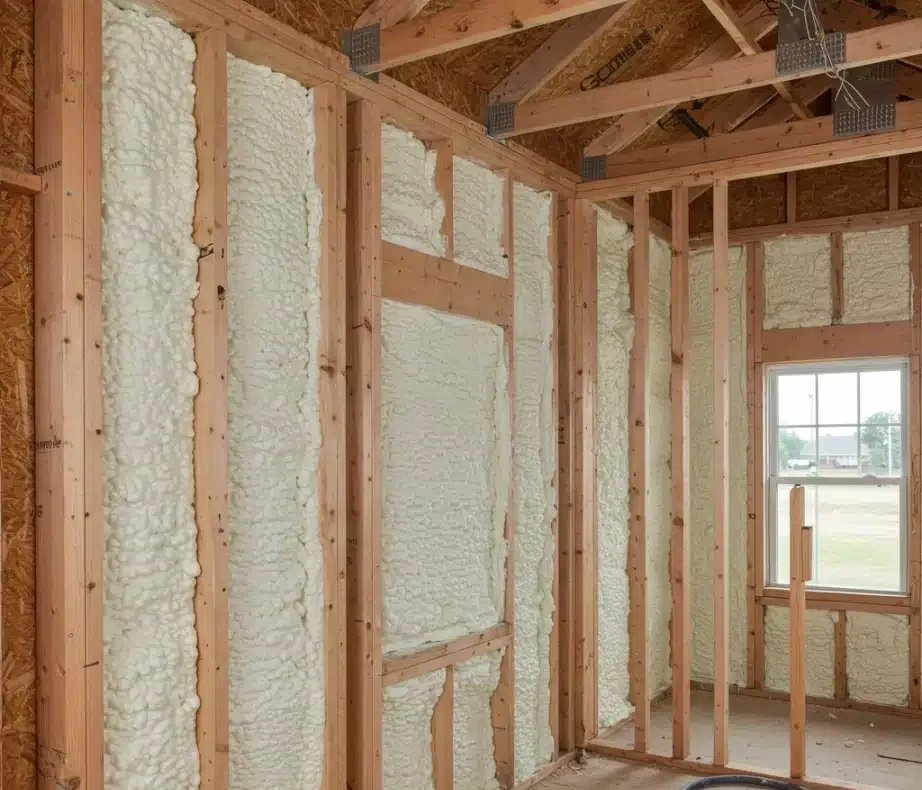
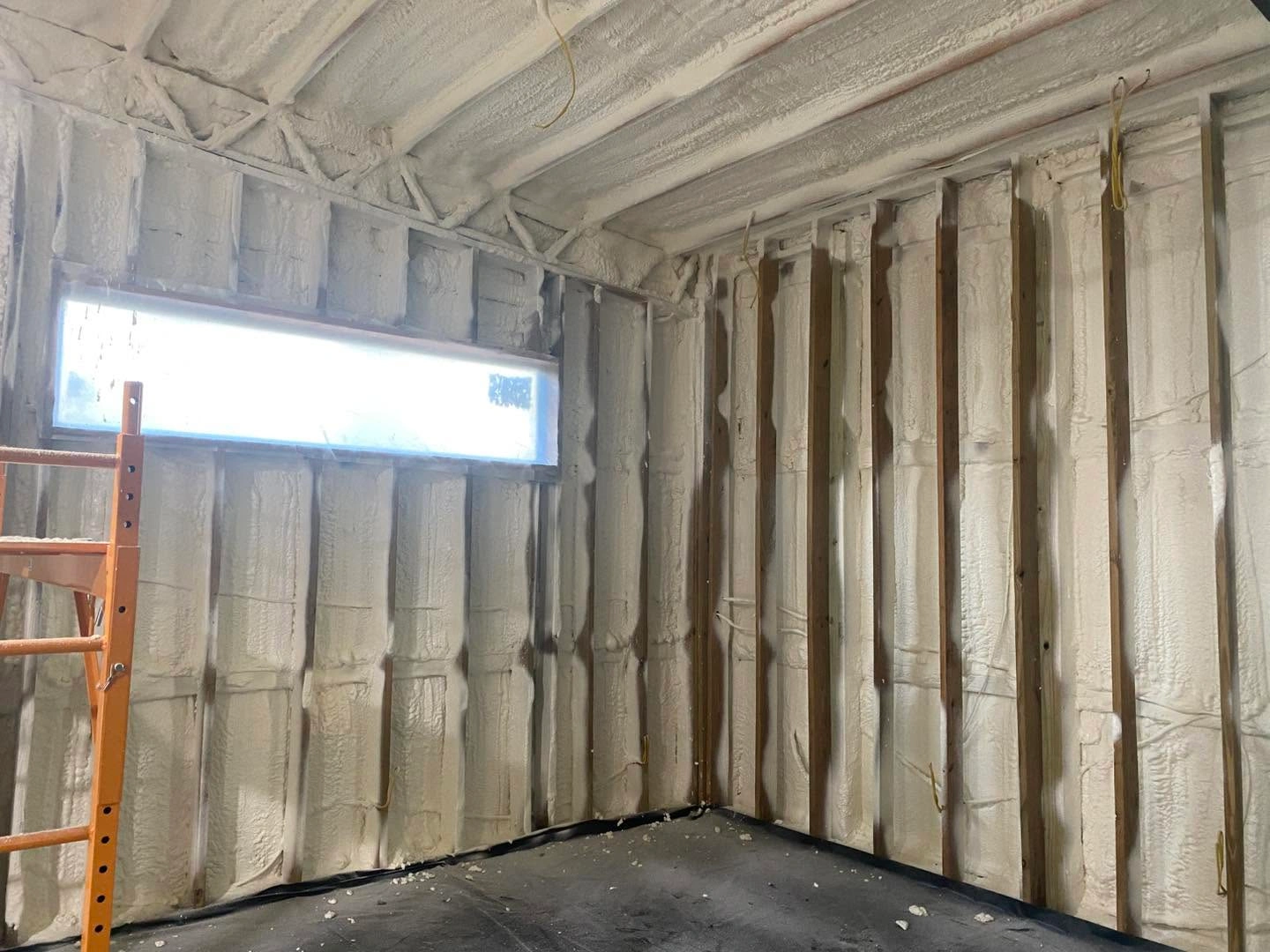
Spray polyurethane foam (SPF) stands apart from other insulation types because it provides continuity of four control layers simultaneously [Building Science Corporation – Residential Spray Foam Guide]: water control, air control, vapor control, and thermal control, as documented by Building Science Corporation. This is especially valuable in Las Vegas, where extreme heat, low humidity, and occasional monsoon moisture create unique building envelope challenges. When spray foam is applied to walls, roofs, or foundations, it expands to fill gaps and voids that traditional insulation materials like fiberglass batts cannot reach, creating an airtight seal that dramatically reduces energy waste.
The Department of Energy confirms that adding insulation to attics, floors, crawl spaces, and accessible basement rim joists, along with reducing air leaks, can save homeowners up to 20% on heating and cooling costs [DOE Guide to Home Insulation (PDF)] and up to 10% on total energy costs.
Open-Cell vs. Closed-Cell Spray Foam: Which Fits Your Home?
The two primary types of safest spray foam insulation serve different purposes, and choosing the right one depends on your climate zone, the application area, cavity depth, and moisture exposure.
| Feature | Open-Cell Spray Foam | Closed-Cell Spray Foam |
|---|---|---|
| R-Value per Inch | ~3.7 | ~6.5 |
| Density | Low (0.5 lb/ft3) | High (2.0 lb/ft3) |
| Vapor Permeability | Vapor permeable | Acts as vapor retarder at 1.5″+ |
| Air Barrier | Yes, when fully cured | Yes, when fully cured |
| Structural Strength | Minimal | Adds wall racking strength |
| Best Applications | Interior walls, attics, sound damping | Exterior walls, crawlspaces, foundations, metal buildings |
| Thickness Needed | Greater depth for equivalent R-value | Less depth for same R-value |
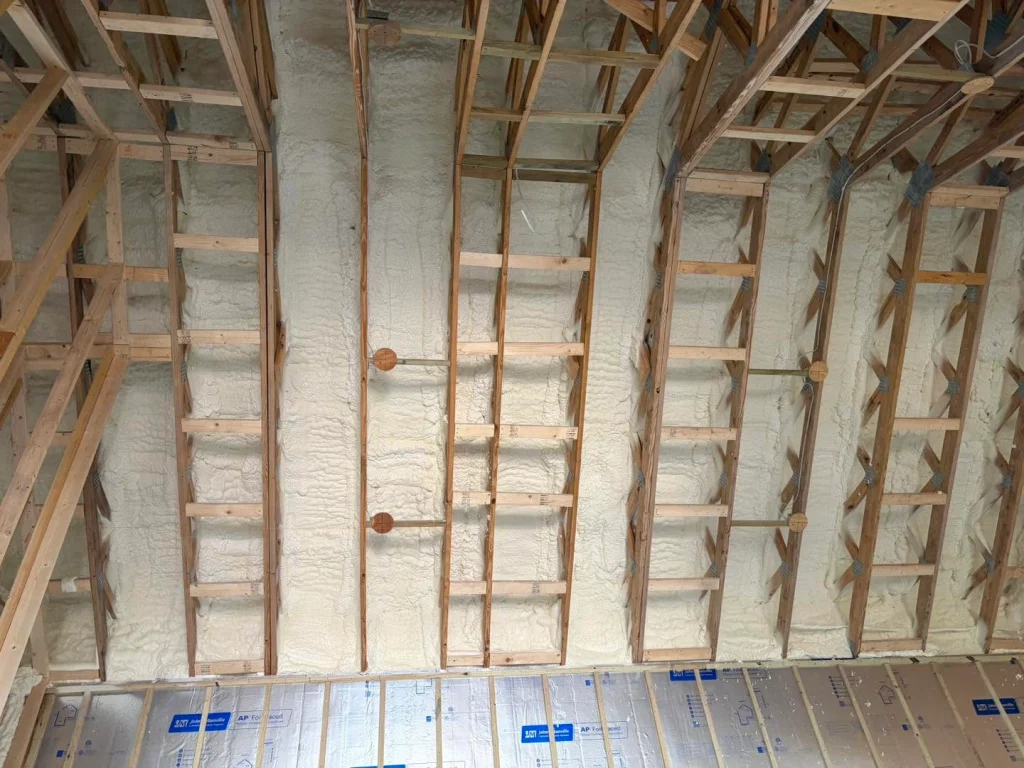
In Las Vegas and the surrounding Southern Nevada area, both types work well for most residential applications. For unvented conditioned attics, which are common in warm climates where ductwork is located in attic spaces, Building Science Corporation notes that either open-cell or closed-cell spray foam can be sprayed directly to the underside of the roof deck. Closed-cell is preferred where a vapor retarder is needed, such as crawlspaces and below-grade applications.
Where Spray Foam Makes the Biggest Impact
Attics and Roof Assemblies
Attics are the single largest source of energy loss in most Las Vegas homes, especially during summer. When ductwork and HVAC equipment are located in vented, unconditioned attic spaces, the thermal penalty is substantial. Unvented conditioned attics insulated with spray foam on the underside of the roof deck bring that space into the conditioned envelope, eliminating extreme temperature exposure for ductwork and reducing cooling loads significantly.
Walls and Rim Joists
Wall cavities filled with spray foam provide both insulation and an air barrier in one step. The DOE notes that spray-foam and blown-in insulation can fill wall cavities around wires, pipes, and other obstructions far better than batts. Rim joist areas where floors meet exterior walls are notoriously leaky and are prime candidates for closed-cell spray foam.
Crawlspaces and Foundations
In vented crawlspaces, only high-density closed-cell spray polyurethane foam is recommended across all climate zones to prevent moisture and air from infiltrating the floor assembly. Conditioned, unvented crawlspaces insulated with spray foam on interior walls function as a mini-basement connected to the house, which is the more energy-efficient approach according to building science principles.
Metal Buildings and Pole Barns
For commercial structures and outbuildings common in outlying areas like Henderson, North Las Vegas, and Pahrump, closed-cell spray foam applied to metal roofing and walls provides insulation, prevents condensation on metal surfaces, and adds structural rigidity.
Tax Credits and Financial Incentives for Las Vegas Homeowners
The federal government currently offers meaningful incentives for insulation upgrades. Under the Section 25C Energy Efficient Home Improvement Credit [IRS Energy Efficient Home Improvement Credit (Section 25C)], homeowners can claim 30% of the cost of insulation and air sealing materials or systems that meet International Energy Conservation Code (IECC) standards, up to a maximum of $1,200 per year. This credit applies through December 31, 2025, and there is no lifetime dollar cap, meaning you can claim the credit every year you make eligible improvements.
Importantly, insulation and air sealing materials are the only qualifying property types under this credit that do not require a Qualified Manufacturer Identification Number, making the documentation process simpler.
Safety Considerations: What Homeowners Need to Know
The U.S. Environmental Protection Agency has published safety guidance for spray polyurethane foam, noting that SPF is an effective insulation and air sealant material but exposures to isocyanates during and after installation can cause adverse health effects [EPA Quick Safety Tips for Spray Polyurethane Foam Users] including asthma, sensitization, lung damage, and skin and eye irritation.
Key safety points for homeowners:
- Occupants and workers from other trades should not enter the space during and immediately after installation.
- Re-occupancy times depend on product formulation and curing conditions. Some manufacturers recommend 24 hours after application before re-entry.
- Once fully cured, properly installed spray foam is considered chemically inert and safe.
- Ambient conditions like temperature and humidity affect curing rates, so experienced installers follow manufacturer guidelines closely.
Recommendations by Homeowner Situation
| Homeowner Situation | Recommended Approach | Key Considerations |
|---|---|---|
| New construction | Closed-cell in walls and crawlspaces; open or closed-cell in attic | Design for unvented conditioned attic if ductwork is in attic space |
| Older home retrofit (1950s-1980s) | Closed-cell in attic rim joists; spray foam air seal at ceiling plane | Address existing insulation gaps and air leakage paths first |
| Home with hot rooms upstairs | Spray foam on underside of roof deck (unvented attic approach) | Eliminates extreme attic heat from reaching living spaces below |
| Crawlspace with moisture issues | Closed-cell spray foam on crawlspace walls and floor assembly | Convert to conditioned crawlspace; add ground vapor barrier |
| Metal building or barndominium | Closed-cell spray foam on roof deck and walls | Prevents condensation, adds structural strength, provides highest R-value per inch |
| Sound dampening priority | Open-cell spray foam in interior walls | Lower density absorbs sound better than closed-cell |
Signs You Have Found the Right Spray Foam Insulation Provider
Choosing the right installer matters as much as choosing the right product. Here are the qualities that separate experienced professionals from the rest:
Clear communication about re-occupancy and safety. A qualified installer will explain exactly when it is safe to re-enter the home, what protective measures they use during installation, and how curing conditions affect the timeline.
Detailed written scope of work. The proposal should specify foam type, target thickness, areas to be insulated, R-value targets, and manufacturer information for the products being used.
Knowledge of local building codes and climate zone requirements. Las Vegas falls in IECC Climate Zone 3B, and the installer should be able to reference the specific R-values recommended for your application.
Willingness to answer technical questions. A knowledgeable team will explain why they recommend open-cell versus closed-cell for each area of your home and how the installation will interact with your existing ventilation and HVAC systems.
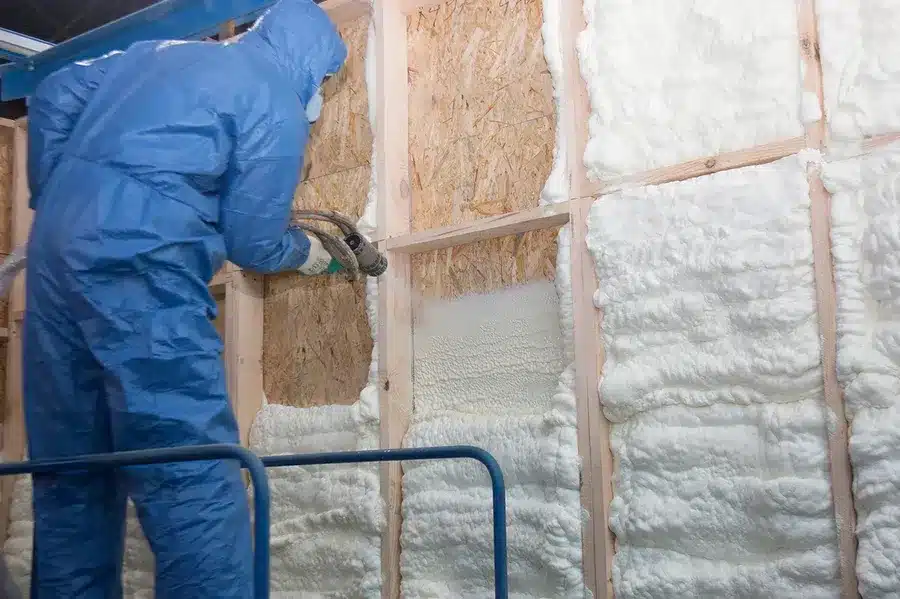
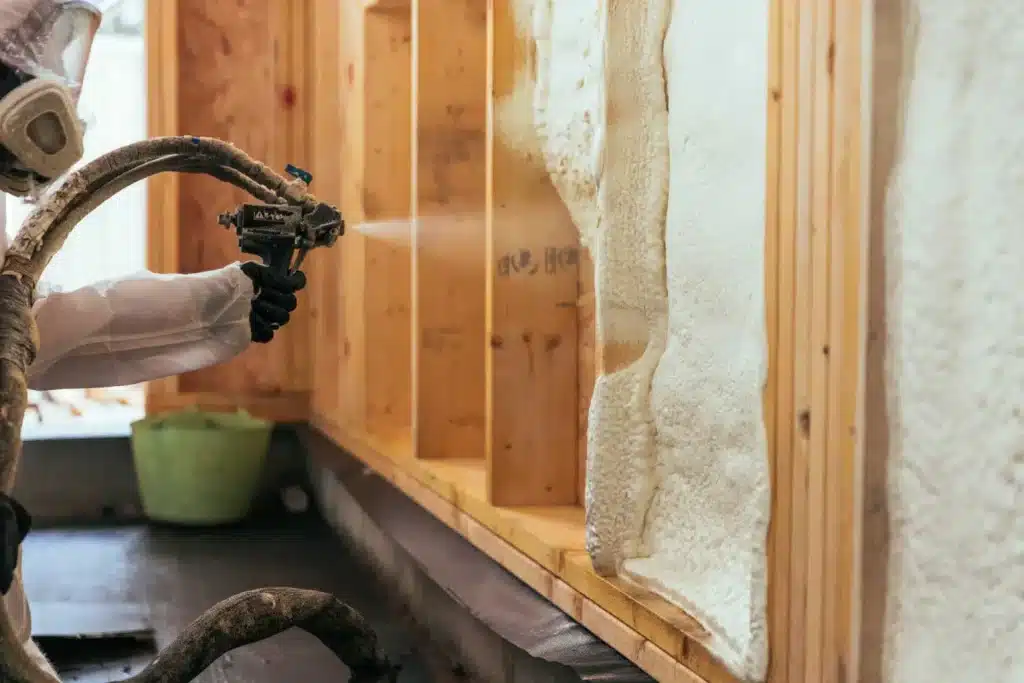
Proper equipment and safety practices. Professional installers use appropriate personal protective equipment and follow manufacturer guidelines for temperature, humidity, and application thickness.
Get Started With Professional Spray Foam Insulation
Supreme Spray Foam LV delivers expert spray foam insulation services in across Las Vegas, Henderson, North Las Vegas, and surrounding Southern Nevada communities. Our experienced team evaluates each project individually, recommending the right foam type and application method for your home’s specific needs and the demands of our desert climate. From unvented conditioned attics to crawlspace encapsulation and full wall insulation, we handle every project with the precision and attention to detail it deserves.
Ready to reduce your energy bills and improve indoor comfort? Reach out to our team today.
Request a Quote | Schedule an Insulation Assessment
Call us at (702) 904-9895 or email [email protected] to discuss your project. We look forward to helping you build a more comfortable, energy-efficient home.
Frequently Asked Questions
How long does spray foam insulation last in a Las Vegas home?
Properly installed spray foam insulation is a permanent installation that does not settle, sag, or degrade over time. It maintains its R-value and air sealing properties for the life of the building when applied correctly.
Is spray foam insulation safe after it cures?
Yes. According to the EPA, spray foam that is correctly applied and allowed to fully cure is considered relatively inert and chemically inactive. The curing process typically takes 8 to 24 hours depending on the product and conditions.
Can spray foam be installed in an existing home with fiberglass insulation already in place?
Yes. Spray foam can be installed over, under, or alongside existing fiberglass insulation. In many retrofit projects, spray foam is used to air-seal the ceiling plane while existing insulation remains in place.
Does spray foam help with Las Vegas summer heat or just winter cold?
Spray foam insulation works in both directions, resisting heat flow into the home during summer and out of the home during winter. In Las Vegas, the primary benefit is reducing cooling loads by blocking radiant heat gain through the roof and walls.
Do I need to leave my home during spray foam installation?
The EPA recommends that building occupants and workers from other trades should not enter the space during and immediately after SPF installation. Re-occupancy timing depends on the specific product used and curing conditions, and your installer should provide clear guidance.
Sources
- DOE Guide to Home Insulation (PDF) – Comprehensive Department of Energy guide covering insulation types, R-values, energy savings estimates, and climate zone recommendations for residential buildings.
- Building Science Corporation – Residential Spray Foam Guide – Authoritative building science reference by Joseph Lstiburek detailing spray foam applications for walls, roofs, and foundations across all IECC climate zones.
- IRS Energy Efficient Home Improvement Credit (Section 25C) – Official IRS page outlining federal tax credit eligibility for insulation and air sealing materials, including credit amounts, qualifying standards, and claiming instructions.
- NOAA/NCEI Nevada State Climate Summary 2022 – Federal climate data documenting Nevada’s rising temperatures, Las Vegas heat extremes, precipitation trends, and climate projections through the end of the century.