
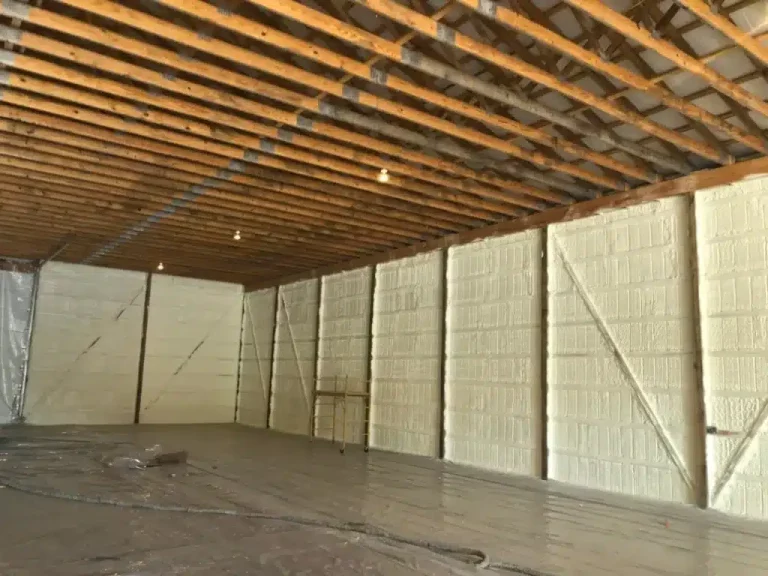
Spray foam insulation delivers superior home comfort compared to fiberglass because it expands to seal gaps, cracks, and penetrations that fiberglass simply cannot reach. While fiberglass slows conductive heat transfer with an R-value of roughly 2.9 to 3.8 per inch according to the U.S. Department of Energy, it does not stop air movement. Spray foam, on the other hand, provides both thermal resistance and an air barrier in a single application. Closed-cell spray foam delivers an R-value of approximately 6.5 per inch and qualifies as a Class II vapor retarder at thicknesses over 1.5 inches, making it the stronger option for comprehensive comfort in extreme climates like Las Vegas. That said, fiberglass remains a practical and budget-conscious choice for standard wall cavities in moderate conditions, especially when paired with proper air sealing.
TL;DR
- Spray foam provides both insulation and air sealing in one step, eliminating the drafts and gaps that reduce fiberglass effectiveness by 30 to 50 percent according to Building Science Corporation research
- Closed-cell spray foam achieves R-6.5 per inch versus fiberglass at approximately R-2.9 to R-3.8 per inch, meaning spray foam delivers more thermal resistance in less space
- Open-cell spray foam is lighter and less expensive but should never be used below ground level, while closed-cell works in every application from walls to crawlspaces
- The EPA estimates that homeowners can save an average of 15% on heating and cooling costs by air sealing and adding insulation, and spray foam is the most effective single product for achieving both simultaneously
- Fiberglass is cheaper upfront and easier for DIY installation, but it requires separate air sealing work to perform at its rated R-value
- For new construction in hot, dry climates, spray foam delivers the most consistent comfort; for budget-conscious upgrades on standard attics, fiberglass with proper air sealing still gets the job done
How Each Insulation Type Works
Fiberglass insulation is made from extremely fine glass fibers spun into a wool-like material. It is available as pre-cut batts, continuous rolls, or loose-fill blown into cavities. According to the Department of Energy, fiberglass batts for a standard 2×4 stud wall typically deliver R-11 to R-15, while high-density batts for 2×6 framing reach R-21. Fiberglass works by trapping pockets of air within the glass fibers, which slows conductive heat flow. It does not, however, stop air from passing through gaps around wiring, plumbing, and framing.
Spray foam insulation is a polyurethane-based material mixed on site and applied as a liquid that expands and hardens into a solid foam. The Department of Energy describes two main types: closed-cell foam with high-density cells filled with an insulating gas, and open-cell foam with lower-density cells filled with air. Closed-cell spray foam delivers roughly R-6.5 per inch and acts as both insulation and a vapor retarder. Open-cell foam delivers about R-3.5 per inch and provides good air sealing but allows moisture vapor to pass through. Both types expand to fill cavities completely and bond to surrounding surfaces, sealing cracks and penetrations in the process.
Why Air Sealing Changes Everything for Home Comfort
The difference in comfort between these two materials comes down to what happens beyond the R-value. A home with R-30 fiberglass in the attic can still feel drafty and uncomfortable if air leaks through penetrations, gaps around recessed lights, and unsealed top plates. According to ENERGY STAR, nine out of ten homes in the U.S. are under-insulated, and EPA estimates that adding insulation combined with air sealing can save an average of 15% on heating and cooling costs.
Spray foam addresses this gap by creating a monolithic seal as part of the installation process. When sprayed into a wall cavity or onto an attic floor, it expands into every crack around electrical boxes, plumbing runs, and framing joints. The Building Science Corporation notes that spray foam is unique in its ability to handle water, air, vapor, and heat control simultaneously, which is why building scientists recommend closed-cell spray foam in vented crawlspaces and basements across all climate zones.
For homeowners in Las Vegas, where summer temperatures regularly exceed 110 degrees, this air sealing capability makes a tangible difference in how rooms feel, not just what the thermostat reads. Eliminating air infiltration means fewer hot spots, reduced dust infiltration, and more consistent temperatures from room to room with Spray Foam Insulation.
Spray Foam Excels In:
- Attics with ductwork where turning the space into a conditioned zone prevents extreme heat from degrading HVAC performance
- Crawlspaces and basements where moisture control and air sealing are both required
- Walls with numerous penetrations from plumbing and electrical runs
- Renovations where cavity depth is limited and maximum R-value per inch is needed
- Homes in extreme climates where both thermal and moisture control are critical
Fiberglass Works Well In:
- Standard open attics with adequate ventilation and no ductwork
- New construction walls with standard stud spacing and minimal obstructions
- Budget-conscious projects where upfront material cost is the primary constraint
- DIY-friendly retrofit projects where homeowners want to handle installation themselves
Factors That Influence the Decision
Several variables determine which insulation will deliver the most comfort for a specific home:
- Climate zone: Hot, dry climates benefit most from spray foam’s air sealing and moisture resistance. Moderate climates may not justify the added expense.
- Existing construction vs. new build: Spray foam is easier to justify in new construction where it replaces multiple steps (air sealing, vapor barrier, insulation). Retrofits may only target specific problem areas.
- Cavity depth: When wall or ceiling cavities are shallow, spray foam’s higher R-value per inch makes it the only practical option for meeting code requirements.
- HVAC ductwork location: Ducts in unconditioned attics or crawlspaces create a strong case for spray foam to bring those spaces into the conditioned envelope.
- Moisture exposure: Basements, crawlspaces, and below-grade walls require the vapor control that only closed-cell spray foam provides at standard thicknesses.
- Budget and timeline: Fiberglass can be installed faster and cheaper in straightforward applications, but spray foam delivers more long-term value per inch of cavity space.
Who Spray Foam Is For (and Who It Is Not)
Spray foam is the right choice for homeowners who:
- Want the most comfortable, draft-free home possible with consistent temperatures in every room
- Have ductwork, plumbing, or electrical runs in unconditioned spaces that need protection
- Live in extreme climates where both thermal and moisture control are non-negotiable
- Are building new or doing a major renovation and want to maximize long-term energy performance
- Have limited cavity depth and need the highest R-value per inch available
Spray foam is not the best fit for homeowners who:
- Have a tight budget and need the lowest upfront material cost
- Are insulating a simple, standard attic with no ductwork and want to handle installation themselves
- Only need to add a small amount of insulation to an already well-sealed home
- Have a timeline that requires immediate occupancy after installation (spray foam needs curing time)
Can You Use Both Together?
Yes, and building scientists actually recommend it. The Building Science Corporation describes “hybrid assemblies” where a thin layer of closed-cell spray foam is applied to the interior face of wall sheathing as an air and vapor barrier, with fiberglass or cellulose filling the remaining cavity depth for bulk insulation. This approach gets the air sealing benefits of spray foam at a lower overall cost because the foam layer only needs to meet code minimums for condensation control rather than filling the entire cavity, a concept often discussed in spray foam insulation soundproofing benefits.
In vented attics, spray foam is used to create an airtight seal at the ceiling plane, which is then filled with fiberglass or cellulose for thermal resistance. This “bathtub” approach prevents wind washing, which is air movement through insulation that drastically reduces its effective R-value.
Get Expert Help Choosing the Right Insulation
Every home is different, and the best insulation choice depends on your climate, construction type, budget, and comfort goals. Our team at Supreme Spray Foam LV has the experience and training to assess your home and recommend the right solution, whether that is full spray foam application, a hybrid approach, or targeted air sealing combined with fiberglass. We serve homeowners throughout the Las Vegas area with professional installation and honest recommendations tailored to your specific situation.
Contact us at info@supremesprayfoamlv.com or call (702) 904-9895 to schedule your consultation today.
Sources
- Department of Energy: Insulation Materials: Comprehensive guide to all insulation material types including fiberglass and polyurethane spray foam, covering R-values, applications, and installation methods.
- Department of Energy: Types of Insulation: Detailed breakdown of insulation installation methods including sprayed foam, blanket batts, and loose-fill, with guidance on choosing the right type for specific home areas.
- ENERGY STAR: Why Seal and Insulate?: EPA data on energy savings from air sealing and insulation, including the estimate that 9 out of 10 U.S. homes are under-insulated.
- Building Science Corporation: BSI-116: Interior Spray Foam: Technical guidance on spray foam in residential walls, roofs, and foundations, including hybrid assemblies combining spray foam with fiberglass or cellulose.
- Insulation Institute: Comparing Insulation Types: Non-profit industry resource comparing fiberglass, mineral wool, cellulose, and spray foam on performance, installation quality, acoustics, and health considerations.