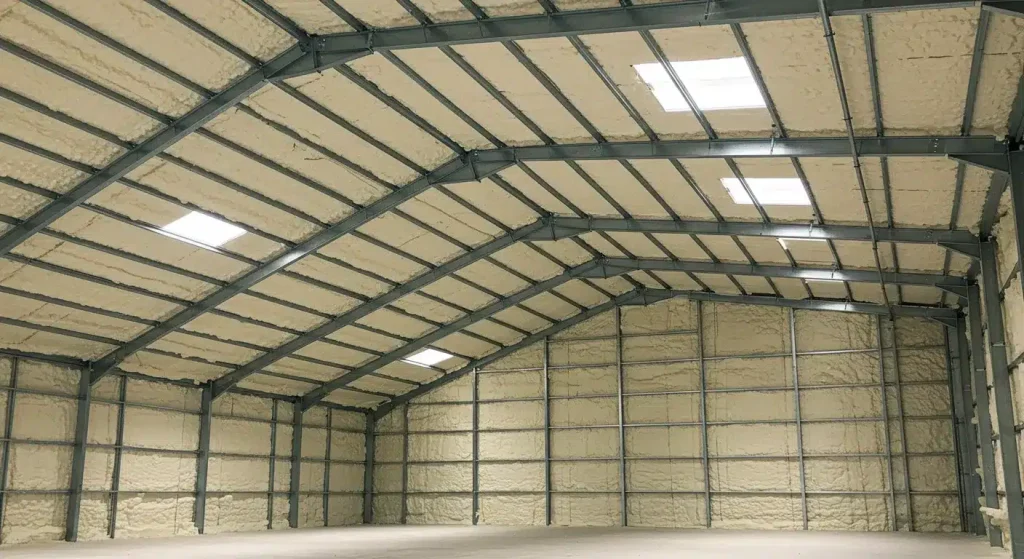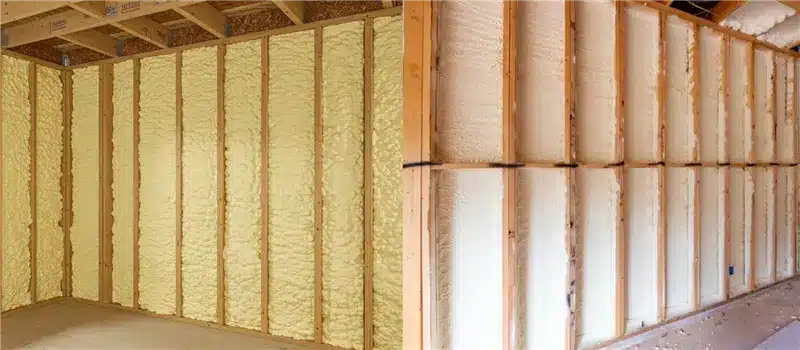

Spray foam insulation is one of the most effective upgrades a Summerlin South homeowner can make before the next stretch of triple-digit heat, but the right choice depends on your home’s construction, attic configuration, and ventilation design. Open cell foam suits interior walls and sound control, closed cell foam suits rooflines, garage ceilings, and areas that need moisture resistance, and hybrid approaches combine foam with other materials to reach target R-values. Before signing anything, you should understand how each foam type performs in our desert climate, what federal guidance recommends for southern Nevada attics, what installation day actually involves, and how to separate qualified installers from the rest. This guide covers all of it from our perspective as a local crew serving Summerlin South and the Las Vegas Valley.
TL;DR
- Spray polyurethane foam expands 30 to 60 times its liquid volume, so it insulates and air seals in a single step, which matters in a climate where air leakage drives cooling costs.
- Closed cell foam delivers roughly R-5.1 to R-6 per inch and acts as both an air and vapor barrier at proper thickness; open cell runs near R-3.8 per inch and is best suited to interior walls and sound control.
- ENERGY STAR guidance for Climate Zone 3, which covers southern Nevada, calls for R-49 attic insulation in uninsulated spaces and R-38 when topping up a few inches of existing material.
- The EPA estimates homeowners save an average of 15% on heating and cooling costs by air sealing and adding insulation, and 9 out of 10 U.S. homes are under-insulated.
- Ducts in a typical home lose 20 to 30% of the air moving through them to leaks and poor connections, a serious problem when that ductwork sits in a 130-degree Summerlin South attic.
- Fresh foam off-gasses while curing and needs the home cleared during application; once cured, it is inert, and modern formulas cure quickly.
- Vet installers on prep work, documentation, thickness verification, and re-entry guidance rather than on bids alone.
Why Summerlin South Homes Need a Local Approach
Summerlin South sits on the western edge of the Las Vegas Valley, directly against the Red Rock Canyon National Conservation Area, with roughly 30,744 residents and a community association that manages standards across the neighborhood (Wikipedia – Summerlin South, Nevada). That geography shapes insulation decisions in three ways:
- Heat load: Long cooling seasons push attic temperatures far above outdoor highs, and most homes here run ductwork through that attic space.
- Housing stock: Many homes are two-story with vaulted ceilings, casitas, and garage-adjacent living space, all of which benefit from targeted foam placement.
- Community standards: Exterior-visible work may involve association review, so scheduling and scope should be planned with that in mind.
Add the duct problem, and the case for spray foam insulation gets stronger. In houses with forced-air systems, about 20 to 30% of conditioned air is lost through duct leaks, holes, and disconnected joints before it ever reaches a room (ENERGY STAR – Duct Sealing). An encapsulated attic brings ducts inside the conditioned envelope, which cuts those losses dramatically.
Open Cell vs. Closed Cell Spray Foam
The two spray foam types are chemically similar but perform very differently. Both are created by mixing two chemical parts at the spray gun, then expanding and hardening in place (Wikipedia – Spray Foam). Here is how they compare for local homes:
| Attribute | Open Cell (Half-Pound) | Closed Cell (Two-Pound) |
|---|---|---|
| R-value per inch | About R-3.8 | About R-5.1 to R-6 |
| Texture | Soft, sponge-like, crushable by hand | Rigid, every cell sealed |
| Air barrier | At 5.5 inches or more of thickness | Acts as air barrier at much thinner application |
| Vapor barrier | No | Yes, at required minimum thickness |
| Sound control | Strong, absorbs airborne noise | Moderate |
| Best local uses | Interior walls, theater rooms, offices | Rooflines, garage ceilings, rim joists, block wall cavities |
Neither product is universally “better.” A two-story home near Red Rock might use closed cell along the roof deck and open cell in the media room wall. The right answer depends on where the foam goes and what problem it solves.
R-Value Targets for Southern Nevada Attics
Federal guidance gives us clear benchmarks. ENERGY STAR’s recommended levels for retrofitting wood-framed homes call for R-49 in an uninsulated attic and R-38 when adding to 3 or 4 inches of existing insulation in Zone 3 climates like ours, along with R-19 floors and R-19 walls in new insulation scenarios (ENERGY STAR – Recommended Home Insulation R-Values). Those figures trace back to the 2021 International Energy Conservation Code.
In practice, we hit those targets two ways:
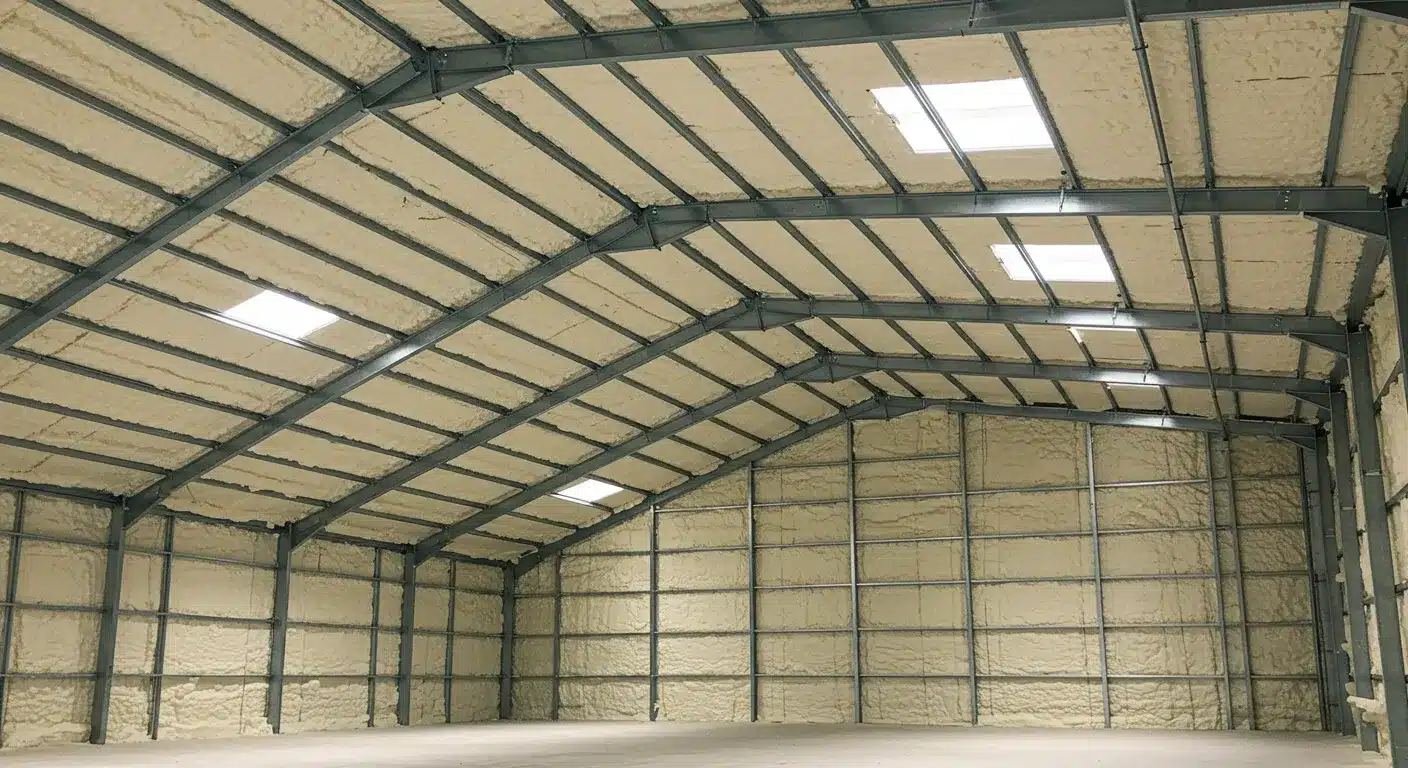
- Full foam application: Closed cell on the roof deck at the calculated thickness, common in encapsulated attic designs.
- Flash-and-fill hybrid: A layer of closed cell for air sealing followed by blown-in material to reach the full R-value, often chosen for vented attic conversions.
Because foam insulation blocks all three forms of heat transfer, conduction, radiation, and convection, the effective performance often exceeds what raw R-value comparisons suggest (Wikipedia – Spray Foam).
What Foam Actually Fixes Beyond Temperature
The most underrated benefit is air sealing. The EPA estimates that air sealing plus added insulation in attics, floors, and crawl spaces saves the average homeowner 15% on heating and cooling costs, or 11% on total energy costs (ENERGY STAR – Why Seal and Insulate). If you added up every leak in a typical envelope, it would equal an open window running all year.
Sealed, insulated homes also report:
- Less dust, pollen, and wind-blown debris from the desert
- Better humidity control during monsoon season
- Reduced street and neighbor noise
- Fewer hot rooms caused by leaking attic ducts
Installation Day: Prep, Curing, and Re-Entry
A professional application follows a defined sequence:
- Assessment and prep: We verify attic condition, address moisture issues, mask surfaces, and clear the work area.
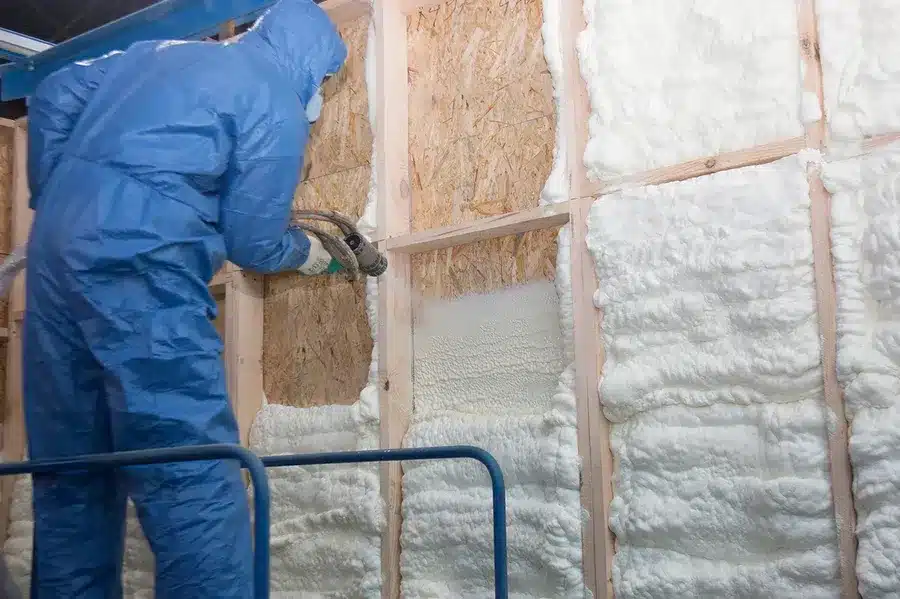
- Application: The two chemical parts mix at the gun and expand on contact, filling gaps and bonding to irregular framing.
- Curing: Foam off-gasses while curing, so occupants and pets stay out during application, and we provide clear re-entry timing based on the product used. Once cured, the foam is inert (Wikipedia – Spray Foam).
- Verification: We confirm applied thickness against spec and document the result.
Ask any installer you are considering to explain steps 3 and 4 in detail before you commit. Hesitation there is a warning sign.
Common Mistakes to Avoid
- Assuming all foam is identical: Density, blowing agent, and application thickness change performance substantially.
- Skipping the duct evaluation: Sealing the envelope while leaving leaking attic ducts untouched leaves savings on the table.
- Ignoring ventilation changes: Converting a vented attic to encapsulated changes how the roof assembly works and must be designed, not improvised.
- Chasing the lowest bid: Thin application is the most common defect we see, and it cannot be spotted after drywall goes back up.
Matching the Approach to Your Home
| Your Situation | Recommended Approach | Why It Works Here |
|---|---|---|
| Two-story home with attic ducts | Closed cell roofline encapsulation | Brings ducts inside conditioned space, attacks the 20 to 30% duct loss problem |
| Newer home, topping up R-value | Flash-and-fill hybrid | Seals air leaks first, then reaches R-38 or R-49 efficiently |
| Casita, gym, or office over garage | Closed cell at ceiling and walls | High R per inch in tight cavities, plus temperature stability |
| Media room or nursery | Open cell interior walls | Strong sound absorption where it matters most |
Signs You Have Found the Right Approach
- The crew explains vented versus unvented attic design and how it applies to your roof.
- You receive written specs: product, target thickness, R-value, and coverage areas.
- Re-entry timing and safety guidance come up without you asking.
- Prep, masking, and cleanup are described in the same detail as the spray work itself.
- Recommendations reference your home’s layout, not a generic package.
- Documentation and photos are offered as standard practice, not upsells.
Get a Straight Answer from Our Local Team
Our team at Supreme Spray Foam LV has insulated homes throughout Summerlin South, from The Ridges to the neighborhoods along Hualapai, and we will tell you plainly which foam fits your house and why. Reach us at (702) 904-9895 or [email protected], and we will walk your attic, review your duct layout, and put a clear scope in writing.Contact us and find out what your home has been paying for in wasted cooling.
Frequently Asked Questions
How soon can we return home after spray foam is applied?
Occupants and pets stay out during application and while the foam cures. Modern formulas cure quickly, and once cured the foam is completely inert, so we give you a specific re-entry window before we start.
Which foam is better for a Summerlin South attic?
For encapsulated rooflines, closed cell is usually the fit because it delivers higher R-value per inch and doubles as a vapor barrier. For interior walls and sound control, open cell is the better match.
Do we need to remove our existing attic insulation first?
Usually yes when foaming the roof deck, so the foam bonds directly to clean sheathing. When using a flash-and-fill approach, we evaluate what stays and what goes during the assessment.
Will spray foam really help with dust in the house?
Yes. Air sealing reduces the pollen, dust, and pests that enter through gaps in the envelope, which is one of the documented comfort benefits EPA highlights for sealed and insulated homes.
Do we need HOA approval before scheduling?
Interior attic work generally does not require association review, while anything touching the exterior may. We confirm requirements for your specific neighborhood before the job is scheduled so nothing stalls.
Sources
- Wikipedia – Spray Foam-Technical reference covering open cell and closed cell spray polyurethane foam, R-values per inch, expansion characteristics, and curing safety.
- ENERGY STAR – Why Seal and Insulate—EPA estimates on heating and cooling savings from air sealing and insulation, plus national under-insulation data.
- ENERGY STAR – Recommended Home Insulation R-Values – Climate zone table with attic, wall, and floor R-value targets based on the 2021 IECC.
- ENERGY STAR – Duct Sealing – Data on the 20 to 30% of conditioned air lost through duct leaks in typical forced-air homes.
- Wikipedia – Summerlin South, Nevada—Local geography, population, and community context for Summerlin South in Clark County.