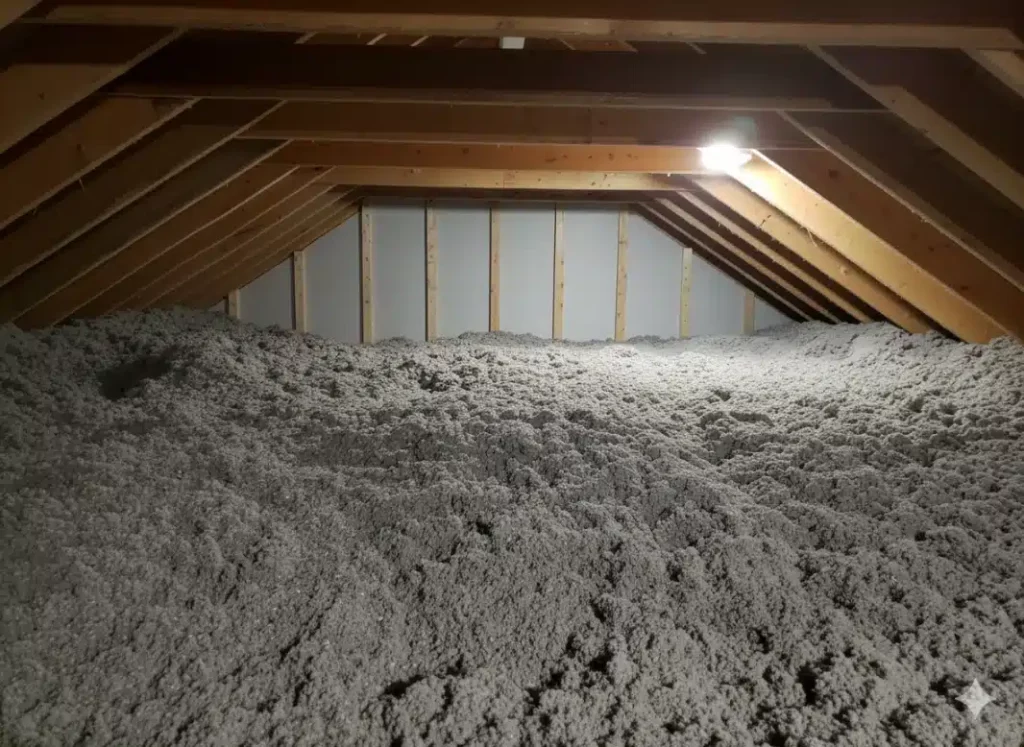
Attic insulation is one of the most impactful upgrades you can make to create a quiet, comfortable, and energy-efficient master suite in North Las Vegas. In a desert climate where summer temperatures regularly push past 105 degrees and winds carry dust and noise from surrounding development, your attic acts as either a barrier or a funnel for heat, sound, and air movement between the roof and your living space. The right insulation strategy addresses all three of those pathways at once, combining thermal regulation with sound dampening and air sealing to give your master suite the calm, controlled environment it needs.
TL;DR
- North Las Vegas sits in Climate Zone 3 (desert), where the Department of Energy recommends R-38 to R-60 for uninsulated attics, making high-performance insulation a necessity rather than an upgrade.
- EPA estimates that homeowners can save an average of 15% on heating and cooling costs by air sealing and adding attic insulation.
- Attic insulation absorbs and dampens sound waves, reducing noise from rooftop sources, wind, HVAC systems, and nearby outdoor activity.
- Heat flows through conduction, convection, and radiation, and quality insulation slows all three mechanisms simultaneously.
- Proper insulation reduces HVAC runtime, extending equipment lifespan and lowering monthly utility bills in extreme desert heat.
- Air sealing combined with insulation creates a double defense against both temperature swings and noise transmission.
- The World Health Organization identifies environmental noise as a contributor to sleep disturbance, cardiovascular stress, and cognitive impairment, making a quiet master suite a health investment.
How North Las Vegas Climate Makes Attic Insulation Non-Negotiable
North Las Vegas sits within the broader Las Vegas Valley, a desert basin surrounded by mountain ranges that create extreme temperature swings. According to the National Weather Service Las Vegas office, the region is known for abundant sunshine and hot summer temperatures that regularly reach triple digits, while winter nights can drop into the 20s. The area receives only about 4 inches of rain per year, making it one of the driest metropolitan regions in the continental United States.
This climate profile means your attic faces a specific set of challenges:
- Intense radiant heat gain during summer months, when the sun bakes your roof for 13 to 14 hours per day
- Rapid heat loss during winter nights when temperatures plunge after sunset
- Strong winds, especially during spring and fall, that carry noise from construction, traffic, and neighboring properties
- Low humidity, which means your HVAC system works overtime to maintain comfortable moisture levels
The Department of Energy places North Las Vegas in Climate Zone 3, which calls for R-49 to R-60 in uninsulated attics and R-38 to R-49 if you already have 3 to 4 inches of existing insulation. Most homes built before 2010 in the North Las Vegas area fall far short of these levels, leaving the master suite below exposed to temperature fluctuations and airborne noise that insulation would otherwise block.
The Connection Between Attic Insulation and a Quiet Master Suite
Most homeowners think of insulation as a temperature-control tool, but its role in noise reduction is equally important, especially in a master suite positioned directly beneath the attic. The roof is the largest surface area of your home exposed to the outside environment, which means it is also the largest surface collecting and transmitting sound.
Sound enters your home through two main paths: airborne transmission (voices, traffic, wind, aircraft) and structure-borne vibration (rain, hail, footsteps on the roof, HVAC cycling). Attic insulation solutions address both by adding mass and absorbency between the roof deck and your ceiling below. Dense insulation materials trap sound waves within their fibers, converting acoustic energy into a small amount of heat rather than allowing it to pass through. This process, called sound absorption, is measured by Noise Reduction Coefficient (NRC), with higher values indicating greater effectiveness.
The health impacts of indoor noise exposure are well documented. The World Health Organization reports that excessive environmental noise increases the risk for hypertension, sleep disturbance, hearing impairment, and cognitive impairment. When your master suite sits under an uninsulated or under-insulated attic, every gust of wind, passing aircraft from nearby Nellis Air Force Base, or rooftop HVAC startup becomes an intrusion on your rest and privacy.
A peer-reviewed study published in Environmental Health Perspectives (NIH/PMC) confirms that noise exposure constitutes a measurable health risk, with sufficient evidence linking chronic exposure to hearing impairment, hypertension, ischemic heart disease, annoyance, sleep disturbance, and decreased school and work performance. For a room designed for rest, focus, and privacy, reducing that exposure through proper attic insulation is a direct investment in quality of life.
How Heat Transfer Works Through Your Attic (And Why It Matters)
Understanding the mechanics of heat transfer helps explain why insulation matters so much in a North Las Vegas home. The Department of Energy outlines three mechanisms that move heat through your home:
Without insulation, your attic can reach 150 degrees or more on a July afternoon in North Las Vegas attic insulation projects. That heat radiates through your ceiling continuously, forcing your air conditioning to run longer and work harder to keep the master suite comfortable. The reverse happens in winter: warm indoor air rises through gaps in the ceiling and escapes into the cold attic space.
Insulation slows all three heat transfer methods. Fibrous materials like fiberglass and cellulose trap still air, which is a poor conductor. Spray foam insulation fills gaps and crevices that allow convective air movement. Reflective barriers and radiant barriers bounce radiant heat away from the living space. When combined, these approaches create a thermal boundary that keeps your master suite at a steady, comfortable temperature regardless of what is happening on the roof above. This is one of the primary benefits of professional attic insulation solutions.
Comparing Insulation Approaches for Sound and Temperature Control
Not all insulation performs equally when it comes to the combined goals of noise reduction and thermal control. Here is how common types compare for master suite applications:
Spray foam insulation stands out for master suite projects because it simultaneously air-seals and insulates. When applied to the attic floor (the ceiling of your master suite), it eliminates gaps around recessed lights, plumbing stacks, and electrical penetrations that would otherwise allow both air leaks and sound transmission. The ENERGY STAR program estimates that combining air sealing with attic insulation can save homeowners an average of 15% on heating and cooling costs, or about 11% on total household energy costs.
Recommendations by Home Type
The right insulation approach depends on the age, construction style, and specific conditions of your North Las Vegas home:
Homes built before 2000: These homes commonly have only R-11 to R-19 fiberglass batts in the attic, well below the recommended R-49 to R-60. Air sealing gaps around penetrations and adding blown-in insulation or spray foam to bring the total R-value to at least R-49 will produce the most noticeable improvement in both temperature stability and noise reduction.
Homes built between 2000 and 2015: Many of these homes have R-30 to R-38, which is closer to code but still below the DOE’s recommended levels. Adding supplemental insulation on top of existing material can bring performance up to R-49 or higher without a full tear-out.
Newer homes (2015 and later): Even newer builds may benefit from air sealing improvements and spot checks for compression or gaps in the insulation layer. Spray foam applied to critical penetration points can tighten the thermal and acoustic envelope significantly.
Signs You Have Found the Right Insulation Contractor
Choosing the right team for your master suite insulation project matters as much as choosing the right material. Look for these indicators:
- Detailed attic assessment: Our team inspects your attic before quoting anything, measuring existing insulation depth, identifying air leaks, and evaluating ventilation conditions.
- Clear explanation of R-value targets: We reference the Department of Energy recommendations for Climate Zone 3 and show exactly how our proposed installation meets or exceeds those levels.
- Air sealing included as standard: Insulation without air sealing leaves the biggest gaps unaddressed. We treat both as a single, integrated system.
- Warranty and documentation: We provide written warranties on our work and document the installed R-value with photos and measurements for your records.
- Local climate knowledge: Our experience with North Las Vegas conditions means we account for monsoon moisture, extreme radiant heat, and wind-driven noise in every installation plan.
Request Your Attic Insulation Assessment
Supreme Spray Foam LV specializes in spray foam insulation solutions designed for North Las Vegas homeowners who want a quieter, more comfortable, and more energy-efficient master suite. Our team evaluates your existing attic conditions, identifies air leaks and sound transmission paths, and recommends the right insulation strategy for your home’s specific needs. We take the time to explain every option and make sure the final result meets the Department of Energy guidelines for our climate zone.
📞 Call us at (702) 904-9895 or email info@supremesprayfoamlv.com to get started.
Sources
- ENERGY STAR: Rule Your Attic! For Comfort and Savings: EPA estimates on energy savings from attic insulation and air sealing, plus guidance on R-value targets and federal tax credits.
- U.S. Department of Energy: Insulation: Comprehensive explanation of heat transfer mechanisms (conduction, convection, radiation), R-value requirements by climate zone, and insulation material types.
- National Weather Service: Climate of Las Vegas: Official climate data for the Las Vegas Valley including temperature extremes, precipitation, wind patterns, and monsoon conditions that affect North Las Vegas homes.
- World Health Organization: Guidance on Environmental Noise: WHO findings on health impacts of environmental noise exposure, including sleep disturbance, cardiovascular effects, and cognitive impairment.
- NIH/PMC: Noise Exposure and Public Health: Peer-reviewed research published in Environmental Health Perspectives documenting the health risks of noise exposure, including hearing impairment, hypertension, and ischemic heart disease.