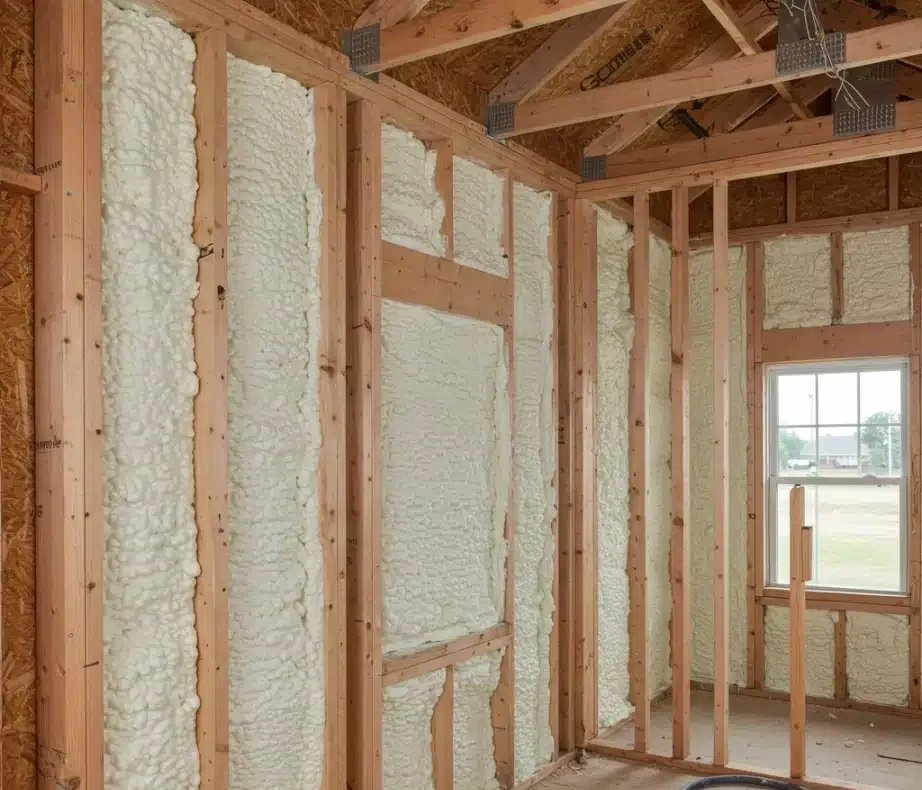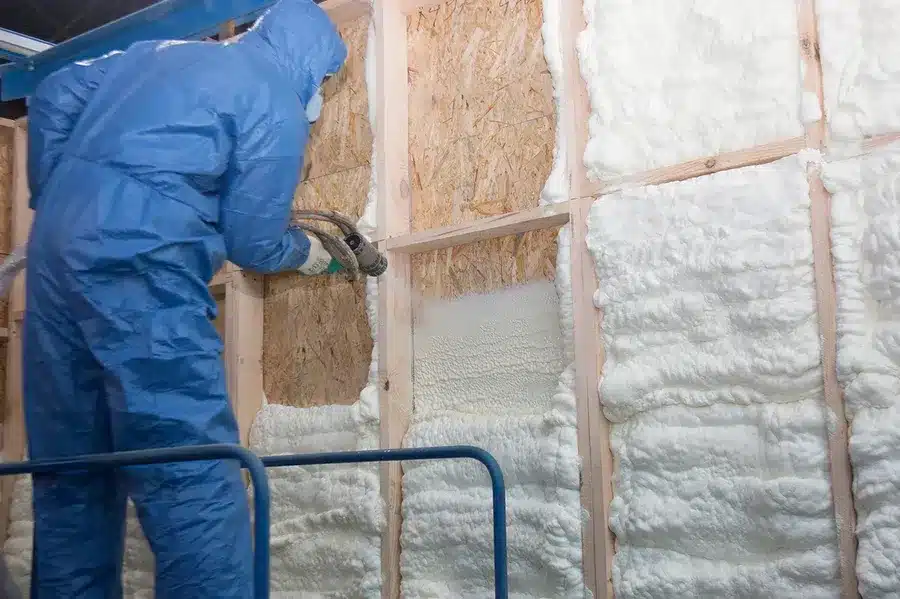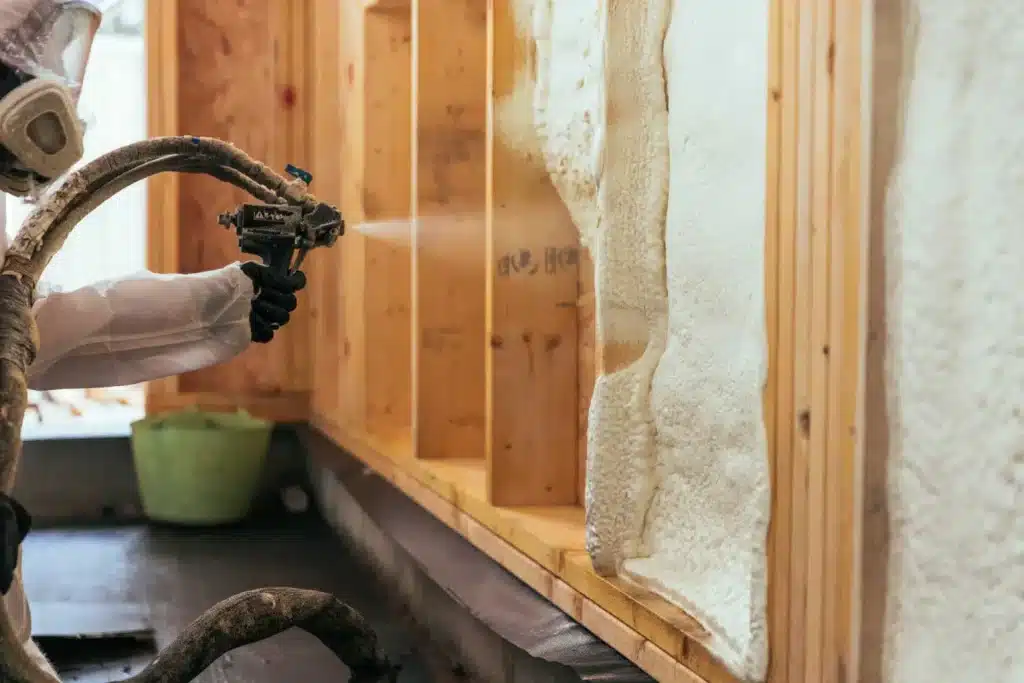


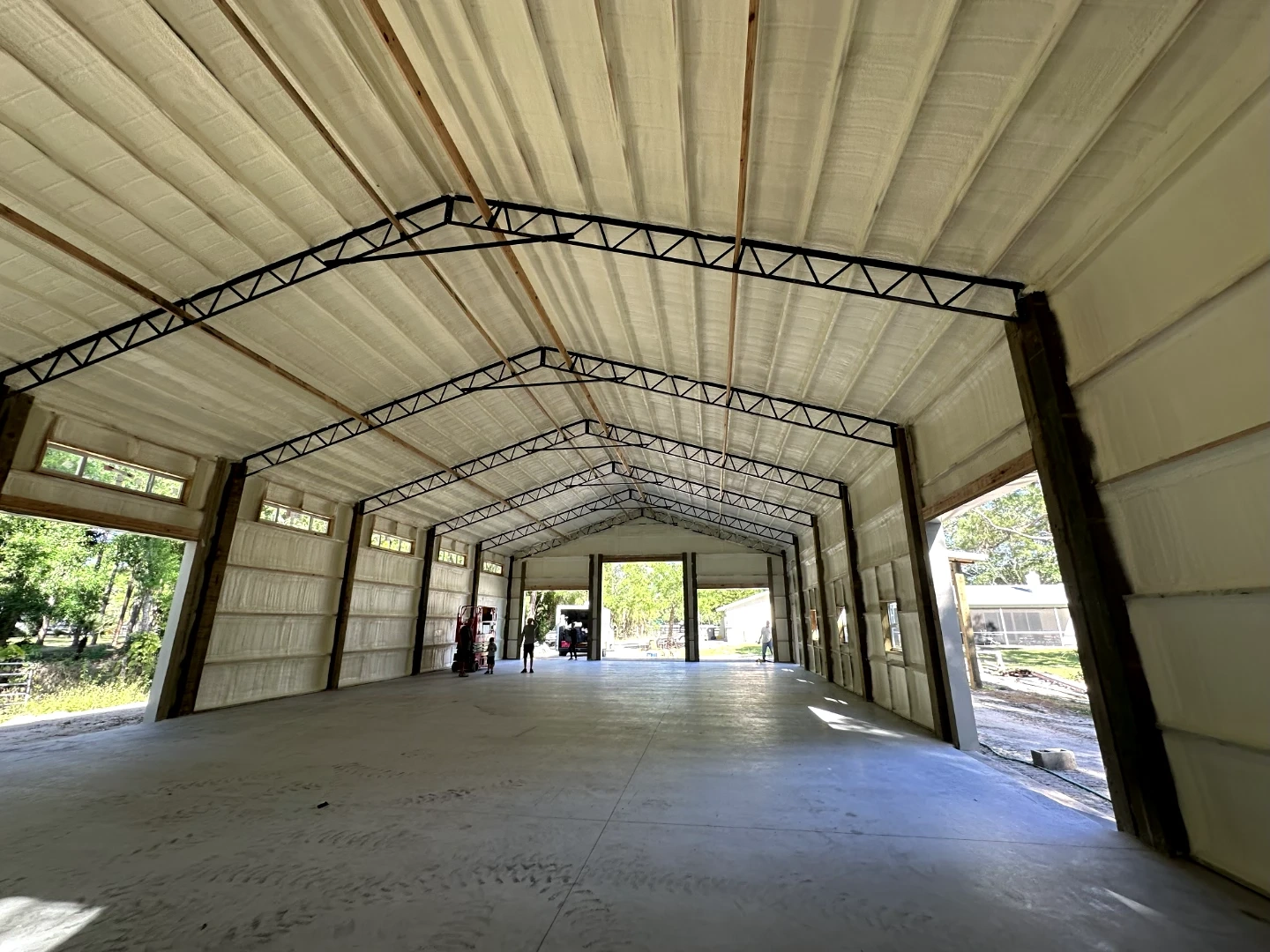
Commercial insulation works by slowing the transfer of heat through a building’s envelope, which directly reduces the energy demand placed on HVAC systems. In large buildings, where the surface area of walls, roofs, and floors is substantial, even moderate improvements in thermal resistance can lead to meaningful reductions in heating and cooling loads. The right Commercial insulation strategy depends on building type, climate zone, occupancy patterns, and whether the project is new construction or a retrofit. Spray foam, rigid board, fiberglass batts, and blown-in insulation each serve different purposes and offer different performance profiles when applied to commercial-scale structures.
TL;DR
- Heating and cooling account for approximately 36% of total energy consumption in commercial buildings, making the building envelope a primary target for efficiency gains.
- Proper insulation can reduce heating and cooling energy use by up to 20%, depending on the building’s existing condition and climate zone.
- R-value measures thermal resistance, and higher R-values indicate better insulating performance per inch of material.
- Spray foam insulation offers the dual benefit of high R-value and air sealing, which is especially valuable in large commercial buildings where air leakage is a major source of energy loss.
- Thermal bridges, such as steel framing and concrete joints, can undermine insulation performance if not addressed with continuous insulation strategies.
- Building codes such as ASHRAE 90.1 set minimum R-value requirements for commercial construction by climate zone, and exceeding these standards delivers measurable long-term savings.
- The most effective commercial insulation plans combine the right material with proper installation, air sealing, and moisture management.
Why the Building Envelope Matters for Commercial Energy Use
The building envelope, which includes walls, roofs, floors, windows, and doors, is the boundary between conditioned interior spaces and the exterior environment. According to research from the National Institute of Standards and Technology (NIST), heating and cooling loads account for approximately 36% of energy consumption in commercial buildings. Thermal insulation in the building envelope is the primary approach for reducing those loads.
In large buildings, the envelope covers thousands of square feet. Every square foot of poorly insulated wall or roof represents a path for heat to escape during winter or enter during summer. When HVAC systems work harder to compensate for that constant heat exchange, utility costs climb, equipment wears faster, and occupant comfort suffers. Addressing the envelope with proper insulation is one of the most direct ways to cut energy waste at the source.
How Insulation Reduces Heat Transfer
Heat moves through buildings in three ways: conduction, convection, and radiation. Insulation targets all three.
Conduction occurs when heat travels through solid materials, such as steel framing, concrete slabs, or glass. Materials with low thermal conductivity, like foam insulation and mineral wool, slow this process significantly.
Convection happens when air carries heat through gaps, cracks, and unsealed penetrations. Spray foam insulation is particularly effective here because it expands to fill cavities and crevices, creating an airtight seal that blocks convective loops.
Radiation transfers heat through electromagnetic waves, which is why sun-exposed roofs and walls gain heat even without direct air contact. Reflective and radiant barrier insulation can reduce this gain, especially in hot climates.
The effectiveness of any insulation material is measured by its R-value, which quantifies thermal resistance. The higher the R-value, the better the material resists heat flow. For large commercial buildings, achieving the target R-value across the entire envelope, including continuous insulation over framing, is essential for realizing real energy savings.
Types of Commercial Insulation and Where They Work Best
Not all insulation materials perform equally in every commercial application. The choice depends on the building assembly, climate, fire code requirements, and whether the goal is new construction or retrofitting an existing structure.
| Insulation Type | R-Value Per Inch | Best Commercial Applications | Air Sealing Capability |
|---|---|---|---|
| Closed-cell spray foam | R-5.5 to R-6.5 | Walls, roofs, metal buildings, crawl spaces | Excellent, forms airtight barrier |
| Open-cell spray foam | R-3.5 to R-3.6 | Interior walls, sound control, retrofit cavities | Good, but less moisture resistant |
| Fiberglass batts | R-2.9 to R-4.3 | Standard wall cavities, drop ceilings | Minimal, requires separate air barrier |
| Rigid foam board | R-3.8 to R-6.8 | Continuous exterior insulation, below-grade walls | Moderate, depends on sealing at joints |
| Mineral wool | R-3.0 to R-3.85 | Fire-rated assemblies, steel stud walls | Minimal, requires separate air barrier |
| Blown-in cellulose | R-3.0 to R-3.8 | Retrofit wall cavities, attic floors | Moderate, fills gaps when densely packed |
As the ASU Energy Efficiency Center notes, adding insulation based on climate zone and building conditions can save up to 15% on electricity bills alone. For large commercial buildings where HVAC represents a major share of operating costs, that percentage translates to significant annual savings.
The Problem with Thermal Bridges in Large Buildings
A thermal bridge is any point in the building envelope where heat can bypass insulation through a more conductive path. In commercial construction, steel studs, concrete floor slabs, window frames, and structural connections are common thermal bridges. Even if the cavity between studs is filled with insulation, heat still travels through the framing at a much higher rate.
This problem is especially pronounced in large buildings with steel framing. The solution is continuous insulation, meaning a layer of insulation applied on the exterior of the structural framing, uninterrupted by thermal bridges. Rigid foam board and spray foam applied to the exterior surface are two effective methods for achieving continuous insulation in commercial construction.
The U.S. Department of Energy points out that on average, proper insulation combined with air sealing can save up to 20% on heating and cooling costs. In a commercial building, those savings compound across decades of operation.
New Construction vs. Retrofitting: Different Approaches
New Construction
In new commercial buildings, insulation can be planned into the design from the start. This allows for optimized material choices, continuous insulation layers, and integrated air barriers. Building teams can select assemblies that meet or exceed ASHRAE 90.1 requirements for the local climate zone while staying within budget.
Retrofitting Existing Buildings
Retrofitting insulation into an existing large commercial building presents more challenges. Wall cavities may be inaccessible, and adding exterior insulation may require changes to cladding or facade details. Spray foam is often the preferred retrofit choice because it can be injected into existing wall cavities through small holes, sealing air leaks while adding R-value. Roof insulation retrofits, such as adding a layer of rigid foam board beneath a new membrane, are also common and highly effective.
Recommendations by Building Type
| Building Type | Recommended Insulation Strategy | Why It Works |
|---|---|---|
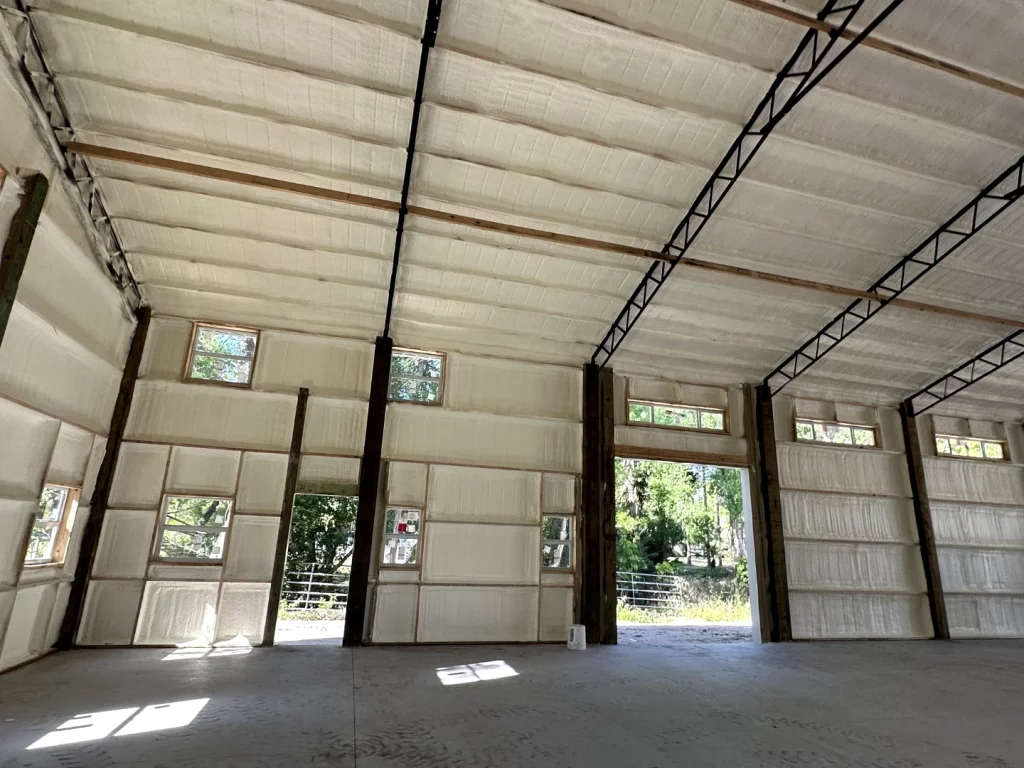
| Warehouses and distribution centers | Closed-cell spray foam on walls and roof deck | Handles large surface areas, seals metal building leaks, resists moisture |
| Multi-story office buildings | Continuous rigid foam exterior + fiberglass or mineral wool in cavities | Meets fire codes, provides continuous thermal break, matches standard framing |
| Retail and mixed-use spaces | Spray foam in walls + rigid board on roof | Balances air sealing needs with tenant comfort and code compliance |
| Healthcare and laboratory facilities | High-R closed-cell spray foam + continuous insulation | Demands strict humidity and temperature control, needs superior air barrier |
| Cold storage facilities | High-density closed-cell spray foam throughout | Requires maximum thermal resistance and vapor control to prevent condensation |
Signs You’ve Found the Right Insulation Approach
Choosing the right insulation partner and strategy for a large commercial building involves more than comparing material specs. Here are the indicators of a sound approach:
- Detailed assessment before recommendations. A qualified provider inspects the building, reviews mechanical systems, and considers climate zone and occupancy patterns before suggesting materials or R-values.
- Clear explanation of air sealing integration. Insulation without air sealing leaves a major portion of energy waste unaddressed. The right approach treats insulation and air barriers as a single system.
- Compliance awareness. The provider understands ASHRAE 90.1 requirements for commercial buildings and can demonstrate how the proposed solution meets or exceeds local energy code.
- Moisture management planning. In large buildings, trapped moisture causes mold, structural damage, and insulation degradation. A solid plan accounts for vapor barriers, ventilation, and material selection based on the specific assembly.
- Long-term performance focus. The best recommendations consider how materials will perform over decades, not just at installation. Some foam products lose R-value over time as blowing agents dissipate, and this should be discussed openly.
According to Wikipedia’s building insulation reference, around 40% of energy consumption globally can be attributed to buildings, primarily from heating and cooling. That makes the insulation decisions you make today a long-term operational lever.
Get a Professional Assessment for Your Commercial Building
Understanding how professional commercial insulation improves energy efficiency is the first step. Applying the right solution to your specific building requires hands-on evaluation. At Supreme Spray Foam LV, our team assesses commercial building envelopes, identifies thermal weaknesses and air leakage points, and recommends insulation strategies tailored to your building type and climate zone. Whether you are planning new construction or retrofitting an existing facility, we provide professional installation that supports long-term energy savings and occupant comfort.
Send to: [email protected]
For a customized insulation plan, Request a Quote or Schedule an Energy Assessment. Contact us at [email protected] or call (702) 904-9895 to discuss your project. Every building has unique insulation needs, and our experienced team is ready to help you address them with precision.
Frequently Asked Questions
How does commercial insulation differ from residential insulation?
Commercial insulation must meet stricter fire codes, handle larger surface areas, and often requires continuous insulation to address thermal bridging in steel and concrete structures. Material choices and installation methods are scaled for commercial building assemblies.
What R-value should a commercial building target?
The target R-value depends on the climate zone and building assembly. ASHRAE 90.1 provides minimum requirements for commercial construction, and exceeding those minimums delivers better long-term performance. A qualified insulation professional can determine the right values for your specific building.
Can insulation be added to an existing commercial building without major construction?
Yes. Spray foam can be injected into existing wall cavities through small access holes, and rigid foam board can be added to roofs during re-roofing projects. These retrofit methods improve energy efficiency without requiring full building renovation.
Does insulation also improve indoor air quality in commercial buildings?
Indirectly. Proper insulation combined with air sealing reduces uncontrolled air infiltration, which can introduce pollutants, moisture, and allergens. When paired with appropriate mechanical ventilation, insulation supports cleaner, more consistent indoor air quality.
How long does commercial insulation last before needing replacement?
Most commercial insulation materials, including spray foam, rigid board, and mineral wool, last the life of the building when installed correctly. Some foam products may experience gradual R-value reduction over time, but this is typically factored into performance ratings and product specifications.
Sources
- NIST – Assessment of High-Temperature and Innovative Insulation Thermal Performance – NIST research on thermal insulation in building envelopes, noting that heating and cooling loads account for approximately 36% of energy consumption in commercial buildings.
- U.S. Department of Energy – Guide to Home Insulation – DOE publication detailing insulation types, R-value recommendations by climate zone, and data showing insulation can save up to 20% on heating and cooling costs.
- Wikipedia – Building Insulation – Comprehensive reference on building insulation materials, thermal transfer mechanisms, and the role of insulation in reducing building energy consumption.
- Wikipedia – R-Value (Insulation) – Detailed explanation of R-value as a measure of thermal resistance, including typical R-values for common insulation materials used in commercial construction.
- ASU Energy Efficiency Center – Energy Savings by Insulation – Educational overview of insulation types, R-value grading, and data showing insulation can save up to 15% on electricity bills.