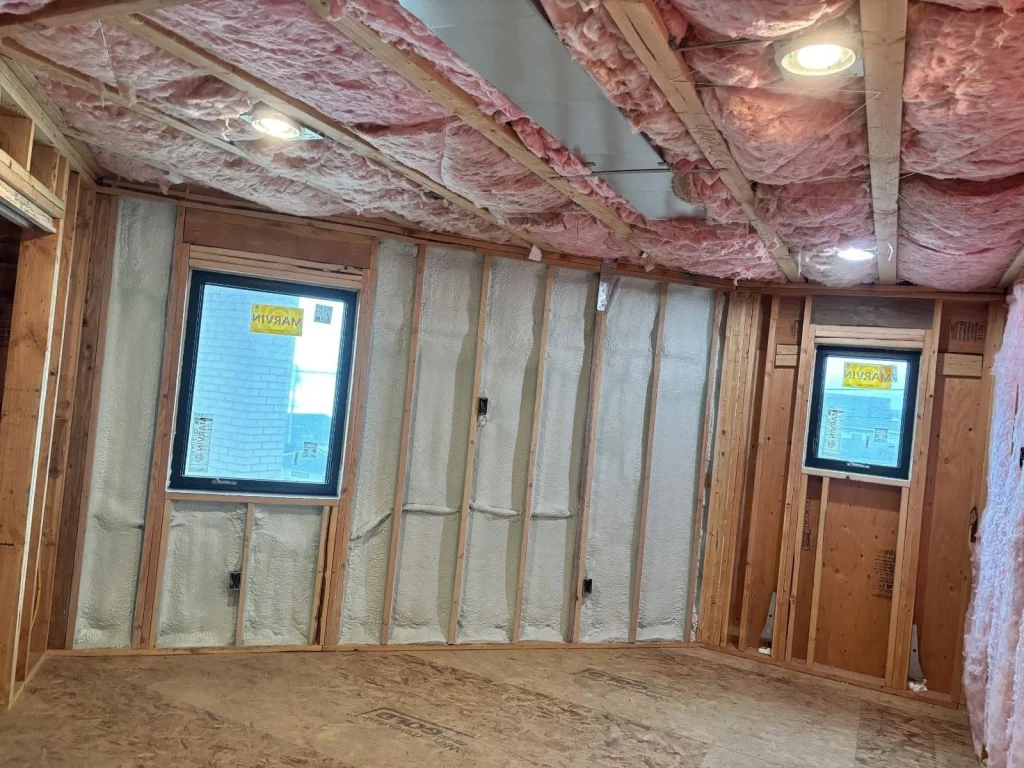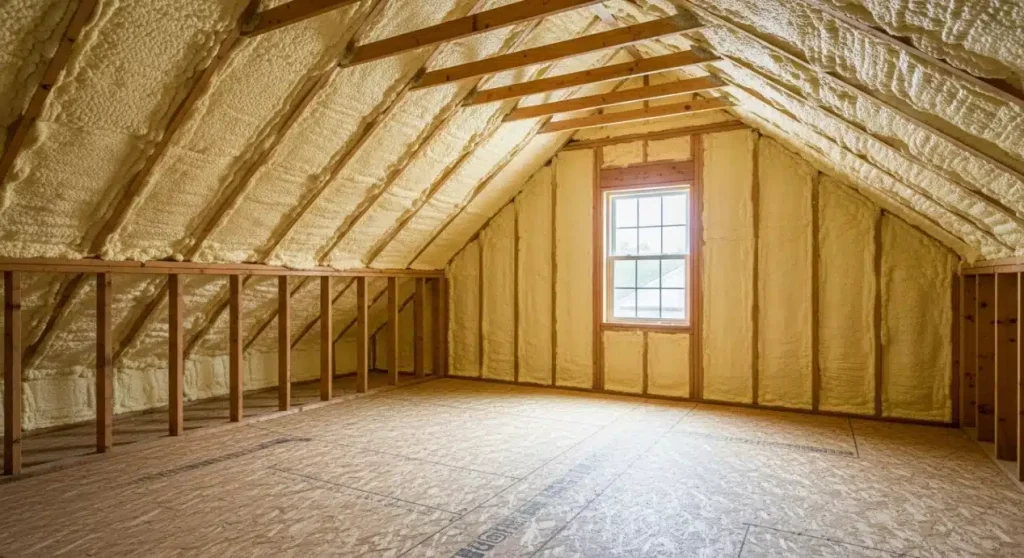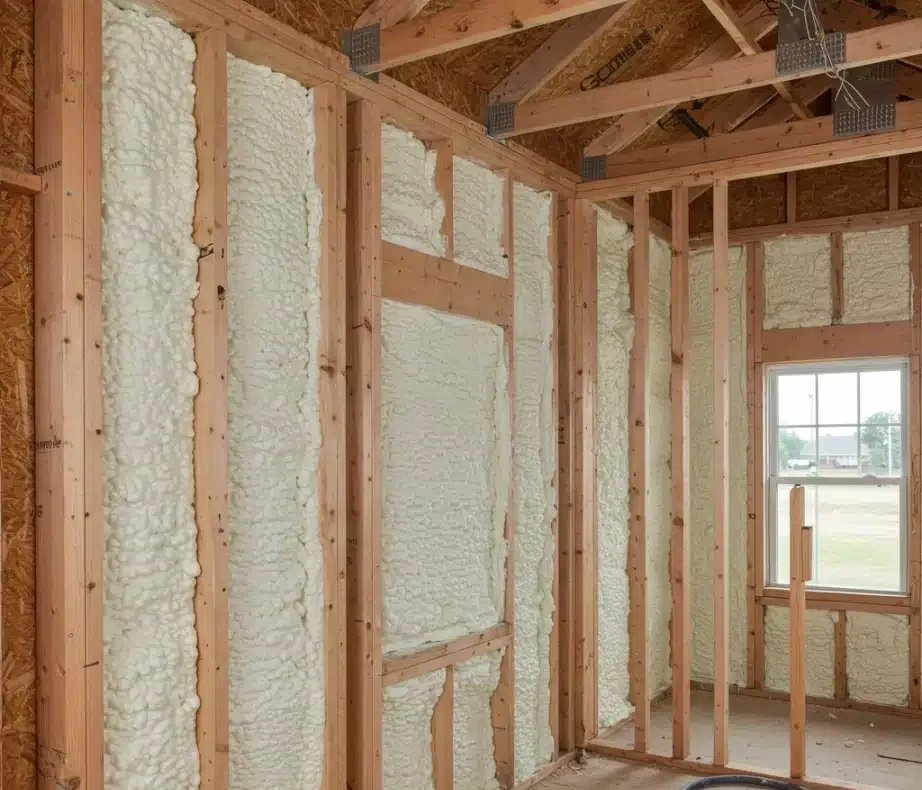

Commercial buildings face persistent challenges that impact energy costs, occupant comfort, and structural integrity. U.S. Environmental Protection Agency – Commercial and Residential Sector Emissions. Inadequate insulation creates a cascade of problems, from uncontrolled air leakage to moisture damage and thermal bridging. Addressing these issues with modern commercial insulation solutions can transform building performance, reduce operating costs, and create healthier indoor environments. Understanding the specific problems your commercial property faces is the first step toward implementing effective solutions that deliver measurable results over the long term.
TL;DR
- Commercial buildings with poor insulation experience 20 to 40 percent higher energy costs compared to properly insulated structures
- Air leakage through gaps and cracks forces HVAC systems to work overtime, shortening equipment lifespan and increasing maintenance expenses
- Thermal bridging creates localized cold spots that lead to condensation, mold growth, and premature structural deterioration
- Moisture intrusion damages building materials, compromises indoor air quality, and creates liability risks for property owners
- Modern spray foam insulation provides both thermal resistance and air sealing in a single application, reducing labor costs and installation time
- Proper insulation installation can reduce heating and cooling costs by up to 50 percent in some commercial applications
- Building code requirements for commercial insulation vary by climate zone and building type, with minimum R-values ranging from R-20 to R-40 for walls and R-30 to R-60 for roofing systems. International Code Council – Commercial Energy Efficiency Chapter
Common Problems in Commercial Buildings Without Adequate Insulation
Air Leakage and Thermal Bridging
Commercial buildings frequently suffer from significant air leakage through gaps in walls, ceilings, and around penetrations for mechanical systems. These leaks allow conditioned air to escape while introducing unconditioned outdoor air, forcing heating and cooling equipment to work continuously to maintain comfortable temperatures. U.S. Department of Energy – Energy Saver: Energy Efficient Commercial Buildings estimates that air leakage accounts for 25 to 40 percent of energy loss in commercial buildings, representing thousands of dollars in wasted utility costs annually.
Thermal bridging occurs when building materials with high thermal conductivity create pathways for heat transfer, bypassing insulation layers. Steel studs, concrete columns, and metal fasteners create thermal bridges that reduce overall wall performance by 15 to 25 percent compared to continuous insulation systems. These bridges create temperature differentials across wall cavities that lead to condensation problems, especially in humid environments or during winter months when interior surfaces cool below dew point temperatures.
The combination of air leakage and thermal bridging creates a compounding effect where energy losses accumulate through multiple pathways. A building with adequate wall insulation but poor air sealing may still experience significant energy waste through uncontrolled air movement through gaps, cracks, and utility penetrations. Addressing both issues simultaneously provides the most effective solution for reducing energy consumption and improving occupant comfort.
Moisture and Condensation Problems
When warm, humid air contacts cold surfaces within wall cavities or roof systems, condensation forms on structural components, insulation, and finish materials. This moisture accumulation leads to mold growth, wood rot, and corrosion of metal fasteners and structural elements. Commercial buildings in humid climates or those with significant interior humidity loads, such as restaurants, laundry facilities, and indoor pools, face elevated risks for condensation-related damage.
Moisture intrusion also degrades insulation performance over time. Fiberglass insulation, when damp, loses its R-value and can become a breeding ground for biological growth that contaminates indoor air quality. The remediation costs for moisture-damaged insulation often exceed the original installation expense, making proactive moisture management through proper insulation design a cost-effective strategy for property owners.
Condensation on interior surfaces creates visible staining, peeling paint, and deteriorating finishes that reflect poorly on building management and may trigger occupant complaints or lease violations. In food service, healthcare, and pharmaceutical applications, moisture control is not merely a comfort issue but a regulatory requirement that affects operational permits and compliance status.
Energy Inefficiency and Escalating Utility Costs
Commercial buildings without adequate insulation face perpetually high utility costs that erode profit margins and competitive positioning. Energy represents 30 to 40 percent of total operating expenses for many commercial properties, and heating and cooling typically account for 40 to 60 percent of that energy consumption. Inadequate insulation forces HVAC equipment to operate beyond designed capacity, increasing electricity consumption, natural gas usage, and peak demand charges.
The Commercial Buildings Energy Consumption Survey conducted by the Energy Information Administration – Commercial Buildings Energy Consumption Survey documents that commercial buildings waste substantial energy through envelope deficiencies that proper insulation could address. Buildings constructed before modern energy codes often contain minimal insulation, with wall cavities containing as little as R-11 in regions where R-20 or higher is now required. These under-insulated structures experience heat transfer rates two to three times higher than current code requirements, translating directly to elevated utility expenses.
Utility rate increases compound the financial impact of energy inefficiency. As energy costs escalate, the premium paid by under-insulated buildings grows correspondingly, widening the gap between efficient and inefficient structures. Property owners who invest in insulation upgrades lock in long-term savings that increase in value as utility rates continue their upward trajectory.
Acoustic Challenges and Occupant Discomfort
Commercial spaces require acoustic separation between tenant spaces, conference rooms, private offices, and general work areas. Inadequate insulation allows sound transmission through walls, floors, and ceiling assemblies, creating privacy violations, concentration difficulties, and communication challenges for occupants. Office buildings, medical facilities, educational institutions, and hospitality venues all require effective acoustic performance to support their intended functions.
Sound transmission ratings for wall assemblies correlate directly with insulation quality and continuity. A wall with continuous insulation and proper sealing achieves STC ratings 5 to 10 points higher than an identical wall with gaps or compressed insulation. The difference translates to noticeably better sound isolation that occupants immediately recognize and appreciate.
Beyond acoustic separation, insulation affects thermal comfort by moderating surface temperatures and reducing cold spots near exterior walls. Occupants near poorly insulated walls experience radiant heat loss to cold surfaces that creates localized discomfort even when thermostat readings indicate adequate ambient temperature. This discomfort leads to complaints, thermostat adjustments, and energy waste as occupants override building control systems.
How Commercial Insulation Solves These Problems
Comprehensive Air Sealing
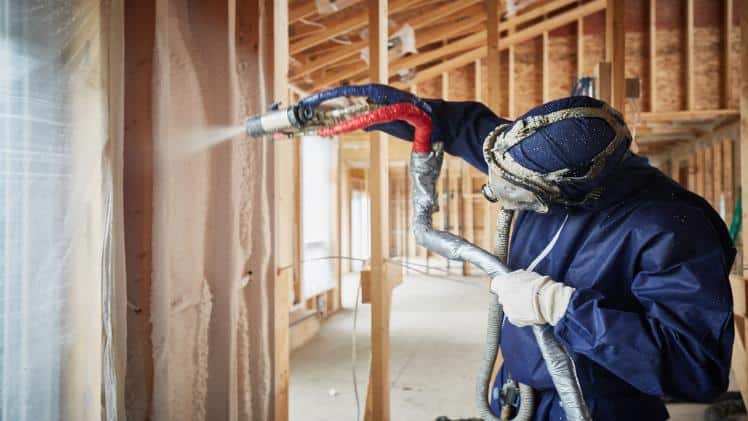
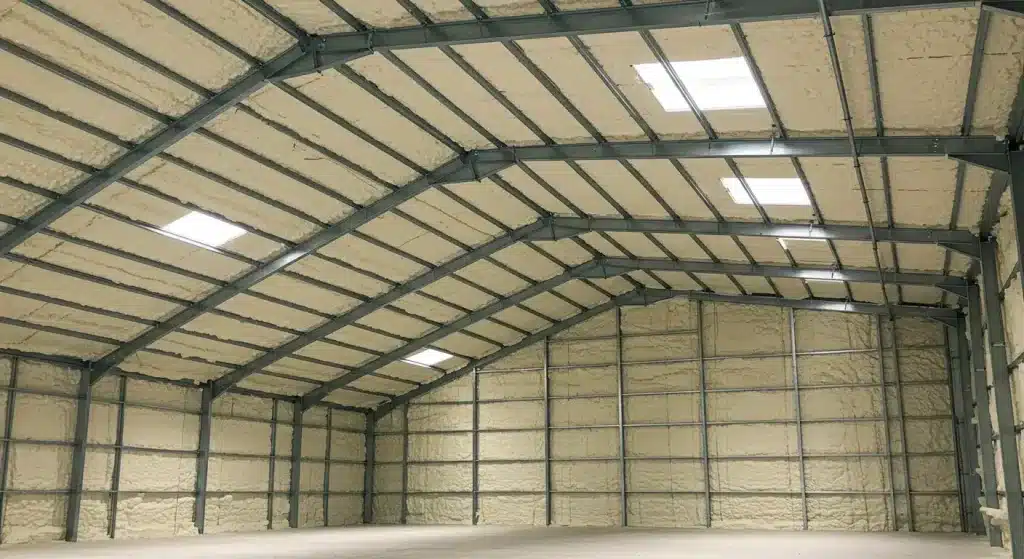
Modern spray foam insulation combines thermal resistance with air sealing capability in a single application. Closed-cell spray foam expands to fill gaps, cracks, and penetrations, creating a continuous air barrier that prevents uncontrolled air movement through the building envelope. This dual-function performance eliminates the need for separate air sealing steps, reducing installation time and labor costs while delivering superior results.
The air sealing performance of spray foam is measured in cubic feet per minute per square foot of surface area at pressure differentials typical of wind loading and mechanical ventilation. Spray foam assemblies routinely achieve air leakage rates below 0.02 cfm/sq ft, compared to 0.06 to 0.10 cfm/sq ft for fiberglass batts with separate air sealing efforts. The reduction in air leakage directly correlates with energy savings, with each reduction of 0.01 cfm/sq ft typically saving 0.5 to 1 percent of total building energy consumption.
Air sealing also prevents moisture-laden outdoor air from entering wall cavities and condensing on cold surfaces. By controlling air movement, insulation reduces the risk of condensation-related damage while improving indoor air quality by limiting infiltration of unfiltered outdoor air, pollen, dust, and other contaminants.
Thermal Break and Continuous Insulation
Continuous insulation applied to exterior surfaces eliminates thermal bridging by covering structural elements that penetrate through traditional cavity insulation. Spray foam boards, rigid mineral wool panels, and integrated structural insulated panels provide thermal breaks that reduce heat transfer through wall assemblies by 20 to 30 percent compared to stud cavity insulation alone.
The thermal performance improvement from continuous insulation is most significant in steel-framed buildings where studs represent 10 to 15 percent of wall surface area but transmit heat at rates 4 to 6 times higher than insulation. By covering these thermal bridges with continuous insulation, wall assembly U-factors drop from 0.10 to 0.06 or lower, representing a 40 percent improvement in overall thermal performance.
Continuous insulation also moderates surface temperatures on interior finishes, reducing cold spots and improving occupant comfort near exterior walls. Warmer interior surface temperatures eliminate draft complaints and allow thermostat setpoints to remain higher without sacrificing occupant comfort, generating additional energy savings through reduced heating demand. North American Insulation Manufacturers Association – Commercial Building Insulation Technical Resources
Moisture Management and Vapor Control
Insulation systems designed for moisture management prevent condensation within wall cavities and protect structural components from moisture-related deterioration. Closed-cell spray foam provides inherent vapor resistance that limits moisture diffusion through wall assemblies, reducing the risk of interstitial condensation in humid climates.
For buildings with significant interior humidity loads, mechanical dehumidification combined with proper insulation creates a robust moisture management strategy that protects building components while maintaining comfortable indoor conditions. Insulation specifications should account for climate zone, building use, and mechanical system capabilities to ensure adequate protection against moisture intrusion and condensation.
Properly designed roof systems with adequate insulation above the deck prevent ice dam formation and reduce thermal cycling that degrades roofing materials over time. Minimum R-30 insulation in climate zones 1 through 4 and R-35 to R-50 in climate zones 5 through 8 significantly reduces heat loss through roof assemblies, moderates attic or plenum temperatures, and prevents condensation on cold surfaces.
Performance Comparison of Commercial Insulation Types
| Insulation Type | R-Value per Inch | Air Barrier | Moisture Resistance | Best Applications |
|---|---|---|---|---|
| Closed-Cell Spray Foam | 6.5 to 7.0 | Yes, excellent | Excellent, vapor retarder | Roofs, walls, below grade |
| Open-Cell Spray Foam | 3.5 to 4.0 | Yes, good | Moderate, breathable | Interior walls, attics |
| Rigid Polyisocyanurate | 6.0 to 6.5 | No, requires separate sealing | Good | Roof assemblies, continuous exterior |
| Extruded Polystyrene | 5.0 to 5.5 | No, requires separate sealing | Excellent | Below grade, foundation walls |
| Fiberglass Batt | 3.0 to 3.5 | No, gaps are common | Poor, requires a vapor retarder | Stud cavities with air sealing |
| Mineral Wool | 3.5 to 4.5 | No, requires separate sealing | Good, fire-resistant | Fire-rated assemblies, acoustic walls |
Real-World Examples of Insulation Problem Resolution
| Scenario | Building Type | Problem | Solution | Outcome |
|---|---|---|---|---|
| Warehouse Distribution Center | 150,000 sq ft | 35 percent energy costs above the regional average, excessive HVAC runtime | Closed-cell spray foam in the roof deck and wall cavities, and air sealing of loading dock doors | 42 percent reduction in energy costs, HVAC runtime reduced by 4 hours daily |
| Medical Office Building | 45,000 sq ft | Mold growth on interior walls, occupant complaints, and regulatory citations | Interior spray foam with vapor retarder properties, mechanical ventilation upgrades | Elimination of condensation issues, zero mold callbacks in 3 years, improved patient satisfaction scores |
| Restaurant Chain | 8,000 sq ft per location | Variable energy costs, kitchen temperature fluctuations, and staff complaints | Spray foam in exterior walls and roof, dedicated exhaust makeup air units | 38 percent average energy reduction, consistent temperatures across dining and kitchen areas |
| Multi-Tenant Office Building | 120,000 sq ft | Sound transmission between tenant spaces, tenant turnover | Mineral wool acoustic insulation in demising walls, spray foam at penetrations and gaps | STC ratings improved from 35 to 50, and tenant retention increased by 25 percent |
| Cold Storage Facility | 25,000 sq ft | Excessive refrigeration costs, frost accumulation on walls, and product temperature excursions | High-density closed-cell spray foam (R-7 per inch), rigid board continuous insulation, vapor barrier systems | 45 percent reduction in refrigeration costs, elimination of frost issues, improved product temperature stability |
Actionable Strategies for Commercial Property Owners and Managers
- Schedule a comprehensive energy audit that includes blower door testing, thermal imaging, and insulation assessment to identify specific envelope deficiencies and prioritize remediation efforts based on return on investment calculations.
- Verify insulation coverage by inspecting for gaps, compression, and settlement in accessible areas. Common problem locations include behind electrical outlets, at rim joists, around pipe and duct penetrations, and at wall intersections with ceilings.
- Compare insulation specifications against current code requirements for your climate zone and building type. Minimum code compliance may not represent optimal performance, and upgrading insulation typically provides attractive returns within 5 to 10 years.
- Include air sealing specifications in all insulation projects, whether through spray foam application or separate air barrier installation. Insulation without air sealing provides significantly reduced benefits compared to combined systems.
- Document insulation installation with photos and specification sheets for future reference and resale documentation. Potential buyers and lenders increasingly request insulation documentation as part of due diligence for commercial property transactions.
Factors That Affect Commercial Insulation Performance
Installation Quality represents the most significant variable in insulation performance. Proper training, adequate supervision, and attention to detail during commercial insulation installation directly impact final performance. Gaps, compression, and inadequate coverage reduce effective R-value by 20 to 40 percent compared to properly installed systems.
Insulation Thickness determines total thermal resistance and must match design specifications for each assembly. Thinner applications than specified provide inadequate performance, while thicker applications may create moisture management issues in some assemblies.
Climate Zone Classification affects recommended insulation levels and assembly design. Buildings in cold climates require higher R-values and more robust vapor control than buildings in mild climates. Local climate data and building science principles should guide insulation specifications.
Building Age and Construction Type influence which insulation solutions are appropriate. Historic buildings may require preservation-compatible approaches, while modern metal frame buildings benefit from continuous exterior insulation strategies that address thermal bridging.
Moisture loads and ventilation interact with insulation performance to determine condensation risk. Buildings with high humidity generation require careful moisture management through ventilation, dehumidification, or vapor control strategies integrated with insulation design.
Solve Your Commercial Building Problems with Supreme Spray Foam LV
Commercial insulation problems compound over time, creating escalating energy costs, structural damage, and occupant complaints that erode property values and competitive positioning. Addressing these challenges requires experienced professionals who understand building science principles and deliver quality installation.
Supreme Spray Foam LV specializes in commercial insulation solutions that address air leakage, thermal bridging, moisture problems, and energy inefficiency. Our team evaluates your building’s specific conditions and recommends systems that deliver measurable performance improvements and long-term savings.
Contact us today to schedule a consultation and receive a detailed assessment of your commercial insulation needs.Call (702) 904-9895
Our professionals serve commercial property owners, managers, and contractors throughout the Las Vegas region with installation services backed by quality guarantees and responsive support. Transform your building’s performance with insulation solutions designed to solve problems and create lasting value.
Frequently Asked Questions
How do I know if my commercial building needs better insulation?
Signs of inadequate insulation include high and variable utility costs, drafts near exterior walls, condensation on windows or walls, mold growth, and occupant complaints about temperature discomfort. A professional energy audit with thermal imaging identifies specific insulation deficiencies.
What is the typical return on investment for commercial insulation upgrades?
Most commercial insulation upgrades pay for themselves within 5 to 10 years through reduced energy costs, with some high-performance installations achieving payback in 3 to 5 years. Long-term savings continue after the payback period, making insulation a sound capital investment.
Can insulation help with noise between tenant spaces?
Yes, insulation significantly improves acoustic separation between spaces. Mineral wool and spray foam products reduce sound transmission through walls and floor assemblies, improving privacy and occupant comfort in multi-tenant buildings.
What insulation R-values do commercial buildings require?
Code requirements vary by climate zone, building type, and assembly location. Wall requirements range from R-13 to R-25, depending on climate zone, while roof assemblies typically require R-30 to R-60. Consult local codes or our professionals for specific requirements.
How long does commercial spray foam insulation last?
Spray foam insulation installed properly lasts for the life of the building, maintaining its thermal and air sealing performance without settling, degrading, or requiring replacement. Unlike fiberglass, spray foam does not experience significant R-value loss over time.
Sources
- U.S. Department of Energy – Energy Saver: Energy Efficient Commercial Buildings – Government guidance on commercial building energy efficiency strategies and insulation benefits for reducing heating and cooling costs.
- U.S. Environmental Protection Agency – Commercial and Residential Sector Emissions – EPA data on building sector energy consumption and emissions showing the significant contribution of commercial buildings to national energy use.
- North American Insulation Manufacturers Association – Commercial Building Insulation Technical Resources – Industry association guidance documenting 13 to 35 percent energy savings from proper insulation in commercial building walls, ceilings, and floors.
- Energy Information Administration – Commercial Buildings Energy Consumption Survey – National survey data on commercial building stock, energy consumption patterns, and envelope characteristics affecting energy efficiency.
- International Code Council – Commercial Energy Efficiency Chapter – Model energy code requirements for commercial building insulation R-values, air sealing, and thermal envelope performance standards by climate zone.

- How Do You Choose the Right Insulation for a Las Vegas, NV Property Without Guesswork? - September 16, 2026
- What Questions Should Peccole Ranch, NV Property Owners Ask About Spray Foam Insulation? - September 16, 2026
- Where Can Spray Foam Insulation Be Used When Access Is Limited or Restricted? - September 15, 2026