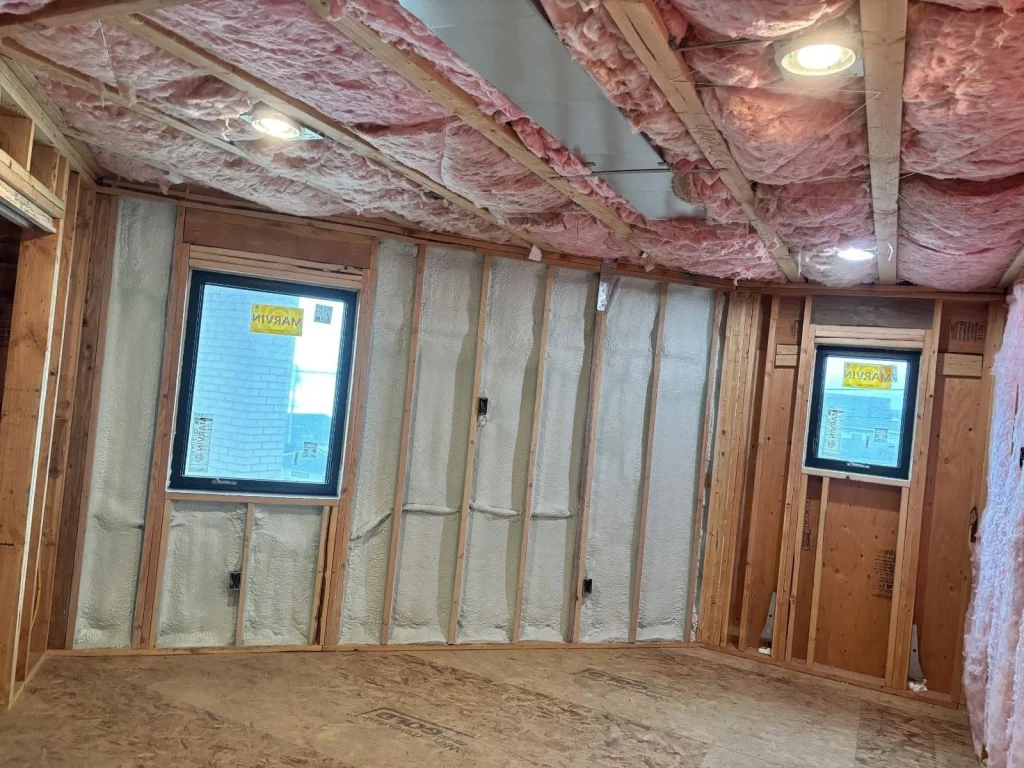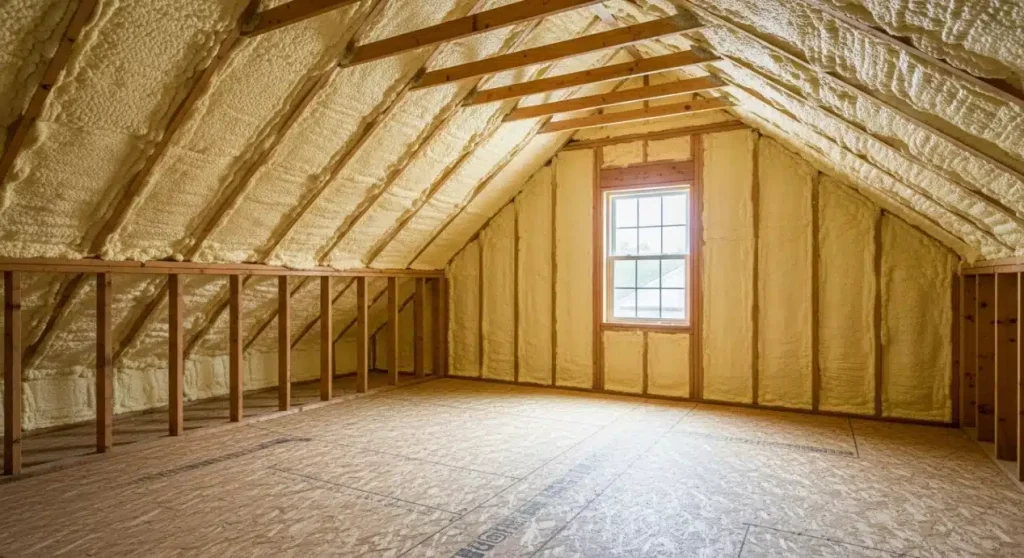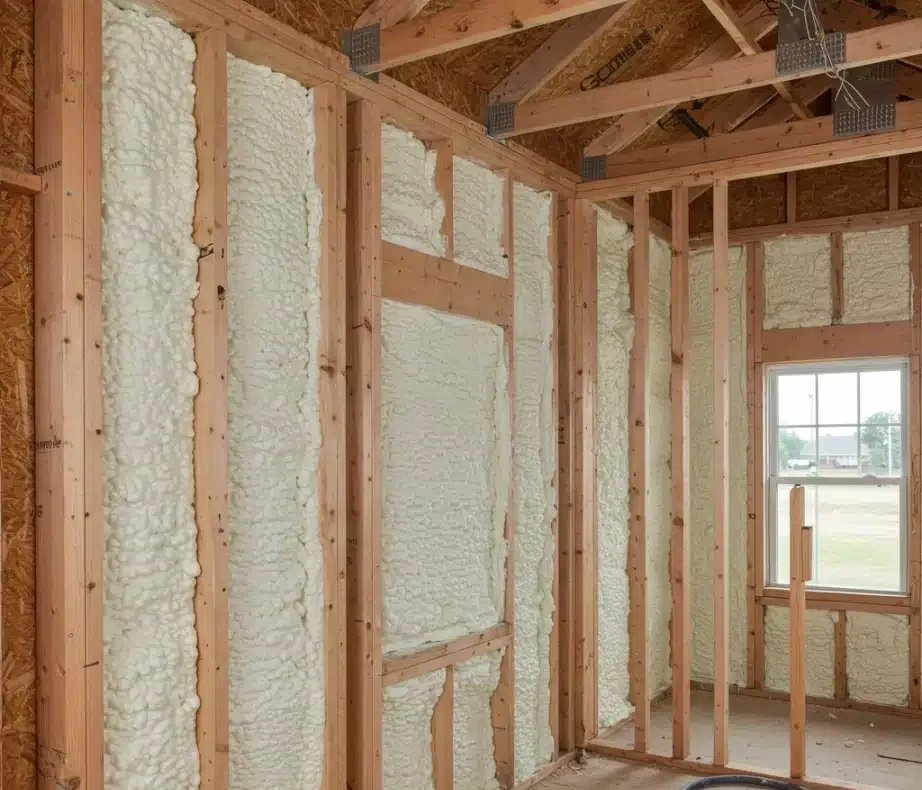

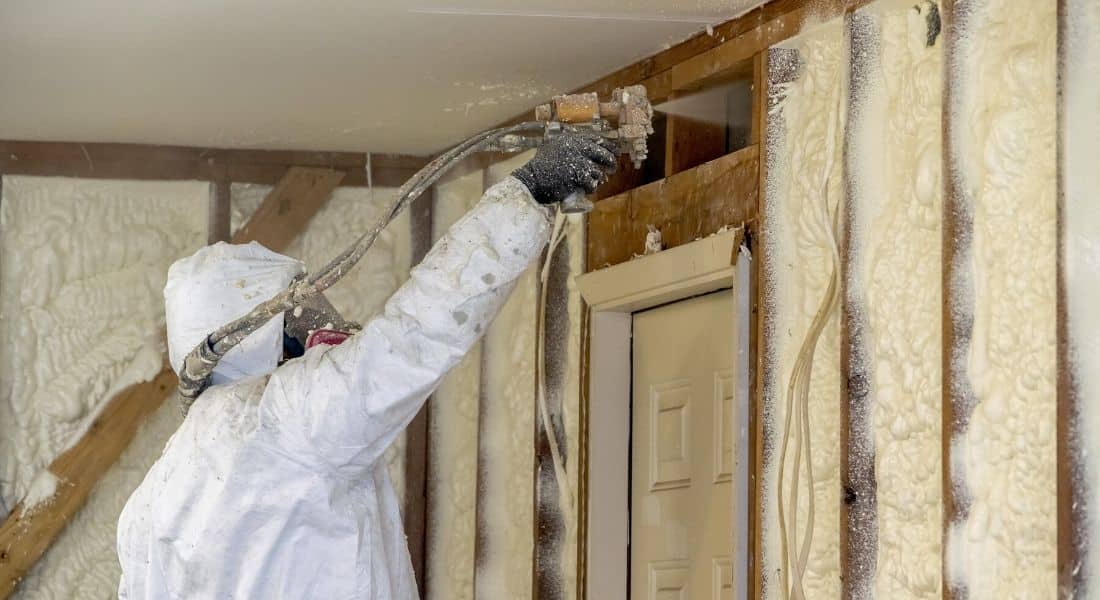
Commercial and residential insulation serve the same fundamental purpose of thermal control and energy efficiency, but the similarities end there. In Green Valley Ranch and throughout Henderson, Nevada, these two categories differ significantly in material requirements, installation complexity, code compliance, cost structure, and performance expectations. Commercial insulation projects typically involve larger footprints, stricter fire ratings, higher R-value requirements, and specialized equipment, while residential work focuses on occupant comfort, moisture management, and cost-effective solutions for smaller spaces. Understanding these differences helps contractors and property owners make informed decisions that balance upfront investment against long-term energy savings and building performance.
TL;DR
- Commercial buildings in Green Valley Ranch typically require R-30 or higher roof insulation per Nevada energy codes, while residential homes need R-38 to R-49 in attics for Climate Zone 5 compliance.
- Spray foam insulation costs range from $1.50 to $3.50 per square foot for open-cell and $3.00 to $5.50 per square foot for closed-cell applications, with commercial projects often commanding premium pricing due to equipment and access requirements.
- Commercial insulation projects require fire-rated materials meeting strict building codes, including thermal barriers and ignition barriers in many occupancy classifications.
- Installation complexity differs substantially: residential jobs typically complete in 1 to 3 days, while commercial projects may span weeks depending on building size and access considerations.
- Air sealing performance differs markedly between applications, with spray foam providing superior air barrier properties compared to traditional batt insulation in both sectors.
- Moisture management strategies vary by building type, with commercial buildings requiring dedicated vapor retarders and residential properties needing careful placement of insulation relative to the vapor barrier plane.
- Sound control considerations favor residential applications, where interior wall insulation significantly impacts occupant comfort between rooms.
Building Code Requirements in Nevada
Nevada operates under the International Energy Conservation Code (IECC) with state-specific amendments, and Green Valley Ranch falls under Clark County jurisdiction with its own modifications to the baseline energy code. Commercial buildings must comply with Chapter 4 of the IECC, which mandates specific thermal envelope requirements based on climate zone classification. Southern Nevada, including Henderson and Green Valley Ranch, sits in Climate Zone 5 for residential applications and Climate Zone 3 for commercial roof assemblies, creating distinct compliance pathways for each project type.
Read more: U.S. Department of Energy – Commercial and Residential Building Energy Codes
The Department of Energy provides comprehensive guidance on insulation requirements, emphasizing that properly insulated buildings reduce heating and cooling costs substantially while improving overall comfort. Department of Energy – Insulation. For commercial roof assemblies in Nevada’s climate zones, the minimum continuous insulation requirement ranges from R-30 to R-38, depending on the specific assembly type and code edition in effect. PIMA State Energy Code Fact Sheets: Residential attic insulation requirements typically specify R-38 minimum for Climate Zone 5, with many energy-conscious builders opting for R-49 to R-60 for enhanced performance in the desert climate.
Commercial occupancies also face stricter requirements for air leakage testing, with blower door tests and duct leakage measurements required for many building classifications under the current energy code. These testing requirements do not typically apply to residential projects, creating different quality assurance approaches between the two sectors.
Material Selection Differences
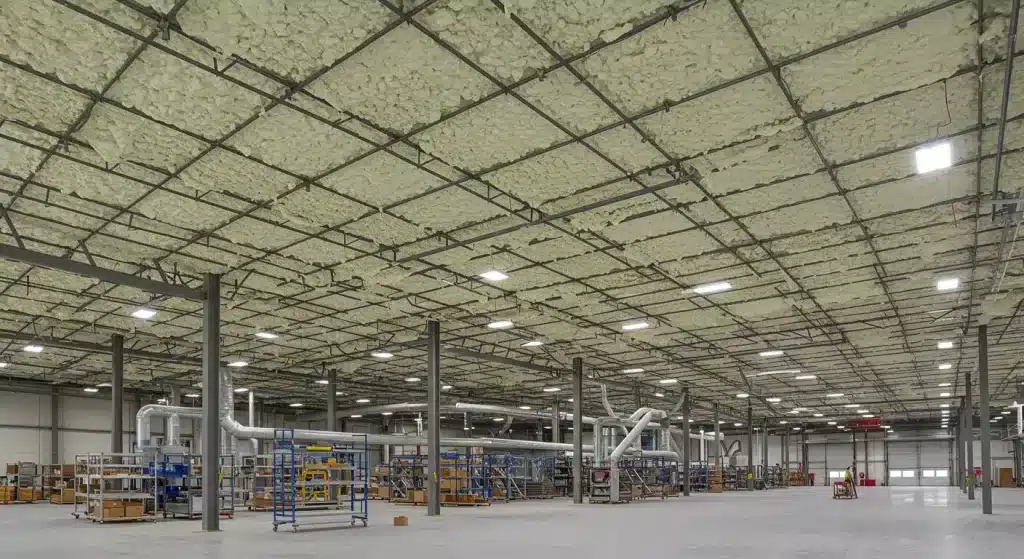
The material palette available to contractors differs meaningfully between commercial and residential applications. Commercial projects frequently utilize rigid foam boards, spray polyurethane foam, mineral wool, and fiberglass batts in thicknesses and configurations not commonly seen in residential work. These materials must meet specific fire performance ratings, with flame spread indices and smoke developed indices governing their approval for use in commercial occupancies.
Residential insulation centers on batt insulation, blown-in cellulose or fiberglass, spray foam, and increasingly, high-performance continuous insulation sheathing. Department of Energy – Types of Insulation The selection typically balances cost, thermal performance, and ease of installation in spaces with standard wall cavities and attic configurations. Energy Star provides R-value recommendations by climate zone, guiding residential contractors toward appropriate insulation levels for walls, attics, floors, and foundations. Energy Star – Recommended Home Insulation R-Values
Spray foam insulation has gained substantial market share in both sectors due to its superior air sealing capabilities, but the application methods and specifications differ. Closed-cell spray foam, with its higher density and R-value per inch, appears frequently in commercial roof assemblies and areas requiring structural reinforcement, while open-cell foam serves residential attic and wall applications where cost-effectiveness and sound dampening provide added value.
Performance and Efficiency Comparison
Thermal performance expectations diverge between commercial and residential insulation based on building usage patterns, operating schedules, and occupant requirements. Commercial buildings often run HVAC systems continuously during business hours, creating sustained thermal loads that demand consistent insulation performance across large roof and wall surfaces. The thermal mass of commercial structures, typically featuring steel framing and concrete decks, interacts differently with insulation than the wood-framed residential envelope.
Energy savings calculations for commercial insulation projects typically focus on peak demand reduction and operational cost savings over the building’s entire service life. The Department of Energy notes that heating and cooling systems work less to maintain desired temperatures when insulation performance improves, directly translating to utility cost reductions. Residential projects prioritize comfort, consistency, moisture control, and monthly utility bill reduction for homeowners.
Air sealing performance represents a significant advantage of spray foam insulation in both applications. The material expands to fill gaps, cracks, and voids that traditional batt insulation cannot address, creating a continuous air barrier that dramatically reduces infiltration and exfiltration. This characteristic proves particularly valuable in Nevada’s desert climate, where summer temperatures regularly exceed 110 degrees Fahrenheit, and every degree of unwanted heat gain impacts cooling costs.
Cost Structure and Project Economics
| Factor | Residential Insulation | Commercial Insulation |
|---|---|---|
| Average Cost per Sq Ft | $1.50 – $3.00 | $2.00 – $5.50 |
| Typical Project Size | 1,500 – 3,000 sq ft | 5,000 – 100,000+ sq ft |
| Installation Timeline | 1 – 3 days | 1 – 6 weeks |
| Labor-to-Material Ratio | 60/40 | 50/50 or higher |
| Equipment Requirements | Standard tools | Lifts, compressors, specialized rigs |
Commercial insulation projects carry inherently higher overhead costs stemming from equipment requirements, insurance premiums, bonding capacity, and specialized labor. The necessity for lifts and staging equipment in commercial roof applications adds a high cost that residential contractors avoid. However, the economies of scale in commercial work often offset these per-unit costs, creating competitive bidding environments that benefit property owners.
Residential projects benefit from simpler logistics, faster installation cycles, and lower insurance requirements, enabling contractors to offer competitive pricing for standard applications. The prevalence of do-it-yourself options in the residential market has created price sensitivity that commercial contractors do not experience, as commercial work almost exclusively involves professional installation.
Real-World Scenarios in Green Valley Ranch
| Scenario | Property Type | Recommended Insulation | Estimated Project Cost |
|---|---|---|---|
| Office tenant improvement | 2,500 sq ft commercial | Closed-cell spray foam roof, R-38 | $18,500 – $24,000 |
| Single-family home | 2,200 sq ft residential | Blown-in fiberglass attic, R-49 | $2,800 – $3,600 |
| Retail strip center | 8,000 sq ft commercial | Foam board under the new roof membrane | $42,000 – $55,000 |
| Medical office building | 12,000 sq ft commercial | Spray foam roof with thermal barrier | $85,000 – $110,000 |
| Townhome community | 1,800 sq ft per unit residential | Batt insulation in walls, blown attic | $3,200 – $4,100 per unit |
A local property management company recently completed a retrofit project on a 15,000-square-foot office complex near Green Valley Ranch, replacing aged batt insulation in the roof assembly with closed-cell spray foam. The project cost approximately $95,000 but generated immediate utility savings of 22% on heating and cooling costs, representing roughly $8,400 annually. The building owner projected a complete return on investment within 11 years while gaining improved tenant comfort and reduced HVAC runtime.
A homeowner in Green Valley Ranch opted for open-cell spray foam in her attic and crawlspace during a recent renovation, spending $6,200 on the installation. She reported summer cooling costs dropping by approximately 30% compared to her neighbors with traditional batt insulation, with the added benefit of eliminating attic ventilation issues that plagued the original construction.
Factors Influencing the Decision
Building Age and Construction Type
Older commercial buildings in Green Valley Ranch often feature asbestos-containing materials requiring abatement before insulation work, dramatically affecting project costs and timelines. Residential properties face similar challenges with vermiculite insulation in homes built before 1990. Construction type fundamentally determines insulation accessibility, with steel-framed commercial buildings requiring different approaches than wood-framed residential structures.
Occupancy Classification and Use Pattern
Commercial occupancies face fire code requirements that residential properties do not, mandating thermal barriers in many classifications. Buildings with high occupant density, such as schools and healthcare facilities, require enhanced fire-rated assemblies that increase material costs. Use patterns matter as well; a 24-hour data center requires different insulation specifications than a typical office building.
Budget Constraints and ROI Requirements
Commercial projects typically undergo rigorous return-on-investment analysis, with insulation competing against other capital improvements for funding. Property owners demand quantifiable payback periods, often requiring energy modeling to justify insulation expenditures. Residential decisions more frequently balance budget constraints against comfort improvements and perceived value.
HVAC System Integration
Commercial buildings often feature integrated building management systems that interact with insulation performance, creating opportunities for optimization that residential systems lack. The sizing and efficiency of HVAC equipment directly relates to insulation performance, with better-insulated buildings requiring smaller, more efficient heating and cooling systems.
Who Should Focus on Commercial Insulation
Commercial insulation work suits contractors with experience managing larger projects, adequate working capital for material purchases and payroll during extended installations, appropriate bonding capacity, and proper insurance coverage. Contractors serving the commercial sector must understand building codes, plan for equipment access, and maintain relationships with general contractors and property management companies. Spray foam applicators working in commercial settings benefit from manufacturer certifications that validate their technical competence.
Who Should Focus on Residential Insulation
Residential insulation appeals to contractors prioritizing faster project cycles, lower capital requirements, and direct relationships with homeowners. This market segment values responsiveness, competitive pricing, and reputation within local communities. Contractors entering homes must possess clean backgrounds, excellent customer service skills, and the ability to explain technical concepts in accessible terms. Many successful residential insulation contractor specialize in specific products or brands, building expertise that commands premium pricing.
Get Expert Insulation Guidance for Your Green Valley Ranch Project
Whether you manage commercial properties in Green Valley Ranch or own a home in Henderson’s growing neighborhoods, the right insulation strategy directly impacts your energy costs and building performance for decades. Our team at Supreme Spray Foam LV brings deep experience with both commercial and residential insulation applications throughout Clark County, understanding the specific code requirements and climate considerations that affect every project.
We work with property owners, general contractors, and property managers to design and install insulation systems that meet your performance goals and budget requirements. From small residential attic upgrades to large-scale commercial roof projects, our crews deliver quality installation backed by manufacturer certifications and comprehensive warranties. Contact us today to discuss your insulation needs and receive a detailed proposal tailored to your property.
Call (702) 904-9895 or email [email protected]. Our team responds within one business day to discuss your insulation project requirements.
Frequently Asked Questions
What R-value insulation is required for commercial buildings in Green Valley Ranch?
Nevada’s energy code requires commercial roof assemblies in Climate Zone 3 to meet minimum R-30 continuous insulation requirements, with many buildings opting for higher values to improve energy performance and reduce operational costs.
How does spray foam insulation perform in Nevada’s desert climate?
Spray foam insulation provides excellent thermal resistance and air sealing in hot climates, reducing heat transfer through walls and roofs while minimizing moisture intrusion that can cause problems in climate-controlled spaces during summer months.
What is the typical payback period for commercial insulation upgrades?
Most commercial insulation projects in the Las Vegas area achieve payback within 8 to 15 years through reduced utility costs, with factors including building efficiency, HVAC system performance, and occupancy patterns affecting the actual timeline.
Can residential insulation help with noise reduction between rooms?
Yes, insulation in interior walls significantly reduces sound transmission between rooms, with open-cell spray foam and dense-pack cellulose providing superior acoustic performance compared to uninsulated walls.
Do I need a permit for insulation work in Henderson or Green Valley Ranch?
Permit requirements vary by project scope and locality, with most residential insulation projects not requiring permits unless significant structural changes occur. Commercial projects typically require permits and inspections for code compliance verification.
Sources
- Department of Energy – Insulation – Comprehensive guidance on home and building insulation benefits, R-value recommendations, and energy cost reduction strategies from the U.S. Department of Energy.
- Energy Star – Recommended Home Insulation R-Values – Cost-effective insulation levels by climate zone with specific recommendations for attics, walls, floors, and crawlspaces in Energy Star certified homes.
- Department of Energy – Types of Insulation – Detailed overview of insulation materials including spray foam, batts, blown-in, rigid foam, and reflective systems with installation guidance for different building areas.
- U.S. Department of Energy – Commercial and Residential Building Energy Codes – Information on ASHRAE Standard 90.1 and IECC requirements governing minimum insulation levels and thermal envelope performance for commercial and residential buildings.
- PIMA State Energy Code Fact Sheets – State-specific insulation requirements including Nevada’s minimum R-values for commercial roof assemblies across different IECC code editions and climate zones.

- How Do You Choose the Right Insulation for a Las Vegas, NV Property Without Guesswork? - September 16, 2026
- What Questions Should Peccole Ranch, NV Property Owners Ask About Spray Foam Insulation? - September 16, 2026
- Where Can Spray Foam Insulation Be Used When Access Is Limited or Restricted? - September 15, 2026