
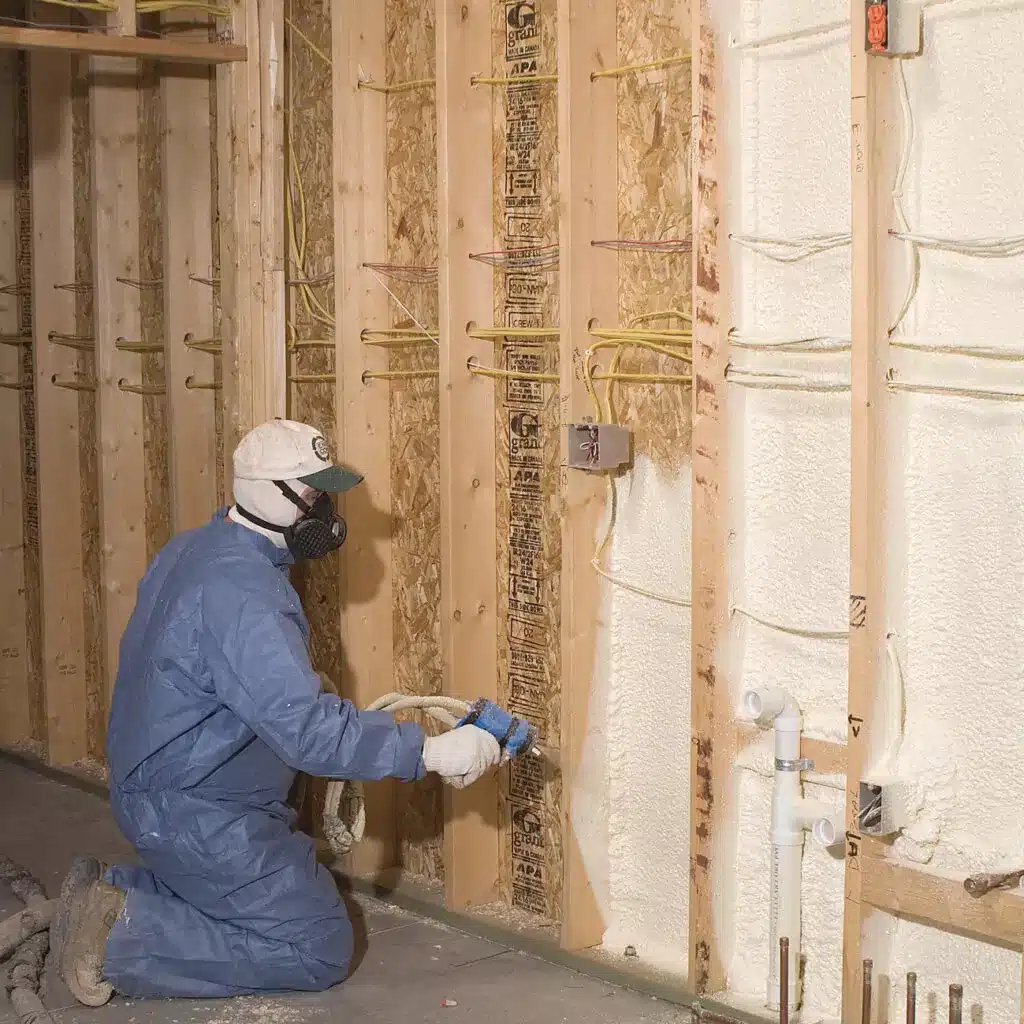
Yes. Spray foam insulation is one of the most effective materials available for addressing drafts, condensation, and unwanted air movement in residential and commercial buildings. The Complete Guide to Spray Foam Insulation should cover how its ability to expand and seal gaps on contact creates an airtight barrier that traditional insulation types like fiberglass batts or loose-fill cellulose cannot match. The right type and application of spray foam depends on the building’s specific needs, including climate zone, existing construction, and moisture management requirements. Understanding the difference between open-cell and closed-cell formulations, as well as how spray foam interacts with the building envelope, is essential to getting lasting results.
TL;DR
- Spray foam insulation expands on application to fill cracks, gaps, and voids, creating a continuous air seal that eliminates drafts and unwanted air infiltration.
- Closed-cell spray foam acts as both an air barrier and a vapor retarder, reducing the risk of interstitial condensation inside wall and ceiling assemblies.
- Open-cell spray foam provides strong air sealing at lower density but is vapor-permeable, making it better suited for certain applications where drying is needed.
- Traditional insulation like fiberglass and cellulose can reduce conducted heat but do little to stop convective air movement through gaps and penetrations.
- Condensation in buildings is caused when warm, moist air contacts a cool surface, and spray foam helps by keeping interior surfaces warmer and blocking the paths where moisture-laden air would otherwise travel.
- Buildings use roughly 40% of total energy consumed, and a large portion of that waste comes from air leakage through the building envelope that spray foam directly addresses.
- Proper installation by trained professionals is critical, because incorrect application can lead to thermal bridging, moisture trapping, or voids that undermine performance.
How Spray Foam Stops Drafts and Unwanted Air Movement
Drafts are the result of air leakage through the building envelope. They occur around windows, doors, rim joists, pipe penetrations, electrical boxes, and any gap between framing and sheathing. Traditional insulation materials like fiberglass batts are designed to slow conducted heat, but they do not seal against air movement. Air simply passes through or around them.
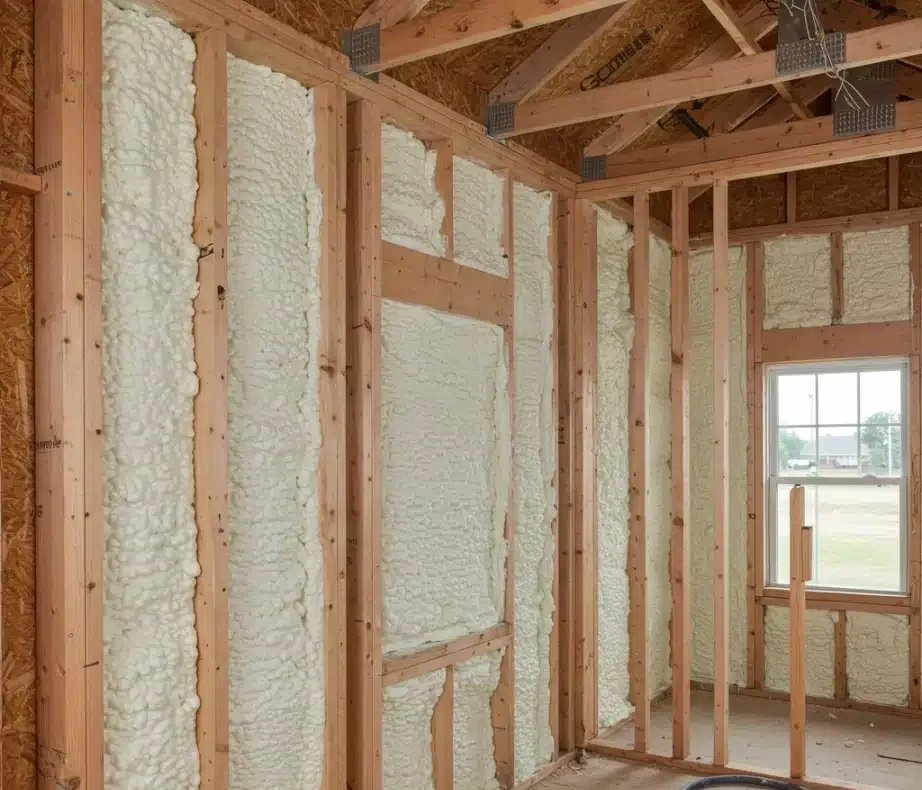
Spray foam insulation works differently. It is applied as a liquid that expands to many times its original volume, filling cavities completely and adhering to surrounding surfaces. This expansion creates a monolithic seal that blocks the pathways air uses to infiltrate or exfiltrate a building. As noted in the R-value (insulation) article on Wikipedia, one of the primary values of spray foam is its ability to create an airtight seal directly against the substrate, reducing the undesirable effects of air leakage that degrade the performance of conventional bulk insulators.
According to Wikipedia’s building insulation entry, reducing airflow from inside to outside can significantly reduce convective heat transfer. The building envelope defines the conditioned living space, and when spray foam seals the gaps, convection currents within wall and ceiling cavities are effectively eliminated.
Where Air Leakage Matters Most
The most common leak points in a building include:
- Rim joists and band joists along the foundation
- Attic floor penetrations around plumbing stacks, electrical wires, and duct chases
- Window and door rough openings
- Recessed lighting fixtures
- Gaps between framing members and sheathing
According to Wikipedia’s weatherization entry, air sealing these pathways is a key step in protecting a building against drafts and unwanted air infiltration.
Spray foam applied to these areas fills the voids completely. Its adhesive nature means it bonds to wood, metal, concrete, and most building materials, maintaining the seal over time without settling, sagging, or compressing.
Closed-Cell vs. Open-Cell: Which Stops Air Better?
Both types stop air effectively, but they differ in density, structure, and secondary properties.
| Property | Closed-Cell Spray Foam | Open-Cell Spray Foam |
|---|---|---|
| Cell Structure | Closed, non-interconnected pores | Open, interconnected pores |
| Air Sealing | Excellent | Excellent |
| Vapor Permeability | Low (acts as vapor retarder) | Higher (vapor permeable) |
| R-Value per Inch | ~5.5 to 6.5 | ~3.6 |
| Density | Higher | Lower |
| Best Applications | Basements, crawl spaces, exterior walls, flood-prone areas | Attics, interior walls, sound-dampening applications |
As detailed in Wikipedia’s polyurethane foam entry, the material’s cellular structure determines its thermal resistance and mechanical properties.
Both formulations stop drafts and unwanted air movement effectively. The choice between them depends on whether the application also requires a vapor barrier, structural rigidity, or moisture permeability.
How Spray Foam Addresses Condensation
Condensation forms when warm, moisture-laden air contacts a surface that is at or below the dew point temperature. Inside building assemblies, this can lead to wood rot, mold growth, corrosion, and degraded insulation performance. The Wikipedia article on condensation in building construction notes that infrastructure condensation may be caused by thermal bridges, insufficient or lacking insulation, and poor damp proofing.
Spray foam combats condensation in three ways.
1. Raising Surface Temperatures
By insulating cavities fully and eliminating thermal bridges, spray foam keeps interior surfaces warmer. When wall and ceiling surfaces stay above the dew point, water vapor in the air is less likely to condense on those surfaces. The building insulation literature points out that sufficient thermal insulation makes sure room surface temperatures do not fall below critical levels, which avoids condensation and the formation of mold.
2. Blocking Moisture-Laden Air Paths
Most condensation problems inside building assemblies are not caused by diffusion through materials but by air movement carrying moisture through gaps and cracks. Warm indoor air exfiltrates through penetrations in the building envelope, and when it reaches a cool surface inside the wall or attic cavity, condensation occurs. Spray foam seals those pathways, preventing the bulk air movement that transports moisture into the cavity.
3. Controlling Vapor Diffusion
Closed-cell spray foam has low vapor permeability and functions as a vapor retarder. In climates where indoor moisture needs to be kept out of wall assemblies during heating seasons, closed-cell foam applied to the interior side of the framing provides this protection. Open-cell foam, being vapor-permeable, allows assemblies to dry toward the interior, which is appropriate in certain climate-specific configurations.
Thermal Bridges and Why They Matter
A thermal bridge is a point in the building envelope where heat conducts more easily because insulation is interrupted or absent. Common thermal bridges include wood or steel studs, concrete slabs extending through walls, and framing around windows and doors. The building insulation article explains that thermal bridges allow heat conduction to bypass insulation, contributing to poor energy performance.
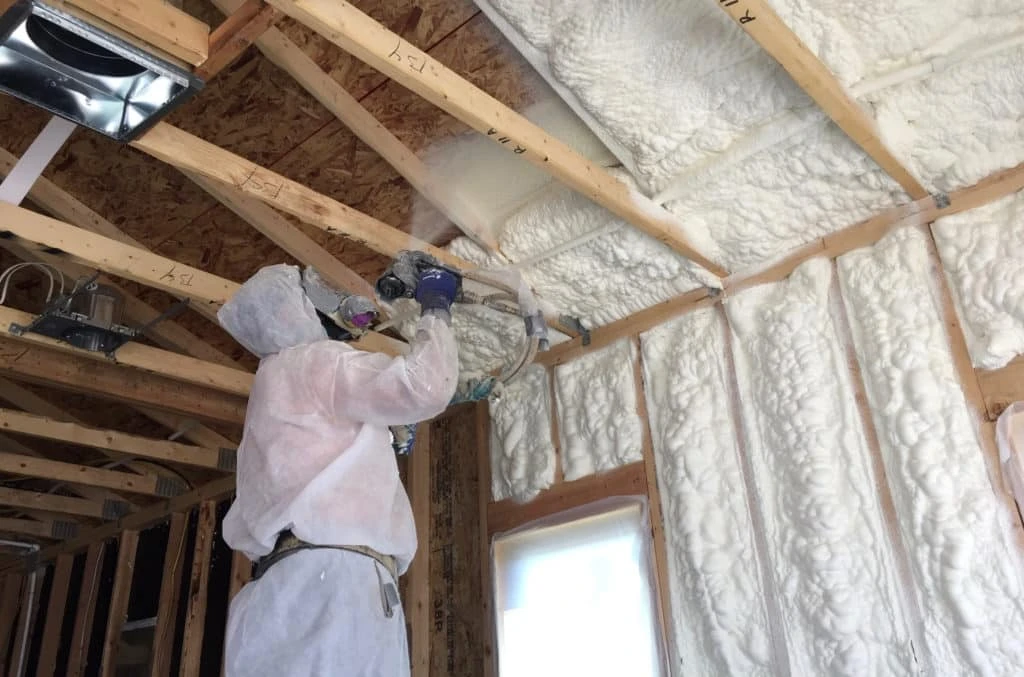
Spray foam addresses thermal bridging more effectively than batt insulation because it fills around and between framing members rather than fitting between them. When spray foam is applied in stud cavities, it coats the studs themselves, reducing the direct conductive path through the wood. Closed-cell spray foam applied as a continuous layer on the exterior of wall sheathing can interrupt thermal bridging through studs entirely
Recommendations by Application
The right spray foam strategy depends on where it is being applied and what conditions exist.
Attics and Roof Assemblies
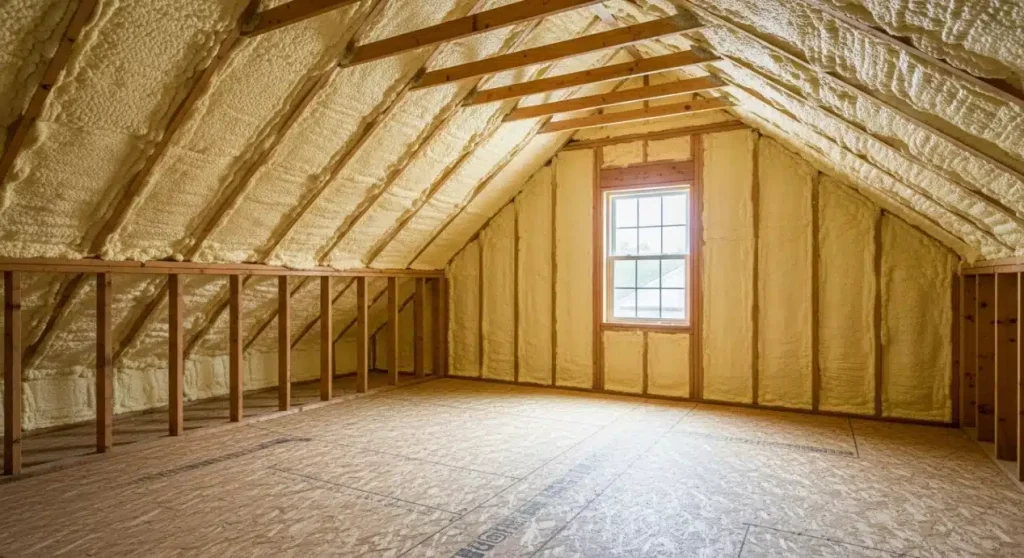
In hot climates like Las Vegas, spray foam applied to the underside of the roof deck moves the building envelope to the roof line. This keeps ductwork and mechanical systems inside the conditioned space, eliminating the extreme heat they would otherwise be exposed to in a vented attic. Open-cell foam is commonly used here because of its lower material cost and excellent air sealing properties.
Crawl Spaces and Basements
Below-grade and rim joist areas benefit from closed-cell spray foam. Its low vapor permeability prevents ground moisture from entering the living space, and its higher density provides added rigidity and moisture resistance. Crawl spaces sealed with closed-cell foam are less prone to mold, musty odors, and structural moisture damage.
Walls During New Construction or Retrofit
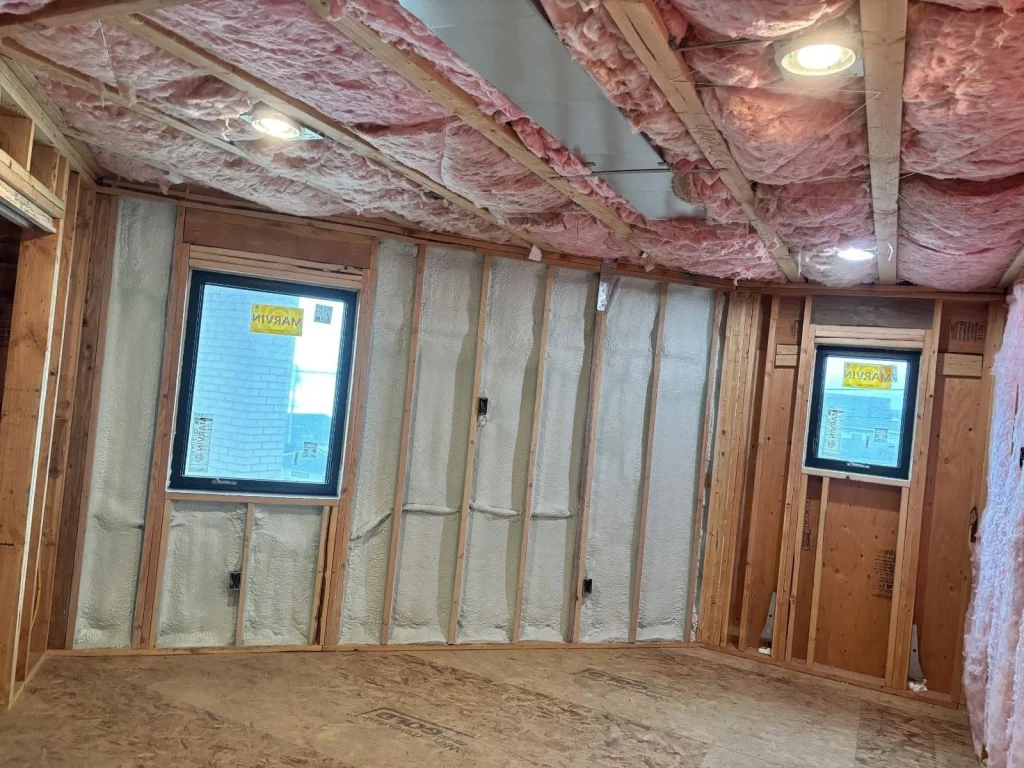
Spray foam in wall cavities during new construction or deep energy retrofits eliminates the gaps and voids common with batt insulation. It fills around electrical boxes, plumbing runs, and irregular framing. For retrofit projects where drywall is already in place, small holes can be drilled and foam injected into the cavities.
Signs You’ve Found the Right Installer
Choosing the right professional makes or breaks a spray foam project. Look for these indicators:
- Clear explanation of the building science. A qualified installer should explain why they recommend open-cell or closed-cell for your specific application, not just quote a price.
- Attention to air sealing before insulation. The best installers seal the major air leaks at penetrations, top plates, and rim joists before spraying foam.
- Proper thickness verification. Installers should demonstrate that the foam has been applied to the specified depth across the entire area, not just visually thickened in spots.
- Willingness to discuss ventilation. Spray foam makes buildings tighter, and proper mechanical ventilation may need to be addressed. A professional installer will raise this topic proactively.
- Consistent communication. You should receive a clear scope of work, expected timeline, and straightforward answers about what the project will and will not address.
Get a Professional Insulation Assessment
Supreme Spray Foam LV specializes in solving draft, condensation, and air movement problems for homes and buildings throughout the Las Vegas area. Our experienced team evaluates your building envelope, identifies air leakage pathways and moisture risks, and recommends the spray foam solution that fits your specific needs. We use both open-cell and closed-cell formulations and apply them precisely to deliver lasting performance and real energy savings.
Call us at (702) 904-9895 or email [email protected] to get started.
Frequently Asked Questions
Can spray foam insulation completely eliminate drafts in a home?
Spray foam can eliminate the vast majority of drafts when applied comprehensively, but some air movement around windows, doors, and mechanical systems may still require complementary weatherization measures.
Does spray foam insulation prevent mold growth?
Spray foam reduces conditions that lead to mold by blocking warm, moist air from entering wall and ceiling cavities where it could condense on cool surfaces. Proper ventilation is still needed to manage indoor humidity.
Is closed-cell or open-cell spray foam better for stopping air movement?
Both types are equally effective at sealing air leaks. The choice between them depends on whether you also need vapor resistance, structural support, or sound dampening in addition to air sealing.
Can spray foam insulation cause moisture problems if installed incorrectly?
Yes, incorrect application, such as applying the wrong type for the climate or failing to account for ventilation needs, can trap moisture. Professional installation is essential to avoid this.
How long does spray foam insulation last in a building?
Spray foam is a thermosetting polymer that does not degrade or settle over time, so it maintains its air sealing and insulating properties for the life of the building when properly installed.
Sources
- Wikipedia – Building Insulation – Comprehensive reference on thermal insulation materials, condensation prevention, thermal bridges, and the role of the building envelope in controlling heat and moisture.
- Wikipedia – R-value (Insulation) – Detailed coverage of spray foam R-values, the distinction between air sealing and thermal conduction, and how foam-in-place insulation reduces air infiltration.
- Wikipedia – Polyurethane Foam – Scientific overview of polyurethane foam chemistry, including open-cell versus closed-cell structure and thermal insulation properties relevant to spray foam applications.
- Wikipedia – Weatherization – Reference on air sealing procedures, weatherization practices for reducing drafts, and the relationship between building tightness and energy efficiency.
- Wikipedia – Condensation – Explanation of condensation in building construction, including causes like thermal bridges and insufficient insulation, and the effects of dampness, mold, and wood rot.

- How Do You Choose the Right Insulation for a Las Vegas, NV Property Without Guesswork? - September 16, 2026
- What Questions Should Peccole Ranch, NV Property Owners Ask About Spray Foam Insulation? - September 16, 2026
- Where Can Spray Foam Insulation Be Used When Access Is Limited or Restricted? - September 15, 2026