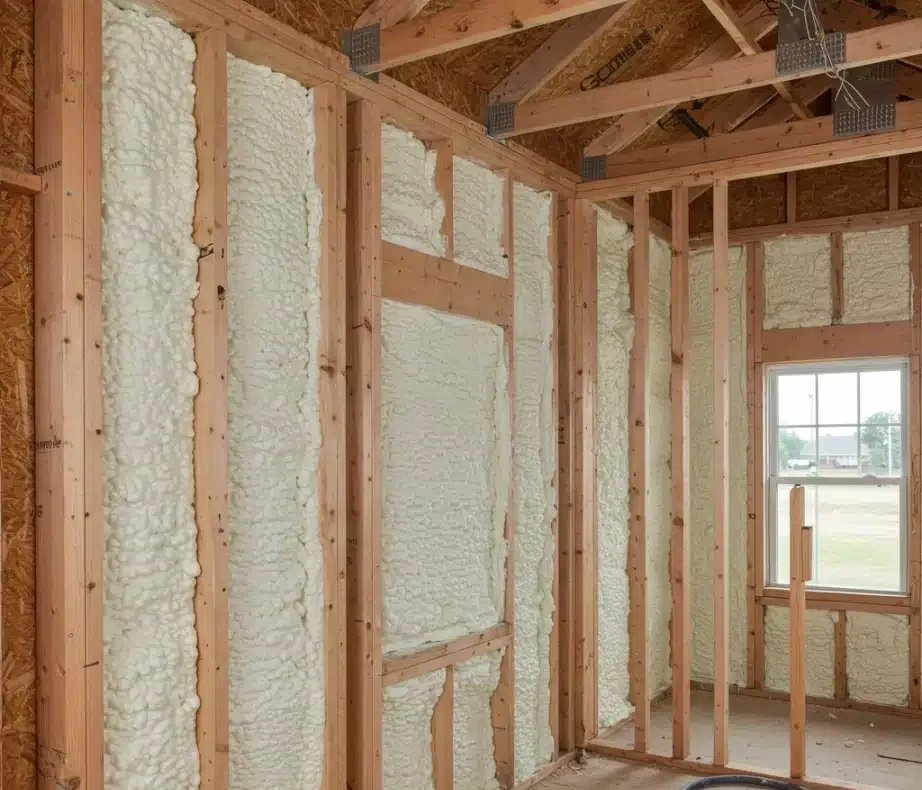

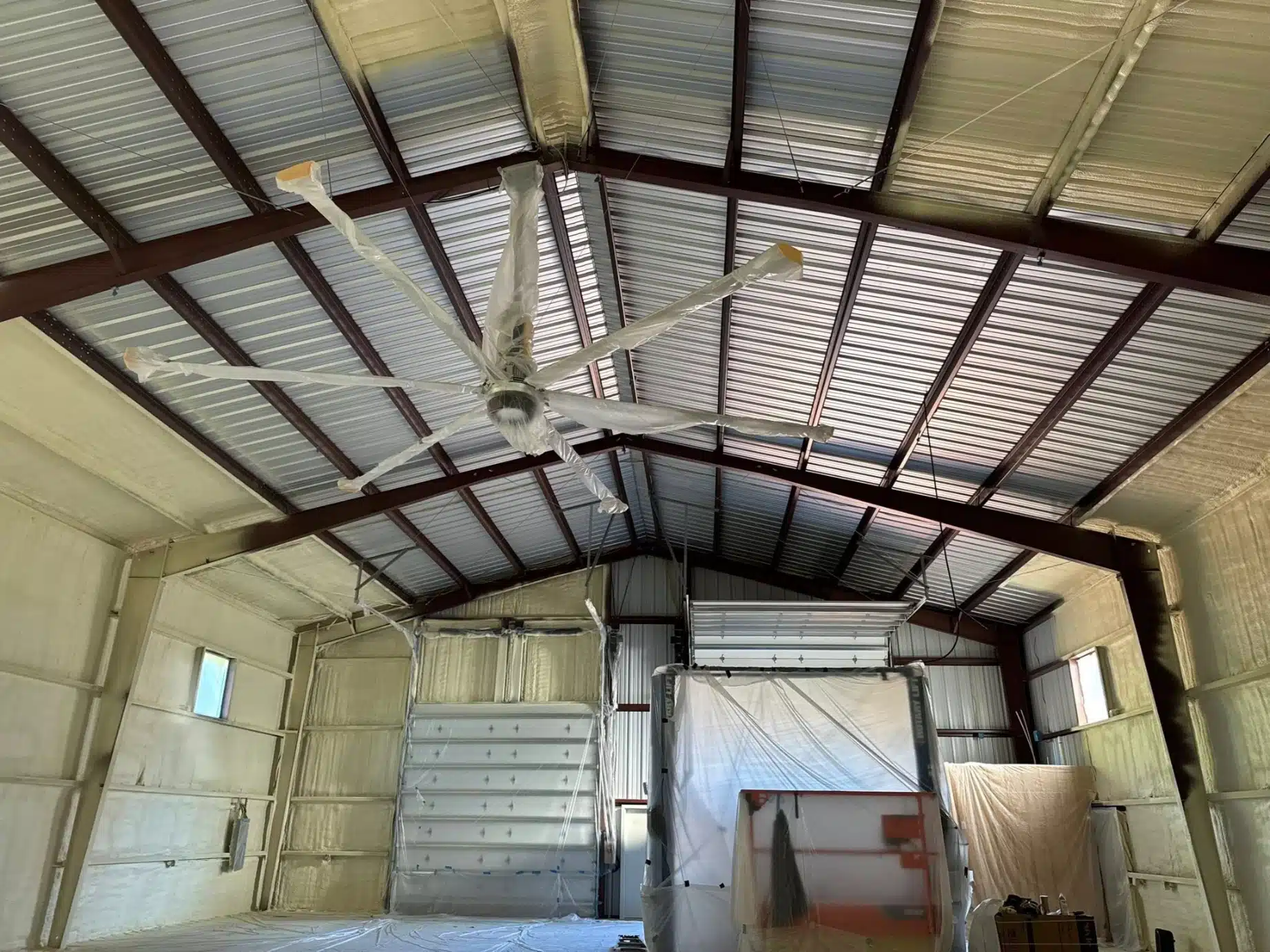
Budgeting for a commercial insulation project in Centennial Hills comes down to understanding four things: your building’s energy code requirements, the type of insulation that fits your application, the total square footage of the areas being insulated, and the labor demands of your specific project. Las Vegas sits in IECC Climate Zone 3B, which means commercial roof assemblies with insulation entirely above the deck must meet a minimum of R-25 continuous insulation per the 2024 IECC, while walls have their own prescriptive R-value requirements based on assembly type. Beyond code minimums, many property owners in Centennial Hills choose to exceed those values to reduce cooling costs in our extreme desert heat, where summer temperatures regularly push past 110 degrees. A well-planned commercial insulation budget accounts for material selection, code compliance, professional installation, and long-term energy savings rather than just the lowest upfront cost, which is covered in this commercial insulation guide.
TL;DR
- Las Vegas is classified under IECC Climate Zone 3B, requiring specific minimum R-values for commercial roof and wall assemblies under the 2024 International Energy Conservation Code
- Commercial low-slope roofs in Climate Zone 3 require a minimum of R-25 continuous insulation when installed entirely above the deck
- Spray foam insulation, both open-cell and closed-cell, offers a higher R-value per inch than traditional fiberglass batts, but requires professional installation and proper curing time
- The EPA notes that spray polyurethane foam requires appropriate personal protective equipment during installation and controlled re-entry times of 24 hours or more after application
- Budget line items should include materials, labor, code compliance documentation, air sealing, and a contingency for unforeseen conditions
- Proper insulation can dramatically reduce HVAC cooling loads in hot, dry climates like Centennial Hills, lowering operating costs over the life of the building
- Building type, accessibility, and whether the project is new construction or retrofit are the biggest variables affecting project scope and budget
Why Insulation Matters for Centennial Hills Commercial Properties
Centennial Hills is one of the fastest-growing commercial corridors in northwest Las Vegas. The area’s City of Las Vegas Sector Plan designates a Town Center zone at the US 95 and Beltway interchange, designed as a high-density mixed-use employment center with retail, office, industrial parks, and multifamily residential. With a projected build-out population approaching 300,000 residents and approximately 162,000 working residents, the commercial construction pipeline here is substantial and diverse.
In a hot, dry climate where summer cooling demands dominate energy usage, insulation is one of the most impactful investments a commercial property owner can make. As Oklahoma State University Extension – The Importance of Residential and Commercial Building Insulation notes, insulation ranks at or near the top of energy projects when measuring benefit versus cost, and the payback period for upgrading insulation can be as short as four years in some applications. For Centennial Hills commercial buildings, where air conditioning runs continuously through extended summer months, the return on insulation investment is often even stronger.
Understanding Nevada’s Commercial Insulation Requirements
Nevada has adopted the 2024 International Energy Conservation Code (IECC) as the basis for its commercial building energy requirements. Under this code, Clark County (where Centennial Hills is located) requires commercial buildings to meet prescriptive R-value minimums for opaque wall assemblies, roof assemblies, and floors based on the climate zone.
The minimum R-value requirements for commercial low-slope roofing with insulation entirely above the deck in Nevada’s climate zones are:
| Climate Zone | Minimum Roof R-Value (ci) |
|---|---|
| Zone 5 | R-30ci |
| Zone 4 | R-30ci |
| Zone 3 | R-25ci |
Since Las Vegas falls in Climate Zone 3B, the R-25 continuous insulation minimum applies. This can be achieved through multiple configurations, such as two layers of 2.2-inch polyisocyanurate board (polyiso), which delivers approximately R-25.2 when installed as a roof assembly above the structural deck.
Wall assembly requirements vary depending on framing type (mass walls, steel-framed, wood-framed) and whether continuous insulation is used. The code also mandates a continuous air barrier for the building thermal envelope, which adds another layer of planning to the project, especially when working with a wall insulation contractor in Centennial Hills.
For details on the specific code requirements, reference the PIMA Nevada Energy Code Fact Sheet – Minimum Insulation Requirements.
Code compliance is non-negotiable. Failing to meet minimum R-values can result in failed inspections, project delays, and costly rework. Your insulation budget should assume code-compliant materials and installation as the baseline, not as an upgrade.
Insulation Material Options for Commercial Projects
Choosing the right insulation material affects both performance and budget. The U.S. Department of Energy – Types of Insulation outlines the primary types used in commercial construction, each with distinct advantages:
| Insulation Type | R-Value Per Inch | Best Application | Air Barrier Capability |
|---|---|---|---|
| Closed-cell spray foam | 6.0 to 7.5 | Walls, roofs, crawl spaces, irregular cavities | Yes, acts as vapor barrier |
| Open-cell spray foam | 3.5 to 3.8 | Wall cavities, attics, sound control | Yes, air barrier (not vapor barrier) |
| Polyiso rigid board | 5.6 to 6.5 | Low-slope roofs, exterior walls | Depends on installation |
| Fiberglass batts | 3.1 to 3.4 | Standard stud/joist cavities | No, requires separate air sealing |
| Mineral wool batts | 3.3 to 4.2 | Walls, fire-rated assemblies | No, requires separate air sealing |
| EPS rigid board | 3.8 to 4.4 | Below-grade, cavity insulation | Depends on installation |
According to the Insulation Institute – Comparing Insulation Types for Commercial Buildings, all insulation types perform equally well when properly installed and paired with air sealing. The real decision comes down to R-value per dollar, moisture control needs, fire safety requirements, and the specific geometry of the building assembly.
Budget Line Items: What Goes Into a Commercial Insulation Project
A thorough budget for a commercial insulation project in Centennial Hills should include the following categories:
1. Materials The insulation product itself is the largest material expense. Spray foam products cost more per square foot than fiberglass or mineral wool, but they deliver higher R-value per inch and serve as an air barrier in a single step, which can offset additional weatherization costs. Rigid foam boards used in commercial roofing applications are priced based on thickness and R-value rating.
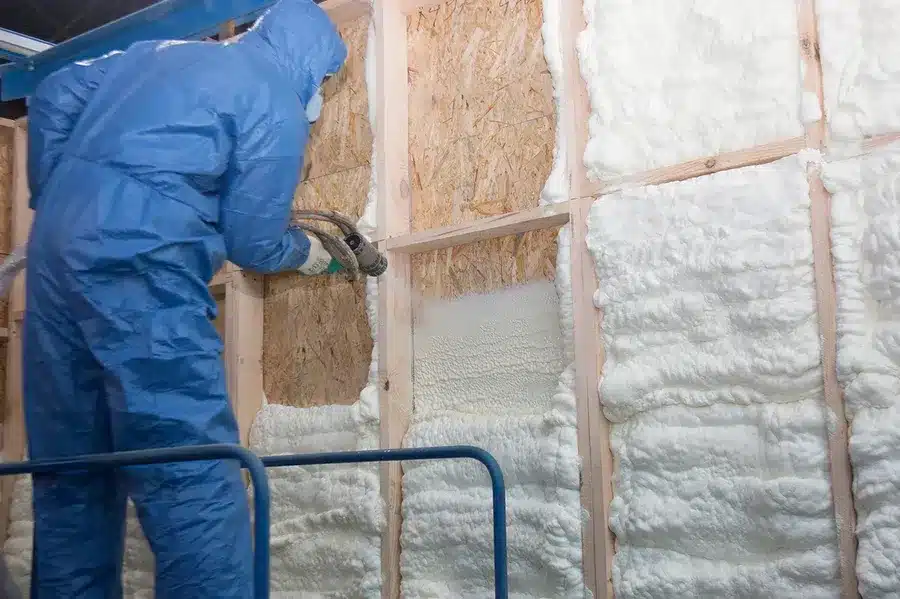
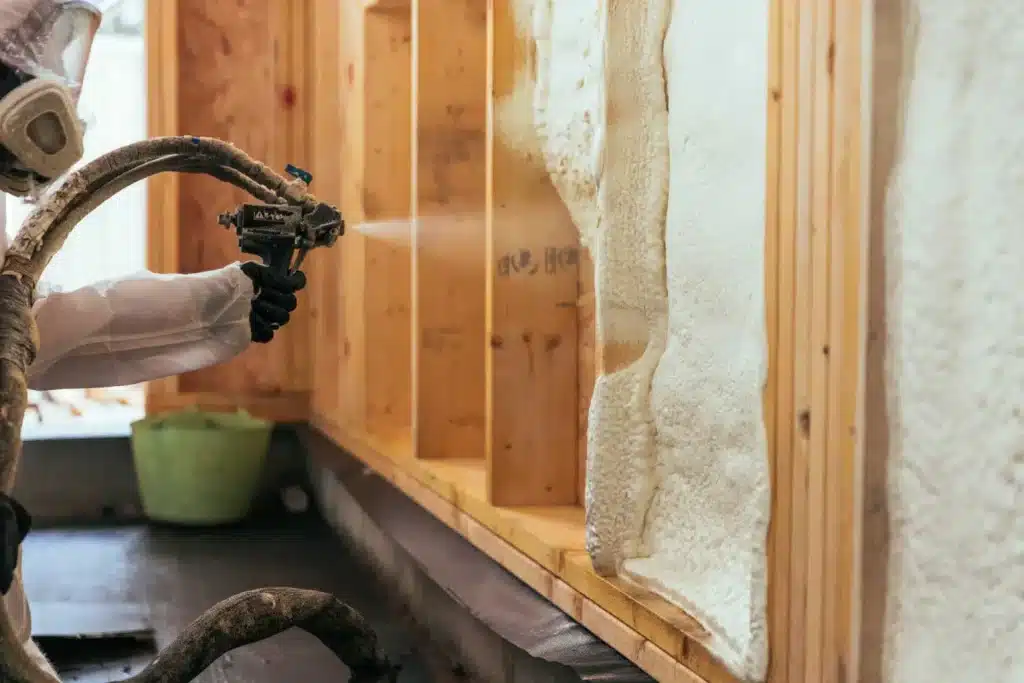
2. Labor Professional installation is required for spray foam and most commercial applications. The U.S. EPA – Potential Chemical Exposures From Spray Polyurethane Foam emphasizes that spray polyurethane foam installation generates isocyanate vapors and aerosols that require personal protective equipment, proper ventilation, and building evacuation during application. Labor rates in the Las Vegas market reflect the specialized skills and certifications needed for commercial insulation work.
3. Air Sealing and Weatherization If you are using fiberglass or mineral wool batts, you must budget for separate air sealing materials and labor, including caulk, spray sealant, housewrap, and tape. Spray foam eliminates this separate step by forming its own air barrier, which is one reason it has gained popularity in commercial retrofits.
4. Code Compliance and Inspections Permit fees, third-party inspections, and documentation for energy code compliance should be included. For projects pursuing LEED certification or other green building standards, additional commissioning and testing may be required.
5. Contingency Commercial buildings often contain unexpected conditions, especially in retrofits: hidden structural damage, asbestos, irregular framing, or inadequate ventilation. A contingency of 10 to 15 percent of the total project budget is a reasonable allowance.
Factors That Influence Your Commercial Insulation Budget
Several variables determine where your project falls on the cost spectrum:
- Building type and size: A 2,000-square-foot retail storefront has different demands than a 50,000-square-foot warehouse or a multi-story office building. Larger projects benefit from economies of scale on materials but may require more complex logistics.
- New construction vs. retrofit: New builds allow insulation to be integrated into the assembly design from the start. Retrofits may require demolition, remediation, or working around existing mechanical systems, all of which add time and cost.
- Accessibility: High ceilings, confined crawl spaces, obstructed roof decks, or buildings with limited loading access increase labor difficulty and time on site.
- Insulation thickness: Higher R-values mean more material. Going from code-minimum R-25 to R-30 on a commercial roof adds roughly 15 to 20 percent more insulation material.
- Moisture and vapor control: In some commercial assemblies, a separate vapor retarder or barrier is required, adding another trade to the project sequence.
- Fire safety requirements: Spray foam requires a thermal barrier (typically half-inch gypsum board) to cover all exposed foam surfaces per building code. This adds framing, drywall, and finishing costs to the scope.
- Seasonal timing: Las Vegas summers present extreme heat that affects spray foam curing times and worker productivity. Scheduling during milder months may improve installation quality and reduce labor strain.
Real-World Commercial Insulation Projects
The following scenarios illustrate the range of commercial insulation projects we encounter in the Centennial Hills area:
| Building Type | Location | Project Scope | Key Considerations |
|---|---|---|---|
| Strip retail center | Centennial Hills Town Center | 8,000 sq ft roof replacement with new insulation above deck | Must meet R-25ci minimum; tear-off of existing membrane; phased to keep tenants operational |
| Medical office building | North of US 95 corridor | Full wall and ceiling retrofit, 12,000 sq ft | Enhanced sound control needed between exam rooms; air sealing of older envelope |
| Mixed-use commercial | Planned community district | 25,000 sq ft new construction, walls, and roof | Coordinated with framing and MEP trades; spray foam for air barrier integration |
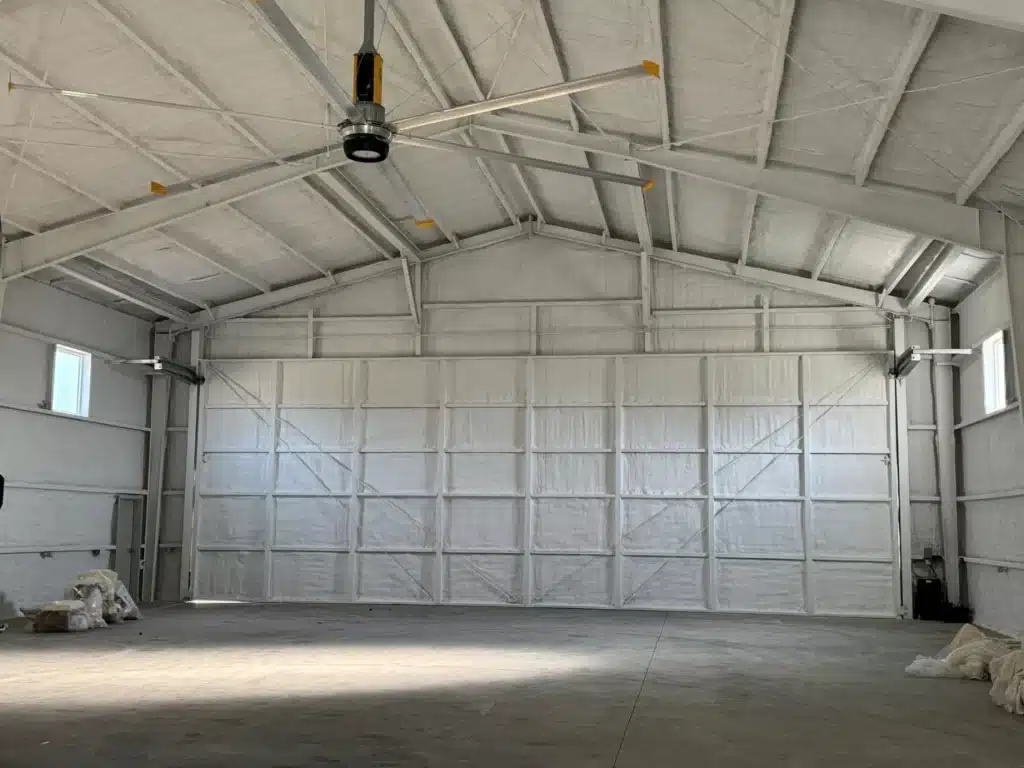
| Warehouse / industrial | Near Beltway interchange | 40,000 sq ft roof insulation, metal building liner system | Large open areas require efficient spray application; vapor drive considerations |
| Neighborhood shopping center | Elkhorn Road corridor | 5,000 sq ft tenant improvement | Partial insulation upgrade in renovated space; schedule coordination with retail opening |
Who This Guide Is For
This guide is for:
- Commercial property owners and developers building or renovating in Centennial Hills or the greater northwest Las Vegas
- Facility managers are responsible for reducing energy costs in occupied commercial buildings
- General contractors and architects are planning the insulation scope for commercial construction projects
- Business owners leasing space who want to understand insulation quality before signing a long-term lease
This guide is NOT for:
- Homeowners looking for residential attic or wall insulation (the scope, codes, and material selection differ significantly)
- Property owners seeking a DIY insulation approach for commercial buildings (spray foam and most commercial applications require certified installers)
- Anyone looking for a single “one-size-fits-all” price quote without a site assessment
The Real Question: What Does Inaction Cost?
Most budget conversations focus on what insulation costs to install. The more important question for Centennial Hills commercial property owners is what it costs to skip or underinvest in insulation.
Under-insulated commercial buildings in Las Vegas’s Climate Zone 3B face higher cooling loads, which means HVAC systems run harder and longer. That translates directly into higher electricity bills, more frequent equipment maintenance, and shorter HVAC system lifespans. In a market where commercial tenants increasingly expect energy-efficient spaces, poor insulation performance can also make a property harder to lease at competitive rates, increasing demand for better office insulation solutions.
Oklahoma State University’s energy calculations show that upgrading insulation from a settled, degraded R-value to a modern R-30 assembly can reduce heat gain through the ceiling by more than 75 percent. In Las Vegas, where the cooling season spans roughly six months and daytime attic temperatures can exceed 150 degrees, the compounding effect on energy bills is substantial.
The cost of inaction is not a one-time expense. It is a recurring monthly penalty that grows as energy rates increase and equipment ages.
Get Your Centennial Hills Commercial Insulation Quote
Supreme Spray Foam LV has extensive experience working on commercial insulation projects throughout the Centennial Hills area, from retail and office buildings to warehouses and mixed-use developments. Our team understands the specific energy code requirements for Climate Zone 3B, the challenges of insulating in extreme desert heat, and the logistics of keeping commercial projects on schedule and occupied spaces safe during installation.
Every building is different, and your insulation budget should start with a detailed assessment, not a guess. Contact us at [email protected] or call (702) 904-9895 to discuss your project scope and get started.
Frequently Asked Questions
What R-value do commercial buildings need in Las Vegas?
Commercial low-slope roofs with insulation above the deck in Climate Zone 3B require a minimum of R-25 continuous insulation per the 2024 IECC. Wall and floor assemblies have separate prescriptive requirements depending on construction type, which can be found in the Nevada energy code tables.
How long does spray foam take to cure before building re-entry?
The EPA notes that most two-component high-pressure spray foam systems require at least 24 hours before workers can re-enter without personal protective equipment and before building occupants can safely return. Curing times vary based on product formulation, temperature, humidity, and foam thickness.
Can insulation be installed while a commercial space is occupied?
It depends on the material and area being treated. Fiberglass and rigid board installations in unoccupied areas like above-ceiling plenums can often proceed with minimal disruption. Spray foam installation requires evacuation of the work area and potentially adjacent spaces during application and curing due to chemical vapors and aerosols.
Does spray foam insulation require a thermal barrier?
Yes. Building codes require an approved thermal barrier with fire resistance equivalent to half-inch gypsum board over all spray foam insulation surfaces. This is a separate trade and cost item that must be included in your project budget and construction schedule.
How does insulation affect commercial HVAC system sizing?
Proper insulation reduces the building’s cooling and heating loads, which can allow for smaller, less expensive HVAC equipment. In new construction, this should be coordinated during the mechanical design phase. In retrofits, reduced loads may extend the life of existing equipment and lower monthly operating costs, but HVAC systems should still be evaluated by a qualified engineer to confirm proper sizing.
Sources
- U.S. Department of Energy – Types of Insulation – Comprehensive guide to insulation types, installation methods, and material performance for residential and commercial applications.
- Oklahoma State University Extension – The Importance of Residential and Commercial Building Insulation – Research-based fact sheet covering R-value fundamentals, material comparisons, and energy savings calculations for insulation projects.
- Insulation Institute – Comparing Insulation Types for Commercial Buildings – Trade association resource comparing thermal performance, fire protection, acoustics, moisture management, and sustainability across insulation types.
- PIMA Nevada Energy Code Fact Sheet – Minimum Insulation Requirements – State-specific fact sheet detailing the 2024 IECC minimum R-value requirements for commercial roofing in Nevada by climate zone.
- U.S. EPA – Potential Chemical Exposures From Spray Polyurethane Foam – EPA guidance on chemical exposure routes, curing times, re-entry protocols, and long-term safety considerations for spray foam insulation.