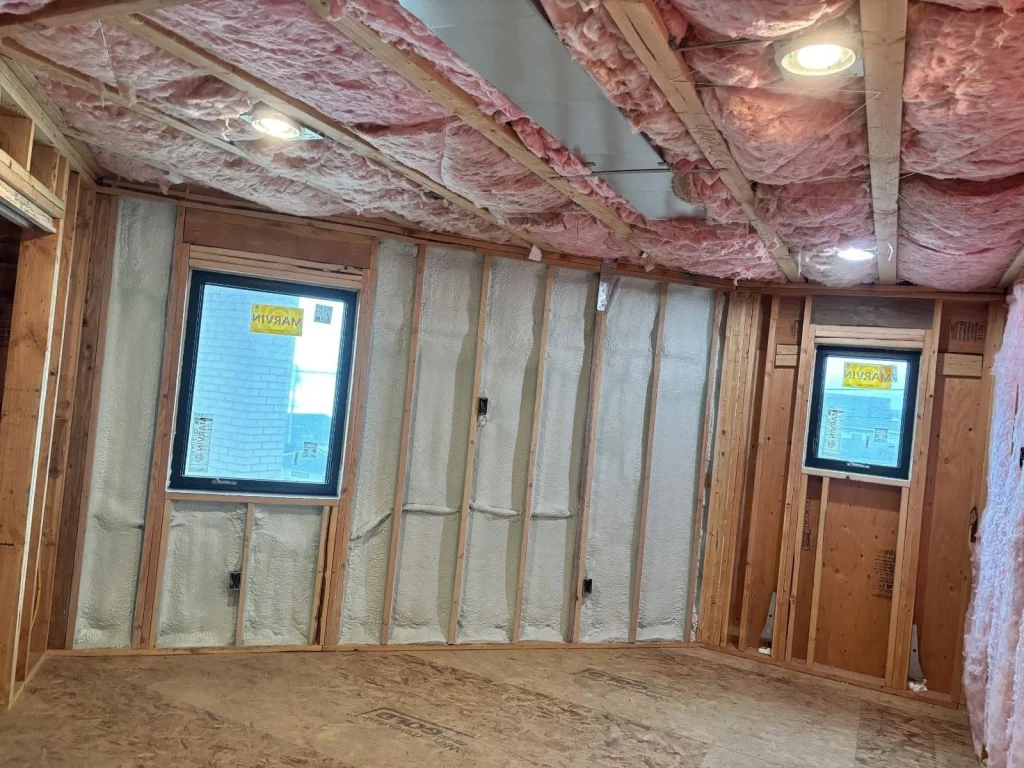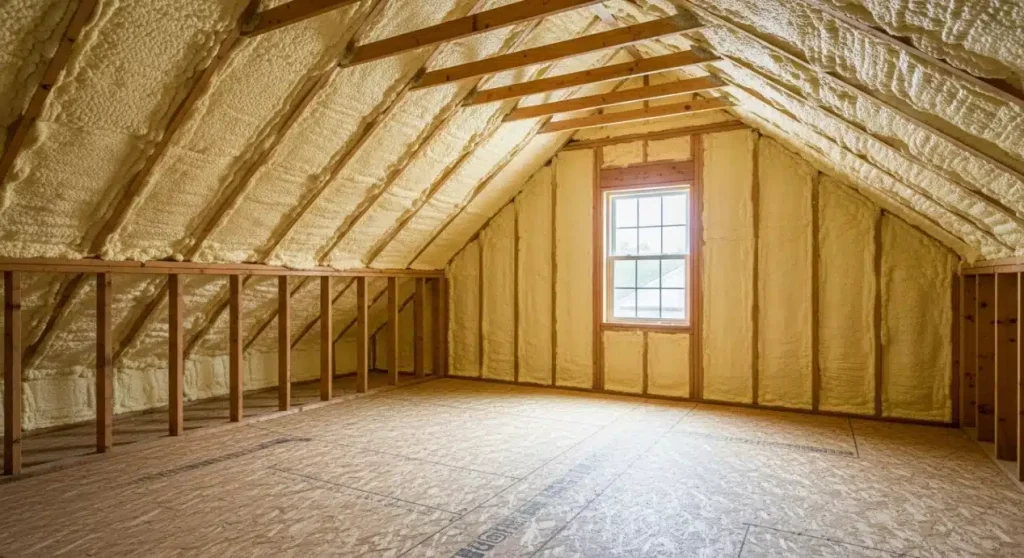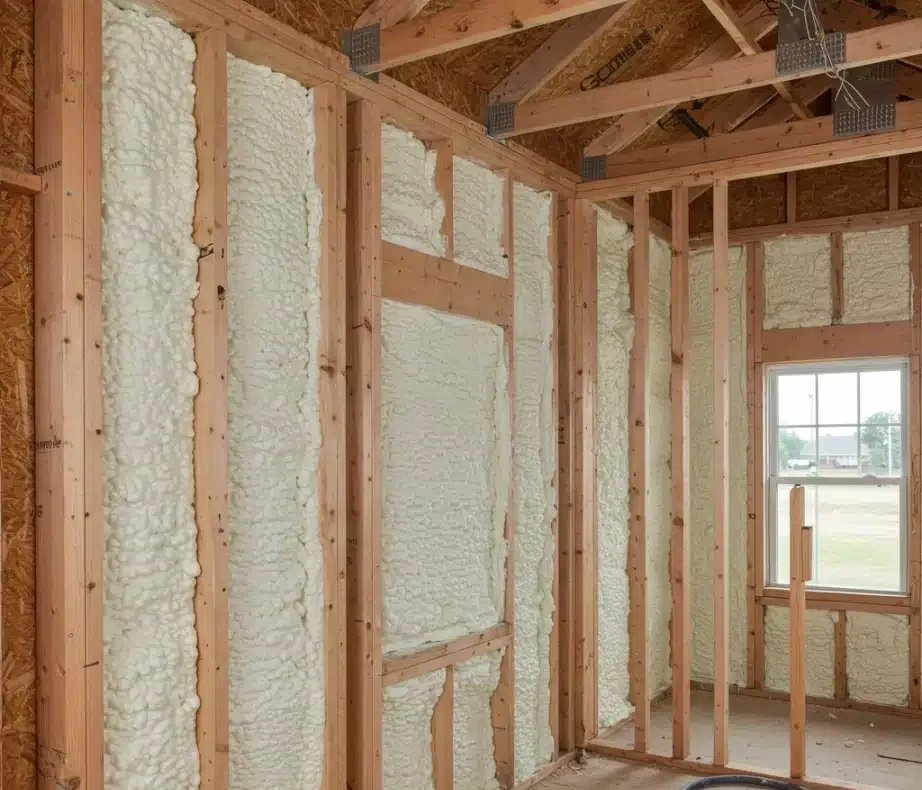

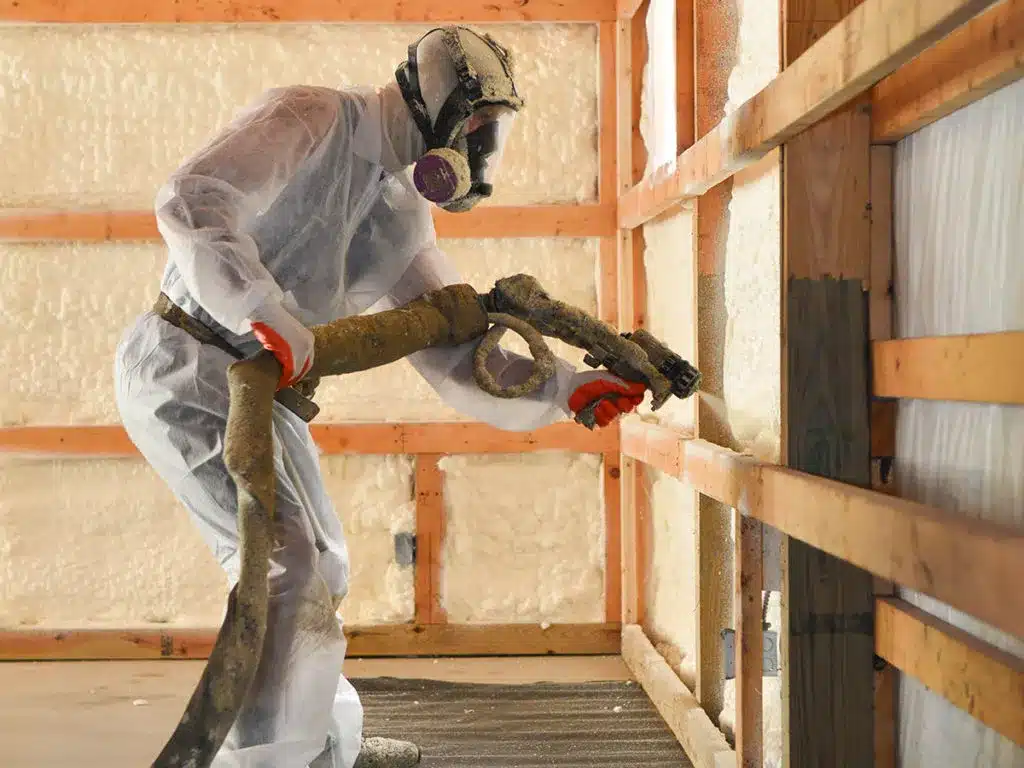
Residential insulation protects homes in Angel Park, NV by creating a thermal barrier that slows all three modes of heat transfer: conduction through solid materials, convection through air movement, and radiation from the intense desert sun. In a hot desert climate where summer highs routinely exceed 100 degrees Fahrenheit and winter nights can drop well below freezing, insulation works in both directions, keeping conditioned air inside and blocking extreme outdoor temperatures from penetrating the building envelope. Residential insulation in Angel Park, NV, helps homeowners maintain more consistent indoor temperatures while reducing the impact of the region’s extreme weather. The right approach depends on your home’s construction, its current insulation levels, and whether your priority is summer heat resistance, winter warmth, or both. Spray foam insulation, fiberglass batts, blown-in cellulose, and rigid foam board each serve different roles in protecting the attic, walls, crawl spaces, and roof assemblies of Angel Park residences.
TL;DR
- Angel Park sits within the Las Vegas Valley, which has a subtropical hot desert climate with an average July high of 104.5 degrees Fahrenheit and record temperatures reaching 120 degrees Fahrenheit, making thermal protection a year-round priority.
- Insulation resists all three modes of heat transfer: conduction through building materials, convection via air leakage, and radiation from solar exposure.
- The EPA estimates homeowners can save an average of 15% on heating and cooling costs by combining air sealing with added insulation in key areas like attics, crawl spaces, and exterior walls.
- Nine out of ten homes in the United States are under-insulated, and many Angel Park residences built before modern energy codes likely fall into this category.
- Spray foam insulation provides both high thermal resistance and an effective air seal, making it particularly effective for desert climates where air infiltration drives significant energy loss.
- Attic insulation delivers the single largest opportunity for temperature regulation in Angel Park homes because roof surfaces absorb direct solar radiation throughout summer.
- A whole-house approach that addresses the attic, walls, crawl spaces, and air sealing delivers better temperature control than insulating any single area alone.
Why Angel Park, NV Demands High-Performance Insulation
Angel Park is located within the Summerlin community on the west side of the Las Vegas Valley. The area shares the same harsh desert climate as greater Las Vegas, which is classified as a subtropical hot desert climate (Koppen classification BWh) characteristic of the Mojave Desert. According to Wikipedia’s Las Vegas climate data, July is the hottest month with an average daytime high of 104.5 degrees Fahrenheit, and the city averages 78 days per year at or above 100 degrees Fahrenheit, including 10 days that reach 110 degrees or higher. On the other extreme, winter evenings routinely drop into the upper 30s, with overnight lows averaging around 40 degrees in December and January. The all-time record low stands at 8 degrees Fahrenheit.
This temperature swing is a key part of Everything About Residential Insulation, because insulation must perform double duty: resisting intense radiant heat gain during summer months and preventing heat loss during surprisingly cold winter nights. The low average humidity, which sometimes falls below 10 percent, compounds the challenge because dry air heats and cools rapidly. A well-insulated thermal envelope reduces the rate at which these extreme outdoor conditions affect indoor living spaces.
How Insulation Works: The Science of Heat Transfer Resistance
Thermal insulation is the reduction of heat transfer between objects of differing temperature. Heat moves through buildings by three primary mechanisms, and effective insulation addresses all of them:
- Conduction: Heat flows directly through solid materials such as framing, drywall, and roofing. Insulation materials with low thermal conductivity, such as foam and fiberglass, slow this transfer.
- Convection: Warm air rises and escapes through gaps, while hot outdoor air infiltrates through cracks around windows, doors, and wall penetrations. Sealing these air leaks is a necessary companion to adding insulation.
- Radiation: Solar energy heats exterior surfaces, particularly roofs, and radiates into the home. Reflective barriers and materials with low emissivity can reduce this form of heat gain.
The effectiveness of insulation is measured by its R-value, which quantifies thermal resistance. Higher R-values indicate better insulating performance. R-values are additive, meaning multiple layers combine to increase total resistance. In a desert climate like Angel Park’s, building codes and energy standards prescribe specific R-value minimums for different parts of the building envelope based on the local climate zone.
The Building Envelope: Your First Line of Defense
Building insulation is material used in the building envelope, which encompasses the outer walls, roof, foundation, windows, and doors, to reduce the flow of thermal energy. The envelope defines the boundary between conditioned indoor space and the harsh outdoor environment. When this boundary is poorly insulated or has significant air leaks, the HVAC system must work substantially harder to maintain comfortable indoor temperatures.
In Angel Park, the roof and attic represent the highest-priority areas for insulation upgrades. During summer, roof surfaces absorb direct solar radiation for most of the day, with attic temperatures frequently exceeding 150 degrees. Without adequate attic insulation and ventilation, this heat conducts through the ceiling and radiates into living spaces below. Exterior walls, especially those facing west and south, receive prolonged sun exposure and benefit from continuous insulation that eliminates thermal bridging through framing members.
| Insulation Target | Primary Function in Angel Park Climate | Recommended Priority |
|---|---|---|
| Attic / Roof | Blocks radiant solar heat gain from roof surfaces; prevents winter heat loss through the ceiling | Highest |
| Exterior Walls | Reduces conductive heat transfer through framing; maintains consistent indoor wall surface temperatures | High |
| Crawl Spaces | Blocks heat transfer from ground-adjacent areas; prevents humidity infiltration | Moderate |
| Air Sealing | Eliminates convective heat loss through gaps, cracks, and penetrations in the envelope | Essential companion |
Spray Foam Insulation: Air Sealing and Thermal Resistance Combined
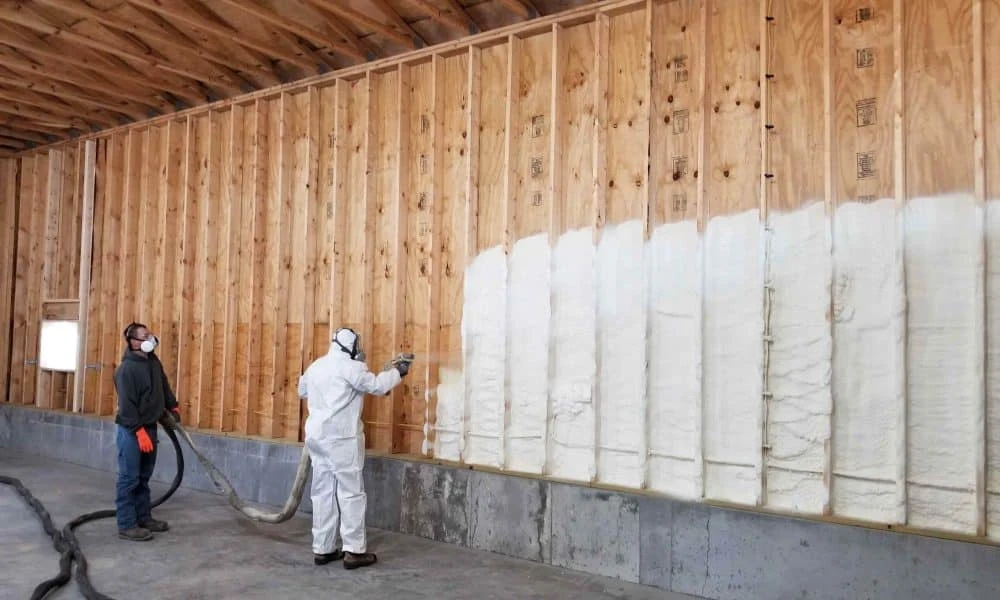
Among insulation types, spray foam stands out in desert climates because it performs two functions at once. When applied, spray foam expands to fill cavities and gaps, creating both a thermal barrier and an air seal in a single step. According to Wikipedia’s R-value reference data, closed-cell spray foam delivers approximately R-5.5 to R-6.5 per inch, while open-cell spray foam provides roughly R-3.6 per inch.
Closed-cell spray foam also acts as a vapor barrier, which adds value in Angel Park homes by limiting moisture migration. While the Las Vegas area is arid, occasional monsoon moisture and condensation from air conditioning can introduce humidity into wall and ceiling assemblies. The air-sealing property of spray foam is particularly relevant because, as ENERGY STAR notes, the combined air leaks in a typical home are equivalent to leaving a window open every day of the year.
Energy Savings and Comfort: What the Data Shows
The financial and comfort benefits of proper insulation are well documented. The ENERGY STAR program reports that the EPA estimates homeowners can save an average of 15% on heating and cooling costs, or about 11% on total energy costs, by air sealing their homes and adding insulation in attics, floors over crawl spaces, and basements. ENERGY STAR further states that nine out of ten homes in the United States are under-insulated.
For Angel Park residents, these savings are especially meaningful because the cooling season stretches from May through September, with air conditioning systems running almost continuously during peak summer weeks. When residential insulation service reduces the rate at which outdoor heat enters the home, the air conditioning system cycles less frequently, draws less power, and lasts longer. The same principle applies during winter, when heating systems maintain comfort against the cold desert nights.
Beyond energy savings, proper insulation improves comfort in ways that are immediately noticeable. Rooms near exterior walls and ceilings feel more evenly tempered. Hot and cold spots diminish. HVAC systems can maintain the thermostat setpoint with less effort, reducing temperature swings between cycles. Insulation also reduces noise transmission from outside and helps control indoor humidity levels.
Recommendations by Home Type in Angel Park
| Home Type | Insulation Priority | Recommended Approach |
|---|---|---|
| Newer Build (post-2005) | Attic upgrades and air sealing | Focus on attic floor insulation to R-49 or above; seal ductwork and penetrations |
| Older Home (pre-2000) | Full envelope assessment | Comprehensive attic, wall, and crawl space insulation; prioritize air sealing alongside insulation |
| Custom / High-Performance | Continuous insulation and thermal breaks | Exterior rigid foam on walls; spray foam in wall cavities and roofline; radiant barrier in attic |
| Home with Vaulted Ceilings | Roof assembly insulation | Spray foam applied directly to the roof deck; no vented attic space |
Each home type benefits from different strategies based on how it was originally built. Older homes in Angel Park may have little more than builder-grade fiberglass in the attic and no wall insulation at all. Newer construction meets more recent energy codes but may still leave significant room for improvement, particularly around air sealing and continuous insulation at the roofline.
Signs You Have Found the Right Insulation Strategy
How do you know your insulation plan is the right fit for your Angel Park home? Look for these indicators:
- The provider conducts a thorough inspection of your attic, walls, and crawl spaces before recommending any specific product or approach.
- The proposal addresses air sealing as a companion to insulation rather than treating insulation as a standalone solution.
- The recommended R-values align with or exceed current climate zone requirements for the Las Vegas Valley, not just minimum building code minimums.
- The provider explains how each recommended area (attic, walls, crawl space) contributes to overall thermal performance.
- The scope of work accounts for your home’s specific construction type, including any vaulted ceilings, ductwork located in the attic, or cantilevered floor sections.
- Communication is clear about timeline, installation methods, and what to expect during and after the project.
Get Your Free Insulation Assessment in Angel Park
Supreme Spray Foam LV helps homeowners across Angel Park and the greater Las Vegas Valley protect their homes against extreme desert temperatures with professional spray foam insulation services. Our experienced team evaluates your home’s current insulation levels, identifies air leakage points, and recommends the right solution for your specific needs. We handle everything from attic insulation to full envelope spray foam applications, ensuring your home stays cooler in summer, warmer in winter, and more energy efficient year-round.
Call us at (702) 904-9895 or email [email protected] to get started. Protect your home before the next heat wave hits.
Frequently Asked Questions
What R-value should my attic insulation reach in Angel Park, NV?
The Las Vegas Valley falls in IECC Climate Zone 3B (warm-dry), which recommends attic insulation levels of R-38 to R-49 for existing homes and R-49 or higher for new construction.
Can insulation help with summer cooling more than winter heating in the Las Vegas climate?
In Angel Park’s desert climate, insulation serves both seasons, but attic insulation provides the greatest summer benefit because roof surfaces absorb direct solar radiation and drive extreme heat gain into the home.
Why does spray foam insulation cost more than fiberglass, and is it worth it?
Spray foam delivers higher R-value per inch and provides air sealing that fiberglass cannot, which reduces convective heat loss and lowers the overall load on your HVAC system throughout the year.
How do I know if my home is under-insulated?
Visible signs include uneven temperatures between rooms, high energy bills compared to similar homes, visible gaps or compressed insulation in the attic, and drafts near windows, doors, and electrical outlets.
Does adding insulation to my attic require removing existing insulation?
In most cases, new insulation can be installed over existing material provided the old insulation is dry, undamaged, and free of pests or mold, though a professional inspection should confirm this before proceeding.
Sources
- Thermal Insulation – Wikipedia – Comprehensive reference on the science of thermal insulation, heat transfer mechanisms (conduction, convection, radiation), and how insulation materials slow energy transfer.
- Las Vegas – Wikipedia – Detailed climate data for the Las Vegas Valley including average temperatures, extreme records, and precipitation data relevant to Angel Park, NV.
- Why Seal and Insulate? – ENERGY STAR – EPA-backed data on energy savings from air sealing and insulation, including the estimate that homeowners can save 15% on heating and cooling costs.
- R-value (Insulation) – Wikipedia – Technical reference on R-value definitions, R-values per inch for spray foam and other insulation materials, and how thermal resistance is calculated.
- Building Insulation – Wikipedia – Reference on building envelope insulation strategies, thermal bridge prevention, and climate-specific approaches for hot and cold regions.

- How Do You Choose the Right Insulation for a Las Vegas, NV Property Without Guesswork? - September 16, 2026
- What Questions Should Peccole Ranch, NV Property Owners Ask About Spray Foam Insulation? - September 16, 2026
- Where Can Spray Foam Insulation Be Used When Access Is Limited or Restricted? - September 15, 2026